
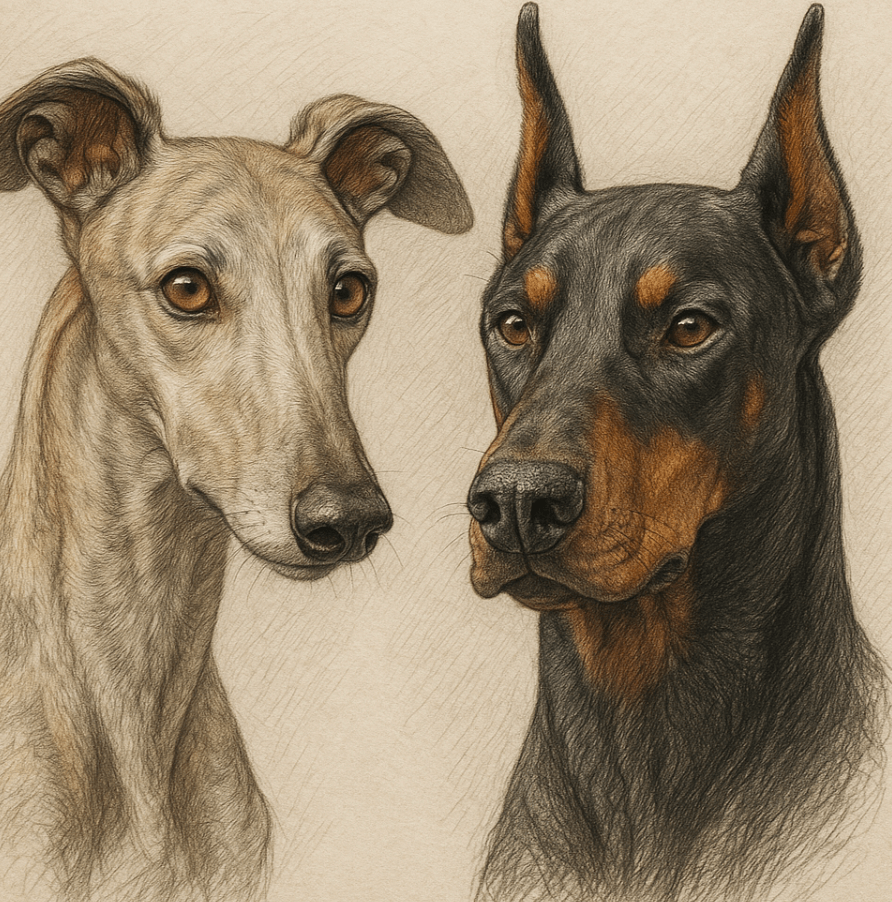

Greyhound vs Doberman: Which Breed is Right for You?
When it comes to choosing a dog breed, the decision often boils down to lifestyle, personality, and specific needs. Two popular breeds that frequently capture attention are the Greyhound and the Doberman Pinscher. While both are striking in appearance and highly intelligent, they differ significantly in temperament, energy levels, and care requirements.
The Greyhound, known for its speed and elegance, is often seen as a laid-back couch potato despite its athletic reputation. On the other hand, the Doberman is celebrated for its loyalty, protective nature, and high energy. In this blog post, we’ll compare the Greyhound vs Doberman across various aspects, helping you determine which breed aligns best with your lifestyle.
Temperament Differences Between Greyhounds and Dobermans
The temperaments of these two breeds highlight their distinct personalities, making them suitable for different types of households. Understanding these differences is key to finding the right match for your family.
Greyhound Temperament:
Greyhounds are calm, gentle, and affectionate, often described as “45-mile-per-hour couch potatoes.” They love lounging around and make excellent companions for relaxed environments.Doberman Temperament:
Dobermans are alert, confident, and highly energetic. Their protective instincts make them exceptional guard dogs but require experienced owners who can manage their intensity.Social Behavior:
Greyhounds tend to be more independent and reserved, while Dobermans thrive on constant interaction and form strong bonds with their families.Suitability for Families:
Greyhounds are great with children due to their calm demeanor, whereas Dobermans need proper training to ensure they interact safely with kids.Trainability Levels:
Both breeds are intelligent, but Dobermans excel in obedience training due to their eagerness to please, while Greyhounds may take longer to motivate.
These temperament traits underscore the unique qualities each breed brings to a home, catering to different preferences and lifestyles.
Physical Characteristics of Greyhounds and Dobermans
The physical attributes of Greyhounds and Dobermans reflect their respective roles as sprinters and protectors. Here’s a closer look at their distinctive features.
Size and Build:
Greyhounds are tall and lean, with a sleek, aerodynamic body built for speed. Dobermans are muscular and athletic, exuding strength and agility.Coat Types:
Greyhounds have short, smooth coats that require minimal grooming, while Dobermans also have short coats but shed more heavily.Color Variations:
Greyhounds come in a variety of colors, including fawn, brindle, and black. Dobermans are typically black, red, blue, or fawn with rust markings.Lifespan Expectancy:
Greyhounds generally live 10-14 years, while Dobermans have a slightly shorter lifespan of 10-12 years due to potential health issues.Energy Levels:
Greyhounds are sprinters with bursts of energy followed by long periods of rest, whereas Dobermans maintain consistent high energy throughout the day.
Their physical characteristics not only define their appearances but also influence their care needs and suitability for various activities.
Check this guide 👉Doberman vs Rhodesian Ridgeback: Best 7 Expert Tips!
Check this guide 👉Doberman vs Husky: Best 7 Expert Tips!
Check this guide 👉German Doberman vs American Doberman: Best 7 Expert Tips!
Greyhound Traits | Doberman Traits |
|---|---|
Calm and low-maintenance | Energetic and requires lots of exercise |
Independent nature | Highly social and people-oriented |
Short, easy-to-groom coat | Moderate shedding and grooming needs |
Ideal for relaxed households | Best suited for active, experienced owners |
Lifespan: 10-14 years | Lifespan: 10-12 years |
Exercise Needs of Greyhounds vs Dobermans
Both Greyhounds and Dobermans require regular exercise, but their needs differ significantly based on their energy levels and activity preferences.
Greyhound Exercise Requirements:
Despite their racing heritage, Greyhounds are content with short sprints or leisurely walks. A daily 20-30 minute walk is usually sufficient.Doberman Exercise Requirements:
Dobermans need vigorous exercise, such as runs, hikes, or play sessions, lasting at least 1-2 hours daily to burn off excess energy.Mental Stimulation:
Greyhounds enjoy puzzle toys and sniffing games, while Dobermans thrive on advanced training and interactive challenges.Space Considerations:
Greyhounds adapt well to apartments due to their low-energy lifestyle, whereas Dobermans need more space to roam and expend energy.Behavior Without Exercise:
Under-exercised Greyhounds may become lazy and overweight, while Dobermans can develop destructive behaviors like chewing or barking.
Understanding these differences ensures both breeds receive the appropriate level of physical and mental stimulation.
Health Considerations for Greyhounds and Dobermans
Both breeds are prone to specific health issues that prospective owners should be aware of to provide the best possible care.
Greyhound Health Concerns:
Common issues include dental problems, bone fractures, and sensitivity to anesthesia due to their lean build and unique physiology.Doberman Health Concerns:
Dobermans are susceptible to conditions like dilated cardiomyopathy (DCM), hip dysplasia, and von Willebrand’s disease (a blood clotting disorder).Preventive Care:
Regular vet check-ups, dental cleanings, and a balanced diet are essential for maintaining Greyhound health. Dobermans benefit from cardiac screenings and joint supplements.Lifespan Implications:
Greyhounds typically enjoy longer lifespans with fewer chronic illnesses compared to Dobermans, whose health issues can shorten their lives.Insurance and Costs:
Both breeds may require pet insurance or emergency funds due to potential medical expenses, especially for Dobermans with heart conditions.
Proactive healthcare measures help mitigate risks and ensure a happy, healthy life for your furry companion.
Training Tips for Greyhounds and Dobermans
Training these breeds effectively requires understanding their unique learning styles and motivations. Here are some tailored tips for each.
Greyhound Training Tips:
Use positive reinforcement with treats or praise, as Greyhounds respond well to rewards rather than harsh corrections.Doberman Training Tips:
Focus on consistency and firmness; Dobermans thrive under clear leadership and structured routines.Crate Training Benefits:
Greyhounds appreciate quiet spaces, making crate training helpful for relaxation. Dobermans benefit from crates as a way to establish boundaries.Socialization Importance:
Early exposure to new environments, people, and animals prevents fearfulness in Greyhounds and aggression tendencies in Dobermans.Patience and Persistence:
Both breeds require patience during training, but Greyhounds may take longer to engage, while Dobermans demand ongoing mental challenges.
Tailoring your approach ensures successful training outcomes for both breeds.
Living Arrangements for Greyhounds and Dobermans
The living environment plays a crucial role in determining whether a breed will thrive. These considerations help assess compatibility.
Apartment Living:
Greyhounds adapt easily to smaller spaces, while Dobermans may feel confined without ample room to move.Yard Space Requirements:
Dobermans benefit from secure, fenced yards for running and playing, whereas Greyhounds are fine with limited outdoor access.Climate Tolerance:
Greyhounds are sensitive to extreme temperatures due to their thin coats, while Dobermans tolerate heat better but still need shade and water.Noise Levels:
Greyhounds are quiet and rarely bark, making them ideal for shared walls. Dobermans can be vocal if untrained or bored.Family Dynamics:
Greyhounds suit quieter homes, while Dobermans flourish in active households with dedicated time for bonding and exercise.
Evaluating your living situation ensures harmony between your lifestyle and your chosen breed.
Fun Activities to Enjoy with Your Greyhound or Doberman
Engaging in activities tailored to their strengths strengthens your bond and keeps them physically and mentally stimulated.
Greyhound Activities:
Coursing events (like lure coursing) allow Greyhounds to showcase their natural speed and agility in a controlled setting.Doberman Activities:
Agility courses challenge Dobermans’ athleticism and intelligence, providing hours of fun and focus.Leisure Walks:
Both breeds enjoy walks, though Greyhounds prefer slower strolls, while Dobermans crave brisk, invigorating treks.Interactive Toys:
Puzzle feeders and treat-dispensing toys entertain Greyhounds indoors, while tug-of-war ropes satisfy Dobermans’ need for physical engagement.Swimming Sessions:
Many Greyhounds enjoy water, while Dobermans often excel at swimming as part of their exercise routine.
Incorporating these activities ensures a fulfilling life for your beloved pet, regardless of breed.
Frequently Asked Questions About Greyhounds and Dobermans
Are Greyhounds good apartment dogs?
Yes, their calm nature and low exercise needs make them excellent apartment companions.
Do Dobermans get along with other pets?
With proper socialization, Dobermans can coexist peacefully with other animals, though their prey drive may pose challenges.
How much grooming do these breeds need?
Both have short coats, but Dobermans shed more and require slightly more frequent brushing.
Can first-time owners handle either breed?
Greyhounds are better suited for beginners, while Dobermans require experienced handlers due to their high energy and protective instincts.
What are the main differences in their personalities?
Greyhounds are laid-back and independent, while Dobermans are energetic, loyal, and thrive on attention.
Choosing Between a Greyhound and a Doberman
Deciding between a Greyhound and a Doberman ultimately depends on your lifestyle, experience level, and personal preferences. If you’re looking for a calm, easygoing companion who enjoys lounging and occasional sprints, the Greyhound is an ideal choice. On the other hand, if you’re seeking a loyal, energetic protector who thrives on activity and engagement, the Doberman might be the perfect fit. By carefully considering their temperaments, exercise needs, and health considerations, you can find the breed that complements your household and enriches your life. Whichever breed you choose, both Greyhounds and Dobermans offer unwavering loyalty and companionship when cared for properly.
Spleen Cancer in Cats: Best 7 Expert Tips! – Expert insights on symptoms, care, treatment & quality of life for feline spleen cancer.
Dog Mastitis Treatment: Best 7 Expert Tips! – Safe, vet-approved care for nursing moms & prevention strategies.
The Shikoku Ken Dog: Best 7 Expert Tips! – Discover expert care, training & health advice for this rare, loyal Japanese mountain breed.
The Cairn Terrier Dog Breed: Best 7 Expert Tips! – Discover care, training & health advice for this spirited, loyal Scottish terrier.


