
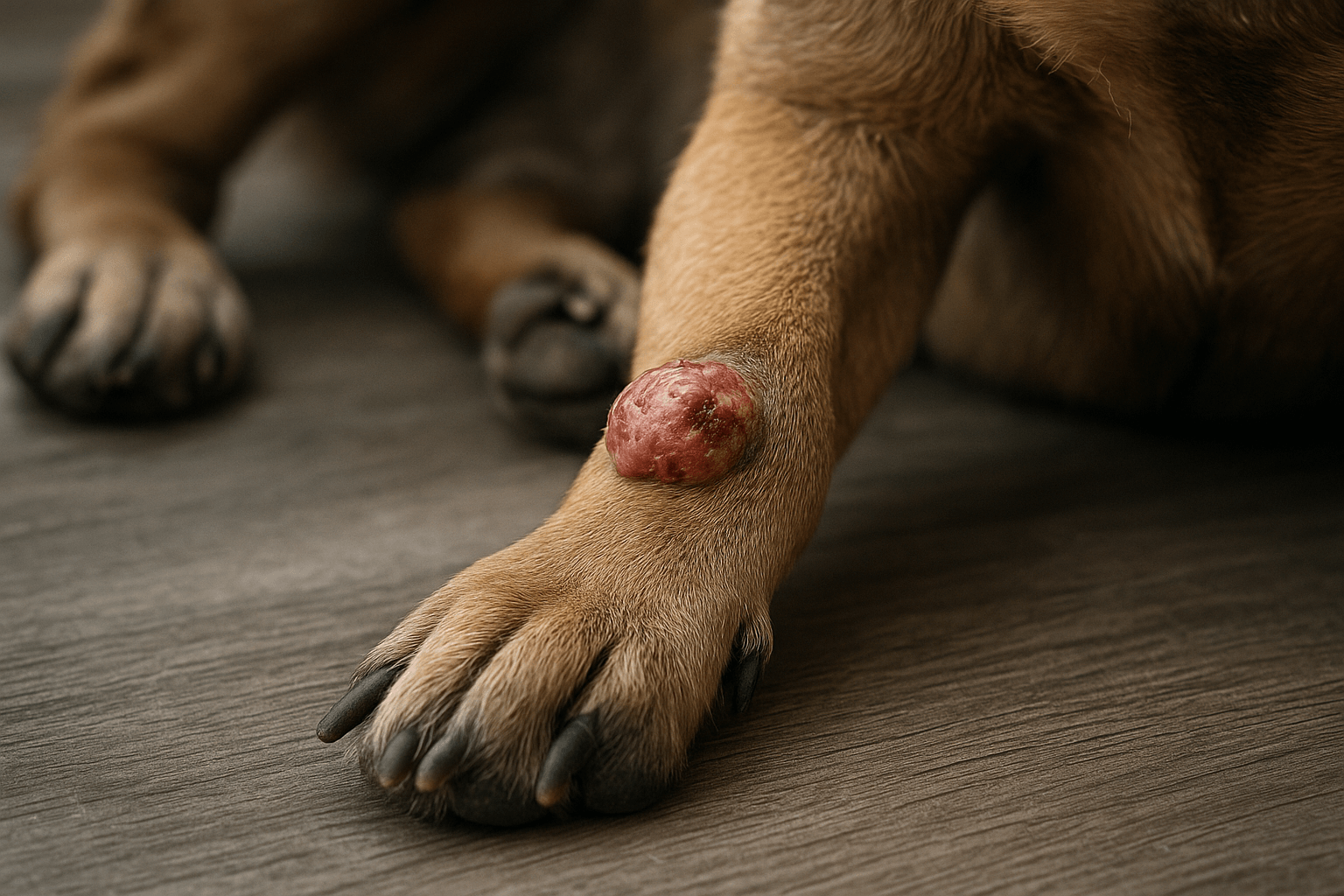

Dog Tumor on Paw: Best 7 Expert Tips!

Dog Tumor on Paw: Best 7 Expert Tips!

Dog Tumor on Paw: What Every Pet Owner Needs to Know

Discovering a lump or tumor on your dog’s paw can be alarming—especially because paws endure constant pressure, contact, and exposure. While some growths are harmless, others may signal infection, inflammation, or even cancer. Early detection and professional evaluation are your best tools for protecting your dog’s mobility and well-being. This guide breaks down what these tumors might be, when to worry, and how to respond wisely. Because when it comes to your dog’s paws, every step matters.

Common Types of Paw Tumors in Dogs


Not all paw lumps are created equal. Some are benign skin tags, while others are aggressive cancers that require prompt intervention. Recognizing the possible types helps you understand the urgency and next steps.

 
  • Histiocytomas:
    These benign, fast-growing tumors often appear in young dogs as smooth, pink, dome-shaped bumps—typically harmless but worth monitoring.
     
  • Mast cell tumors (MCTs):
    One of the most common malignant skin cancers in dogs, MCTs can appear anywhere, including paws, and may change size or ulcerate.
     
  • Papillomas (warts):
    Caused by a virus, these rough, cauliflower-like growths are usually benign but can become irritated from walking or licking.
     
  • Sebaceous adenomas:
    Non-cancerous oil gland tumors that look like waxy, pale lumps—common in older dogs and generally not dangerous.
     
  • Squamous cell carcinoma (SCC):
    A serious malignant tumor that often appears between toes or on paw pads, especially in light-coated or sun-exposed breeds.
 

Identifying the type is impossible by sight alone—so veterinary diagnostics are essential for accurate diagnosis and care.

Dog Tumor on Paw: Best 7 Expert Tips!

Warning Signs That Demand Immediate Vet Attention


While some paw lumps grow slowly and cause no discomfort, others come with red flags that signal a deeper problem. Don’t wait if you notice these symptoms.

 
  • Limping or reluctance to bear weight:
    Persistent favoring of one paw often means pain or pressure from a growing mass.
     
  • Bleeding, oozing, or foul odor:
    Open, infected, or necrotic tumors can emit a strong smell and leak fluid or blood.
     
  • Rapid growth over days or weeks:
    Fast-changing lumps—especially those that swell, shrink, then swell again—are highly suspicious.
     
  • Ulceration or cracked paw pads:
    Tumors like SCC often break down the skin, creating painful sores that won’t heal.
     
  • Swelling of the entire toe or foot:
    This could indicate bone involvement or aggressive cancer like digit amelanotic melanoma.
 

When in doubt, schedule a vet visit—early action can dramatically improve outcomes.

Likely Benign Signs Possible Malignant Indicators
Small, slow-growing lump Rapidly enlarging mass
Smooth, firm, movable under skin Fixed to underlying tissue
No limping or behavior change Limping, licking, or guarding paw
Stable for weeks or months Fluctuates in size or bleeds
Appears in young dog (<3 years) Appears in older dog (>8 years)

Diagnostic Steps Your Vet May Recommend


If a tumor is suspected, your veterinarian will likely take a methodical approach to determine its nature and severity—because treatment depends entirely on the diagnosis.

 
  • Fine needle aspirate (FNA):
    A quick, minimally invasive test where cells are extracted with a needle and examined under a microscope—useful for mast cell tumors.
     
  • Biopsy:
    For ambiguous or suspicious masses, a tissue sample (often under sedation) provides a definitive diagnosis and cancer grading.
     
  • X-rays of the paw and chest:
    To check for bone destruction in the toe or signs of metastasis to the lungs—common with SCC or melanoma.
     
  • Blood work and urinalysis:
    Assesses overall health before surgery or treatment and checks for systemic illness.
     
  • Lymph node evaluation:
    Enlarged lymph nodes near the affected leg may indicate cancer spread and require sampling.
 

Accurate diagnosis is the cornerstone of effective treatment—never skip this critical step.

Treatment Options Based on Tumor Type


Once diagnosed, your vet will tailor a plan to your dog’s specific condition. Options range from monitoring to advanced oncology care.

 
  • Surgical removal:
    The primary treatment for most paw tumors—especially if caught early and localized to one toe.
     
  • Digit amputation:
    Often necessary for SCC or melanoma involving the bone; dogs adapt remarkably well to missing a toe.
     
  • Chemotherapy or radiation:
    Used for aggressive or metastatic cancers like high-grade mast cell tumors or melanoma.
     
  • Cryotherapy or laser ablation:
    May be considered for small, superficial benign growths like papillomas.
     
  • Palliative care:
    For advanced cases, pain management, anti-inflammatories, and mobility aids improve quality of life.
 

Modern veterinary oncology offers more options than ever—many dogs live full, happy lives even after cancer diagnosis.

Home Care After Diagnosis or Surgery


Post-treatment care plays a huge role in recovery, especially since paws are hard to keep clean and protected.

 
  • Elizabethan collar (cone):
    Prevents licking that can open incisions or introduce infection—non-negotiable for healing.
     
  • Bandage or bootie protection:
    Keeps the surgical site dry and clean; change as directed to avoid moisture buildup.
     
  • Pain medication compliance:
    Give all prescribed meds on schedule—even if your dog seems fine—to ensure comfort and healing.
     
  • Limit activity strictly:
    No running, jumping, or rough play for 10–14 days post-op to avoid strain on sutures.
     
  • Monitor for complications:
    Watch for redness, swelling, discharge, or your dog refusing to use the paw—call your vet immediately if seen.
 

Gentle, consistent home care dramatically reduces setbacks and supports faster recovery.


Preventive Measures and Risk Reduction


While not all tumors can be prevented, some steps may lower your dog’s risk—especially for sun-related or chronic irritation cancers.

 
  • Limit sun exposure for light-coated dogs:
    SCC is linked to UV exposure; use pet-safe sunscreen or UV-protective booties during peak hours.
     
  • Regular paw checks during grooming:
    Feel between toes, inspect pads, and look for new bumps during routine brushing or bath time.
     
  • Avoid harsh chemicals on floors:
    Irritants like bleach or ice melt can cause chronic inflammation—opt for pet-safe cleaners.
     
  • Maintain healthy weight:
    Less pressure on paws reduces chronic stress and improves healing capacity.
     
  • Annual veterinary skin exams:
    Especially for senior dogs or breeds prone to cancer (e.g., Scottish Terriers, Boxers, Giant Schnauzers).
 

Vigilance and proactive care can catch issues before they become serious.

Emotional Support for You and Your Dog


A tumor diagnosis is stressful—for both of you. Your dog senses your anxiety, so staying calm and focused helps them feel secure.

 
  • Stick to routines:
    Familiar walks, feeding times, and cuddles provide comfort during uncertain times.
     
  • Use positive reinforcement:
    Reward calm behavior during bandage changes or medication to build cooperation.
     
  • Seek support groups:
    Online communities for dog cancer caregivers offer practical tips and emotional solidarity.
     
  • Consider pet hospice or counseling:
    If the prognosis is poor, quality-of-life planning eases guilt and guides compassionate decisions.
     
  • Celebrate small wins:
    Every pain-free walk, wagging tail, or restful night matters—cherish them.
 

Your love is your dog’s greatest medicine, no matter the diagnosis.


Frequently Asked Questions

Are paw tumors in dogs usually cancerous?

Not always. Many are benign (like histiocytomas or warts), but paws are a common site for aggressive cancers—so evaluation is crucial.

Rarely. Benign histiocytomas may regress in young dogs, but most tumors require intervention to prevent pain or spread.

Costs range from $500–$2,500+, depending on location, surgery complexity, diagnostics, and aftercare—get a detailed estimate upfront.

Yes. Most dogs adapt within days and regain near-normal mobility, especially if only one toe is removed.

Not necessarily—but any new, growing, or symptomatic lump on the paw should be assessed. When in doubt, test it.

Final Thoughts – Every Paw Deserves Protection and Care


A tumor on your dog’s paw isn’t just a “bump”—it’s a signal that deserves attention, compassion, and informed action. Whether it’s a harmless growth or something more serious, your vigilance and partnership with your veterinarian make all the difference. Dogs rely on us to notice the subtle signs, advocate for their comfort, and walk beside them—literally and figuratively—through treatment and recovery. With knowledge, care, and unwavering love, you can help your loyal companion step confidently into healthier days ahead.

Understanding Cryptosporidium in Cats: Best 7 Expert Tips!

Understanding Cryptosporidium in Cats: Best 7 Expert Tips! – Spot symptoms, treat safely, and stop parasite spread in your home.

Understanding Cryptosporidium in Dogs: Best 7 Expert Tips!

Understanding Cryptosporidium in Dogs: Best 7 Expert Tips! – Learn symptoms, treatment & prevention for this stubborn gut parasite.

Understanding Syringomyelia in Cats: Best 7 Expert Tips!

Understanding Syringomyelia in Cats: Best 7 Expert Tips! – Recognize signs, manage pain, and support your cat’s neurological health with vet-backed guidance.

Understanding Syringomyelia in Dogs: Best 7 Expert Tips!

Understanding Syringomyelia in Dogs: Best 7 Expert Tips! – Expert insights on symptoms, MRI diagnosis, pain management & quality of life.

Leave a Reply

Your email address will not be published. Required fields are marked *


