
Understanding Dog Brain Capacity: Best 7 Expert Tips!
Your dog’s intelligence is more than just tricks and obedience—it’s shaped by their brain structure, breed heritage, and emotional depth. While dogs don’t think like humans, their cognitive abilities are remarkably sophisticated in their own right. Understanding dog brain capacity helps you communicate better, train more effectively, and deepen your bond. From memory and problem-solving to social intuition, your pup’s mind is constantly at work. Discover how their brain functions—and how you can nurture its full potential—with these expert-backed insights.
How a Dog’s Brain Compares to a Human’s
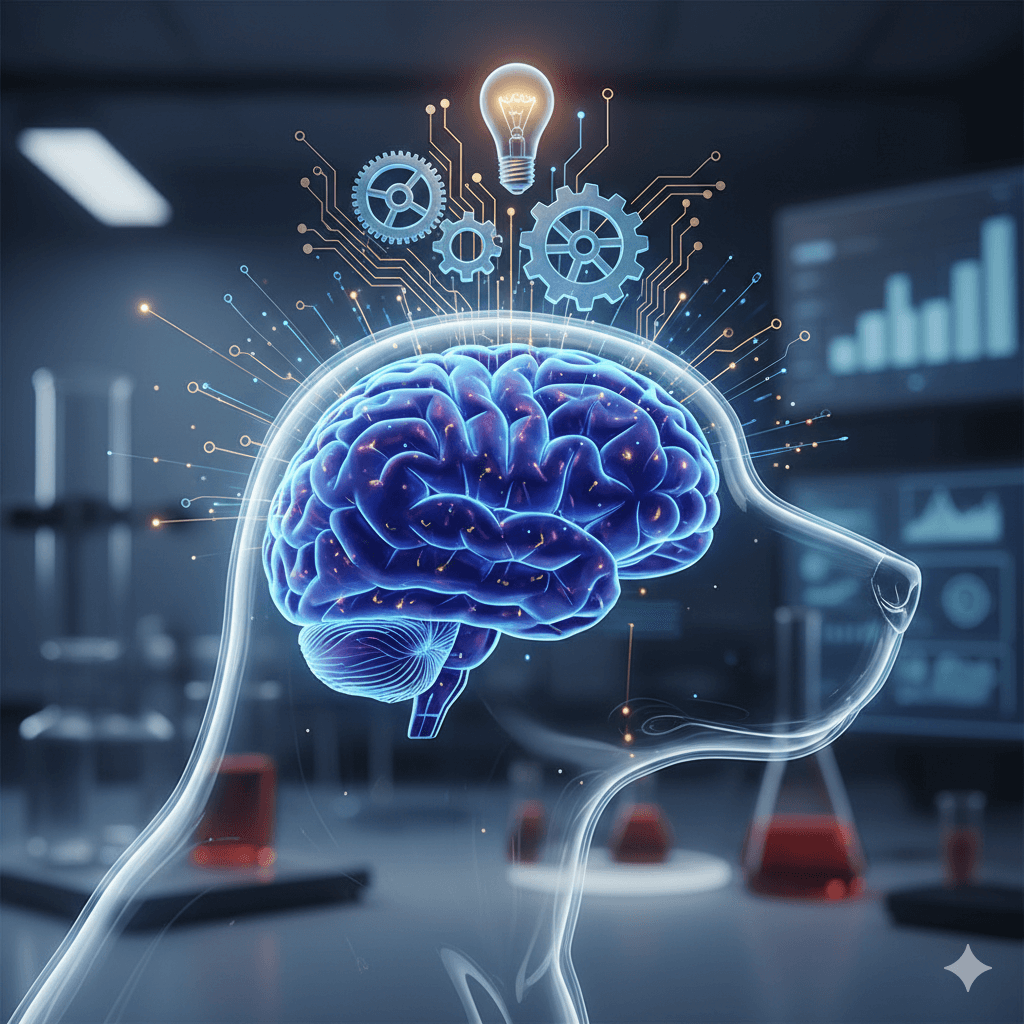
While smaller in size, a dog’s brain shares key functional similarities with the human brain, especially in areas governing emotion and social bonding. However, critical differences in structure and neuron density shape how dogs perceive, learn, and remember. Here’s what sets their cognitive hardware apart:
- Relative Brain Size:
A dog’s brain is about the size of a tangerine and weighs roughly 0.5% of their body mass—much smaller proportionally than a human’s (2%). - Cerebral Cortex Complexity:
Dogs have a smoother cerebral cortex with fewer folds than humans, indicating less capacity for abstract reasoning but strong sensory processing. - Neuron Count:
The average dog has around 500 million cortical neurons—far fewer than humans’ 16 billion—but more than cats (250 million), suggesting higher social intelligence. - Olfactory Bulb Dominance:
Up to 30% of a dog’s brain is dedicated to analyzing smells, making scent their primary way of interpreting the world. - Emotional Processing Centers:
Dogs possess a fully developed limbic system, allowing them to experience joy, fear, and attachment—though not complex emotions like guilt or pride.
These structural traits explain why dogs excel at reading human cues and navigating social environments, even if they can’t solve algebra.
Key Cognitive Abilities Linked to Brain Function
Dog brain capacity isn’t just about size—it’s about how neural networks support real-world skills. Research reveals impressive capabilities rooted in their neurobiology, especially in communication and memory:
- Social Cognition:
Dogs can interpret human gestures (like pointing) better than chimpanzees, thanks to evolutionary adaptation during domestication. - Short-Term Memory Span:
Dogs typically retain information for about 2 minutes—just enough to follow multi-step commands or recall where a toy was hidden briefly. - Emotional Contagion:
They sense and mirror human emotions through voice tone and facial expressions, a trait linked to mirror neuron activity. - Associative Learning:
Their brains excel at linking stimuli (e.g., leash = walk), forming habits quickly through classical and operant conditioning. - Problem-Solving in Context:
While not abstract thinkers, dogs can solve physical puzzles (like opening latches) when motivated by rewards or social interaction.
This blend of instinct and learned intelligence makes dogs uniquely attuned to life alongside humans.
Check this guide 👉Dog Brain Tumor Symptoms: Best 7 Expert Tips!
Check this guide 👉Dog Brain vs Human Brain: Best 7 Expert Tips!
Check this guide 👉Dog Ear Infection Spread to Brain: Best 7 Expert Tips!
Natural Strengths | Cognitive Limitations |
|---|---|
Reading human body language | Limited abstract reasoning |
Exceptional scent memory | Short attention span (5–15 min) |
Strong associative learning | Cannot grasp morality or deception |
Emotional empathy | Poor long-term episodic memory |
Rapid habit formation | Struggles with novel, non-social tasks |
Breed Differences in Brain Structure and Intelligence
Not all dog brains are the same—selective breeding has shaped cognitive strengths across breeds. Working and herding dogs often show enhanced problem-solving, while scent hounds prioritize olfactory processing over obedience:
- Border Collies & Poodles:
These breeds consistently rank highest in working and obedience intelligence, with denser neural pathways for complex commands. - Scent Hounds (e.g., Beagles):
Their brains allocate more resources to the olfactory bulb, sometimes at the expense of responsiveness to verbal cues. - Guardian Breeds (e.g., Mastiffs):
Exhibit strong independent judgment but may appear “slower” in training due to deliberate, cautious processing. - Terriers:
High prey drive correlates with quick visual processing and impulsive decision-making—useful for hunting, challenging for recall. - Toy Breeds (e.g., Chihuahuas):
Despite small brain size, many show high adaptive intelligence, learning household routines quickly.
Breed tendencies aren’t destiny—but they do reflect how evolution and human selection have molded canine cognition.
How Age Affects a Dog’s Brain Capacity
Just like humans, dogs experience cognitive changes as they age. From rapid neural development in puppies to potential decline in seniors, brain capacity is dynamic across the lifespan:
- Puppies (0–6 months):
Undergo explosive neural growth; brains are highly plastic, making this the prime window for socialization and foundational learning. - Adolescence (6–18 months):
The prefrontal cortex matures slowly, explaining impulsive or “teenage” behavior—even in well-trained dogs. - Adulthood (2–7 years):
Peak cognitive performance: memory, focus, and emotional regulation are at their strongest during these prime years. - Senior Dogs (7+ years):
Begin showing signs of cognitive decline in some cases, similar to mild dementia (Canine Cognitive Dysfunction). - Neuroplasticity Lifelong:
Even older dogs can form new neural connections through enrichment, proving mental exercise maintains brain health at any age.
Supporting brain development—or slowing decline—starts with understanding these natural phases.
Enhancing Your Dog’s Cognitive Health
You can’t change your dog’s brain size, but you can optimize its function through targeted mental stimulation and care. A “brain-healthy” lifestyle boosts memory, focus, and emotional resilience:
- Puzzle Toys & Food Dispensers:
Challenge problem-solving skills and slow eating, activating reward and reasoning centers simultaneously. - Novel Experiences:
New walking routes, safe dog meetups, or scent games stimulate neural growth by introducing unfamiliar inputs. - Consistent Training Sessions:
Short, positive-reinforcement drills strengthen neural pathways—just 10 minutes daily maintains cognitive sharpness. - Omega-3 Fatty Acids:
Diets rich in DHA (from fish oil) support neuron membrane health and may delay age-related decline. - Adequate Sleep:
Dogs need 12–14 hours of rest daily; sleep consolidates learning and clears metabolic waste from the brain.
Think of these as “brain vitamins”—simple habits with profound long-term benefits for your dog’s mental vitality.
Myths vs. Facts About Canine Intelligence
Popular beliefs about dog smarts often oversimplify or misrepresent their true cognitive capacities. Separating myth from science helps you set realistic, respectful expectations:
- Myth: “Smart” means obedient.
In reality, independence (e.g., in sighthounds) isn’t stupidity—it’s breed-specific problem-solving adapted to original tasks. - Myth: Dogs understand hundreds of words like toddlers.
Only exceptional individuals (like Border Collie “Chaser”) reach this level; most dogs know 20–50 words through association, not language. - Myth: Bigger dogs are smarter.
Brain size correlates weakly with intelligence; tiny Papillons often outperform large breeds in learning tasks. - Fact: Dogs read emotions better than most animals.
They distinguish happy vs. angry human faces and adjust behavior accordingly—a rare interspecies skill. - Fact: Intelligence is multidimensional.
A dog may excel in social smarts but struggle with object permanence, showing cognition isn’t a single “IQ” score.
Respecting your dog’s unique cognitive profile—rather than comparing them to an ideal—builds a more trusting relationship.
Enriching Your Dog’s Life Through Brain-Stimulating Activities
Just like humans, dogs thrive when their minds are engaged—mental exercise is as vital as physical activity for long-term well-being. Tailoring enrichment to your dog’s cognitive strengths not only prevents boredom but also reduces anxiety, curbs destructive behavior, and strengthens your bond. Whether your pup is a quick learner or prefers simple routines, these brain-boosting strategies can be adapted to any age, size, or breed:
- Scent Work Games:
Hide treats around the house or yard and encourage your dog to “find it”—this taps into their powerful olfactory system and satisfies natural foraging instincts. - Interactive Puzzle Toys:
Use toys that require sliding, flipping, or pawing to release food; these challenge problem-solving skills and slow down fast eaters. - Novel Command Training:
Teach fun tricks like “spin,” “high-five,” or “fetch a specific toy” to stimulate memory and strengthen communication pathways in the brain. - Controlled Social Exposure:
Arrange calm, positive meetups with familiar dogs or supervised human interactions to support emotional intelligence and social confidence. - Rotating Toy System:
Store toys in batches and rotate them weekly—novelty renews interest and prevents sensory habituation, keeping the brain alert.
Consistent mental engagement doesn’t just occupy your dog—it builds cognitive resilience that supports a happier, healthier life at every stage.
Frequently Asked Questions About Dog Brain Capacity
Do dogs have self-awareness?
Dogs fail the mirror test (a common self-awareness measure), suggesting they don’t recognize themselves visually—but they may have scent-based self-recognition.
Can dogs remember people after years?
Yes! Dogs form long-term emotional memories and often recognize former owners or friends after long separations.
Are mixed-breed dogs smarter than purebreds?
Not necessarily—intelligence depends more on individual genetics and early experience than pedigree status.
How many commands can a dog learn?
Average dogs learn 20–50 words; top performers (like Border Collies) have mastered over 1,000 through intensive training.
Does brain size predict intelligence?
No—neuron density and connectivity matter far more. A small-brained Poodle often outperforms a larger-brained Saint Bernard in learning tasks.
Nurturing the Brilliant Mind Behind Those Loving Eyes
Your dog’s brain may be the size of a lemon, but it’s packed with the neural machinery for loyalty, joy, and connection. Understanding dog brain capacity isn’t about measuring IQ—it’s about appreciating how they see, feel, and navigate the world on their own terms. By honoring their cognitive strengths and limitations, you create a life that’s not just safe, but deeply fulfilling. Whether through a well-timed puzzle toy, a calm voice during stress, or patience with their learning pace, you’re not just training a pet—you’re partnering with a sentient being whose mind evolved alongside ours for thousands of years. That’s not just intelligence—it’s a quiet, wagging kind of wisdom worth cherishing.

Is Rawhide Bad for Cats? Best 7 Expert Tips! – Discover the risks, safe alternatives, and expert advice to keep your feline friend healthy and happy.

Is Rawhide Bad for Dogs? Best 7 Expert Tips! – Discover the risks, benefits, and safer alternatives to rawhides for your dog’s chewing needs.

Understanding Anorexia in Cats: Best 7 Expert Tips! – Learn why cats stop eating, spot warning signs, and discover how to help your feline regain appetite safely.

Understanding Anorexia in Dogs: Best 7 Expert Tips! – Learn causes, symptoms, and solutions to help your dog regain appetite and stay healthy.