
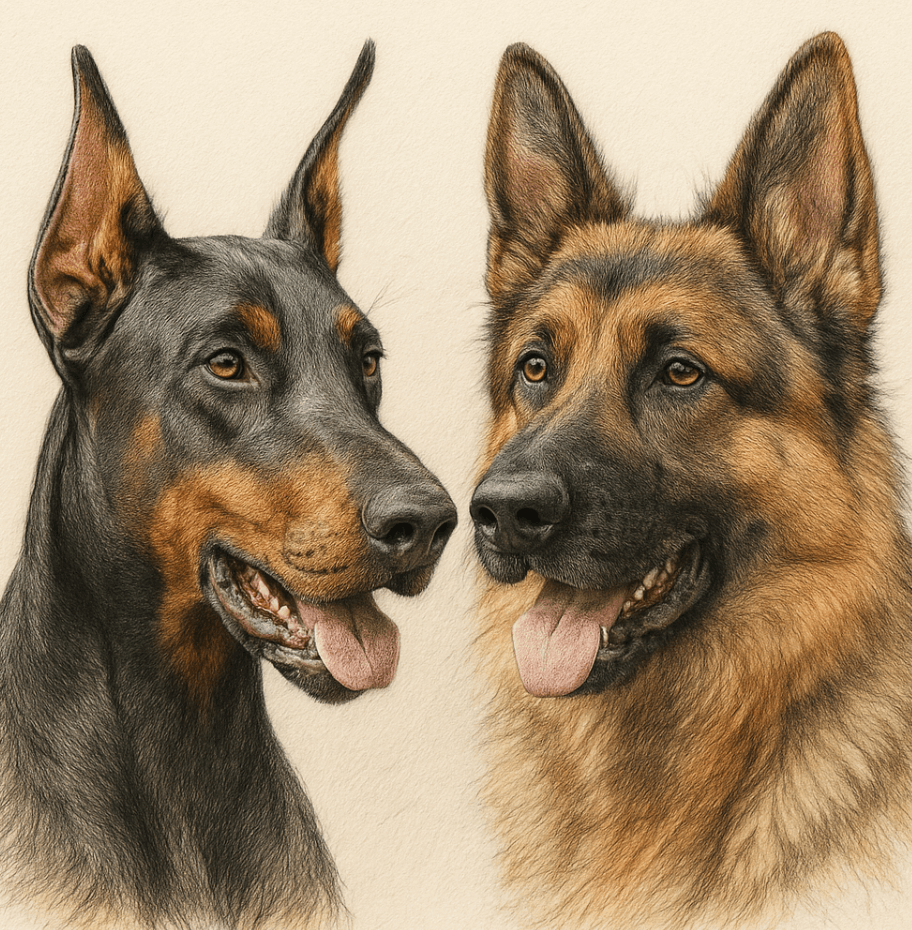

Doberman vs German Shepherd: Which Breed is Right for You?
When it comes to choosing a loyal, intelligent, and protective companion, both the Doberman Pinscher and the German Shepherd are top contenders. These iconic breeds share many similarities but also have distinct differences that make them better suited for different lifestyles. Whether you’re looking for a family pet, a working dog, or a steadfast guardian, understanding the unique traits of each breed is essential. In this blog post, we’ll compare the Doberman and the German Shepherd across various categories, from temperament to exercise needs, to help you decide which breed aligns best with your preferences and circumstances.
Temperament and Personality Differences
The temperament of a dog plays a crucial role in determining compatibility with your household. While both breeds are known for their loyalty and intelligence, their personalities differ in subtle yet significant ways.
Doberman Temperament:
Dobermans are often described as alert, confident, and eager to please. They form strong bonds with their families and thrive on companionship.German Shepherd Temperament:
German Shepherds are known for their calm, courageous, and highly trainable nature. They are often more reserved with strangers compared to Dobermans.Social Behavior:
Dobermans tend to be more people-oriented and enjoy being involved in family activities. German Shepherds, while affectionate, may prioritize guarding duties over socializing.Trainability:
Both breeds excel in training, but Dobermans are slightly more responsive due to their high energy and desire to engage with their owners.Protective Instincts:
German Shepherds have a natural instinct to protect, making them excellent guard dogs. Dobermans, while equally protective, are more likely to act as personal companions first.
Understanding these personality traits can help you choose the breed that best matches your lifestyle and expectations.
Physical Characteristics Compared
The physical appearance of a dog is often one of the first things potential owners consider. Here’s how the Doberman and German Shepherd stack up in terms of size, coat, and overall appearance.
Size and Build:
Dobermans typically stand 24-28 inches tall at the shoulder and weigh between 60-100 pounds. German Shepherds are slightly larger, standing 22-26 inches tall and weighing 50-90 pounds.Coat Type:
Dobermans have a short, sleek coat that requires minimal grooming. German Shepherds have a double coat that sheds heavily and needs regular brushing.Color Variations:
Dobermans are commonly black and tan, while German Shepherds come in a wider range of colors, including black and tan, sable, and all-black.Lifespan:
Both breeds have similar lifespans, averaging 9-13 years with proper care and nutrition.Energy Levels:
Both breeds are high-energy, but German Shepherds are often more endurance-driven, excelling in tasks requiring sustained activity.
These physical differences highlight the unique qualities of each breed, helping you decide based on aesthetics and maintenance preferences.
Check this guide 👉German Pinscher vs Doberman: Best 7 Expert Tips!
Check this guide 👉Cane Corso vs Rottweiler: Best 7 Expert Tips!
Check this guide 👉Rottweiler vs Mastiff: Best 7 Expert Tips!
Doberman Traits | German Shepherd Traits |
|---|---|
Short, low-maintenance coat | Double coat requiring frequent grooming |
Highly people-oriented | Naturally reserved with strangers |
Slightly taller and leaner build | Stockier and more muscular frame |
Eager-to-please attitude | Independent and task-focused mindset |
Ideal for active urban households | Better suited for spacious environments |
Exercise and Activity Needs
Both the Doberman and German Shepherd are high-energy breeds that require substantial physical and mental stimulation. However, their exercise preferences and requirements vary slightly.
Daily Exercise Requirements:
Dobermans need at least 1-2 hours of vigorous exercise daily, including runs, hikes, or agility training.Mental Stimulation:
Puzzle toys, obedience drills, and scent work keep a Doberman’s sharp mind engaged and prevent boredom-related behaviors.German Shepherd Energy:
German Shepherds also require 1-2 hours of exercise but excel in endurance-based activities like herding or search-and-rescue work.Interactive Playtime:
Both breeds enjoy games like fetch, tug-of-war, and frisbee, which strengthen the bond between dog and owner.Rest and Recovery:
Despite their energy levels, both breeds benefit from downtime to rest and recharge after intense activity sessions.
Meeting their exercise needs ensures a happy, healthy, and well-behaved companion regardless of the breed you choose.
Health Considerations for Each Breed
Like all purebred dogs, both the Doberman and German Shepherd are prone to certain health issues. Being aware of these risks allows you to take preventive measures and provide appropriate care.
Common Doberman Health Issues:
Dilated cardiomyopathy (DCM), von Willebrand’s disease (a bleeding disorder), and hip dysplasia are prevalent in Dobermans.Common German Shepherd Health Issues:
Hip and elbow dysplasia, degenerative myelopathy, and bloat are frequent concerns for German Shepherds.Lifespan Expectancy:
Both breeds live 9-13 years, but early detection of health problems through regular vet check-ups can extend their lifespan.Dietary Needs:
High-quality protein-rich diets support muscle development and overall health for both breeds.Preventive Care:
Regular exercise, weight management, and dental hygiene reduce the risk of breed-specific conditions.
Proactive healthcare ensures a longer, healthier life for your beloved pet.
Training Tips for Both Breeds
Training is essential for raising a well-behaved Doberman or German Shepherd. Their intelligence and eagerness to learn make them highly responsive to structured guidance.
Start Early:
Begin obedience training during puppyhood to establish good habits and prevent behavioral issues later.Use Positive Reinforcement:
Reward-based methods, such as treats, praise, and play, motivate both breeds effectively.Focus on Socialization:
Expose them to new people, animals, and environments early to foster confidence and reduce fear-based reactions.Incorporate Mental Challenges:
Advanced commands, agility courses, and puzzle toys keep their sharp minds engaged and prevent boredom.Be Consistent:
Clear rules and consistent enforcement ensure both breeds understand expectations and behave appropriately.
With patience and persistence, training becomes a rewarding experience that strengthens your bond.
Living Arrangements for Each Breed
Your living situation plays a significant role in determining whether a Doberman or German Shepherd is the right fit for your home.
Space Requirements:
German Shepherds thrive in homes with large yards, while Dobermans adapt better to smaller spaces like apartments.Climate Considerations:
Dobermans tolerate warmer climates better due to their short coats, while German Shepherds’ thick double coats suit cooler weather.Noise Levels:
Both breeds are relatively quiet but may bark to alert their owners of perceived threats or unusual activity.Family Dynamics:
Dobermans are more inclined to participate in family activities, while German Shepherds may focus on protective duties.Travel Friendliness:
Dobermans are often easier to travel with due to their lower grooming needs and adaptable nature.
Considering these factors ensures a harmonious living arrangement for both you and your dog.
Fun Activities to Enjoy with Your Dog
Both the Doberman and German Shepherd are versatile breeds that excel in various activities. Engaging in these fun pursuits strengthens your bond while keeping them physically and mentally stimulated.
Agility Training:
Set up obstacle courses to challenge their athleticism and problem-solving skills.Obedience Competitions:
Participate in events to showcase their intelligence and trainability.Search-and-Rescue Drills:
German Shepherds, in particular, shine in scent-based tasks, while Dobermans enjoy the mental engagement.Long Walks or Runs:
Explore trails together to burn off excess energy and enjoy quality time outdoors.Interactive Toys:
Puzzle feeders and treat-dispensing toys keep them entertained when you’re busy or unable to engage actively.
These activities ensure a fulfilling and active lifestyle for your energetic companion.
Frequently Asked Questions About Dobermans and German Shepherds
Which breed is better for families?
Both breeds can be great family pets, but Dobermans are often more affectionate and people-oriented, making them slightly better for families with children.
Are they good apartment dogs?
Dobermans adapt better to apartment living due to their leaner build and lower shedding, but both breeds require ample exercise regardless of space.
How much grooming do they need?
Dobermans need minimal grooming, while German Shepherds require regular brushing to manage heavy shedding.
Can they get along with other pets?
Proper socialization ensures both breeds can coexist peacefully with other animals, though German Shepherds may display stronger herding instincts.
Which breed is easier to train?
Both are highly trainable, but Dobermans may respond slightly faster due to their eagerness to please.
Choosing Between a Doberman and a German Shepherd
Deciding between a Doberman and a German Shepherd ultimately depends on your lifestyle, preferences, and ability to meet their needs. Both breeds offer unwavering loyalty, impressive intelligence, and protective instincts, but their differences in temperament, grooming requirements, and exercise preferences make them unique. By carefully considering these factors, you can find the perfect companion to enrich your life and create lasting memories. Whether you choose the sleek and sociable Doberman or the sturdy and steadfast German Shepherd, you’ll gain a devoted friend who will stand by your side through thick and thin.
Cat Anaphylactic Shock Treatment Costs: Best 7 Expert Tips! – Learn about costs, treatments, and financial aid options to save your cat’s life.
Exocrine Pancreatic Insufficiency in Cats: Best 7 Tips! – Learn to spot symptoms, manage EPI effectively, and improve your cat’s quality of life with expert advice.
Cost of Dog Anaphylactic Shock Treatment: Best 7 Tips! – Learn about emergency costs, financial planning, and ways to manage expenses for your dog’s care.
Exocrine Pancreatic Insufficiency in Dogs: Best 7 Tips! – Learn to spot symptoms, manage EPI effectively, and improve your dog’s quality of life with expert guidance.


