
Understanding Deer Tick vs Cat Tick Size: Best 7 Expert Tips!
When it comes to protecting your pets and family from tick-borne illnesses, knowing the difference between tick species matters—especially when comparing the tiny but dangerous deer tick to ticks commonly found on cats. While both can pose health risks, their size, appearance, and behavior differ in subtle but important ways. Misidentifying them could lead to missed prevention opportunities or delayed treatment. Whether you’ve found a tick on your cat or pulled one off after a hike, recognizing key distinctions helps you respond wisely. Understanding deer tick vs cat tick size empowers you to act quickly and accurately for your pet’s safety.
How to Identify a Deer Tick by Size and Appearance
Deer ticks (also known as black-legged ticks) are among the smallest disease-carrying ticks in North America. Their miniature size—especially in the nymph stage—makes them easy to overlook, yet they’re notorious for transmitting Lyme disease, anaplasmosis, and babesiosis. Accurate identification starts with observing their physical traits under good lighting or with a magnifying glass:
- Adult Deer Tick Size:
Adults measure about 3–3.5 mm before feeding—roughly the size of a sesame seed—and expand to 10 mm when engorged. - Nymph Stage Dimensions:
Nymphs are extremely small, only 1–2 mm, resembling a poppy seed, and are most active in spring and early summer. - Color and Leg Markings:
They have a reddish-orange body with a dark brown or black shield (scutum) and eight black legs with distinctive whitish tips. - Mouthpart Visibility:
Their mouthparts are relatively long and visible from above, unlike some other tick species. - Body Shape When Unfed:
Flat and oval when not feeding, with a smooth, uniform edge around the body.
Because of their minuscule size, deer ticks often attach unnoticed, making regular tick checks essential after outdoor exposure—especially in wooded or grassy areas.
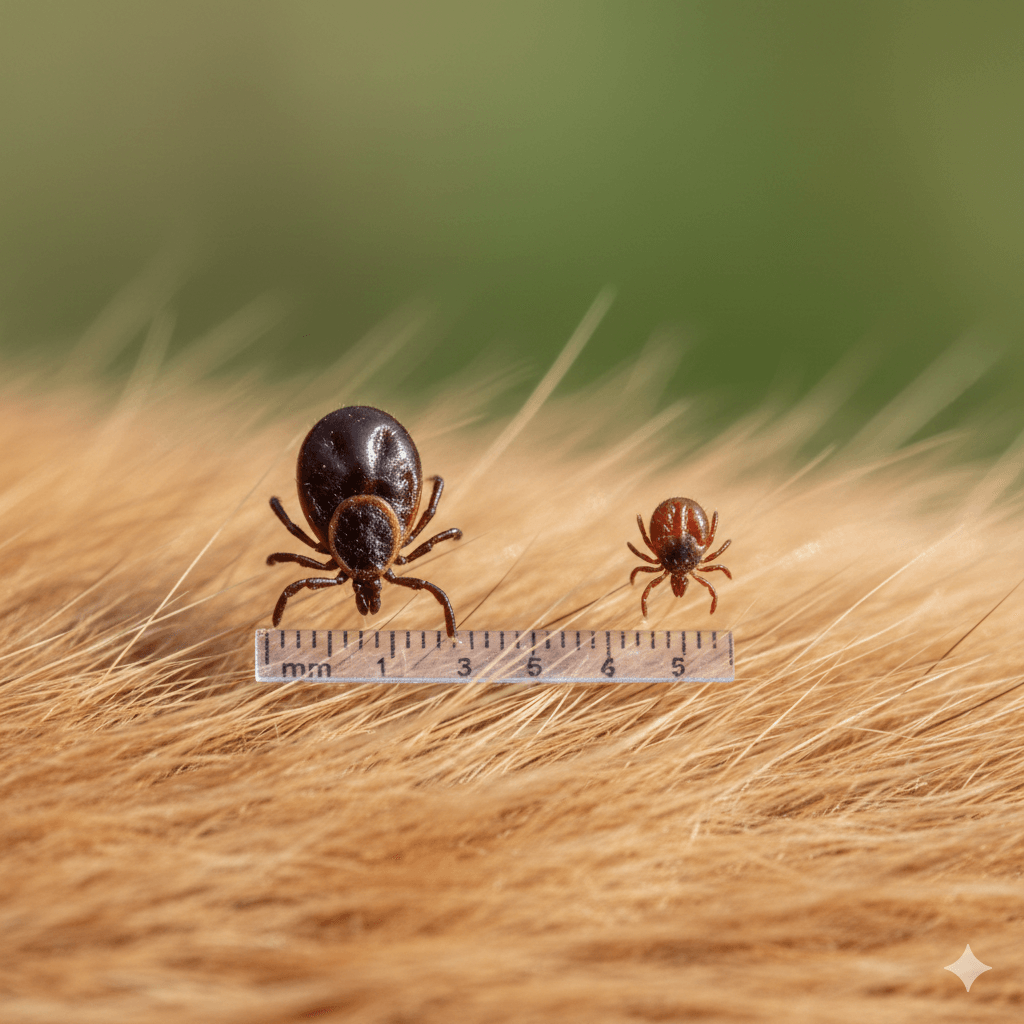
Common Ticks Found on Cats and Their Typical Size
Cats can host several tick species depending on geography and lifestyle, but the most frequently encountered include the American dog tick, lone star tick, and occasionally the brown dog tick. While “cat tick” isn’t a scientific term, these species commonly latch onto felines and differ noticeably from deer ticks in size and structure:
- American Dog Tick Size:
Unfed adults are larger—about 5 mm—and can swell to over 15 mm when fully engorged, making them easier to spot. - Lone Star Tick Characteristics:
Slightly smaller than dog ticks (4–5 mm unfed), females have a single white dot on their back, and they’re aggressive biters. - Brown Dog Tick Dimensions:
Around 3–4 mm when unfed, reddish-brown, and unique for completing their entire life cycle indoors—common in homes with pets. - Larval and Nymph Stages on Cats:
Immature ticks may be 1 mm or less, appearing as tiny dark specks, often found around ears, neck, or between toes. - Engorged Tick Appearance on Cats:
After feeding, ticks become grayish-blue and balloon-like, sometimes mistaken for skin growths or scabs.
Because cats groom meticulously, ticks are often found in protected areas like the face, ears, or armpits—where licking can’t easily remove them.
Check this guide 👉How Big Are Cat Ticks: Best 7 Expert Tips!
Check this guide 👉Understanding Cat Tick Disease: Best 7 Expert Tips!
Check this guide 👉Understanding Deer Tick on Cat Symptoms: Best 7 Expert Tips!
Deer Tick Features | Common Cat-Associated Tick Traits |
|---|---|
1–3.5 mm unfed (nymphs extremely tiny) | 3–5 mm unfed; generally larger and more visible |
Reddish body with black legs and scutum | Varied color: brown, tan, or with white markings |
High Lyme disease transmission risk | Lower Lyme risk; may carry Rocky Mountain spotted fever or tularemia |
Prefers humid, wooded habitats | Found in grass, trails, or even indoor environments (brown dog tick) |
Mouthparts clearly visible from above | Mouthparts less prominent; body appears more rounded |
Why Size Matters in Tick Identification and Risk Assessment
Size isn’t just about visibility—it directly impacts disease risk and removal difficulty. Smaller ticks, like deer tick nymphs, feed longer undetected, increasing pathogen transmission chances. Larger ticks may be spotted and removed sooner, reducing exposure time. Understanding these nuances helps you prioritize which ticks warrant immediate veterinary testing or preventive action:
- Transmission Time Correlation:
Deer ticks typically need 24–48 hours of attachment to transmit Lyme bacteria—small size delays detection. - Removal Challenges:
Tiny ticks require fine-tipped tweezers and good lighting; improper removal can leave mouthparts embedded. - Geographic Risk Mapping:
Deer ticks dominate in the Northeast, Midwest, and parts of the West Coast; other ticks vary by region. - Pet Behavior Influence:
Outdoor cats in tick-prone zones are more likely to encounter deer ticks, while indoor cats may face brown dog ticks. - Seasonal Activity Patterns:
Nymph-stage deer ticks peak in spring/summer (when they’re smallest), aligning with high human and pet exposure.
Recognizing that smaller doesn’t mean less dangerous is crucial—especially when it comes to deer ticks and their disproportionate disease potential.
Best Practices for Tick Checks on Cats After Outdoor Exposure
Even indoor-outdoor cats need thorough tick inspections, particularly during peak tick season (spring through fall). Focus on hidden areas where ticks burrow to avoid grooming, and use proper tools to avoid injury or incomplete removal:
- Use a Fine-Toothed Comb:
Gently comb through fur, especially around the head, ears, neck, and under the legs, where ticks often hide. - Part the Fur Methodically:
Use your fingers to separate hair in sections under bright light; look for tiny dark dots or raised bumps. - Check Between Toes and Tail Base:
Ticks commonly attach in these less-groomed zones—don’t skip paw pads or the underside of the tail. - Avoid Squeezing or Burning:
Never use matches, alcohol, or fingers to remove ticks—this can inject more pathogens into the skin. - Save the Tick for Identification:
Place it in a sealed bag with a damp cotton ball; your vet can test it for diseases if symptoms arise.
Daily checks drastically reduce the chance of prolonged attachment and disease transmission—especially critical with nearly invisible deer tick nymphs.
Prevention Strategies to Reduce Tick Exposure in Cats
While no method is 100% foolproof, combining approaches significantly lowers your cat’s risk of tick bites. Always choose feline-safe products, as many dog tick preventives are toxic to cats:
- Use Vet-Approved Tick Preventives:
Topical or collar-based options like fipronil or (in some regions) fluralaner are formulated specifically for cats. - Limit Outdoor Roaming in Peak Seasons:
Restrict free-roaming during spring and early summer when nymphs are most active and hardest to spot. - Maintain a Tick-Unfriendly Yard:
Keep grass short, remove leaf litter, and create barriers (like gravel paths) between lawns and wooded areas. - Treat the Environment if Needed:
In high-risk areas, ask your vet about safe yard sprays or tick tubes that target rodent carriers. - Never Use Dog Products on Cats:
Permethrin and similar ingredients in canine tick treatments can cause fatal seizures in felines.
Consistent prevention is far safer than dealing with tick-borne illness—especially when tiny deer ticks are in your area.
What to Do If You Find a Tick on Your Cat
Finding a tick can be alarming, but calm, correct action minimizes harm. The goal is complete removal without stressing your cat or damaging the tick:
- Stay Calm and Restrain Gently:
Wrap your cat in a towel if needed to prevent squirming during removal. - Use Proper Tick Removal Tools:
Fine-tipped tweezers or a tick hook should grasp the tick as close to the skin as possible. - Pull Straight Up with Steady Pressure:
Avoid twisting or jerking, which can leave mouthparts behind and increase infection risk. - Clean the Bite Site Afterward:
Disinfect with mild antiseptic and monitor for redness, swelling, or scabbing over the next week. - Monitor for Illness Symptoms:
Watch for lethargy, fever, limping, or loss of appetite in the following 2–4 weeks—signs of tick-borne disease.
If you’re unsure about removal or suspect it’s a deer tick, consult your veterinarian immediately for guidance or testing.
Special Considerations for Indoor Cats and Tick Exposure
Even strictly indoor cats aren’t immune—ticks can hitchhike indoors on clothing, shoes, or other pets. The brown dog tick is especially adept at establishing indoor infestations, but deer ticks can also be carried inside:
- Human Clothing as Vectors:
A walk in the woods can bring deer ticks into your home, where they may seek a new host—including your cat. - Multi-Pet Households Increase Risk:
Dogs that go outside can transport ticks to indoor cats during close contact or shared bedding. - Window or Balcony Access:
Cats near open windows or screened porches in tick zones may encounter questing ticks on vegetation. - Indoor Tick Life Cycles:
Brown dog ticks can lay eggs in cracks, carpets, or furniture, leading to recurring infestations. - False Sense of Security:
Assuming “indoor = safe” delays detection; occasional tick checks are still wise for all cats.
Never assume your cat is safe just because they don’t go outside—vigilance protects even the most homebound felines.
“Adult deer ticks are about 3 mm (1/8 in) and dark brown to black in color. Females typically are an orange to red color behind the scutum.” – Michael R. Patnaude & Thomas N. Mather
Frequently Asked Questions About Deer Tick vs Cat Tick Size
Are deer ticks smaller than other ticks found on cats?
Yes—especially in the nymph stage (1–2 mm), deer ticks are significantly smaller than adult American dog ticks or lone star ticks commonly found on cats.
Can I tell a deer tick apart from other ticks just by size?
Size helps, but it’s not definitive; combine size with color, leg markings, and body shape for accurate identification.
Do all ticks on cats carry disease?
No, but deer ticks have a high association with Lyme disease, while others may carry different pathogens—testing is the only way to know.
How can I safely measure a tick I found?
Place it next to a ruler with millimeter markings or compare it to a poppy seed (1 mm) or sesame seed (3 mm) for rough sizing.
Should I worry if my cat has a tiny tick?
Yes—especially if you live in a Lyme-endemic area. Small size often means higher risk due to delayed detection.
Protecting Your Cat from Hidden Threats, One Tick at a Time
Ticks may be small, but their impact can be enormous—especially when a nearly invisible deer tick carries a serious illness. By learning to distinguish deer tick vs cat tick size, you gain a powerful tool in your pet care toolkit. This knowledge doesn’t just help you identify risks; it empowers you to act swiftly, prevent exposure, and advocate for your cat’s health with confidence. Whether your feline friend roams forests or stays cozy on the couch, your vigilance creates a safer world for them. In the quiet moments of checking their fur, you’re not just removing a pest—you’re offering peace of mind, one careful inspection at a time.

Is Rawhide Bad for Cats? Best 7 Expert Tips! – Discover the risks, safe alternatives, and expert advice to keep your feline friend healthy and happy.

Is Rawhide Bad for Dogs? Best 7 Expert Tips! – Discover the risks, benefits, and safer alternatives to rawhides for your dog’s chewing needs.

Understanding Anorexia in Cats: Best 7 Expert Tips! – Learn why cats stop eating, spot warning signs, and discover how to help your feline regain appetite safely.

Understanding Anorexia in Dogs: Best 7 Expert Tips! – Learn causes, symptoms, and solutions to help your dog regain appetite and stay healthy.