
Cuterebra Larvae in Cats: Best 7 Expert Tips!

Cuterebra Larvae in Cats: Best 7 Expert Tips!

Cuterebra Larvae in Cats: A Sneaky Summer Threat

If you’ve noticed a strange lump or breathing issue in your feline friend—especially after outdoor time—you might be dealing with something unexpected: Cuterebra larvae. These parasitic fly larvae usually target rodents and rabbits but can accidentally infest cats, leading to serious health concerns. While rare, these infestations are more common in warm months and rural or wooded areas. Early recognition and prompt veterinary care are key to a full recovery. Let’s explore what every cat owner should know about this unusual but treatable condition.

What Is Cuterebra and How Does It Infect Cats?


Cuterebra is a genus of large, non-biting flies native to the Americas. Their larvae typically develop inside wild hosts like squirrels or rabbits—but curious or hunting cats can become accidental hosts, often with alarming results.

 
  • Egg deposition near burrows:
    Female flies lay eggs near rodent tunnels or paths; when a warm body (like a passing cat) triggers them, the eggs hatch instantly.
     
  • Entry through natural openings:
    Larvae crawl into the nose, mouth, or even open wounds—then migrate through tissues to find a spot to mature.
     
  • Migration phase:
    The larva may travel under the skin or through internal organs before settling, usually near the head, neck, or torso.
     
  • Formation of a warble:
    Once settled, it creates a small breathing hole in the skin—a swollen lump with a visible pore, often oozing fluid.
     
  • Accidental infestation:
    Cats aren’t natural hosts, so the larva often gets “lost,” leading to unusual symptoms depending on its location.
 

Though distressing, most cases are treatable when caught early—but knowing how infection happens is the first step to prevention.

Cuterebra Larvae in Cats: Best 7 Expert Tips!

Common Signs of Cuterebra Infestation in Cats


Symptoms vary widely based on where the larva migrates. Some cats show mild skin lumps; others develop severe neurological or respiratory issues.

 
  • Skin warble with a central hole:
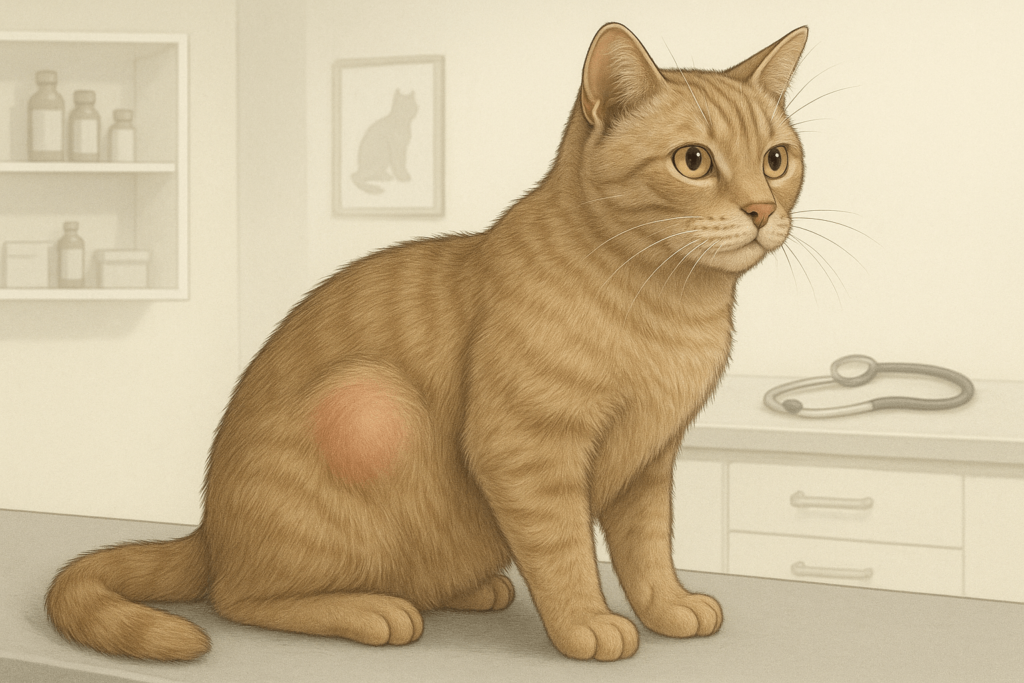
    A firm, round swelling—often on the neck or face—with a small opening that may secrete fluid or pus.
     
  • Sneezing, nasal discharge, or facial swelling:
    If the larva entered through the nose and remains in the nasal passages or sinuses.
     
  • Neurological signs (rare but serious):
    Seizures, circling, blindness, or loss of coordination if the larva migrates into the brain or spinal cord.
     
  • Respiratory distress:
    Coughing, wheezing, or labored breathing if the larva lodges in the trachea or lungs.
     
  • Lethargy, reduced appetite, or fever:
    General signs of inflammation or systemic stress due to the foreign invader.
 

If your cat exhibits any of these—especially after outdoor exposure—contact your vet immediately. Delaying care can lead to irreversible damage.

Early Warning Signs High-Risk Situations
Small lump with a pore on skin Cats that hunt or roam near rodent burrows
Persistent sneezing or nasal drip Outdoor access during summer/fall
Head tilt or unusual eye movement Kittens or young cats (more curious)
Lethargy after outdoor excursion Rural or wooded neighborhood locations
Oozing from a skin opening History of previous parasitic issues

Diagnosis: How Vets Confirm Cuterebra Infestation


Veterinarians use a combination of physical signs, history, and diagnostics to identify Cuterebra—since symptoms can mimic other conditions like abscesses or tumors.

 
  • Physical examination of the lump:
    A warble with a breathing hole is often diagnostic on sight—never attempt to squeeze or remove it yourself.
     
  • Imaging (X-rays or CT scans):
    Used if neurological or respiratory symptoms suggest internal migration.
     
  • Neurological evaluation:
    Assesses coordination, reflexes, and vision if brain involvement is suspected.
     
  • Rhinoscopy or endoscopy:
    May be used to visualize larvae in nasal passages or airways.
     
  • Rule-outs for other conditions:
    Tests may exclude fungal infections, cancer, or dental abscesses that present similarly.
 

Accurate diagnosis ensures the larva is removed safely and complications are minimized.

Treatment Options and Veterinary Care


Treatment depends entirely on the larva’s location and whether it’s still alive. Never try to extract it at home—this can cause severe inflammation or anaphylaxis.

 
  • Surgical removal of intact larva:
    The gold standard—done under sedation to remove the larva whole through its breathing pore.
     
  • Antibiotics and anti-inflammatories:
    Prescribed to prevent secondary infection and reduce swelling around the site.
     
  • Supportive care for neurological cases:
    Includes fluids, steroids, and monitoring—though outcomes vary if the brain is affected.
     
  • Wound cleaning and follow-up:
    The warble site is flushed and may need rechecks to ensure proper healing.
     
  • Hospitalization for severe cases:
    Cats with breathing issues or seizures often need intensive care until stable.
 

With timely intervention, most cats recover fully—especially when the larva is removed before it causes deep tissue damage.

What NOT to Do If You Suspect Cuterebra


Well-meaning actions can turn a manageable issue into a medical emergency. Avoid these common mistakes.

 
  • Poking or squeezing the lump:
    This can rupture the larva, releasing antigens that trigger severe allergic or inflammatory reactions.
     
  • Using tweezers or home extraction tools:
    Incomplete removal leaves parts behind, leading to chronic infection or granuloma formation.
     
  • Applying alcohol, peroxide, or ointments:
    These irritate the site and may drive the larva deeper into tissues.
     
  • Ignoring subtle symptoms:
    Even mild sneezing or a small bump after outdoor time warrants a vet check during fly season.
     
  • Assuming it’s “just a bug bite”:
    Cuterebra warbles don’t behave like typical insect bites—they persist and often grow.
 

When in doubt, call your vet. Observation is safer than intervention without expertise.

Prevention Strategies for Cat Owners


While no method is 100% foolproof, these steps significantly reduce your cat’s risk—especially during peak fly season (late summer to early fall).

 
  • Limit outdoor access during high-risk months:
    Keep cats indoors from July through October in endemic areas.
     
  • Supervise outdoor time or use a catio:
    Controlled environments prevent contact with rodent burrows where eggs are laid.
     
  • Discourage hunting behavior:
    Use toys and enrichment to satisfy predatory instincts without real prey exposure.
     
  • Regularly inspect your cat’s skin and face:
    Check for new lumps, especially after outdoor excursions.
     
  • Seal gaps near your home’s foundation:
    Reduce rodent activity near your house, which in turn reduces fly egg-laying sites.
 

Prevention is far easier—and kinder—than treating an infestation after it occurs.


Long-Term Outlook and Recovery


Most cats with skin-only Cuterebra infestations heal completely within 1–2 weeks after larval removal. However, internal cases require more caution.

 
  • Skin warble recovery:
    Clean, uncomplicated sites close on their own; scarring is minimal with proper care.
     
  • Neurological cases:
    May leave residual deficits like a head tilt—but many cats adapt well and live full lives.
     
  • Respiratory involvement:
    Usually resolves once the larva is removed, though secondary pneumonia may need treatment.
     
  • No immunity after infection:
    Cats can be reinfested, so ongoing prevention remains essential.
     
  • Emotional recovery:
    Stress from illness or vet visits may temporarily affect behavior—extra comfort helps.
 

With love, vigilance, and veterinary support, the vast majority of cats bounce back stronger than ever.

Frequently Asked Questions

Can Cuterebra larvae spread to humans?

Direct transmission from cats to humans is extremely rare. Humans can become accidental hosts only through direct exposure to eggs in the environment—not from pets.

The larval stage lasts 3–6 weeks. If undisturbed, it eventually exits to pupate—but veterinary removal is always safer.

Very low risk—but not zero. Larvae can enter homes via open doors or on clothing if you’ve been near infested areas.

Most skin cases require minor sedation and a small incision—not full surgery. Internal cases may need advanced procedures.

No. Standard preventatives don’t repel Cuterebra flies. Physical prevention (keeping cats indoors) is the only reliable method.

Final Thoughts – Vigilance, Care, and Peace of Mind


Cuterebra infestation in cats is uncommon but unforgettable when it happens. By understanding how it occurs, recognizing the subtle signs, and acting quickly, you can protect your feline companion from serious complications. More than anything, this condition reminds us how deeply connected our pets are to the natural world—even in our backyards. With thoughtful prevention, prompt care, and a trusted vet by your side, your cat can stay safe, healthy, and happily scratch-free all year long.

Cuterebra Larvae in Cats: Best 7 Expert Tips!

Cuterebra Larvae in Cats: Best 7 Expert Tips! – Expert advice on signs, treatment & prevention of this rare but serious feline parasitic infestation.

Cuterebra Larvae in Dogs: Best 7 Expert Tips!

Cuterebra Larvae in Dogs: Best 7 Expert Tips! – Expert advice on signs, treatment & prevention of this rare but serious parasitic infestation.

Cat Tumor on Paw: Best 7 Expert Tips!

Cat Tumor on Paw: Best 7 Expert Tips! – Expert advice on signs, diagnosis, treatment & care for feline paw tumors.

Panacur Side Effects in Dogs: Best 7 Expert Tips!

Panacur Side Effects in Dogs: Best 7 Expert Tips! – Safe usage, common reactions & when to call the vet.

Leave a Reply

Your email address will not be published. Required fields are marked *

Post Category