
Cuban Dog Breeds: Rare Roots and Island Resilience
Cuba may not be known as a global hub for dog breeding, but its canine heritage reflects centuries of adaptation, isolation, and cultural fusion. From hardy street dogs shaped by survival to rare native types cherished by locals, Cuban dog breeds embody resilience and quiet charm. While not many are formally recognized internationally, their stories offer a fascinating glimpse into island life and loyalty. Whether you’re a dog enthusiast or simply curious about Cuba’s four-legged residents, understanding these breeds reveals a unique side of Caribbean history.
Historical Background of Cuban Canines
Long before modern kennel clubs, dogs arrived in Cuba with colonizers, traders, and settlers—then evolved through necessity and environment. The island’s tropical climate, limited resources, and relative isolation created distinct types rarely seen elsewhere. These dogs weren’t bred for shows but for function, companionship, and survival in a changing world.
- Colonial Introductions:
Spanish conquistadors and European settlers brought mastiff-type dogs and small terriers to Cuba as early as the 1500s, laying the genetic foundation for local mixes. - Role in Agriculture and Guarding:
Dogs were used on sugar plantations and farms to guard property and control rodents, favoring hardiness over appearance. - Influence of the Cuban War of Independence:
During wartime, many purebred lines disappeared, leaving behind resilient mongrels that adapted to urban and rural life alike. - 20th-Century Isolation:
Cuba’s political shifts limited new breed imports, allowing street dogs—now called “perros callejeros cubanos”—to develop unique traits over generations. - Cultural Symbolism:
Though rarely celebrated in official records, local dogs appear in Cuban art, music, and folklore as symbols of loyalty and street-smart survival.
Today’s Cuban dogs are less about pedigrees and more about endurance—living testaments to an unbroken bond between people and their unofficial island companions.
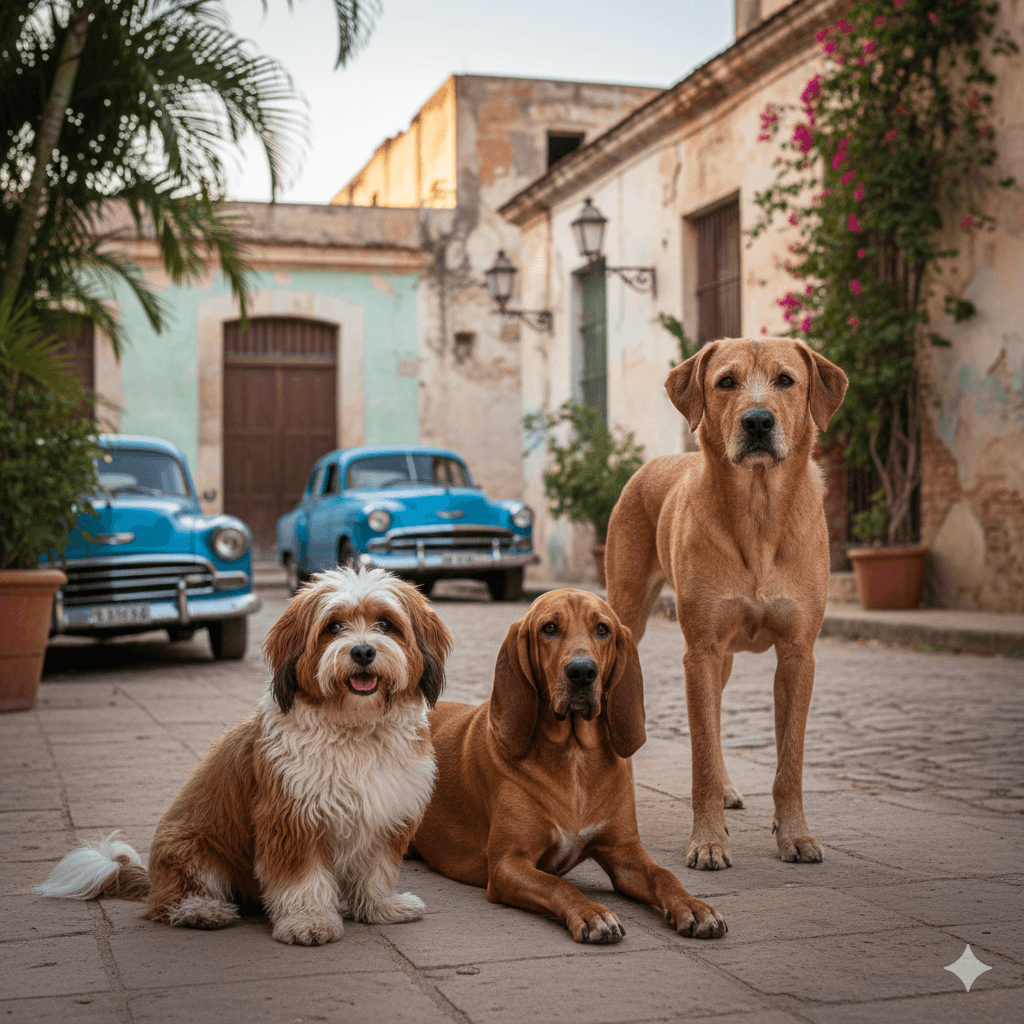
The Cuban Street Dog: Cuba’s Unofficial Native Breed
While not a standardized breed, the Cuban street dog is widely considered the island’s de facto native canine. Often medium-sized, lean, and highly intelligent, these dogs thrive despite limited resources and showcase remarkable adaptability.
- Physical Characteristics:
Typically 30–50 pounds, with short coats in tan, black, or brindle, upright ears, and a whip-like tail—built for heat tolerance and agility. - Temperament and Behavior:
Alert, cautious with strangers, yet deeply loyal to those who earn their trust; many display strong protective instincts. - Health and Hardiness:
Naturally selected for disease resistance, they often enjoy robust health with minimal veterinary care—though parasites remain a common challenge. - Social Structure:
In cities like Havana, street dogs often form loose packs, displaying complex social behaviors and territory awareness. - Recognition Efforts:
Some Cuban animal advocates are documenting and promoting these dogs as a cultural treasure, though formal breed recognition remains unlikely.
More than just strays, these dogs represent a living lineage shaped entirely by Cuban soil, climate, and community.
Check this guide 👉Understanding Dominican Dog Breeds: Best 7 Expert Tips!
Check this guide 👉Nordic Dog Breeds: Best 7 Expert Tips!
Check this guide 👉Jamaican Dog Breeds: Best 7 Expert Tips!
Traits of Cuban Street Dogs | Care Considerations for Adopters |
|---|---|
Naturally lean and athletic build | Transition slowly to commercial food to avoid digestive upset |
High environmental awareness | Needs patience and trust-building; not immediately “family-ready” |
Low grooming needs due to short coat | Check thoroughly for ticks, fleas, and ear mites upon rescue |
Intelligent but independent mindset | Positive reinforcement works best; avoid forceful training |
Adaptable to heat and sparse resources | May struggle in cold climates—provide warmth in winter |
The Havanese: Cuba’s Only Internationally Recognized Breed
Despite Cuba’s limited dog-breeding history, one breed proudly carries the nation’s name worldwide: the Havanese. As the national dog of Cuba and the only native breed recognized by major kennel clubs, it’s a symbol of Cuban elegance and charm.
- Royal and Aristocratic Roots:
Originating in the 18th century, the Havanese was favored by Cuban elites and European nobility alike for its silky coat and affectionate nature. - Near Extinction and Revival:
After the Cuban Revolution, few Havanese remained on the island; most survived through dogs taken to the U.S. and Europe, where breeding programs preserved the lineage. - Distinctive Appearance:
With long, wavy, non-shedding hair, expressive eyes, and a springy gait, the Havanese looks like a tiny, cheerful ambassador of tropical grace. - Personality and Companionship:
Known for being playful, social, and deeply attached to their humans, they thrive on attention and dislike being left alone. - Modern Popularity:
Today, the Havanese is a beloved companion worldwide and a testament to Cuba’s cultural influence beyond politics and music.
Though small in stature, the Havanese carries the spirit of old Havana—refined, joyful, and impossible to ignore.
Other Canine Types Found in Cuba
Beyond the street dog and the Havanese, Cuba hosts a mix of imported and hybrid types that contribute to its canine mosaic. These aren’t native breeds but are commonly seen and culturally woven into daily life.
- German Shepherds and Dobermans:
Brought in for police and military work, these breeds are often seen in government or security roles across Cuban cities. - Small Terrier Mixes:
Descendants of European imports, these feisty, compact dogs are common in rural areas, used for ratting and companionship. - Sight Hounds (Local “Greyhounds”):
Lean, fast dogs resembling Podencos or Italian Greyhounds appear in hunting communities, though rarely purebred. - Mixed-Breed Village Dogs:
In the countryside, free-roaming dogs of indeterminate origin serve as farm guardians and family pets, valued for utility over looks. - Recent Imported Breeds:
In limited numbers, breeds like Poodles or Cocker Spaniels appear in urban homes of those with access to international travel or trade.
While not “Cuban breeds” in the genetic sense, these dogs reflect the island’s layered history of connection and adaptation.
Adoption and Preservation Efforts in Modern Cuba
Animal welfare in Cuba faces challenges—limited veterinary access, few shelters, and economic hardship—but passionate locals are working to change that. Efforts to protect and understand native canine types are growing, driven by love rather than profit.
- Grassroots Rescue Groups:
Volunteers in Havana and other cities feed, spay/neuter, and rehome street dogs, often using social media to connect with international supporters. - Educational Campaigns:
Programs aim to shift public perception from seeing street dogs as pests to recognizing them as part of Cuba’s living heritage. - Veterinary Collaboration:
Cuban vets, often working with donated supplies, provide basic care and advocate for humane population control. - Cultural Documentation:
Photographers, writers, and filmmakers are highlighting the lives of Cuban dogs to foster empathy and preservation. - International Adoption Pathways:
Some rescued Cuban dogs find forever homes abroad, though export requires health checks, paperwork, and patience.
These efforts may not create a new kennel club breed—but they honor the dignity of Cuba’s dogs and their quiet role in everyday life.
Challenges Facing Cuban Dog Populations
Despite their resilience, Cuba’s dogs face systemic obstacles that threaten their well-being and long-term survival as a distinct population. Awareness is the first step toward change.
- Limited Access to Veterinary Care:
Vaccines, dewormers, and emergency treatments are often scarce or unaffordable for average citizens. - Food Scarcity:
Many dogs rely on scraps or handouts, leading to malnutrition despite their apparent hardiness. - Lack of Spay/Neuter Infrastructure:
Overpopulation remains a key issue, with few low-cost sterilization options available island-wide. - Climate and Parasite Pressure:
Humidity and heat create ideal conditions for mange, ticks, and internal parasites year-round. - Legal and Social Ambiguity:
Street dogs exist in a gray zone—tolerated but not protected by strong animal welfare laws.
Addressing these challenges requires both local commitment and global awareness, especially as Cuba slowly opens to more international collaboration.
What Travelers and Dog Lovers Should Know
If you’re visiting Cuba or considering adopting a Cuban dog, approach with respect, preparation, and cultural sensitivity. These dogs are not “exotic souvenirs” but individuals shaped by unique circumstances.
- Observe, Don’t Intrude:
Many street dogs are wary but not aggressive; avoid sudden gestures or feeding without understanding local norms. - Support Ethical Rescues:
If you wish to help, donate to verified Cuban animal groups rather than attempting impromptu rescues. - Adoption Requires Patience:
Bringing a Cuban dog abroad involves health certifications, microchipping, and strict import rules—start early. - The Havanese Abroad Isn’t “More Cuban”:
Modern Havanese outside Cuba are show-bred; the true Cuban spirit often lives more vividly in street dogs. - Celebrate Their Story:
Sharing respectful stories and photos (without exploitation) helps raise global awareness of Cuba’s canine legacy.
Cuban dogs ask for little—but deserve recognition, compassion, and a place in the narrative of this vibrant island nation.
Frequently Asked Questions About Cuban Dog Breeds
Is there really a native Cuban dog breed?
Yes—the Havanese is Cuba’s only internationally recognized native breed. The Cuban street dog is an unofficial but culturally significant type.
Can I adopt a dog from Cuba?
It’s possible but complex, requiring health checks, export permits, and compliance with your country’s import laws—work with a reputable rescue.
Are Cuban street dogs aggressive?
Generally no—they’re cautious due to survival instincts but often gentle with kind humans who earn their trust.
Why aren’t Cuban street dogs recognized as a formal breed?
They lack standardized genetics and closed breeding records, though they share common adaptive traits developed over generations.
Do Havanese dogs still live in Cuba today?
Yes, though rare. Most modern Havanese are bred abroad, but small populations remain in Havana and other cities, often as family pets.
Honoring Cuba’s Canine Legacy
Cuban dog breeds—or more accurately, Cuban canine types—may not grace dog shows or dominate social media, but they carry a quiet dignity born of survival, adaptation, and unspoken loyalty. From the elegant Havanese dancing through colonial courtyards to the watchful street dog napping in a sunlit alley, each embodies a piece of Cuba’s soul. Their stories remind us that not all heritage is formalized—and that sometimes, the most authentic breeds are those shaped not by humans, but by time, place, and resilience. In honoring them, we honor Cuba itself: vibrant, enduring, and full of heart.

Understanding Cryptosporidium in Cats: Best 7 Expert Tips! – Spot symptoms, treat safely, and stop parasite spread in your home.

Understanding Cryptosporidium in Dogs: Best 7 Expert Tips! – Learn symptoms, treatment & prevention for this stubborn gut parasite.

Understanding Syringomyelia in Cats: Best 7 Expert Tips! – Recognize signs, manage pain, and support your cat’s neurological health with vet-backed guidance.

Understanding Syringomyelia in Dogs: Best 7 Expert Tips! – Expert insights on symptoms, MRI diagnosis, pain management & quality of life.