
Understanding Cat Traits by Breed: A Guide to Feline Personalities
Personality Traits of Popular Cat Breeds
- Siamese Cats:
Known for their vocal nature, Siamese cats love to “talk” with their owners through loud meows and chirps. They are highly social, forming strong bonds with their humans, and often follow them around the house. Their curiosity and intelligence make them excellent problem solvers but can also lead to mischief if left unstimulated. - Maine Coons:
Often called “gentle giants,” Maine Coons are friendly, patient, and adaptable. They enjoy interacting with people but aren’t overly demanding of attention. Their playful yet calm demeanor makes them ideal for families with children or other pets. Despite their large size, they are surprisingly gentle and affectionate. - Persian Cats:
Persians are known for their laid-back and serene personalities. They prefer quiet environments and enjoy lounging in cozy spots. While not as active as some breeds, they form deep bonds with their owners and appreciate gentle companionship. Their low-energy nature suits indoor living perfectly. - Bengal Cats:
Bengals are energetic, adventurous, and highly intelligent. They thrive on physical activity and mental stimulation, often enjoying games like fetch or puzzle toys. Their wild ancestry gives them a curious and bold streak, making them less suited for sedentary households. Without enough engagement, Bengals may become destructive. - Ragdoll Cats:
Ragdolls are famous for their docile and loving nature. They tend to go limp when picked up, hence their name. These cats adore human company and are often described as “puppy-like” due to their loyalty and desire to be near their owners. Their calm temperament makes them great companions for seniors or first-time cat owners.
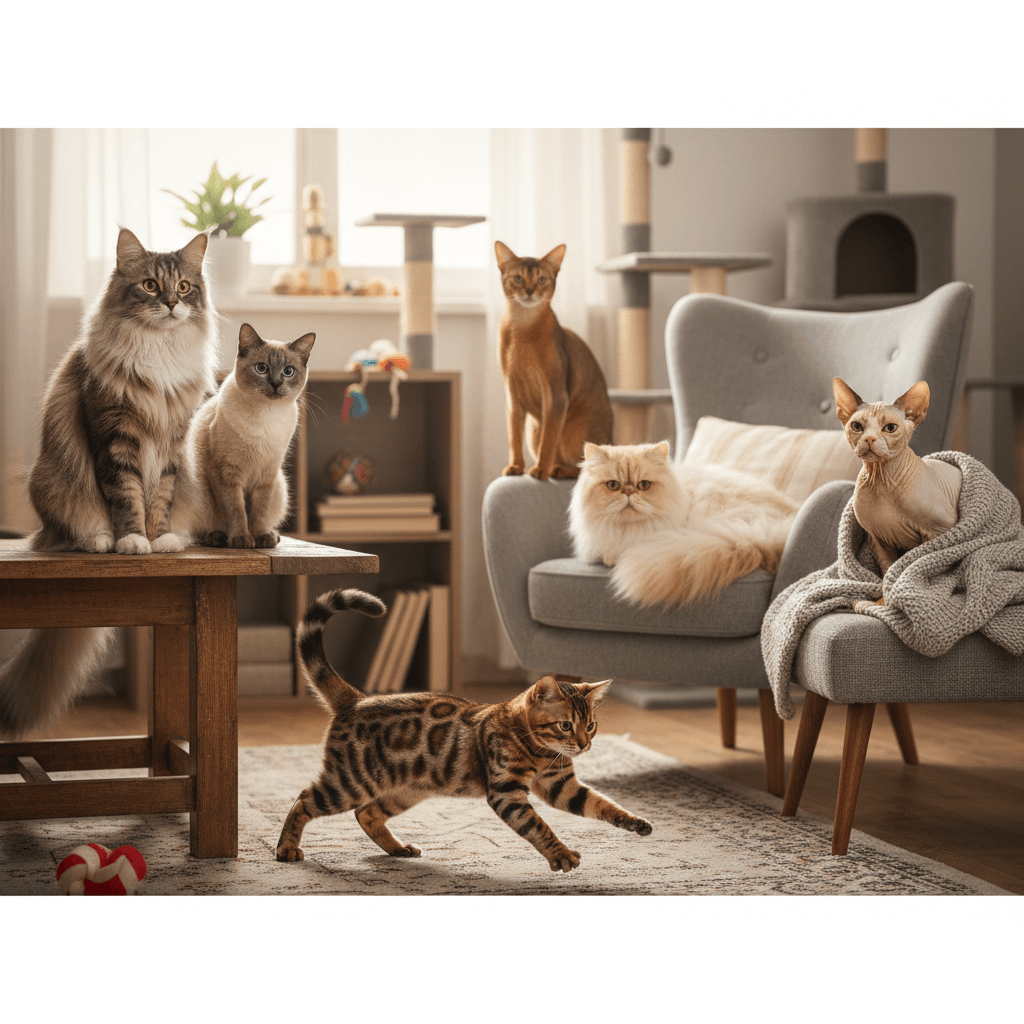
Physical Characteristics of Different Cat Breeds
- Long-Haired Breeds (e.g., Persian, Himalayan):
These cats boast luxurious, flowing coats that require daily grooming to prevent matting and hairballs. Their facial structure often includes flat noses, which can lead to breathing issues or tear staining. Regular cleaning and vet check-ups are essential for their well-being. - Short-Haired Breeds (e.g., British Shorthair, American Shorthair):
Short-haired cats are generally easier to maintain, with minimal grooming needs. Their dense coats provide insulation, making them adaptable to various climates. However, shedding can still occur seasonally, requiring occasional brushing. - Large Breeds (e.g., Maine Coon, Norwegian Forest Cat):
These cats are known for their impressive size and muscular builds. They need spacious environments to roam and play, along with sturdy furniture to support their weight. Despite their size, they are often gentle and easygoing. - Small Breeds (e.g., Singapura, Cornish Rex):
Compact and lightweight, small breeds are perfect for apartments or homes with limited space. Their diminutive stature doesn’t mean they lack energy—many small breeds are surprisingly active and playful. - Hairless Breeds (e.g., Sphynx, Peterbald):
Hairless cats have unique care needs, including regular bathing to remove oils from their skin. They are sensitive to temperature changes and require warm clothing or blankets in cooler weather. Their striking appearance often draws attention, but their care demands should not be underestimated.
Check this guide 👉Portuguese Cat Breeds: Best 7 Expert Tips!
Check this guide 👉What Cat Breed Has the Highest Bite Rate: Best 7 Tips!
Check this guide 👉Most Popular Cat Breeds: Best 7 Expert Tips!
| Breed Traits | Best Suited For |
|---|---|
| Siamese: Vocal, social, intelligent | Active households, owners who enjoy interaction |
| Maine Coon: Friendly, adaptable, large size | Families with kids or other pets |
| Persian: Calm, low-energy, requires grooming | Quiet homes, seniors, or first-time owners |
| Bengal: Energetic, curious, athletic | Experienced owners with time for play |
| Ragdoll: Affectionate, docile, loves cuddles | Homes seeking a loyal, easygoing companion |
Activity Levels Across Cat Breeds
- High-Energy Breeds (e.g., Bengal, Abyssinian):
These cats are constantly on the move, climbing shelves, exploring rooms, and playing with toys. They require plenty of interactive playtime and enrichment activities to stay happy and healthy. Puzzle feeders and climbing trees are excellent additions to their environment. - Moderately Active Breeds (e.g., Ragdoll, Scottish Fold):
While not as hyperactive as Bengals or Abyssinians, these breeds still enjoy moderate exercise. Short bursts of play followed by long naps are typical. They adapt well to most households, provided they receive regular attention. - Low-Energy Breeds (e.g., Persian, Exotic Shorthair):
These cats are content lounging in sunny spots or curling up on laps. They don’t demand much physical activity, making them ideal for quieter homes. However, obesity can be a concern if overfed, so portion control is crucial. - Playful Yet Independent Breeds (e.g., Maine Coon, Norwegian Forest Cat):
These cats enjoy interactive play but are also capable of entertaining themselves. Their intelligence and resourcefulness make them less reliant on constant human interaction. - Couch Potato Breeds (e.g., British Shorthair, Chartreux):
Known for their relaxed demeanor, these breeds are happiest when lounging. They rarely seek out vigorous activity, preferring peaceful surroundings and predictable routines.
Social Behavior and Companionship Needs
- Extroverted Breeds (e.g., Siamese, Burmese):
These cats thrive on social interaction and dislike being left alone for long periods. They often greet guests enthusiastically and enjoy participating in household activities. - Independent Breeds (e.g., Russian Blue, Turkish Angora):
While affectionate, these cats value their personal space and are comfortable spending time alone. They form strong bonds with their owners but aren’t overly clingy. - Family-Friendly Breeds (e.g., Ragdoll, Maine Coon):
Known for their patience and tolerance, these breeds get along well with children and other animals. Their gentle nature makes them excellent additions to busy households. - Reserved Breeds (e.g., Scottish Fold, British Shorthair):
These cats are more cautious around strangers and take time to warm up to new people. Once they trust someone, however, they show deep affection and loyalty. - Affectionate Yet Selective Breeds (e.g., Devon Rex, Cornish Rex):
While loving toward their owners, these cats may be wary of unfamiliar faces. They form close bonds with one or two family members rather than everyone in the household.
Grooming Requirements by Breed
- Long-Haired Breeds (e.g., Persian, Maine Coon):
Daily brushing is essential to prevent tangles and mats. Bathing may be necessary every few months, especially for Persians prone to oil buildup. Eye cleaning is also important for flat-faced breeds. - Short-Haired Breeds (e.g., American Shorthair, Bombay):
Weekly brushing suffices to reduce shedding and distribute natural oils. Occasional baths help remove dirt and allergens, though they’re not always necessary. - Hairless Breeds (e.g., Sphynx, Donskoy):
These cats require frequent baths to remove excess oil from their skin. Ear cleaning and nail trimming are also vital parts of their grooming routine. - Curly-Coated Breeds (e.g., LaPerm, Selkirk Rex):
Their unique coats benefit from regular brushing to prevent tangling. Gentle detangling tools work best to avoid damaging their delicate fur. - Minimal-Grooming Breeds (e.g., Bengal, Egyptian Mau):
These cats naturally groom themselves efficiently, requiring little intervention beyond occasional brushing during shedding seasons.
Health Considerations for Specific Breeds
- Brachycephalic Breeds (e.g., Persian, Exotic Shorthair):
Flat faces increase the risk of respiratory issues, dental problems, and tear duct blockages. Regular vet visits are crucial for early detection and management. - Large Breeds (e.g., Maine Coon, Ragdoll):
Hypertrophic cardiomyopathy (HCM) is common in these breeds. Routine cardiac screenings help monitor heart health and prevent complications. - Hairless Breeds (e.g., Sphynx, Peterbald):
These cats are prone to skin infections and sunburn due to their lack of fur. Keeping their skin clean and protected is essential for their well-being. - Active Breeds (e.g., Abyssinian, Bengal):
Joint issues like arthritis can develop in highly active breeds. Providing joint supplements and maintaining a healthy weight minimizes risks. - Small Breeds (e.g., Singapura, Devon Rex):
Dental disease is prevalent in smaller breeds. Regular teeth cleaning and professional dental care prevent painful infections.
Choosing the Right Breed for Your Lifestyle
- For Busy Professionals:
Low-maintenance breeds like British Shorthairs or Chartreux suit individuals with limited free time. Their independent nature means they won’t feel neglected during long workdays. - For Families with Kids:
Breeds like Ragdolls, Maine Coons, or Abyssinians are patient and tolerant, making them excellent companions for energetic households. - For Seniors or Retirees:
Calm, affectionate breeds such as Persians or Scottish Folds thrive in quiet environments where they can relax and bond with their owners. - For First-Time Owners:
Easygoing breeds like American Shorthairs or Devon Rexes are forgiving and adaptable, making them ideal for beginners. - For Experienced Owners:
Challenging breeds like Bengals or Sphynxes require experienced handlers who can meet their high energy and specialized care needs.
“cat breeds have diverged not only morphologically but also behaviourally,”
– nature.com
Frequently Asked Questions About Cat Traits by Breed
What are the friendliest cat breeds?
Breeds like Ragdolls, Maine Coons, and Siamese are known for their friendly and affectionate nature, making them great companions for families and singles alike.
How do I choose the right cat breed for my home?
Consider factors like your activity level, living space, grooming preferences, and whether you have children or other pets. Matching these to breed traits ensures compatibility.
Are some cat breeds better for apartments?
Yes—smaller, low-energy breeds like British Shorthairs, Scottish Folds, and Persians adapt well to apartment living due to their calm demeanor and minimal space requirements.
Do all cats in a breed share the same traits?
While breed traits provide general guidelines, individual personalities can vary. Early socialization and upbringing also play a significant role in shaping behavior.
What should I know before adopting a long-haired cat?
Long-haired breeds like Persians and Maine Coons require daily grooming to prevent matting and hairballs. Be prepared for additional maintenance and potential vet costs.
Finding the Perfect Feline Companion

Is Rawhide Bad for Cats? Best 7 Expert Tips! – Discover the risks, safe alternatives, and expert advice to keep your feline friend healthy and happy.

Is Rawhide Bad for Dogs? Best 7 Expert Tips! – Discover the risks, benefits, and safer alternatives to rawhides for your dog’s chewing needs.

Understanding Anorexia in Cats: Best 7 Expert Tips! – Learn why cats stop eating, spot warning signs, and discover how to help your feline regain appetite safely.

Understanding Anorexia in Dogs: Best 7 Expert Tips! – Learn causes, symptoms, and solutions to help your dog regain appetite and stay healthy.