
Cat Sneezing No Other Symptoms: Should You Be Concerned?
It’s not uncommon for cat owners to notice their feline friend sneezing occasionally. While a single sneeze might not raise alarm bells, repeated sneezing without other symptoms can leave you wondering whether it’s a harmless quirk or a sign of something more serious. Cats, like humans, can sneeze for a variety of reasons—some benign, others requiring attention. Understanding the potential causes and knowing when to seek veterinary care is key to ensuring your cat stays healthy and happy. In this blog post, we’ll explore everything you need to know about cat sneezing, from common triggers to practical tips for addressing the issue.
Expert Insight on Cat Sneezing
“If your cat’s sneezing occasionally, it may just be part of the normal process to clear their nose and usually isn’t concerning. However, if the sneezing is persistent or if other symptoms are present, it may indicate an underlying disease.”
Common Causes of Cat Sneezing Without Other Symptoms
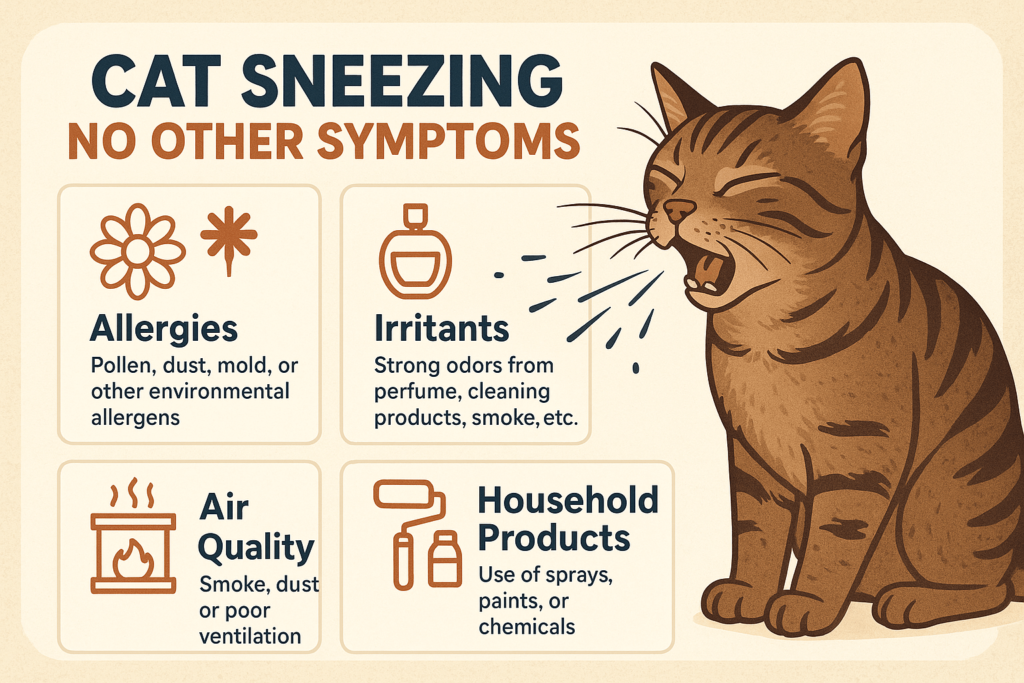
When your cat sneezes but shows no other signs of illness, it’s often due to minor irritants or environmental factors. However, understanding the possible causes can help you determine whether further action is needed.
Dust and Allergens:
Dust particles, pollen, or cleaning products can irritate your cat’s nasal passages, triggering sneezing episodes.Foreign Objects:
Small objects like grass seeds or hair can get lodged in your cat’s nose, causing irritation and sneezing.Dry Air:
Low humidity levels, especially during winter months, can dry out your cat’s nasal passages and lead to sneezing.Strong Scents:
Strong-smelling candles, perfumes, or air fresheners can overwhelm your cat’s sensitive sense of smell, prompting sneezes.Playful Behavior:
Sometimes cats sneeze during play or excitement, much like humans might laugh until they sneeze—it’s usually harmless.
In most cases, sneezing without other symptoms is nothing to worry about. However, monitoring the frequency and context of sneezes can help you identify any underlying issues.
Signs That Your Cat’s Sneezing May Require Attention
While occasional sneezing is normal, certain patterns or changes in behavior may indicate a need for veterinary evaluation. Here are some red flags to watch for:
Frequent Sneezing Episodes:
If your cat sneezes multiple times a day or over several days, it could signal an underlying issue that needs investigation.Nasal Discharge:
Clear discharge is less concerning, but yellow, green, or bloody mucus may indicate an infection or other health problem.Changes in Appetite or Energy Levels:
A sudden decrease in appetite or lethargy alongside sneezing could point to a more serious condition.Pawing at the Nose:
If your cat frequently rubs or paws at their nose, it might suggest discomfort or the presence of a foreign object.Difficulty Breathing:
Wheezing, labored breathing, or open-mouth breathing accompanying sneezing requires immediate veterinary attention.
Recognizing these warning signs ensures you address potential health concerns before they escalate.
Check this guide 👉Cat Sneezing and Vomiting: Best 7 Expert Tips!
Check this guide 👉Why Is My Cat Sneezing Blood? Best 7 Expert Tips!
Check this guide 👉Why Is My Cat Sneezing and Have Watery Eyes? Best 7 Tips!
Possible Causes of Sneezing | When to See a Vet |
|---|---|
Dust, allergens, or strong scents | Sneezing persists for more than a week |
Dry air or seasonal changes | Nasal discharge changes color or texture |
Foreign objects in the nasal passage | Cat seems lethargic or uninterested in food |
Playful or excited sneezing | Difficulty breathing or wheezing occurs |
Environmental irritants | Cat paws at their nose repeatedly |
How to Prevent and Manage Cat Sneezing
Taking proactive steps can reduce the likelihood of sneezing episodes and ensure your cat remains comfortable. Here are some practical tips for prevention and management:
Maintain a Clean Environment:
Regularly dust and vacuum your home to minimize irritants like dust, dander, and pollen.Use Humidifiers:
Adding moisture to the air with a humidifier can prevent dry nasal passages, especially in colder months.Avoid Strong Scents:
Refrain from using heavily scented candles, sprays, or cleaning products around your cat.Inspect Your Cat’s Nose:
Gently check your cat’s nose for signs of foreign objects or irritation if sneezing becomes frequent.Provide Fresh Air:
Ensure your home is well-ventilated to reduce stagnant air and potential irritants.
By implementing these strategies, you can create a healthier environment for your cat and minimize sneezing triggers.
When Sneezing Could Indicate a Serious Condition
While most sneezing is harmless, certain conditions require prompt veterinary attention. Understanding these possibilities can help you act quickly if needed.
Upper Respiratory Infections (URIs):
Viral or bacterial infections can cause sneezing, even if other symptoms haven’t yet appeared.Feline Herpesvirus:
This common virus can lead to sneezing and nasal irritation, particularly in stressed or immunocompromised cats.Nasal Polyps or Tumors:
Growths in the nasal cavity may cause persistent sneezing and require diagnostic imaging to confirm.Tooth Infections:
Dental issues, such as abscesses, can affect the nasal passages and trigger sneezing.Allergic Reactions:
Severe allergic reactions to food, plants, or chemicals may present with sneezing as an early symptom.
If sneezing persists or worsens, consulting a veterinarian is the best course of action to rule out serious conditions.
Home Remedies for Mild Sneezing
If your cat’s sneezing seems mild and isn’t accompanied by other symptoms, you can try these simple remedies to soothe their nasal passages.
Steam Therapy:
Let your cat sit in a steamy bathroom while you shower. The warm, moist air can help clear nasal congestion.Saline Drops:
Use vet-approved saline drops to gently clean your cat’s nasal passages if they seem irritated.Hydration:
Encourage your cat to drink more water to keep their nasal passages hydrated and reduce irritation.Soft Bedding:
Provide cozy bedding away from drafts or cold areas to help your cat rest comfortably.Limit Exposure to Irritants:
Remove potential irritants like cigarette smoke, scented candles, or dusty litter from your home.
These gentle interventions can alleviate mild sneezing and improve your cat’s comfort.
Seasonal Factors That Trigger Sneezing
Seasonal changes can influence how often your cat sneezes, especially if they’re sensitive to environmental shifts.
Spring Pollen:
Increased pollen levels during spring can irritate your cat’s respiratory system, causing sneezing.Winter Dryness:
Cold, dry air in winter can dry out nasal passages, making sneezing more likely.Fall Leaves and Debris:
Outdoor cats may sneeze more in autumn due to exposure to decaying leaves and mold spores.Summer Heat:
Hot, humid weather can exacerbate allergies or respiratory issues in sensitive cats.Holiday Decorations:
Artificial scents from candles or trees can irritate your cat’s nose during the holiday season.
Being mindful of seasonal triggers helps you anticipate and manage sneezing episodes effectively.
When to Consider Allergy Testing
If your cat’s sneezing persists despite addressing environmental factors, allergies might be the culprit. Here’s what you need to know about allergy testing and management.
Consult Your Veterinarian:
A vet can recommend allergy testing to identify specific triggers affecting your cat.Food Trials:
Elimination diets can help determine if your cat has a food allergy contributing to sneezing.Environmental Controls:
Reducing exposure to identified allergens, such as certain plants or fabrics, can minimize symptoms.Medications:
Antihistamines or corticosteroids prescribed by a vet can help manage severe allergic reactions.Regular Monitoring:
Keep track of your cat’s sneezing patterns to identify recurring triggers and adjust care accordingly.
Allergy testing provides valuable insights into managing chronic sneezing and improving your cat’s quality of life.
Frequently Asked Questions About Cat Sneezing
Is it normal for cats to sneeze occasionally?
Yes, occasional sneezing is normal and often caused by minor irritants like dust or excitement.
Can allergies cause sneezing in cats?
Yes, cats can develop allergies to environmental factors, leading to sneezing and other symptoms.
How can I tell if my cat has something stuck in their nose?
Signs include frequent sneezing, pawing at the nose, or visible discomfort. Veterinary assistance is recommended.
Should I be worried if my cat sneezes after playing?
Not necessarily—excitement-induced sneezing is usually harmless unless it becomes a frequent occurrence.
What should I do if my cat’s sneezing doesn’t stop?
If sneezing persists for more than a few days or is accompanied by other symptoms, consult your veterinarian promptly.
Understanding and Addressing Cat Sneezing
Sneezing in cats is often a temporary and harmless occurrence, but staying informed about its potential causes and warning signs is essential for responsible pet ownership. By creating a clean, comfortable environment and monitoring your cat’s behavior, you can minimize sneezing triggers and ensure their well-being. Remember, while occasional sneezing is rarely a cause for concern, persistent or unusual sneezing should always be evaluated by a veterinarian. With a little vigilance and care, you can keep your feline companion happy, healthy, and sneeze-free.
Understanding Cryptosporidium in Cats: Best 7 Expert Tips! – Spot symptoms, treat safely, and stop parasite spread in your home.
Understanding Cryptosporidium in Dogs: Best 7 Expert Tips! – Learn symptoms, treatment & prevention for this stubborn gut parasite.
Understanding Syringomyelia in Cats: Best 7 Expert Tips! – Recognize signs, manage pain, and support your cat’s neurological health with vet-backed guidance.
Understanding Syringomyelia in Dogs: Best 7 Expert Tips! – Expert insights on symptoms, MRI diagnosis, pain management & quality of life.