

Cat Regurgitation vs Vomit: What’s the Difference?
If you’ve ever noticed your cat bringing something up, you may have wondered whether it was regurgitation or vomiting—and why it happened. While both actions involve expelling material from the stomach or esophagus, they are distinct processes with different causes and implications. Understanding the difference between cat regurgitation and vomit is crucial for identifying potential health issues and knowing when to seek veterinary care. In this guide, we’ll explore the signs, causes, and solutions to help you better care for your feline friend.
Expert Insight on Cat Regurgitation
“Regurgitation is defined as the action of bringing swallowed food up the esophagus and into the mouth. It’s usually an involuntary process. Cat regurgitation can be caused by many conditions or by a congenital (present from birth) defect of the esophagus.”
Key Differences Between Regurgitation and Vomiting in Cats
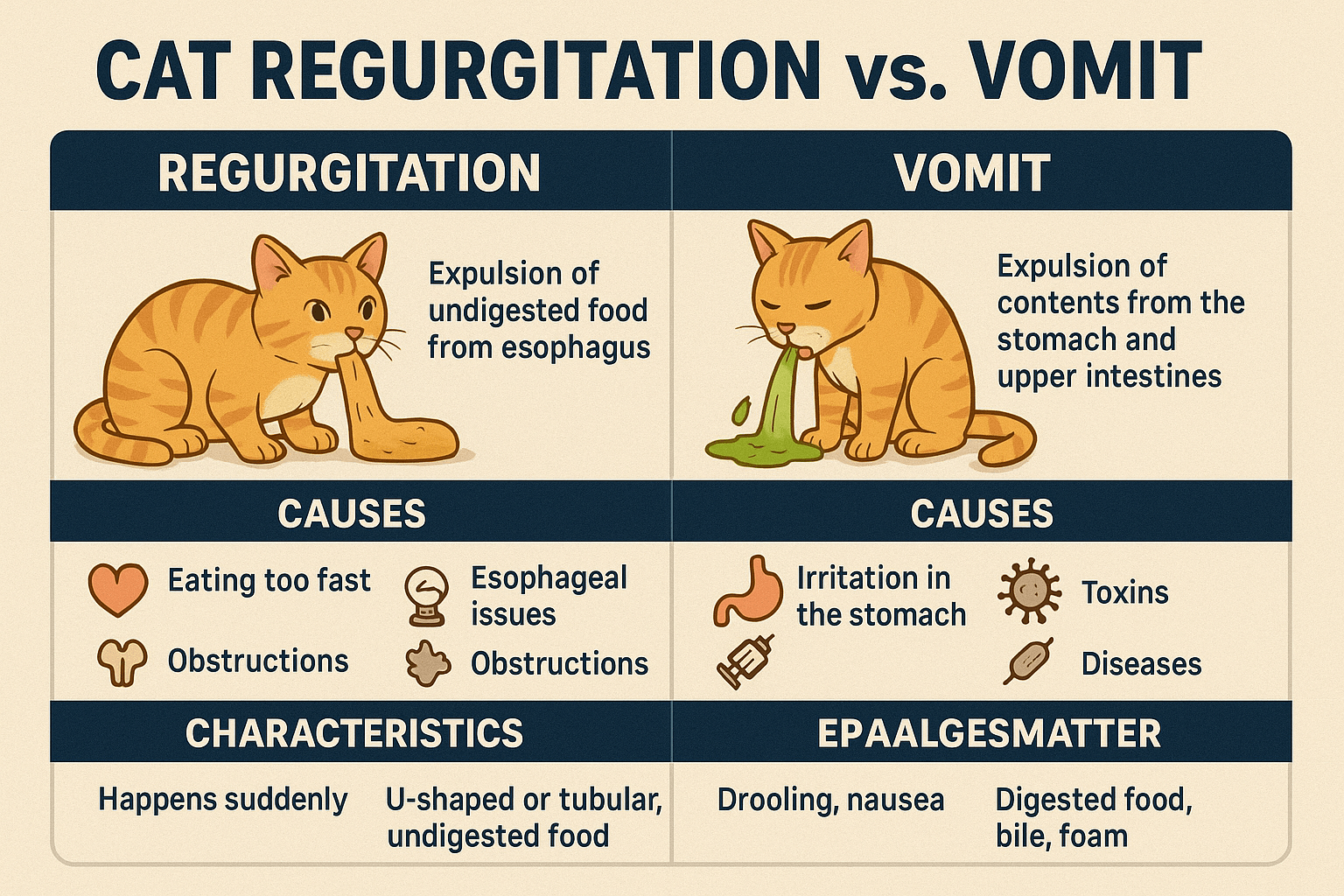
Regurgitation and vomiting may look similar at first glance, but they stem from different physiological processes. Recognizing these differences can help you determine the underlying cause of your cat’s behavior.
Timing of the Episode:
Regurgitation typically occurs shortly after eating, while vomiting often happens hours later as the stomach empties its contents.Appearance of the Expelled Material:
Regurgitated food usually looks undigested and tubular, resembling the shape of the esophagus. Vomit, on the other hand, is more liquid and may contain bile or frothy foam.Behavior Before the Episode:
Cats that vomit often show signs of nausea, such as drooling, retching, or heaving. Regurgitation, however, tends to happen suddenly without much warning.Frequency and Triggers:
Regurgitation is often linked to eating too quickly or swallowing air, while vomiting may indicate digestive issues, infections, or dietary indiscretion.Location of the Issue:
Regurgitation originates in the esophagus, whereas vomiting involves the stomach and sometimes the intestines.
By understanding these distinctions, you can better assess whether your cat’s episode is harmless or a sign of something more serious.
Common Causes of Cat Regurgitation
Regurgitation in cats is often benign, but it can sometimes signal an underlying issue. Here are some common reasons why your cat might regurgitate their food.
Eating Too Quickly:
Cats that gobble their food may swallow air or overwhelm their esophagus, leading to regurgitation shortly after eating.Large Kibble Size:
Food pieces that are too large for your cat to chew properly can get stuck in the esophagus and trigger regurgitation.Gastroesophageal Reflux:
Acid reflux or irritation in the esophagus can cause cats to bring up undigested food.Foreign Objects:
Swallowing non-food items like toys or string can obstruct the esophagus and lead to regurgitation.Position During Eating:
Elevated or awkward feeding positions can increase the likelihood of regurgitation, especially in older cats.
Addressing these causes can often resolve regurgitation issues, but persistent episodes should always be evaluated by a veterinarian.
Check this guide 👉Diabetic Cat Vomiting: Best 7 Health Tips!
Check this guide 👉Cat Sneezing and Vomiting: Best 7 Expert Tips!
Check this guide 👉Understanding Cat Green Vomit: Best 7 Health Tips!
Signs of Regurgitation | Signs of Vomiting |
|---|---|
Occurs soon after eating | Happens hours after eating |
Undigested, tubular food | Liquid, frothy, or bile-like substance |
No retching or heaving beforehand | Often preceded by drooling or retching |
Typically linked to esophageal issues | Usually tied to stomach or intestinal problems |
Less frequent and less concerning | May indicate serious health conditions |
Common Causes of Cat Vomiting
Vomiting in cats can range from mild and occasional to frequent and concerning. Here are some potential reasons behind this behavior.
Hairballs:
Cats groom themselves frequently, and ingested hair can irritate the stomach, leading to vomiting.Dietary Changes:
Sudden switches in food or introducing new ingredients can upset a cat’s sensitive digestive system.Food Intolerances or Allergies:
Some cats are allergic to certain proteins or grains, which can cause gastrointestinal distress.Parasites or Infections:
Internal parasites like worms or bacterial infections can irritate the stomach lining and trigger vomiting.Underlying Health Conditions:
Chronic vomiting may indicate serious issues such as kidney disease, pancreatitis, or inflammatory bowel disease (IBD).
Understanding these causes helps you determine whether your cat’s vomiting is a minor issue or a symptom of a larger problem.
How to Respond to Regurgitation or Vomiting
When your cat regurgitates or vomits, it’s important to respond appropriately to ensure their well-being. Here are some steps to take based on the situation.
Observe the Frequency:
Occasional regurgitation or vomiting is usually not a cause for concern, but repeated episodes warrant attention.Check the Contents:
Examine what your cat expelled—undigested food points to regurgitation, while bile or foam suggests vomiting.Adjust Feeding Habits:
Slow down rapid eaters by using puzzle feeders or smaller portions, and avoid elevated bowls if they seem problematic.Monitor for Other Symptoms:
Look for signs of illness, such as lethargy, diarrhea, or weight loss, which could indicate a deeper issue.Consult Your Veterinarian:
Persistent or severe episodes should always be evaluated by a vet to rule out underlying health conditions.
Taking these steps ensures you address the root cause of your cat’s discomfort and prevent future episodes.
Tips for Preventing Regurgitation
Preventing regurgitation in cats is often a matter of making simple adjustments to their routine. These tips can help reduce the likelihood of your cat bringing up their food.
Use Slow-Feeder Bowls:
Slow-feeder bowls encourage cats to eat at a slower pace, reducing the risk of overeating and regurgitation.Feed Smaller, More Frequent Meals:
Dividing meals into smaller portions throughout the day prevents overwhelming the esophagus.Choose Appropriate Kibble Size:
Opt for kibble that matches your cat’s size and chewing ability to avoid choking hazards.Avoid Stressful Environments During Meals:
Ensure your cat eats in a calm, quiet space to prevent anxiety-related regurgitation.Elevate Food Bowls Carefully:
For cats prone to regurgitation, experiment with bowl height to find the most comfortable position.
Implementing these strategies can significantly reduce the chances of regurgitation and improve your cat’s overall comfort.
Managing Hairballs Effectively
Hairballs are a common cause of vomiting in cats, but there are ways to manage them effectively. These tips can help minimize hairball-related issues.
Brush Your Cat Regularly:
Daily brushing removes loose fur, reducing the amount your cat swallows during grooming sessions.Provide Hairball-Control Treats:
Specialized treats or supplements can aid digestion and help pass hair through the digestive tract.Encourage Hydration:
Proper hydration keeps the digestive system functioning smoothly, preventing hair from forming clumps.Invest in Hairball-Friendly Food:
Certain cat foods are formulated to reduce hairball formation and promote gut health.Watch for Signs of Blockages:
If your cat exhibits constipation, gagging, or frequent vomiting, consult a vet to rule out blockages.
By managing hairballs proactively, you can keep your cat comfortable and reduce vomiting episodes.
When to Seek Veterinary Help
While occasional regurgitation or vomiting may not be alarming, certain signs indicate the need for professional intervention. These red flags should never be ignored.
Persistent Vomiting or Regurgitation:
Episodes occurring daily or multiple times a week require thorough evaluation by a veterinarian.Blood in the Vomit or Stool:
The presence of blood signals a serious issue that demands immediate attention.Weight Loss or Appetite Changes:
Sudden changes in eating habits or noticeable weight loss could point to underlying health problems.Lethargy or Weakness:
Cats that appear unusually tired or unresponsive may be suffering from a systemic illness.Difficulty Breathing or Swallowing:
Labored breathing or trouble swallowing could indicate obstructions or respiratory issues.
Seeking timely veterinary care ensures your cat receives the treatment they need to recover and thrive.
Frequently Asked Questions About Cat Regurgitation and Vomiting
Is regurgitation dangerous for cats?
Occasional regurgitation is usually harmless, but frequent episodes may indicate an underlying issue that needs veterinary attention.
What should I do if my cat vomits hairballs often?
Regular grooming and specialized hairball-control food can reduce the frequency of hairball-related vomiting.
Can stress cause vomiting in cats?
Yes, stress or anxiety can upset a cat’s stomach, leading to vomiting. Addressing the source of stress can help.
Should I withhold food after my cat vomits?
Withhold food for a few hours to let the stomach settle, then reintroduce bland food gradually under veterinary guidance.
When is vomiting an emergency?
Withhold food for a few hours to let the stomach settle, then reintroduce bland food gradually under veterinary guidance.
Understanding and Addressing Cat Regurgitation and Vomiting
Recognizing the difference between cat regurgitation and vomit empowers you to make informed decisions about your pet’s health. While occasional episodes may be harmless, persistent or severe instances require prompt veterinary evaluation. By observing your cat’s behavior, adjusting their diet, and addressing potential triggers, you can minimize the occurrence of these unsettling events. Remember, your cat relies on you to advocate for their well-being—so stay vigilant and proactive in ensuring they live a happy, healthy life.
Is Rawhide Bad for Cats? Best 7 Expert Tips! – Discover the risks, safe alternatives, and expert advice to keep your feline friend healthy and happy.

Is Rawhide Bad for Dogs? Best 7 Expert Tips! – Discover the risks, benefits, and safer alternatives to rawhides for your dog’s chewing needs.

Understanding Anorexia in Cats: Best 7 Expert Tips! – Learn why cats stop eating, spot warning signs, and discover how to help your feline regain appetite safely.

Understanding Anorexia in Dogs: Best 7 Expert Tips! – Learn causes, symptoms, and solutions to help your dog regain appetite and stay healthy.