Cat Fungal Skin Infection: Recognize, Treat, and Prevent Before It Spreads
Cat fungal skin infections are more common than most pet owners realize — and often mistaken for allergies, fleas, or dry skin. Left untreated, these infections can spread rapidly, cause discomfort, and even become contagious to humans and other pets. Understanding the signs, causes, and solutions is not just helpful — it’s essential for your cat’s health and your household’s well-being.
The Most Common Causes of Fungal Skin Infections in Cats
Fungal skin infections in cats don’t appear out of nowhere. They arise from specific environmental, biological, and behavioral triggers. Recognizing these root causes is the first step toward prevention and effective treatment.
Ringworm (Dermatophytosis):
The most frequent culprit — not a worm, but a fungus, usually Microsporum canis, that thrives on skin, hair, and nails.Moist, Warm Environments:
Damp bedding, humid climates, or wet fur after bathing create the perfect breeding ground for fungal spores.Weakened Immune Systems:
Kittens, seniors, or cats with chronic illness (like FIV or diabetes) are far more susceptible to fungal overgrowth.Poor Grooming Habits:
Cats who stop grooming due to pain, stress, or obesity often develop skin conditions that fungi exploit.Exposure to Infected Animals or Objects:
Shared bedding, brushes, or even contact with stray cats can transmit fungal spores instantly.
Understanding these causes transforms how you protect your cat — from daily hygiene to environmental management. Prevention starts with awareness.
Key Signs Your Cat May Have a Fungal Skin Infection
Fungal infections can be subtle at first — but they leave unmistakable clues if you know where to look. Ignoring early signs often leads to worsening symptoms and longer recovery times.
Circular Bald Patches:
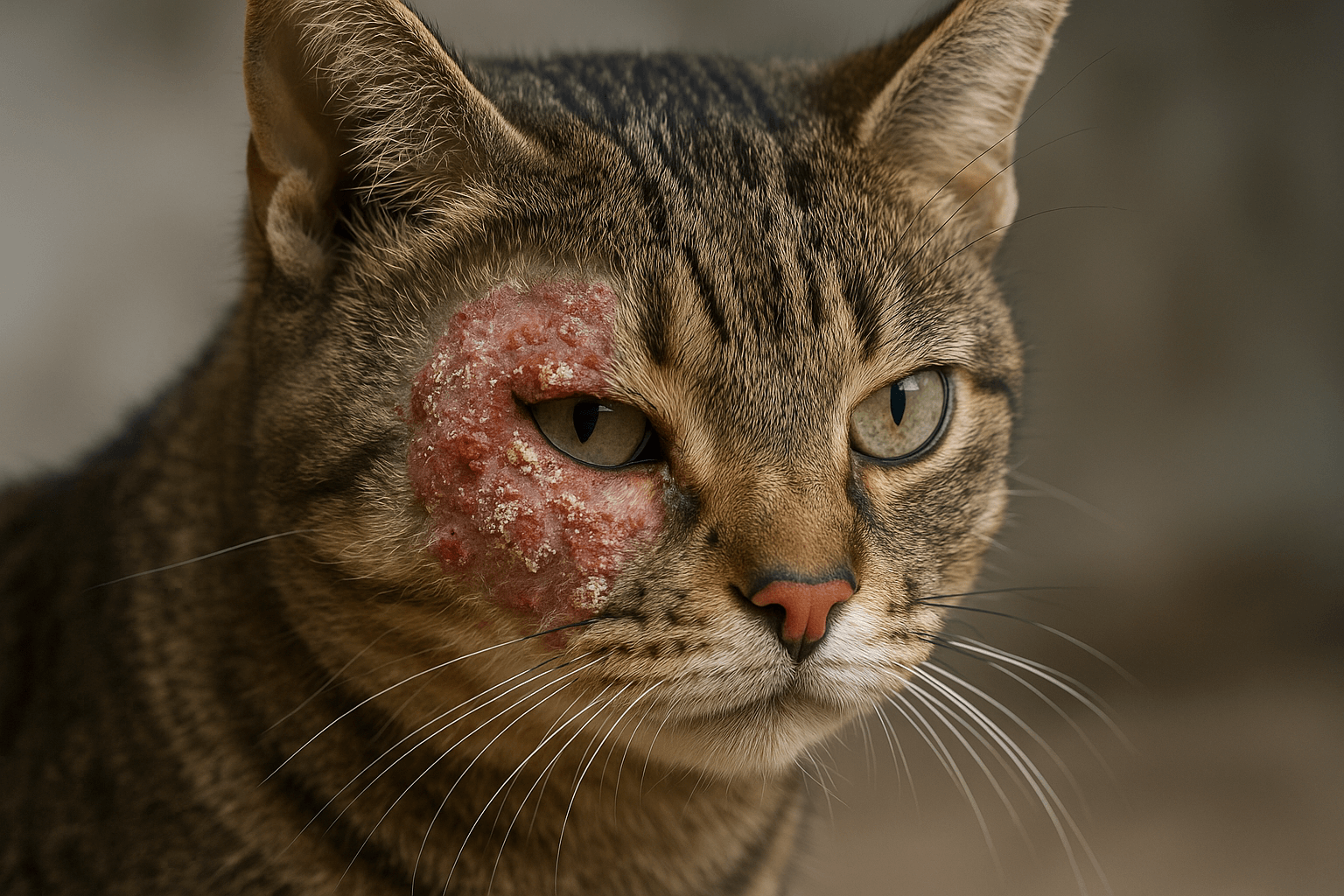
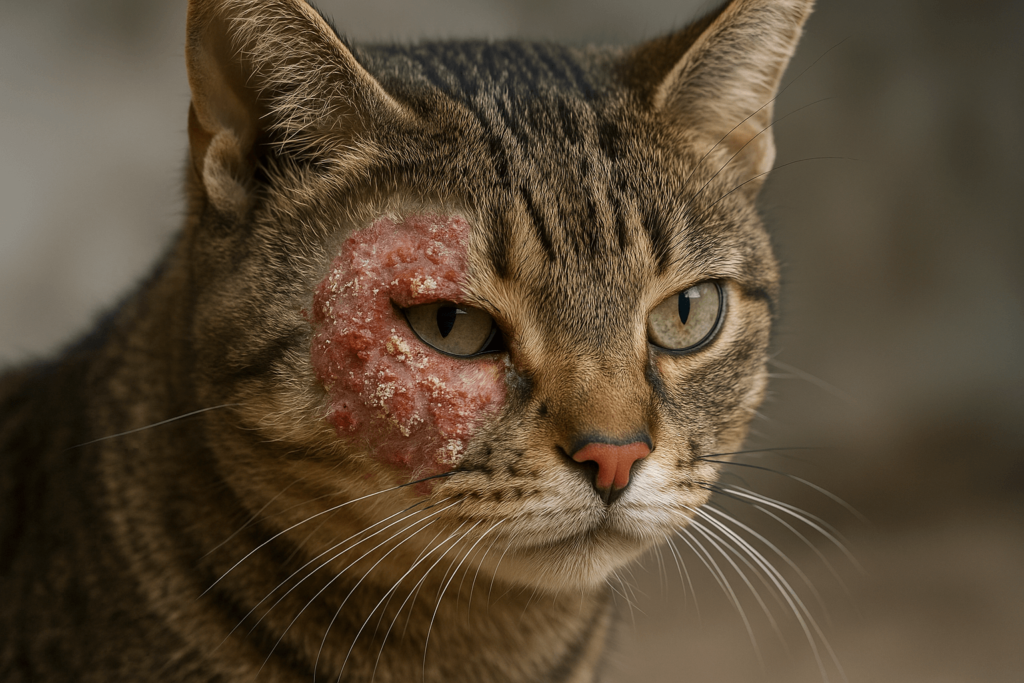
Classic ringworm presents as round, scaly areas of hair loss, often around the ears, face, paws, or tail.Red, Flaky, or Crusty Skin:
Affected areas may appear inflamed, with a dandruff-like texture or thickened, crusty skin.Itching and Scratching:
While not always itchy, many cats scratch or lick infected areas excessively, spreading spores to other parts of the body.Broken or Brittle Hairs:
Hairs near the infection site may look stubby, broken, or as if they’ve been chewed off at the root.Dark or Discolored Skin Patches:
In chronic cases, the skin may darken or turn grayish, especially under the fur.
These symptoms often mimic other conditions — but when multiple signs appear together, a fungal infection is highly likely. Don’t wait for it to spread. Early detection saves time, money, and stress.
Check this guide 👉Siamese Cat Skin Problems: Best 7 Expert Tips!
Check this guide 👉Understanding Cat Skin Cancer: Best 7 Expert Tips!
Check this guide 👉Cat Dry Skin Treatment: Best 7 Expert Tips!
| Symptom | What It Means |
|---|---|
| Circular bald patches | Classic sign of ringworm — fungal spores destroy hair follicles. |
| Flaky or scaly skin | Fungus breaks down skin cells, causing dandruff-like shedding. |
| Excessive scratching or licking | Irritation triggers grooming behavior, which spreads infection. |
| Broken or stubby hairs | Fungi weaken hair shafts, causing them to snap off easily. |
| Darkened or discolored skin | Chronic inflammation from prolonged fungal activity. |
How Fungal Infections Spread — And Why It Matters for Your Home
A fungal skin infection isn’t just your cat’s problem — it’s a household issue. Spores are microscopic, resilient, and can survive for over a year on surfaces.
Contagious to Humans:
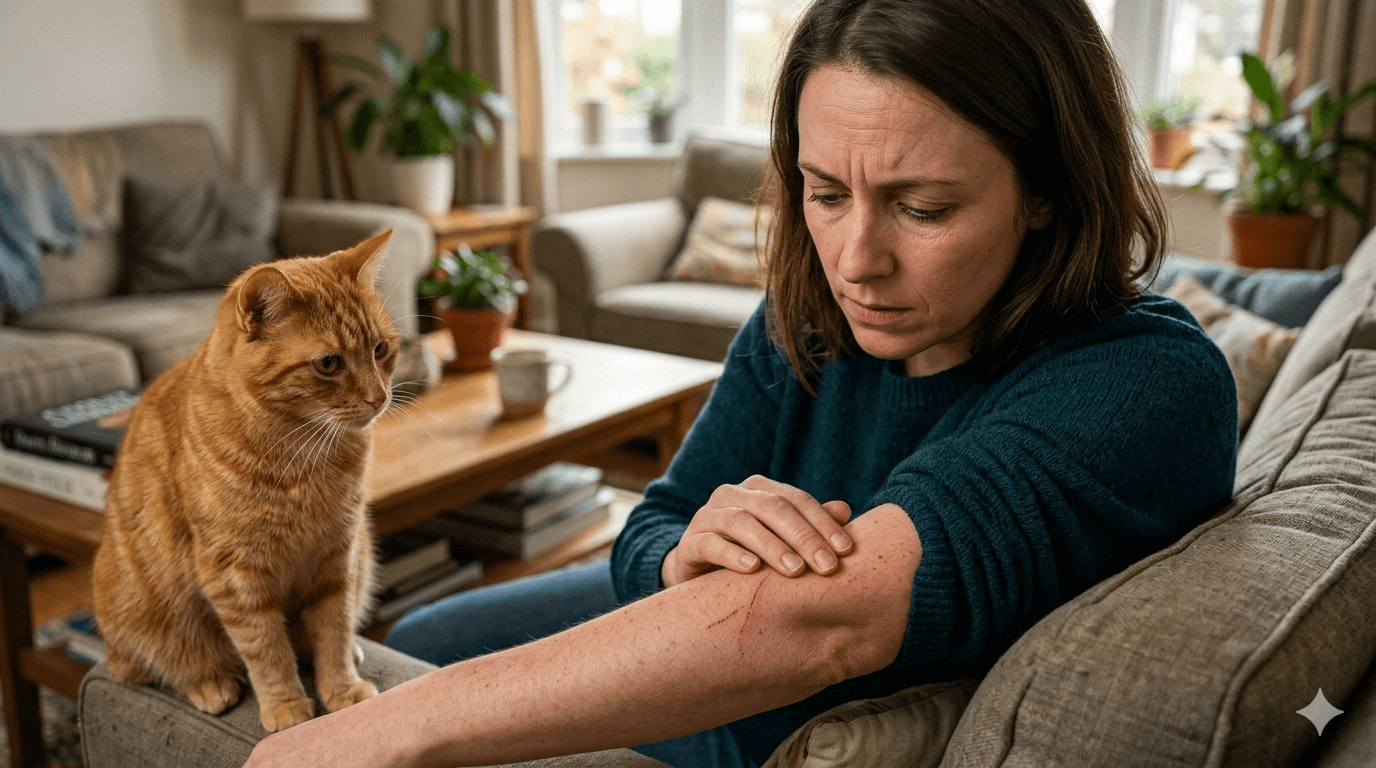
Ringworm can transfer to people — especially children, elderly, or immunocompromised individuals — causing red, itchy rings on the skin.Spreads to Other Pets:
Dogs, rabbits, and even ferrets can catch fungal infections from infected cats.Lingers on Bedding and Furniture:
Spores cling to fabrics, carpets, and brushes for months, making re-infection common if cleaning is ignored.Airborne Transmission:
Shed hair and dander carry spores into the air, settling on surfaces you can’t even see.Hidden Carriers:
Some cats show no symptoms but still shed spores — especially long-haired breeds or those with thick coats.
This is why treating your cat alone isn’t enough. Your home must be part of the recovery plan. Ignoring environmental decontamination is like treating a leaky roof while ignoring the flooded basement.
Diagnosing a Fungal Skin Infection: What the Vet Will Do
Self-diagnosis is risky. Many skin conditions look identical — but only a vet can confirm a fungal infection with certainty.
Wood’s Lamp Examination:
A special UV light may cause Microsporum canis to glow green — a quick, non-invasive screening tool.Fungal Culture:
Hair and skin samples are placed on a growth medium; results take 1–3 weeks but are the gold standard for confirmation.Skin Scraping or Biopsy:
A small sample is examined under a microscope to identify fungal hyphae or spores.Blood and Allergy Tests:
To rule out underlying issues like allergies or immune disorders that make your cat vulnerable.PCR Testing (Advanced):
Some clinics use DNA testing to detect fungal species faster and more accurately than traditional cultures.
Don’t rely on apps, online photos, or guesswork. Accurate diagnosis prevents mismanagement — and unnecessary treatments that can harm your cat’s health.
Effective Treatment Options for Fungal Skin Infections
Treatment depends on severity, but success requires consistency. There’s no quick fix — only committed care.
Topical Antifungals:
Medicated shampoos, creams, or sprays (like chlorhexidine or miconazole) applied 2–3 times weekly directly to affected areas.Oral Antifungal Medications:
Drugs like itraconazole or terbinafine are prescribed for moderate to severe cases — taken daily for 4–8 weeks.Lime Sulfur Dips:
A potent, veterinarian-recommended dip for widespread infections — effective but has a strong odor.Clipping Affected Fur:
Removing infected hair reduces spore load and helps topical treatments penetrate the skin.Environmental Decontamination:
Vacuuming daily, washing bedding in hot water, disinfecting surfaces with diluted bleach (1:10), and discarding contaminated brushes.
Treatment isn’t over when the fur grows back. Continue medication as prescribed — even if your cat looks better — to kill every last spore.
How to Prevent Future Fungal Skin Infections
Prevention is the smartest, most cost-effective strategy. Once you’ve treated an infection, protect your home and cat from recurrence.
Keep Your Cat Dry:
After baths or rainy walks, dry your cat thoroughly — especially under the chin, armpits, and tail.Regular Grooming:
Brush your cat daily to remove loose hair, distribute natural oils, and catch early signs of skin issues.Clean Bedding Weekly:
Wash all bedding, blankets, and cat beds in hot water with antifungal detergent.Limit Exposure to Strays or Shelters:
Avoid contact with unfamiliar animals — especially those with visible skin issues.Boost Immune Health:
Feed a high-quality, balanced diet rich in omega-3s and taurine. Consider vet-approved supplements if needed.
Prevention isn’t about perfection — it’s about routine. Small habits create lasting protection.
When to Worry: Red Flags That Need Immediate Vet Attention
Not all fungal infections are mild. Some escalate quickly — especially in vulnerable cats.
Infection Spreading Rapidly:
New bald patches appearing daily or spreading to the face or belly.Open Sores or Pus:
Indicates secondary bacterial infection — requires urgent antibiotics.Loss of Appetite or Lethargy:
Suggests systemic illness or immune compromise.No Improvement After 2 Weeks of Treatment:
May mean misdiagnosis, resistant fungus, or an underlying condition.Human Family Members Develop Skin Rashes:
Confirms zoonotic spread — immediate environmental and medical intervention needed.
If you see any of these signs, don’t wait. Delaying care can turn a manageable issue into a life-threatening one.
Frequently Asked Questions About Cat Fungal Skin Infections
Can I treat my cat’s fungal infection with home remedies like coconut oil or tea tree oil?
No. Coconut oil has mild antifungal properties but is not strong enough to cure an active infection. Tea tree oil is toxic to cats if ingested or applied undiluted. Always use vet-approved treatments.
Is ringworm contagious to humans?
Yes. Ringworm is a zoonotic disease. Wash hands after handling your cat, and avoid touching your face or skin if you’ve had contact with infected areas.
How long does it take for a fungal infection to clear up?
Mild cases: 3–4 weeks. Severe or widespread cases: 8–12 weeks. Treatment must continue until confirmed negative by culture — not just when symptoms fade.
Can I use human antifungal cream on my cat?
Never. Human products often contain ingredients toxic to cats. Always use formulations specifically approved for feline use.
Will my cat always be prone to fungal infections after one episode?
Not necessarily. Once cleared and with proper prevention, most cats don’t re-infect. However, those with immune disorders may need ongoing monitoring.
Embrace Prevention — Because Health Starts at Home
A fungal skin infection is never just a “skin deep” problem. It’s a signal — a quiet cry from your cat that something in their environment, routine, or health needs attention. By recognizing the signs early, treating with precision, and preventing with consistency, you don’t just heal your cat — you protect your entire household. Fungal spores are stubborn, but they’re not unbeatable. With knowledge, patience, and care, you can turn a stressful situation into a powerful lesson in proactive pet wellness. Your cat doesn’t ask for much — just a safe, clean, and healthy world to live in. Give them that, and they’ll reward you with purrs, head bumps, and the quiet joy of a life lived without discomfort.
Pandango Dog: Best 7 Expert Tips! – Discover the perfect mix of Poodle smarts and Dachshund charm, plus care, health, and training advice for this lovable hybrid.
Why Is My Cats Skin Pink? Best 7 Expert Tips! – Discover causes, signs, and solutions for pink skin in cats. Learn when to worry and how to keep your feline healthy.
Why Is My Dogs Skin Pink? Best 7 Expert Tips! – Discover causes, symptoms, and solutions for pink skin in dogs. Learn when to act and how to keep your pup healthy!
Understanding Cat Skin Colors: Best 7 Expert Tips! – Explore the science, patterns, and care behind feline skin colors for a healthier, happier cat.