
Can Fleas Cause Hair Loss in Dogs?
Fleas are more than just a nuisance—they can lead to significant skin irritation and even hair loss in dogs. Persistent scratching, biting, and chewing at flea-infested areas often results in patchy fur and inflamed skin. Understanding the connection between fleas and hair loss is crucial for protecting your dog’s coat and overall health.
How Fleas Trigger Hair Loss in Dogs
Fleas are notorious for causing discomfort, but their impact on a dog’s coat can be far more severe than many pet owners realize. These tiny parasites not only irritate the skin but also lead to significant hair loss if left untreated. The constant itching and biting create a vicious cycle of inflammation and damage, often resulting in bald patches or thinning fur. Understanding how fleas trigger hair loss helps you address the issue effectively and prevent further complications.
- Intense Scratching and Biting:
Dogs with flea infestations scratch excessively to relieve the intense itching caused by flea saliva, which contains allergenic proteins. This persistent scratching damages hair follicles and leads to patchy fur. - Flea Allergy Dermatitis (FAD):
Some dogs develop an allergic reaction to flea bites, known as flea allergy dermatitis. Even a single flea bite can trigger severe skin irritation, leading to hair loss in affected areas like the back, tail base, or abdomen. - Secondary Skin Infections:
The broken skin from constant scratching creates an entry point for bacteria and fungi, resulting in secondary infections. These infections exacerbate inflammation and accelerate hair loss. - Chronic Itch Cycle:
The itch-scratch cycle perpetuates itself—itching causes scratching, which damages the skin and fur, leading to more itching. This cycle worsens hair loss over time. - Behavioral Changes Due to Discomfort:
Dogs may resort to excessive licking, chewing, or rubbing against surfaces to alleviate flea-related discomfort. These behaviors contribute to further hair loss and skin damage.
Addressing the root cause—fleas—is essential to breaking this cycle and restoring your dog’s coat to its healthy state.
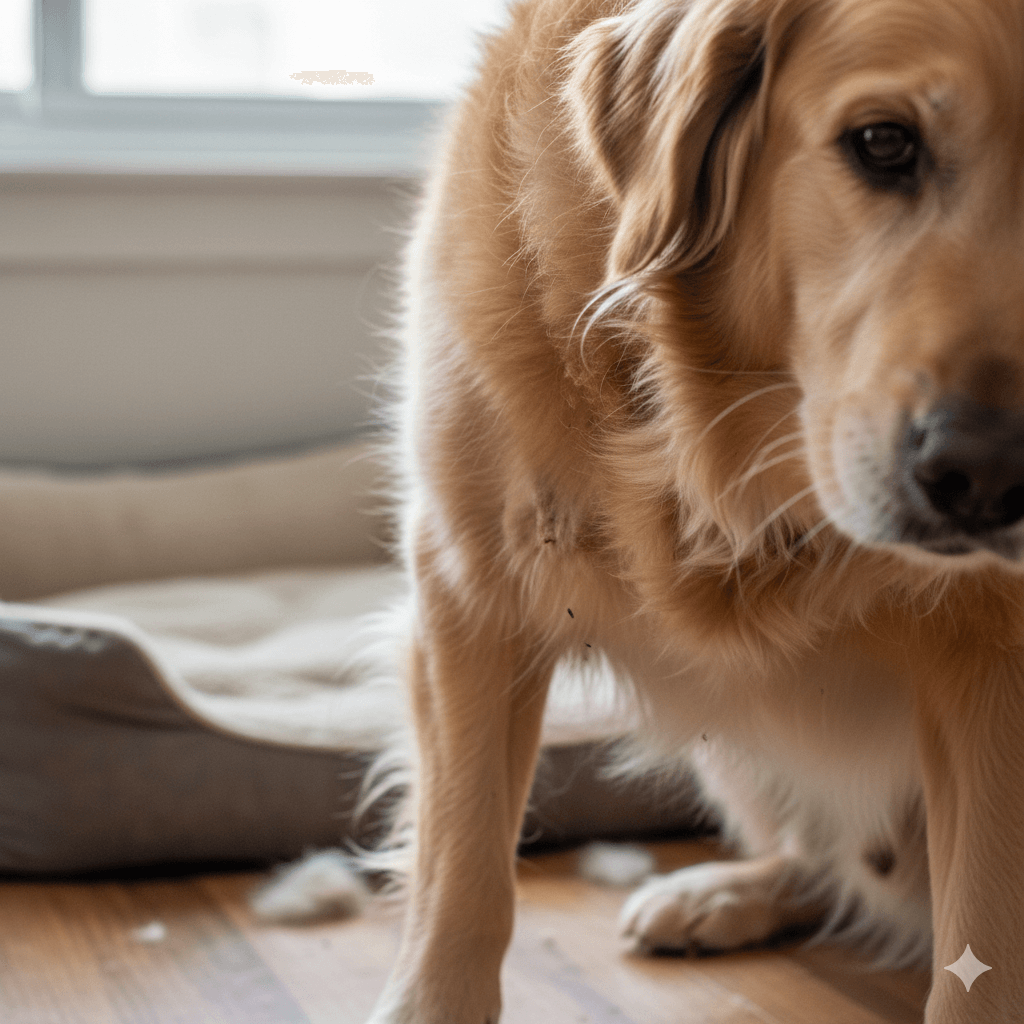
Common Areas of Hair Loss Caused by Fleas
Hair loss due to fleas typically occurs in specific areas where fleas congregate or where dogs focus their scratching. Recognizing these patterns helps identify flea-related issues early and take appropriate action.
- Base of the Tail:
Fleas often cluster around the tail base, making it a hotspot for hair loss. Dogs frequently chew or bite this area, worsening the condition. - Hindquarters and Thighs:
These areas are easily accessible for scratching, leading to significant hair loss and redness from constant irritation. - Abdomen and Groin:
Fleas thrive in warm, less exposed areas like the abdomen. Dogs may lick or chew excessively here, causing bald patches. - Ears and Neck:
Flea bites around the ears and neck prompt dogs to rub or scratch, resulting in hair loss and potential ear infections. - Legs and Paws:
Dogs may chew their legs or paws to relieve itching, leading to thinning fur and inflamed skin in these regions.
Understanding these common areas allows you to monitor your dog closely and intervene before hair loss becomes severe.
Check this guide 👉Coconut Oil for Dogs Fleas: Best 7 Expert Tips!
Check this guide 👉Dog Losing Hair Around Nose: Best 7 Expert Tips!
Check this guide 👉Garlic for Dogs and Fleas: Best 7 Expert Tips!
| Prevention Methods | Treatment Options |
|---|---|
| Monthly topical flea treatments | Medicated shampoos for soothing skin |
| Oral flea medications prescribed by vets | Antibiotics for secondary infections |
| Flea collars for continuous protection | Anti-inflammatory drugs to reduce itching |
| Regular vacuuming and home cleaning | Omega-3 supplements for coat recovery |
| Yard maintenance to eliminate flea habitats | Veterinary check-ups for advanced cases |
Symptoms of Flea-Related Hair Loss in Dogs
Hair loss is just one symptom of a flea problem—dogs often exhibit other signs that indicate an infestation or related complications. Identifying these symptoms ensures timely treatment and prevents further damage.
- Excessive Scratching and Licking:
Persistent scratching or licking signals flea activity and discomfort. These behaviors are often accompanied by visible hair loss in affected areas. - Red, Inflamed Skin:
Flea bites cause localized redness and inflammation, which may progress to open sores or scabs if left untreated. - Visible Fleas or Flea Dirt:
Tiny black specks (flea dirt) or actual fleas on your dog’s skin confirm an infestation and explain the hair loss. - Patchy or Thinning Fur:
Bald spots or uneven fur distribution indicate prolonged flea exposure and chronic scratching. - Behavioral Changes:
Restlessness, irritability, or aggression may stem from flea-related discomfort, signaling the need for immediate intervention.
Recognizing these symptoms early helps prevent long-term damage to your dog’s coat and skin.
Long-Term Effects of Untreated Flea Infestations
Ignoring a flea problem can lead to severe consequences beyond hair loss. Fleas multiply rapidly, and untreated infestations wreak havoc on your dog’s health and well-being.
- Severe Skin Damage:
Prolonged scratching and secondary infections result in deep wounds, scarring, and permanent skin damage. - Chronic Hair Loss:
Without treatment, hair loss may become irreversible due to damaged follicles or ongoing inflammation. - Anemia in Severe Cases:
Fleas feed on blood, and heavy infestations can cause anemia, especially in small or young dogs. - Weakened Immune System:
Constant stress from flea bites and infections weakens your dog’s immune system, making them more susceptible to other illnesses. - Behavioral and Emotional Impact:
Chronic discomfort from fleas affects your dog’s quality of life, leading to anxiety, lethargy, or depression.
Preventing these long-term effects requires proactive flea control and regular monitoring.
Effective Treatments for Flea-Related Hair Loss
Treating flea-related hair loss involves addressing both the infestation and its consequences. A comprehensive approach ensures your dog’s coat and skin heal properly.
- Flea Control Products:
Topical treatments, oral medications, or flea collars eliminate fleas and prevent reinfestation when used consistently. - Medicated Shampoos:
Shampoos containing soothing ingredients like oatmeal or antiseptics reduce itching, cleanse the skin, and promote healing. - Antibiotics for Infections:
If secondary infections occur, antibiotics prescribed by your vet help clear up bacterial or fungal issues. - Anti-Inflammatory Medications:
Steroids or antihistamines reduce inflammation and alleviate itching, giving your dog relief while their coat regrows. - Supplements for Coat Health:
Omega-3 fatty acids and other supplements support skin repair and encourage healthy hair regrowth.
Combining these treatments restores your dog’s coat and prevents future issues.
Preventing Flea Infestations and Hair Loss
Prevention is the best strategy for protecting your dog from fleas and their damaging effects. Simple measures significantly reduce the risk of infestations and subsequent hair loss.
- Regular Flea Prevention:
Monthly flea prevention products, whether topical, oral, or collar-based, keep fleas at bay and protect your dog year-round. - Clean Living Environment:
Vacuum carpets, wash bedding, and treat your home regularly to eliminate fleas and their eggs from your living space. - Yard Maintenance:
Trimming grass and removing debris reduces flea habitats outdoors, minimizing exposure during walks or playtime. - Routine Grooming:
Regular brushing and inspections help detect fleas early, preventing infestations from worsening. - Veterinary Check-Ups:
Scheduled vet visits ensure your dog stays healthy and allow for early detection of potential flea problems.
Proactive prevention safeguards your dog’s coat and overall well-being.
When to Consult a Veterinarian About Fleas
While mild flea infestations can often be managed at home, certain situations require professional veterinary intervention. Knowing when to seek help ensures your dog receives the care they need.
- Severe Hair Loss or Skin Damage:
Extensive bald patches, open sores, or scabs warrant immediate veterinary attention to prevent further complications. - Signs of Anemia:
Pale gums, weakness, or lethargy in small dogs or puppies indicates a potentially life-threatening flea-induced anemia. - Persistent Itching Despite Treatment:
If your dog continues to scratch despite flea control measures, underlying allergies or infections may need diagnosis. - Unexplained Weight Loss or Behavioral Changes:
These symptoms may signal advanced flea infestations or other health issues requiring professional evaluation. - Flea Infestations in Multi-Pet Homes:
When multiple pets are affected, a vet can provide tailored solutions to treat all animals and the environment effectively.
Timely veterinary care prevents minor flea problems from escalating into major health concerns.
“Fleas are the most common external parasite in dogs, and they cause intense itching and often hair loss or skin infections.” This confirms that flea infestations directly contribute to alopecia through persistent irritation and self-trauma. – Cornell University College of Veterinary Medicine
Frequently Asked Questions About Fleas and Hair Loss in Dogs
Can fleas alone cause hair loss in dogs?
Yes, fleas can directly cause hair loss due to intense scratching, biting, and the resulting skin irritation.
How long does it take for a dog’s fur to grow back after flea treatment?
Hair regrowth typically begins within 4–6 weeks after successful flea treatment and skin healing, depending on the severity of the damage.
Are certain dog breeds more prone to flea-related hair loss?
Breeds with sensitive skin, thick coats, or allergies (e.g., Retrievers, Bulldogs) are more susceptible to flea-related issues and subsequent hair loss.
Can I use over-the-counter flea treatments for my dog?
While some OTC treatments are effective, consult your vet to ensure the product is safe and appropriate for your dog’s size, breed, and health condition.
What if my dog still loses hair after flea treatment?
Persistent hair loss may indicate an underlying issue like allergies, infections, or hormonal imbalances—consult your vet for further diagnosis.
A Lifeline for Your Dog’s Coat and Comfort
Fleas are more than just a nuisance—they can wreak havoc on your dog’s coat, skin, and overall well-being. Understanding how fleas cause hair loss empowers you to take proactive steps, from prevention to treatment, ensuring your furry friend stays healthy and comfortable. With consistent flea control, proper grooming, and timely veterinary care, you can restore your dog’s lustrous coat and protect them from future infestations. Remember, your vigilance and care are the ultimate shields against these persistent pests—a testament to the love and dedication you have for your loyal companion.

Is Rawhide Bad for Cats? Best 7 Expert Tips! – Discover the risks, safe alternatives, and expert advice to keep your feline friend healthy and happy.

Is Rawhide Bad for Dogs? Best 7 Expert Tips! – Discover the risks, benefits, and safer alternatives to rawhides for your dog’s chewing needs.

Understanding Anorexia in Cats: Best 7 Expert Tips! – Learn why cats stop eating, spot warning signs, and discover how to help your feline regain appetite safely.

Understanding Anorexia in Dogs: Best 7 Expert Tips! – Learn causes, symptoms, and solutions to help your dog regain appetite and stay healthy.