
Can Cats See in the Dark?
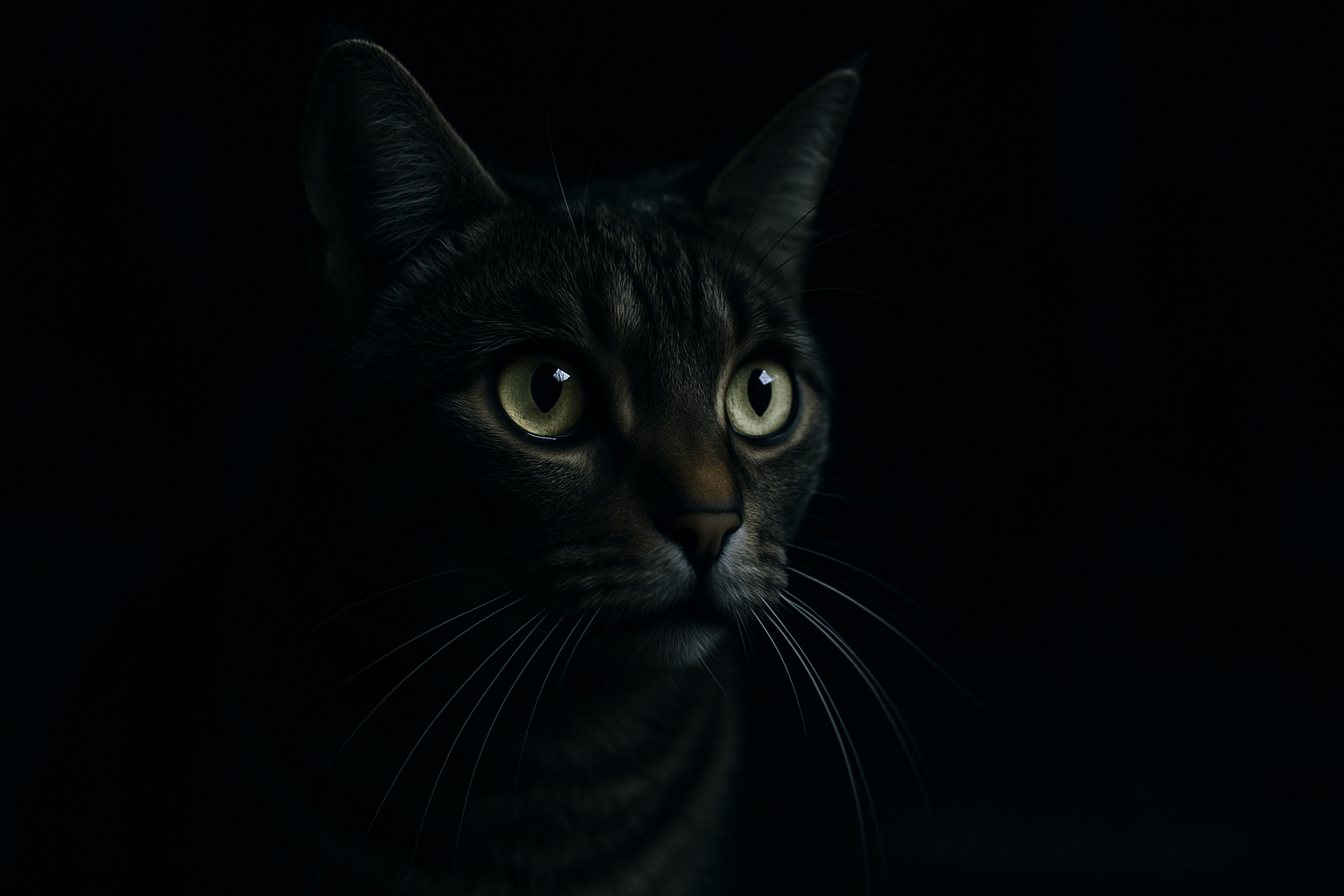
Few creatures embody mystery and nocturnal grace quite like the domestic cat. With their silent paws, luminous eyes, and uncanny ability to vanish into shadows, it’s no wonder we’ve long believed cats possess supernatural night vision. But what’s truth and what’s myth? Can cats really see in total darkness—or is there more to their legendary abilities than meets the eye? Let’s unravel the science behind your feline’s twilight talents.
The Science Behind Feline Night Vision
Cats don’t see in total darkness—but they come remarkably close. Their eyes are evolutionary masterpieces, fine-tuned over millions of years to thrive in low-light conditions far beyond human capability. While they still need a tiny bit of ambient light—like moonlight or starlight—to navigate, their visual system gives them a dramatic edge when the sun goes down.
- Tapetum Lucidum: The Eye’s Natural Headlight
Behind the retina, cats have a reflective layer called the tapetum lucidum. This mirror-like structure bounces light back through the photoreceptors, giving them a second chance to detect it—enhancing night vision by up to 44%. - High Rod-to-Cone Ratio
Cats’ retinas are packed with rod cells (sensitive to dim light and motion) and far fewer cone cells (used for color and daylight detail). This trade-off sacrifices color richness for superior low-light detection. - Elliptical Pupils That Expand Fully
In darkness, a cat’s pupils can open into near-perfect circles, allowing up to 50% more light to enter the eye compared to human pupils. - Wider Field of View
With eyes set slightly forward and outward, cats enjoy a 200-degree field of vision—more than humans’ 180 degrees—helping them detect movement from the corners of the room even in near-darkness. - Enhanced Motion Detection
Their visual system prioritizes detecting the slightest twitch or scurry—a trait vital for hunting small prey at dawn or dusk.
All these adaptations mean your cat isn’t just “seeing in the dark”—they’re interpreting a world of subtle shadows, air currents, and faint glimmers that remain invisible to us.
How Cat Vision Differs from Human Vision
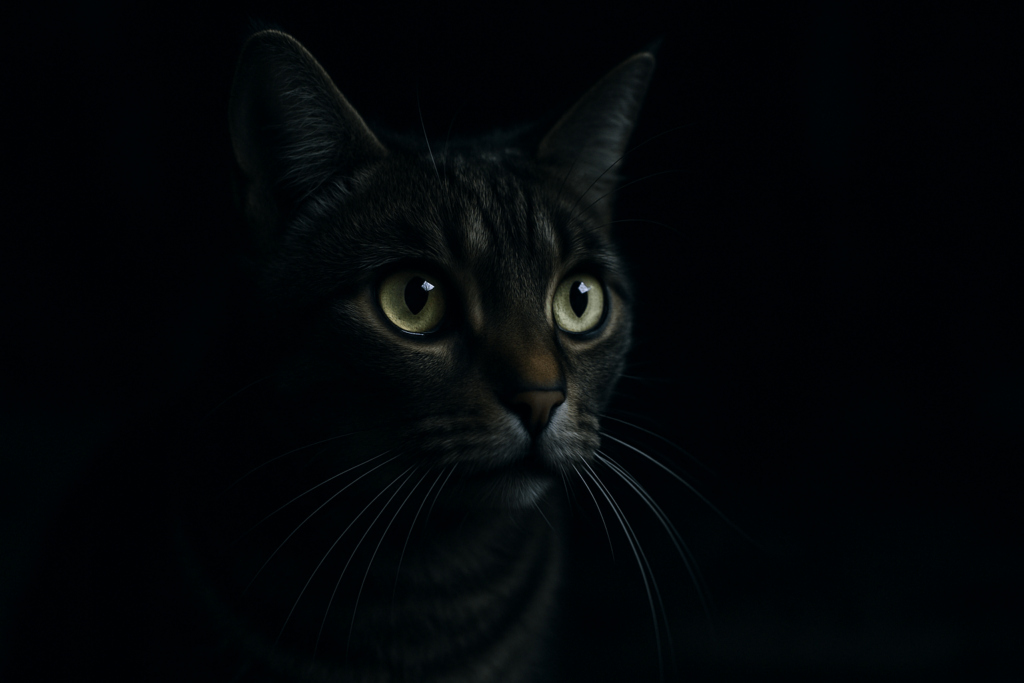
While humans rely heavily on color and fine detail, cats experience the world through motion, contrast, and ambient light. Their vision is optimized for survival—not for admiring sunsets or reading labels.
- Limited Color Perception
Cats see blues and greens moderately well but struggle with reds and pinks, which likely appear as muted grays or yellows. Their world is less vibrant but more contrast-focused. - Blurrier Daytime Vision
A cat’s visual acuity is about 20/100 to 20/200, meaning what we see clearly at 100 feet, they’d need to be just 20 feet away to discern. Daylight isn’t their visual sweet spot. - Better Peripheral Awareness
Their slightly lateral eye placement provides superior motion detection on the edges of their vision—crucial for spotting predators or prey in tall grass. - Faster Flicker Fusion Rate
Cats process visual information about 50–70 frames per second (humans: ~20), making fast movements appear smoother and helping them track darting insects or toys. - Less Dependence on Vision Alone
While their eyes are impressive, cats also rely heavily on whiskers, hearing, and scent to “see” their environment—especially in true darkness.
So while your cat may not need a nightlight, they’re not operating entirely on sight alone. Their senses work as an integrated system—vision is just one brilliant piece.
Check this guide 👉Causes of Cat Eye Infection: Best 7 Expert Tips!
Check this guide 👉Cat Eye Diseases: Best 7 Expert Tips!
Check this guide 👉Understanding Cat Eye Language: Best 7 Expert Tips!
| Night Vision Strengths | Limitations & Realities |
|---|---|
| See clearly with only 1/6th the light humans need | Cannot see in pitch-black conditions |
| Detect subtle movements in near-darkness | Poor depth perception up close (under 1 foot) |
| Tapetum lucidum causes eye shine (green/yellow glow) | More susceptible to glare in bright light |
| Excellent low-light contrast sensitivity | Limited color spectrum (dichromatic vision) |
| Pupils adapt rapidly to changing light levels | Daytime vision is less sharp than humans’ |
Evolutionary Roots of the Cat’s Nocturnal Edge
The cat’s night prowess isn’t just a quirky trait—it’s the legacy of ancient predators. From African wildcats to modern house cats, evolution has consistently favored those who could hunt effectively at twilight.
- Crepuscular Ancestors
Wild ancestors of domestic cats were most active during dawn and dusk (crepuscular), avoiding both daytime heat and larger nocturnal predators. - Survival Through Stealth
Low-light vision allowed them to stalk rodents and small birds when these prey were most active—and least alert. - Energy Conservation Strategy
Hunting in cooler, dimmer hours helped conserve energy in hot climates—a trait still seen in cats who nap all day and zoom at midnight. - Predator Avoidance
Being active when larger carnivores (like big cats or canids) were less active reduced risk, especially for smaller felines. - Genetic Consistency Across Species
From lions to house cats, the basic eye structure remains remarkably similar—proof of how successful this adaptation has been.
This evolutionary blueprint explains why your indoor cat still pounces on shadows at 3 a.m.—they’re hardwired for the hunt, even if their “prey” is just a dust mote in a moonbeam.
How Darkness Affects Cat Behavior
Even with superior low-light vision, total darkness changes how cats interact with their world. Without any light, they switch to other senses—but their behavior often still reflects their visual expectations.
- Increased Whisker Use
In full darkness, whiskers (vibrissae) detect air currents and nearby objects, acting like a tactile radar system. - More Vocal or Cautious Movement
Some cats become quieter, moving slowly to avoid collisions; others meow more to orient themselves or call for you. - Preference for Familiar Paths
Cats memorize their home layout and stick to known routes when visibility drops, avoiding new obstacles. - Heightened Startle Response
Without visual cues, sudden sounds or touches may trigger defensive reactions—ears back, tail puffed. - Sleep Patterns Shift
Many cats sleep deeper in complete darkness but become hyper-alert with even minimal light (like a hallway nightlight).
Understanding these shifts helps you create a safer, calmer nighttime environment for your feline friend.
Practical Tips for Cat Owners in Low-Light Homes
You don’t need to flood your home with light—but a few thoughtful adjustments can help your cat thrive after sunset.
- Use Subtle Nightlights
A dim, warm-colored nightlight in hallways or near litter boxes provides enough ambient glow for confident navigation. - Keep Pathways Clear
Avoid leaving shoes, toys, or furniture in walkways—cats memorize layouts, and sudden changes cause stress in low light. - Avoid Sudden Bright Lights
Turning on overhead lights at night can temporarily blind your cat; use softer, indirect lighting instead. - Place Litter Boxes in Accessible Spots
Ensure boxes are easy to find and not tucked in pitch-black corners—cats value privacy but need visibility. - Engage Their Other Senses
Provide puzzle feeders or crinkly toys that rely on sound and touch, not just sight, for nighttime enrichment.
These small steps honor your cat’s natural abilities while bridging the gaps where vision falls short.
Common Myths About Cats and Night Vision
Pop culture has exaggerated feline sight for centuries—but separating fact from fiction helps us better understand our pets.
- Myth: Cats see in total darkness
False—they need some light. In absolute blackness, they rely on whiskers and memory, not vision. - Myth: Cats see only in black and white
Incorrect—they see limited colors, primarily blues and greens, though less vividly than humans. - Myth: All cats have the same night vision
Not true—breed, age, and eye color can affect performance. Blue-eyed white cats, for instance, may have reduced tapetal reflection. - Myth: A cat’s eyes glow because they produce light
No—the glow (eyeshine) is reflected ambient light, like a bicycle reflector. - Myth: Older cats lose night vision completely
While cataracts or retinal degeneration can occur, many senior cats retain good low-light function with proper care.
Busting these myths fosters more informed, compassionate care.
Supporting Your Cat’s Vision Health Long-Term
Good eye health ensures your cat maintains their remarkable visual abilities well into old age.
- Schedule Annual Vet Checkups
Early detection of conditions like glaucoma, cataracts, or retinal atrophy can preserve vision longer. - Feed a Taurine-Rich Diet
Taurine—an amino acid found in meat—is essential for retinal health. Deficiency can lead to irreversible blindness. - Keep Eyes Clean
Gently wipe away discharge with a damp cloth; persistent tearing or cloudiness warrants a vet visit. - Provide Mental Stimulation
Interactive toys that encourage tracking and pouncing help maintain visual processing skills. - Avoid Smoke and Harsh Chemicals
Secondhand smoke and strong cleaners can irritate delicate feline eyes and contribute to long-term damage.
Proactive care keeps those luminous eyes sharp, bright, and ready for twilight adventures.
Frequently Asked Questions About Cat Night Vision
Can cats see in the dark?
They can see in very low light—but not in total darkness. They need at least a small amount of ambient light, like moonlight or a nightlight.
Do cats need a nightlight?
Not necessarily, but a soft nightlight can help them navigate more confidently and reduce nighttime anxiety or accidents.
Why do cats’ eyes glow in the dark?
The glow comes from the tapetum lucidum, a reflective layer that bounces light back through the retina—enhancing night vision and causing that eerie shine.
Are kittens born with night vision?
No—kittens’ eyes don’t fully develop until around 10 weeks old. Their night vision improves as the tapetum lucidum matures.
Can a cat’s night vision decline with age?
Yes, just like humans, cats can develop age-related eye conditions. Regular vet checks help catch issues early.
The Truth Behind the Twilight Gaze
So, can cats see in the dark? Not quite—but they dance so close to that edge of perception that it might as well be magic. Their eyes are marvels of natural engineering, blending evolutionary wisdom with sensory finesse to turn dimness into domain. Whether they’re leaping at a phantom mouse in the moonlight or curling up beside you in quiet contentment, their vision—like their spirit—is perfectly attuned to the liminal spaces between light and shadow. And perhaps that’s the real secret: cats don’t just see in the dark—they belong there.

Is Rawhide Bad for Cats? Best 7 Expert Tips! – Discover the risks, safe alternatives, and expert advice to keep your feline friend healthy and happy.

Is Rawhide Bad for Dogs? Best 7 Expert Tips! – Discover the risks, benefits, and safer alternatives to rawhides for your dog’s chewing needs.

Understanding Anorexia in Cats: Best 7 Expert Tips! – Learn why cats stop eating, spot warning signs, and discover how to help your feline regain appetite safely.

Understanding Anorexia in Dogs: Best 7 Expert Tips! – Learn causes, symptoms, and solutions to help your dog regain appetite and stay healthy.