
Can a Human Get a Cat Sick? Best 7 Expert Tips!
While we often worry about catching illnesses from our pets, the reverse can also happen—humans can sometimes pass diseases to cats. Though rare, certain viruses, bacteria, and even emotional stress from owners may affect feline health. Understanding these risks helps you protect your sensitive companion. Simple hygiene and awareness go a long way in keeping your cat safe. Let’s explore how your habits might influence your cat’s well-being and what you can do to prevent it.
How Humans Can Unintentionally Make Cats Ill
Cats have delicate immune systems and can react strongly to pathogens or environmental changes introduced by their human companions. Though cross-species transmission is uncommon, it’s not impossible. Below are key ways human behavior or health may negatively impact your feline friend:
- Respiratory Virus Transmission:
Humans with colds or flu may rarely pass certain strains (like influenza A or H1N1) to cats, especially during close contact like cuddling while sick. - Poor Hand Hygiene After Illness:
Touching your cat after coughing, sneezing, or using the restroom without washing hands can transfer harmful bacteria or viruses to their fur or environment. - Shared Food or Utensils:
Offering human food from your plate or using the same spoon can introduce seasonings, fats, or microbes unsafe for cats, triggering vomiting or diarrhea. - Stress Transfer from Owners:
Cats are highly attuned to human emotions; chronic anxiety, tension, or grief in the household can lead to stress-related conditions like feline idiopathic cystitis. - Improper Medication Handling:
Accidentally exposing cats to human medications (e.g., leaving pills out) can lead to toxic ingestion—even trace amounts of acetaminophen are deadly.
Most cats recover well if exposure is limited, but prevention through mindful habits is always the safest approach.
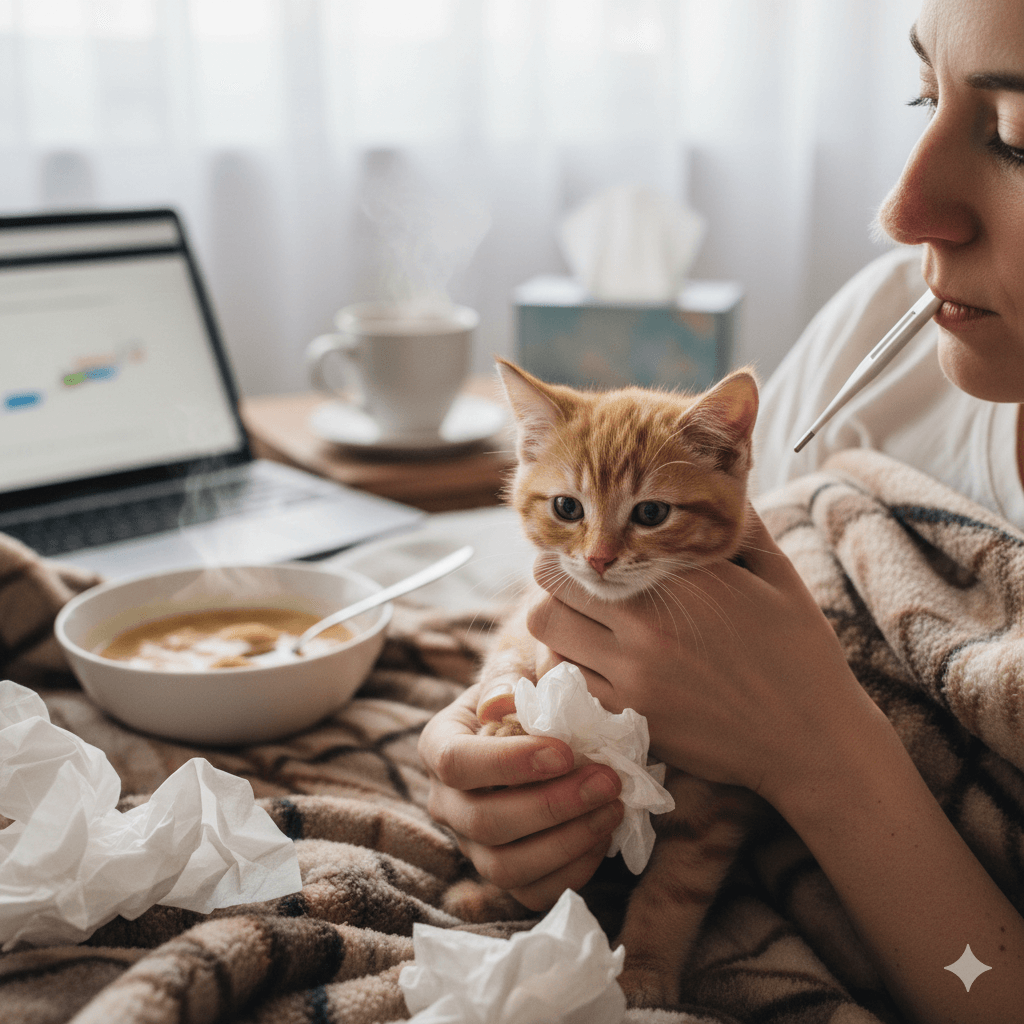
Common Human-Borne Illnesses That May Affect Cats
Not all human diseases can infect cats, but a few have documented zoonotic potential in reverse (anthroponosis). Awareness helps you take smart precautions during your own illness:
- Influenza (Flu):
Documented cases show cats can contract human influenza, showing symptoms like lethargy, fever, coughing, or nasal discharge. - SARS-CoV-2 (COVID-19):
Though uncommon, cats in households with infected humans have tested positive, typically showing mild respiratory or gastrointestinal signs. - Ringworm (Dermatophytosis):
Despite the name, it’s a fungal infection—humans can pass it to cats through direct skin contact, causing circular hair loss and scaly skin. - Gastrointestinal Bacteria:
Poor hygiene can transmit E. coli or Salmonella from humans to cats, especially in multi-pet homes with shared surfaces. - Herpes Simplex Virus (Rare):
Extremely rare, but isolated reports suggest possible transmission causing eye or skin lesions in immunocompromised cats.
While risk remains low, it’s wise to limit close contact with your cat if you’re actively ill with a contagious condition.
Check this guide 👉Can Humans Get Sick from Cats: Best 7 Expert Tips!
Check this guide 👉Are Cats Mouths Cleaner Than Humans? Best 7 Expert Tips!
Check this guide 👉What Human Pain Medicine Can I Give My Cat: Best 7 Tips!
Safe Practices When You’re Sick | High-Risk Behaviors to Avoid |
|---|---|
Wash hands before handling your cat | Coughing or sneezing near your cat’s face |
Wear a mask if you have respiratory illness | Sharing bedding while running a fever |
Designate a healthy caregiver temporarily | Letting your cat lick your hands after using sanitizer |
Disinfect surfaces your cat contacts | Using scented cleaners that irritate feline airways |
Keep tissues and medications out of reach | Leaving used tissues where your cat might sniff them |
Protecting Your Cat During Your Illness
When you’re unwell, a few thoughtful adjustments can shield your cat from potential exposure without sacrificing your bond:
- Limit Face-to-Face Contact:
Avoid kissing your cat or letting them nuzzle your face while you’re symptomatic—viral particles spread easily through breath and saliva. - Delegate Daily Care Tasks:
If possible, have another household member feed, clean the litter box, and handle playtime until you recover. - Sanitize High-Touch Areas:
Regularly wipe doorknobs, countertops, and furniture your cat jumps on with pet-safe disinfectants to reduce pathogen load. - Maintain Calm Energy:
Speak softly and keep routines consistent—even if you’re not feeling well, predictability reassures your cat emotionally. - Monitor for Feline Symptoms:
Watch for sneezing, eye discharge, loss of appetite, or hiding—these may signal your cat has been affected and needs veterinary care.
Your cat’s small size and grooming habits make them more vulnerable than you might think—proactive care shows true love.
High-Risk Situations That Increase Transmission Chances
Some scenarios amplify the likelihood of passing illness to your cat, especially if their immune system is already compromised:
- Living in Close Quarters:
Small apartments or homes where you share beds or couches constantly increase exposure during your illness. - Caring for Kittens or Senior Cats:
Young and elderly cats have weaker immune defenses, making them more susceptible to human-borne pathogens. - Immunocompromised Cats:
Cats with FIV, FeLV, diabetes, or on immunosuppressive drugs face higher risks from even mild human infections. - Households with Frequent Visitors:
More people mean more potential pathogen sources; always ask guests to wash hands before petting your cat. - Using Essential Oils or Strong Cleaners:
Though not infectious, these irritants—often used when humans are ill—can cause respiratory distress in cats.
Being extra cautious in these situations reflects responsible pet ownership during vulnerable times.
Expert-Backed Hygiene Tips to Keep Your Cat Safe
Veterinarians emphasize simple, consistent hygiene as the best shield against reverse zoonosis. These evidence-based habits protect both you and your pet:
- Handwashing as a Non-Negotiable:
Use soap and warm water for 20 seconds before feeding, medicating, or cuddling your cat—especially after using the bathroom or blowing your nose. - Keep Sick Items Contained:
Store tissues, masks, and used utensils in closed bins your cat can’t access or investigate. - Avoid “Kissing” Behaviors:
Refrain from letting your cat lick your face or hands during illness—saliva can carry pathogens even if you feel better. - Wash Bedding Frequently:
Launder shared blankets or your cat’s favorite nap spots in hot water during and after your illness to eliminate lingering microbes. - Use Pet-Safe Disinfectants Only:
Never use bleach, phenol-based cleaners, or alcohol sprays near your cat—opt for veterinary-approved products like accelerated hydrogen peroxide.
These small acts create a cleaner, safer shared environment without disrupting your bond.
When to Call the Vet If Your Cat Shows Symptoms
If your cat develops signs of illness shortly after your own sickness, don’t assume it’s unrelated. Timely veterinary input ensures proper diagnosis and care:
- Respiratory Signs:
Sneezing, nasal discharge, coughing, or open-mouth breathing warrant immediate attention—cats hide illness until it’s advanced. - Lethargy or Hiding:
A normally social cat retreating for more than 12 hours may be unwell, especially if combined with reduced appetite. - Eye Changes:
Squinting, redness, or discharge (especially green/yellow) could indicate viral or bacterial conjunctivitis. - Gastrointestinal Upset:
Vomiting or diarrhea lasting over 24 hours risks dehydration in cats and needs professional evaluation. - Fever or Warm Ears:
While hard to detect at home, warm ears, shivering, or reluctance to move may signal systemic infection.
Early intervention often prevents mild cases from becoming severe—trust your instincts as your cat’s advocate.
Preventing Illness Transmission from Humans to Cats
Protecting your cat from potential human-borne illnesses starts with mindful daily habits. While most human pathogens don’t affect felines, taking simple precautions can significantly reduce even the smallest risks. The following strategies empower you to be a proactive guardian of your cat’s health—especially during cold and flu season or when someone in the household is unwell:
- Practice Consistent Hand Hygiene:
Always wash your hands thoroughly with soap and water before handling your cat, their food, or their litter box—particularly after using the bathroom, blowing your nose, or touching your face. - Avoid Close Facial Contact While Sick:
Refrain from kissing your cat or allowing them to nuzzle your mouth or nose when you have a respiratory infection, as airborne droplets can carry transmissible viruses. - Keep Medications and Tissues Out of Reach:
Store all human medications, used tissues, and sanitizers in closed cabinets—cats may investigate these items out of curiosity, risking accidental ingestion or exposure. - Maintain a Clean Shared Environment:
Regularly disinfect surfaces your cat frequently contacts (like countertops, bedspreads, or couches) using pet-safe cleaners, especially during your illness. - Monitor Your Cat’s Behavior After Your Recovery:
Even after you feel better, watch for subtle changes in your cat’s appetite, energy, or litter box habits for 5–7 days—early detection leads to faster treatment if needed.
By integrating these practices into your routine, you create a safer, healthier space for both you and your feline companion—without sacrificing the closeness that makes your bond so special.
“Reverse zoonosis or zooanthroponosis is the transfer of pathogens from humans to animals. Although less studied than zoonotic diseases, this phenomenon poses a worldwide disease threat.” – Al Noman
Frequently Asked Questions About Humans Passing Illness to Cats
Can I give my cat a cold?
Most human colds (rhinoviruses) don’t affect cats, but some flu strains can—limit close contact if you’re sick.
Is it safe to hold my cat when I have a fever?
Brief, calm interaction is usually fine, but avoid face-to-face contact and wash hands thoroughly before and after.
Can stress from my anxiety make my cat physically ill?
Yes—chronic stress in owners can trigger feline stress cystitis, overgrooming, or digestive upset in sensitive cats.
Should I quarantine myself from my cat if I have COVID-19?
The CDC recommends limiting contact; if possible, have another household member care for your cat during your illness.
Do I need to disinfect my cat’s fur if I’ve been sick?
No—bathing isn’t necessary and can stress your cat. Focus on hand hygiene and environmental cleaning instead.
Caring for Your Cat with Conscious Compassion
Your love for your cat runs deep—and that same love calls for mindful awareness when you’re unwell. While the chance of making your feline friend sick is low, taking gentle precautions honors their vulnerability and strengthens your shared trust. By washing your hands, respecting their space during illness, and watching for subtle signs of distress, you become not just a companion, but a protector. Remember, cats thrive on routine and emotional safety as much as physical health. Your thoughtful actions during your own recovery speak volumes in their quiet language of care. In the quiet moments of healing—for both of you—your bond grows even stronger.

Is Rawhide Bad for Cats? Best 7 Expert Tips! – Discover the risks, safe alternatives, and expert advice to keep your feline friend healthy and happy.

Is Rawhide Bad for Dogs? Best 7 Expert Tips! – Discover the risks, benefits, and safer alternatives to rawhides for your dog’s chewing needs.

Understanding Anorexia in Cats: Best 7 Expert Tips! – Learn why cats stop eating, spot warning signs, and discover how to help your feline regain appetite safely.

Understanding Anorexia in Dogs: Best 7 Expert Tips! – Learn causes, symptoms, and solutions to help your dog regain appetite and stay healthy.