
Discovering the Bracco Italiano: A Versatile Hunting Companion
The Bracco Italiano, also known as the Italian Pointer, is a breed celebrated for its elegance, intelligence, and exceptional hunting skills. Originally developed in Italy as a versatile gun dog, this breed excels in tracking, pointing, and retrieving game with remarkable endurance. Whether you’re an avid hunter or simply seeking a loyal and active companion, the Bracco Italiano’s gentle nature and striking appearance make it a standout choice for enthusiasts worldwide.
Origins and History of the Bracco Italiano
The Bracco Italiano is one of the oldest pointing breeds in the world, with a rich history that dates back thousands of years. This noble breed originated in Italy and was highly prized by Italian nobility for its hunting prowess. Over time, the Bracco Italiano evolved into two distinct types—the lighter Piedmontese variety and the heavier Lombard variety—both of which were eventually standardized into the modern breed we know today. Understanding its origins provides insight into the breed’s purpose and characteristics.
- Ancient Roots in Italy:
Historical records suggest the Bracco Italiano existed as early as the 4th or 5th century BC, making it one of the oldest gun dog breeds in Europe. Its ancestors were likely crossed with sighthounds and Molossers to create its unique traits. - Role in Italian Nobility:
During the Renaissance, the Bracco Italiano became a favorite among Italian aristocrats who valued its versatility in hunting large and small game across diverse terrains. - Near Extinction in the 19th Century:
By the late 1800s, changes in hunting practices and crossbreeding nearly led to the breed’s extinction. Dedicated breed enthusiasts worked tirelessly to revive it through careful breeding programs. - Standardization in the 20th Century:
In the early 1900s, breed clubs were established to preserve the Bracco Italiano’s purity. The Italian Kennel Club officially recognized the breed in 1949, ensuring its survival. - Modern Recognition Worldwide:
Today, the Bracco Italiano is gaining popularity beyond Italy, particularly in Europe and North America, where hunters and families alike appreciate its loyalty and skill.
This storied history highlights the breed’s resilience and enduring appeal as both a working dog and a cherished companion.
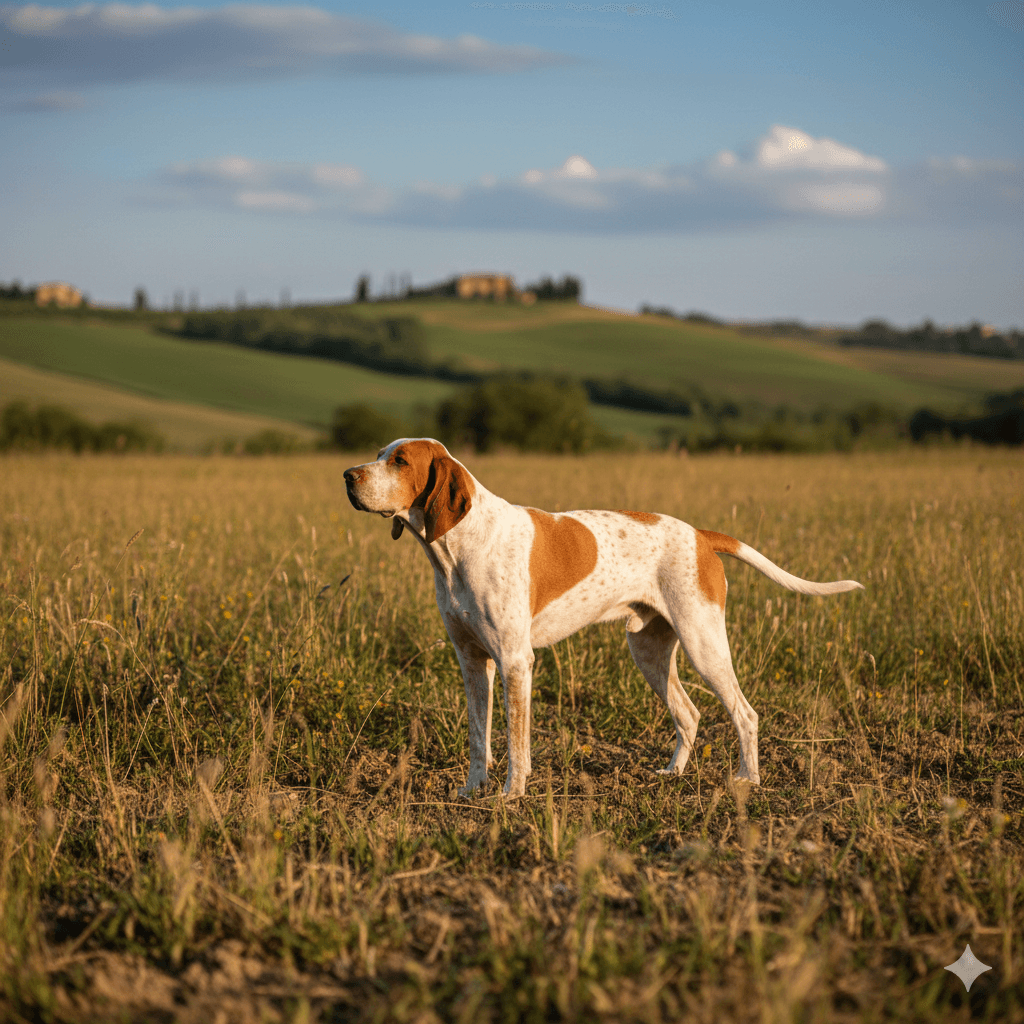
Distinctive Physical Traits of the Bracco Italiano
The Bracco Italiano is renowned for its striking appearance, combining elegance with athleticism. Its muscular build, expressive eyes, and droopy ears give it a regal yet approachable look. These physical attributes are not just aesthetic—they serve functional purposes that make the Bracco Italiano an exceptional hunter and companion.
- Powerful and Agile Build:
Standing 21–27 inches tall and weighing 55–90 pounds, the Bracco Italiano has a robust yet streamlined body designed for endurance during long hunts. - Expressive Eyes and Facial Features:
Their large, soulful eyes convey intelligence and kindness, while their loose skin and wrinkled face add character and charm to their expression. - Distinct Coat Colors and Texture:
The breed sports a short, glossy coat that comes in solid white, orange and white, or brown and white patterns. This low-maintenance coat repels dirt and water effectively. - Droopy Ears and Tail Carriage:
Their long, pendulous ears help trap scents, enhancing their tracking abilities. The tail is typically docked (where legal) to prevent injury in dense brush. - Graceful Movement and Stamina:
The Bracco Italiano moves with effortless grace, showcasing strength and agility. Their gait allows them to cover vast distances without tiring quickly.
These distinctive traits make the Bracco Italiano a standout breed admired for both form and function.
Check this guide 👉Italian Dog Breeds: Best 7 Expert Tips!
Check this guide 👉Understanding Italian Water Dog Size: Best 7 Expert Tips!
Check this guide 👉Italian Greyhound Dachshund Mix: Best 7 Expert Tips!
Key Characteristics | Living Needs |
|---|---|
Size: 21–27 inches, Weight: 55–90 lbs | Requires large spaces; not ideal for apartments |
Lifespan: 10–12 years | High energy; needs 1–2 hours of daily exercise |
Coat: Short, glossy, low-maintenance | Thrives in active households; prefers companionship |
Temperament: Gentle, loyal, intelligent | Prone to separation anxiety if left alone too long |
Health Risks: Hip dysplasia, bloat, ear infections | Regular vet check-ups and grooming recommended |
Temperament and Personality Traits
The Bracco Italiano is beloved not only for its hunting skills but also for its gentle and affectionate nature. This breed thrives on human companionship and forms deep bonds with its family. Understanding its temperament ensures you can provide the right environment for this loyal and intelligent dog.
- Gentle and Affectionate Nature:
Known for their calm demeanor, Bracchi are excellent family pets who enjoy spending time with their humans, whether lounging indoors or playing outside. - Highly Intelligent and Trainable:
Their sharp minds and eagerness to please make training relatively easy, though consistency and positive reinforcement are key to success. - Strong Prey Drive and Work Ethic:
Bred as hunting dogs, they have an innate desire to track and retrieve game, requiring ample mental stimulation and physical exercise to stay content. - Social and Friendly Disposition:
Bracchi generally get along well with children, other dogs, and even strangers, thanks to their friendly and outgoing personalities. - Potential for Separation Anxiety:
Due to their strong attachment to their owners, Bracchi may develop anxiety if left alone for extended periods, leading to destructive behaviors.
This blend of traits makes the Bracco Italiano a loving and devoted companion for active households.
Health Considerations for the Bracco Italiano
Like all breeds, the Bracco Italiano is prone to certain health issues that prospective owners should be aware of. While generally a hardy breed, regular vet check-ups and preventive care are essential to ensure a long, healthy life.
- Hip Dysplasia Risk:
As a large breed, Bracchi are susceptible to hip dysplasia, so responsible breeders screen for this condition to minimize its occurrence. - Ear Infections Due to Droopy Ears:
Their long, floppy ears trap moisture and debris, increasing the risk of infections. Regular cleaning helps prevent complications. - Bloat (Gastric Torsion):
Deep-chested dogs like the Bracco Italiano are prone to bloat, a life-threatening condition requiring immediate veterinary attention. - Joint Issues from High Activity Levels:
Intense exercise can strain joints over time; proper conditioning and rest days reduce the risk of arthritis or ligament injuries. - Lifespan and Overall Hardiness:
With proper care, Bracchi live 10–12 years, often maintaining good health due to their robust constitution and active lifestyle.
Awareness of these health concerns allows you to take proactive steps to keep your Bracco Italiano thriving.
Training Tips for a Well-Behaved Bracco Italiano
Training a Bracco Italiano requires patience, consistency, and an understanding of their natural instincts. Their intelligence and energy levels demand structured guidance to channel their enthusiasm productively.
- Start Early Socialization:
Expose your Bracco Italiano puppy to various people, animals, and environments to build confidence and prevent shyness or fearfulness. - Use Positive Reinforcement:
Reward-based methods, such as treats, praise, and play, motivate Bracchi to learn commands and behaviors quickly and happily. - Focus on Recall Training:
Given their strong prey drive, teaching reliable recall ensures they return when called, even in distracting outdoor settings. - Provide Mental Stimulation:
Interactive toys, scent games, and puzzle feeders engage their sharp minds and prevent boredom-related misbehavior. - Balance Exercise with Rest:
While Bracchi need plenty of exercise, avoid overworking puppies or seniors, as excessive activity can harm developing or aging joints.
Effective training strengthens your bond with your Bracco Italiano and ensures they become a well-mannered member of the family.
Grooming Needs of the Bracco Italiano
The Bracco Italiano’s short coat makes grooming relatively simple compared to longer-haired breeds. However, regular maintenance is still necessary to keep them looking and feeling their best.
- Weekly Brushing Routine:
A soft-bristle brush or rubber grooming mitt removes loose hair and distributes natural oils, keeping their coat shiny and healthy. - Bathing Only When Necessary:
Frequent baths strip essential oils from their skin; bathe your Bracco Italiano every 6–8 weeks unless they get particularly dirty. - Ear Cleaning for Hygiene:
Check and clean their ears weekly to remove dirt and moisture, reducing the risk of infections caused by trapped debris. - Nail Trimming and Paw Care:
Trim nails monthly to prevent overgrowth, and inspect paws regularly for cuts, thorns, or irritation from rough terrain. - Dental Hygiene Practices:
Brush their teeth 2–3 times per week to prevent tartar buildup and maintain fresh breath, promoting overall oral health.
Simple grooming routines enhance your Bracco Italiano’s comfort and appearance while fostering a closer relationship.
Living with a Bracco Italiano: Pros and Cons
Deciding whether a Bracco Italiano is the right fit for your lifestyle involves weighing the pros and cons of owning this energetic and affectionate breed. Their unique qualities suit some households better than others.
- Pros: Loyal and Loving Companionship:
Bracchi form unbreakable bonds with their families, offering unwavering loyalty and affection throughout their lives. - Cons: High Energy Levels Require Commitment:
They need hours of daily exercise and mental stimulation, making them less suitable for sedentary owners or small apartments. - Pros: Versatility in Roles:
Whether as a hunting partner, therapy dog, or family pet, Bracchi adapt well to various roles based on their owner’s needs. - Cons: Potential for Destructive Behavior:
Without sufficient outlets for their energy, Bracchi may chew furniture, dig holes, or bark excessively out of frustration. - Pros: Low-Maintenance Coat Saves Time:
Their short, easy-to-care-for coat reduces grooming time compared to breeds with longer or thicker fur.
Understanding these factors helps you decide if the Bracco Italiano aligns with your expectations and capabilities as a dog owner.
“The Bracco Italiano temperament is playful, intelligent, gentle, and affectionate. Their adaptable nature makes them an excellent fit for active families who can provide both physical exercise and mental engagement.” – Jackie Brown
Frequently Asked Questions About the Bracco Italiano
Is the Bracco Italiano a good family dog?
Yes, the Bracco Italiano is known for its gentle and affectionate nature, making it an excellent companion for families who can meet its exercise needs.
How much exercise does a Bracco Italiano need daily?
This active breed requires at least 1–2 hours of vigorous exercise daily, including walks, runs, or playtime in a secure area.
Are Bracco Italianos easy to train?
Yes, their intelligence and eagerness to please make them highly trainable, though consistency and positive reinforcement are essential.
Do Bracco Italianos get along with other pets?
Generally, yes—they are social dogs that tend to get along well with other animals, especially when raised together.
What health issues should I watch for in a Bracco Italiano?
Common concerns include hip dysplasia, ear infections, bloat, and joint problems due to their size and activity level.
A Devoted Companion for Active Owners
The Bracco Italiano is a remarkable breed that combines elegance, athleticism, and unwavering loyalty. Whether you’re seeking a skilled hunting partner or a loving family pet, this Italian Pointer excels in both roles. Their intelligence, trainability, and affectionate nature make them a joy to own—but their high energy and need for companionship require commitment. By understanding their unique traits and providing proper care, you’ll forge a lifelong bond with a truly extraordinary dog. With the right environment and dedication, the Bracco Italiano will reward you with endless love and devotion.

Is Rawhide Bad for Cats? Best 7 Expert Tips! – Discover the risks, safe alternatives, and expert advice to keep your feline friend healthy and happy.

Is Rawhide Bad for Dogs? Best 7 Expert Tips! – Discover the risks, benefits, and safer alternatives to rawhides for your dog’s chewing needs.

Understanding Anorexia in Cats: Best 7 Expert Tips! – Learn why cats stop eating, spot warning signs, and discover how to help your feline regain appetite safely.

Understanding Anorexia in Dogs: Best 7 Expert Tips! – Learn causes, symptoms, and solutions to help your dog regain appetite and stay healthy.