
Discovering the Boykin Spaniel: A Versatile Companion
Origins and History of the Boykin Spaniel
- A Humble Beginning:
The Boykin Spaniel’s story begins with a small stray dog named “Dumpy,” found wandering near Spartanburg, South Carolina. His natural retrieving instincts caught the attention of local hunter Alexander White, who trained him and discovered his exceptional talent. - Development by Local Hunters:
Local breeders, including Whit Boykin, refined the breed by selectively breeding Dumpy with other skilled retrievers and spaniels. This resulted in a dog uniquely suited for the region’s challenging hunting environments. - Official Recognition:
In 1985, the Boykin Spaniel was officially designated as South Carolina’s state dog, cementing its cultural significance. The breed later gained recognition from the American Kennel Club (AKC) in 2009, further solidifying its status. - Role in Waterfowl Hunting:
Boykins excel in retrieving ducks and other waterfowl from marshy areas. Their webbed feet and waterproof coats make them exceptional swimmers, while their compact size allows them to fit easily into small boats. - Versatility Beyond Hunting:
While originally bred for hunting, Boykins have transitioned seamlessly into family life. Their affectionate nature and trainability make them excellent companions for active households.
Distinctive Physical Traits of the Boykin Spaniel
- Compact and Athletic Build:
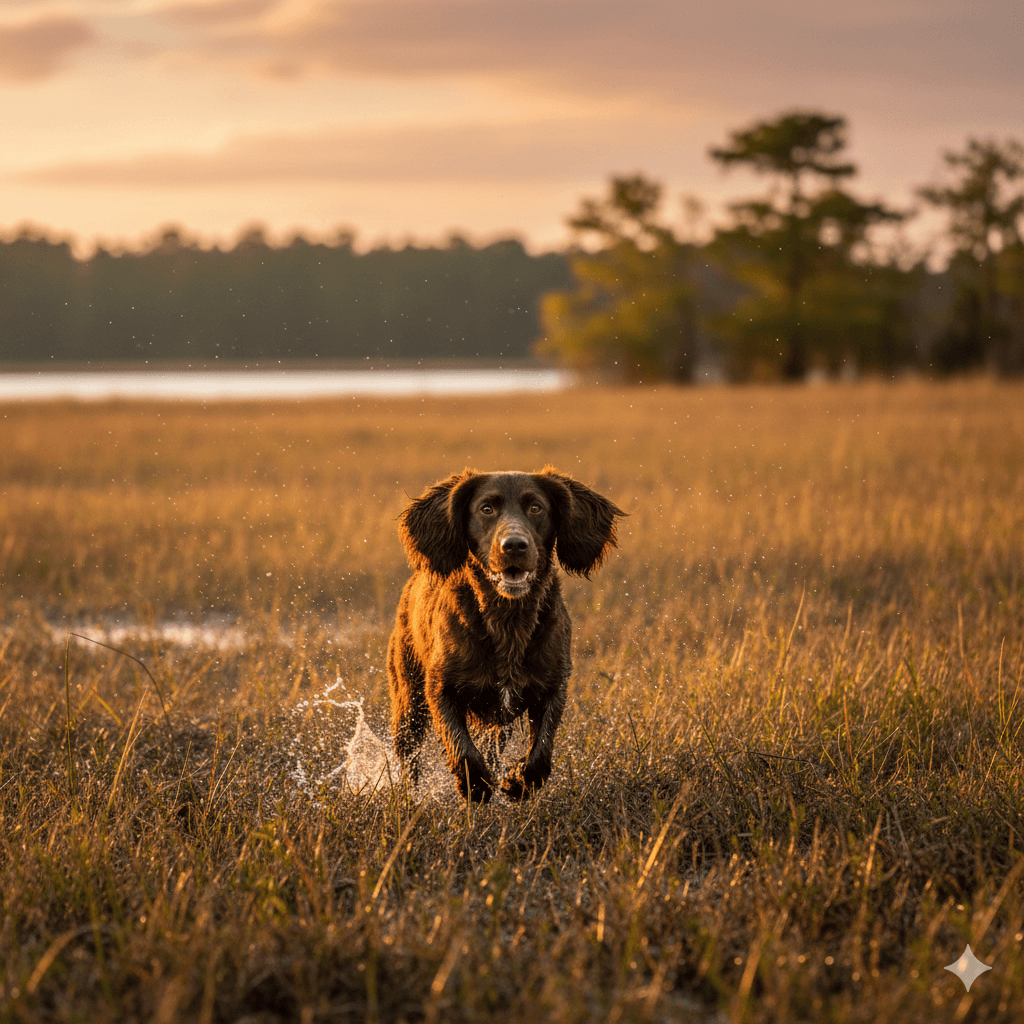
Standing 14–18 inches tall and weighing 25–40 pounds, Boykins are small enough to be portable but muscular enough to endure long hunting sessions. - Coat Variations and Care:
Their coat comes in rich liver or dark chocolate colors, with either a curly or flat texture. Regular brushing prevents matting, especially after outdoor adventures. - Webbed Feet for Swimming:
Their partially webbed feet provide excellent propulsion in water, making them naturals at retrieving waterfowl from lakes and swamps. - Expressive Eyes and Ears:
Boykins have warm, soulful eyes and long, floppy ears that frame their face, giving them a friendly and approachable expression. - Weather-Resistant Coat:
Their dense, water-repellent coat protects them from harsh weather conditions, whether they’re hunting in cold water or navigating dense brush.
Check this guide 👉Irish Water Spaniel Dog: Best 7 Expert Tips!
Check this guide 👉American Water Spaniel Dog: Best 7 Expert Tips!
Check this guide 👉Brittany Spaniel: Best 7 Expert Tips!
Lorem ipsum dolor sit amet, consectetur adipiscing elit. Ut elit tellus, luctus nec ullamcorper mattis, pulvinar dapibus leo.
Temperament and Personality of the Boykin Spaniel
- Affectionate and Loyal:
Boykins form strong bonds with their families and are known for their loving, people-oriented personalities. They enjoy being included in all household activities. - High Energy Levels:
This breed is incredibly active and requires plenty of exercise to stay happy and healthy. Daily walks, playtime, and mental stimulation are essential. - Trainability and Intelligence:
Boykins are highly intelligent and respond well to positive reinforcement training. Their eagerness to please makes them quick learners in obedience and fieldwork. - Social and Friendly:
They generally get along well with children, other dogs, and even cats, provided they are properly socialized from a young age. - Potential for Separation Anxiety:
Due to their strong attachment to their owners, Boykins may develop separation anxiety if left alone for extended periods. Crate training and gradual desensitization can help.
Health Considerations for Boykin Spaniels
- Hip Dysplasia:
This common orthopedic condition occurs when the hip joint doesn’t fit properly, leading to arthritis or mobility issues. Screening tests can identify affected dogs early. - Patellar Luxation:
A condition where the kneecap dislocates, causing lameness or discomfort. Mild cases may resolve with rest, while severe cases may require surgery. - Exercise-Induced Collapse (EIC):
Some Boykins carry a genetic mutation that causes muscle weakness or collapse during intense exercise. Avoid overexertion and consult a vet if symptoms arise. - Ear Infections:
Their long, floppy ears trap moisture, making them prone to infections. Regular cleaning and drying after swimming or baths reduce the risk. - Obesity Risk:
Without sufficient exercise, Boykins can gain weight, which exacerbates joint problems. A balanced diet and active lifestyle prevent obesity-related issues.
Training Tips for Boykin Spaniels
- Start Early with Socialization:
Expose your Boykin to various people, animals, and environments during puppyhood to build confidence and prevent fear-based behaviors. - Use Positive Reinforcement:
Reward-based methods, such as treats, praise, and play, motivate Boykins to learn commands and behaviors quickly and enthusiastically. - Focus on Retrieval Skills:
Their natural retrieving instinct makes fetch and dummy drills fun and effective ways to channel their energy while honing hunting skills. - Incorporate Mental Stimulation:
Puzzle toys, scent games, and obedience challenges keep their sharp minds engaged and prevent boredom-related mischief. - Be Consistent and Patient:
Boykins can be sensitive, so avoid harsh corrections. Consistency and gentle guidance yield the best results.
Exercise Needs of the Boykin Spaniel
- Daily Walks and Runs:
At least one hour of brisk walking or running each day helps burn off excess energy and keeps them physically fit. - Swimming Sessions:
As natural swimmers, Boykins love splashing in lakes, pools, or rivers. Swimming provides low-impact exercise that’s easy on their joints. - Playtime and Fetch:
Interactive games like fetch or tug-of-war satisfy their retrieving instincts and provide mental stimulation. - Agility Training:
Courses involving tunnels, jumps, and weave poles challenge their athleticism and sharpen their problem-solving skills. - Hunting or Field Trials:
For those interested in hunting, Boykins excel in field trials and retrieving competitions, showcasing their innate talents.
Living with a Boykin Spaniel: What to Expect
- Space Requirements:
While adaptable to apartments, Boykins thrive in homes with access to a fenced yard where they can run and play safely. - Time Commitment:
Their need for daily exercise, training, and companionship means you’ll spend significant time engaging with your Boykin. - Grooming Needs:
Regular brushing, ear cleaning, and nail trimming keep them looking and feeling their best. Seasonal shedding may require extra grooming sessions. - Family Compatibility:
Boykins are excellent with children and other pets, making them ideal for active households. Supervision ensures safe interactions with toddlers. - Travel and Adventure Buddies:
Their medium size and adaptable nature make Boykins great travel companions, whether hiking, camping, or simply exploring new places.
“These affable dogs are devoted to their family, and known for their friendly and outgoing personality,”
— Laura Mueller
Frequently Asked Questions About Boykin Spaniels
Is the Boykin Spaniel good for first-time dog owners?
How much grooming does a Boykin Spaniel need?
Their coat requires brushing 2–3 times a week, with additional care after swimming or playing in water to prevent matting and ear infections.
Are Boykin Spaniels good with kids?
Absolutely! They are gentle, playful, and patient, making them excellent companions for children when properly socialized.
Do Boykin Spaniels bark a lot?
They are not excessive barkers but may alert you to strangers or unusual sounds. Early training helps manage unnecessary vocalization.
What is the lifespan of a Boykin Spaniel?
A Lifelong Companion Like No Other

Is Rawhide Bad for Cats? Best 7 Expert Tips! – Discover the risks, safe alternatives, and expert advice to keep your feline friend healthy and happy.

Is Rawhide Bad for Dogs? Best 7 Expert Tips! – Discover the risks, benefits, and safer alternatives to rawhides for your dog’s chewing needs.

Understanding Anorexia in Cats: Best 7 Expert Tips! – Learn why cats stop eating, spot warning signs, and discover how to help your feline regain appetite safely.

Understanding Anorexia in Dogs: Best 7 Expert Tips! – Learn causes, symptoms, and solutions to help your dog regain appetite and stay healthy.