
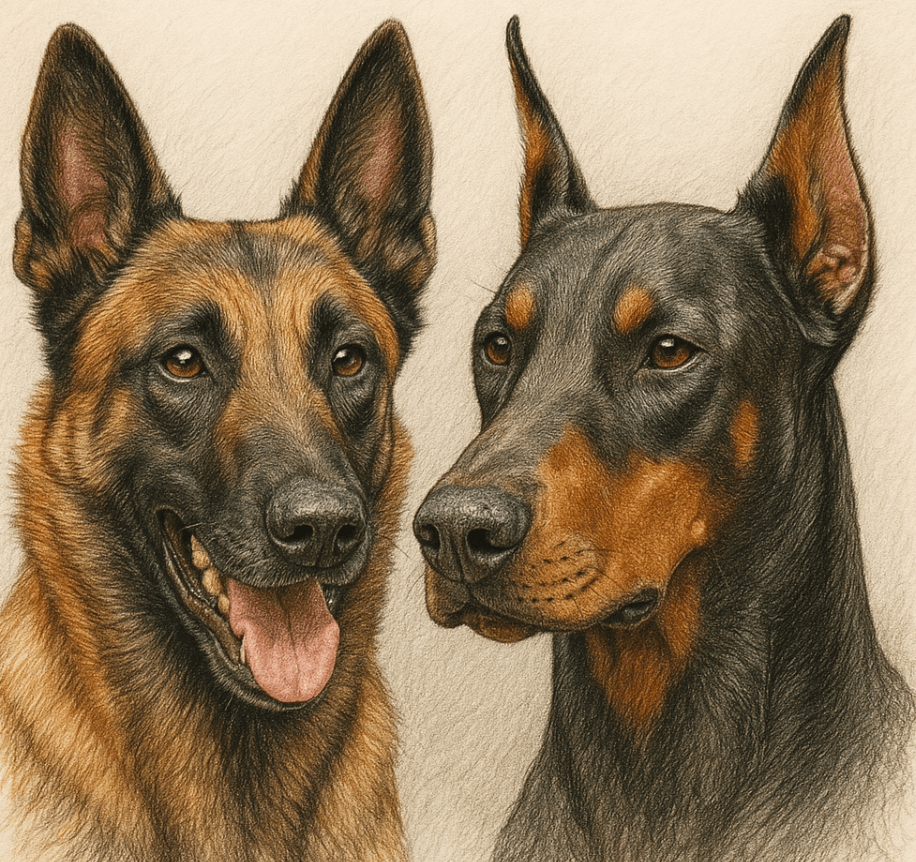

Belgian Malinois vs Doberman: Best 7 Expert Tips!

Belgian Malinois vs Doberman: Best 7 Expert Tips!

Belgian Malinois vs Doberman: Which Breed is Right for You?


When it comes to choosing a loyal, intelligent, and protective companion, both the Belgian Malinois and the Doberman Pinscher often top the list. These breeds share many similarities, such as their high energy levels, trainability, and devotion to their families. However, they also have distinct differences in temperament, physical traits, and care requirements that make them unique. Whether you’re considering one of these breeds as a working dog, family pet, or protector, understanding their characteristics is essential to making an informed decision. In this blog post, we’ll compare the Belgian Malinois vs Doberman, exploring their strengths, challenges, and suitability for different lifestyles.

Key Similarities Between Belgian Malinois and Doberman


While these breeds have their differences, they also share several key traits that make them popular choices among dog enthusiasts. Here’s what they have in common:

 
  • High Intelligence:
    Both breeds are highly intelligent, ranking among the top in canine cognition, which makes them quick learners and excellent problem solvers.

  • Loyal and Protective Nature:
    Known for their unwavering loyalty, both the Belgian Malinois and Doberman are natural protectors, making them ideal guard dogs.

  • High Energy Levels:
    These dogs thrive on physical activity and mental stimulation, requiring plenty of exercise to stay happy and healthy.

  • Trainability:
    Their eagerness to please and strong work ethic make them highly trainable, excelling in obedience, agility, and other tasks.

  • Short, Low-Maintenance Coats:
    Both breeds have sleek, short coats that shed moderately and require minimal grooming compared to longer-haired breeds.


These shared qualities highlight why both breeds are prized for their versatility and adaptability to various roles.

Physical Differences Between Belgian Malinois and Doberman


While similar in many ways, the Belgian Malinois and Doberman differ significantly in their physical appearance. Understanding these distinctions can help you identify which breed aligns better with your preferences.

 
  • Size and Build:
    The Belgian Malinois typically has a leaner, more athletic build, while the Doberman tends to be slightly taller and more muscular.

  • Coat Color Variations:
    Malinois usually sport fawn or mahogany coats with black masks, whereas Dobermans come in solid colors like black, red, blue, or fawn, often with rust accents.

  • Ears and Tail:
    Both breeds have naturally floppy ears, but Dobermans’ ears are often cropped (where legal), while Malinois ears remain upright without alteration.

  • Weight Range:
    Malinois generally weigh between 40-80 pounds, while Dobermans range from 60-100 pounds, depending on gender and genetics.

  • Lifespan Expectancy:
    On average, Belgian Malinois live 12-14 years, while Dobermans have a slightly shorter lifespan of 10-12 years due to breed-specific health issues.


These physical differences contribute to their unique appearances and may influence your choice based on aesthetics and practicality.

Belgian Malinois vs Doberman: Best 7 Expert Tips!
Belgian Malinois Traits
Doberman Pinscher Traits
Lean and athletic build
Muscular and robust frame
Fawn or mahogany coat with black mask
Solid colors with rust markings
Naturally upright ears
Often cropped ears (where legal)
Weighs 40-80 pounds
Weighs 60-100 pounds
Lifespan: 12-14 years
Lifespan: 10-12 years

Temperament Differences Between Belgian Malinois and Doberman


Though both breeds are intelligent and loyal, their temperaments can vary, influencing how they interact with families, strangers, and other pets.

 
  • Work Drive and Focus:
    Belgian Malinois have an intense work drive, often excelling in police or military roles, while Dobermans balance work ethic with a calmer demeanor at home.

  • Social Behavior:
    Malinois tend to be more reserved with strangers, while Dobermans are often friendlier and more outgoing once properly socialized.

  • Energy Levels Indoors:
    Malinois may display higher energy indoors, requiring constant engagement, whereas Dobermans adapt better to quieter environments after adequate exercise.

  • Protective Instincts:
    Both breeds are protective, but Malinois are more reactive to perceived threats, while Dobermans assess situations before acting.

  • Suitability for Families:
    Dobermans are often considered more adaptable to family life, while Malinois may be better suited for active singles or experienced handlers.


Understanding these temperament differences helps ensure a harmonious match between owner and dog.

Care Requirements for Belgian Malinois vs Doberman


Caring for these breeds involves meeting their specific needs, from exercise routines to dietary considerations. Here’s what you need to know about keeping them healthy and happy.

 
  • Exercise Needs:
    Malinois require intense daily workouts, including running, hiking, or agility training, while Dobermans are content with moderate exercise like walks and playtime.

  • Training Commitment:
    Both breeds benefit from early socialization and consistent training, but Malinois demand advanced challenges to prevent boredom-related behaviors.

  • Dietary Preferences:
    High-quality protein-rich diets are essential for both breeds, though Malinois may require additional calories due to their higher energy output.

  • Grooming Routine:
    Minimal grooming is needed for both, but Malinois’ double coat may shed more seasonally, requiring frequent brushing during those times.

  • Health Monitoring:
    Dobermans are prone to heart conditions like dilated cardiomyopathy, while Malinois may develop hip dysplasia or allergies; regular vet check-ups are crucial.


Tailoring care to each breed’s unique needs ensures a long, fulfilling life together.


Common Misconceptions About Belgian Malinois and Doberman


Several myths surround these breeds, leading to misunderstandings about their personalities and care requirements. Clearing up these misconceptions ensures realistic expectations.

 
  • They Are Aggressive by Nature:
    While protective, neither breed is inherently aggressive when properly trained and socialized.

  • They Don’t Need Much Attention:
    Both breeds crave companionship and can develop separation anxiety if left alone for extended periods.

  • All Individuals Are the Same:
    Temperament varies widely within each breed, influenced by genetics, upbringing, and environment.

  • They’re Easy to Train Without Effort:
    Though intelligent, they still require consistency, patience, and positive reinforcement to thrive.

  • They’re Only Suitable for Experienced Owners:
    With dedication and research, even novice owners can succeed with either breed under professional guidance.


Dispelling these myths fosters a deeper appreciation for their individuality.

Fun Activities to Enjoy with Your Belgian Malinois or Doberman


Living with either breed means embracing an active lifestyle. These engaging activities will strengthen your bond while satisfying their physical and mental needs.

 
  • Agility Training:
    Set up obstacle courses in your backyard or enroll in classes to challenge their athleticism and focus.

  • Long Walks or Runs:
    Explore local parks or trails together, allowing them to burn off excess energy in a stimulating environment.

  • Interactive Games:
    Play fetch, tug-of-war, or frisbee to combine exercise with bonding opportunities.

  • Scent Work:
    Teach them to locate hidden treats or objects, tapping into their natural instincts and enhancing problem-solving skills.

  • Swimming Sessions:
    Many Belgian Malinois and Dobermans enjoy water; swimming provides excellent low-impact exercise.


Engaging in these activities ensures a fulfilling life for your energetic companion.


Tips for Training Your Belgian Malinois or Doberman


Training is critical for success with these intelligent and driven breeds. Follow these tips to build a strong foundation and foster good behavior.

 
  • Start Early:
    Begin obedience training and socialization during puppyhood to establish lifelong habits and confidence.

  • Use Positive Reinforcement:
    Reward-based methods, such as treats, praise, and toys, motivate them effectively and reinforce desired behaviors.

  • Be Consistent:
    Establish clear rules and stick to them to avoid confusion or disobedience over time.

  • Challenge Their Minds:
    Incorporate advanced commands, puzzles, and scent games to keep their sharp minds engaged and prevent boredom.

  • Seek Professional Help:
    Enroll in obedience classes or hire a trainer if you’re struggling to manage their high energy or assertiveness.


With dedication and patience, training becomes a rewarding experience that strengthens your relationship with your dog.

Frequently Asked Questions About Belgian Malinois vs Doberman

 
Which breed is better for first-time owners?

Dobermans are generally more adaptable and easier to manage, making them a better fit for novice owners than the high-drive Malinois.

Yes, both breeds can be great with kids if properly trained and socialized, though supervision is recommended due to their size and energy.

Early socialization is key; both breeds can coexist peacefully with other animals if introduced correctly.

Malinois require 1-2 hours of vigorous exercise, while Dobermans need about 1 hour of moderate activity to stay satisfied.

Malinois are prone to hip dysplasia and allergies, while Dobermans face risks of heart disease and bloat; regular vet visits help monitor their health.

Choosing Between Belgian Malinois and Doberman


Both the Belgian Malinois and Doberman Pinscher are exceptional breeds with unique qualities that cater to different lifestyles. The Belgian Malinois shines as a high-energy, task-oriented companion, ideal for active individuals or professionals seeking a working dog. On the other hand, the Doberman offers a balanced blend of loyalty, intelligence, and adaptability, making them a versatile choice for families and less experienced owners. By carefully evaluating your ability to meet their needs and understanding their distinct traits, you can find the perfect match for your home and heart.

Spleen Cancer in Cats: Best 7 Expert Tips!

Spleen Cancer in Cats: Best 7 Expert Tips! – Expert insights on symptoms, care, treatment & quality of life for feline spleen cancer.

Dog Mastitis Treatment: Best 7 Expert Tips!

Dog Mastitis Treatment: Best 7 Expert Tips! – Safe, vet-approved care for nursing moms & prevention strategies.

The Shikoku Ken Dog: Best 7 Expert Tips!

The Shikoku Ken Dog: Best 7 Expert Tips! – Discover expert care, training & health advice for this rare, loyal Japanese mountain breed.

The Cairn Terrier Dog Breed: Best 7 Expert Tips!

The Cairn Terrier Dog Breed: Best 7 Expert Tips! – Discover care, training & health advice for this spirited, loyal Scottish terrier.

Leave a Reply

Your email address will not be published. Required fields are marked *

Recent Post

Post Category


