

Bee Sting Dog Paw Treatment: Best 7 Expert Tips!

Bee Sting Dog Paw Treatment: Best 7 Expert Tips!

Bee Sting Dog Paw Treatment: What Every Pet Owner Should Know


A bee sting on your dog’s paw can be a painful and alarming experience for both you and your furry friend. Dogs are naturally curious creatures, often exploring their surroundings with their paws and noses, which makes them more susceptible to stings. While bee stings are usually not life-threatening, they can cause discomfort, swelling, and, in rare cases, allergic reactions. Knowing how to identify, treat, and prevent bee stings is essential for ensuring your dog’s safety and well-being. In this guide, we’ll walk you through everything you need to know about treating a bee sting on your dog’s paw effectively and safely.

Expert Opinion: What Happens When a Dog Gets Stung by a Bee on the Paw

“When a dog gets stung by a bee on the paw, it can cause swelling, redness, and pain in the affected area. The paw may also become tender to the touch, and the dog may start limping or favoring the injured paw. In some cases, the dog may even develop an allergic reaction to the bee sting, which can lead to more severe symptoms such as difficulty breathing or swelling in other parts of the body.”

Dr. Jess

Immediate Steps to Treat a Bee Sting on Your Dog’s Paw


When your dog gets stung on their paw, acting quickly can make a significant difference in reducing pain and preventing complications. Follow these steps to provide immediate relief and care.

 
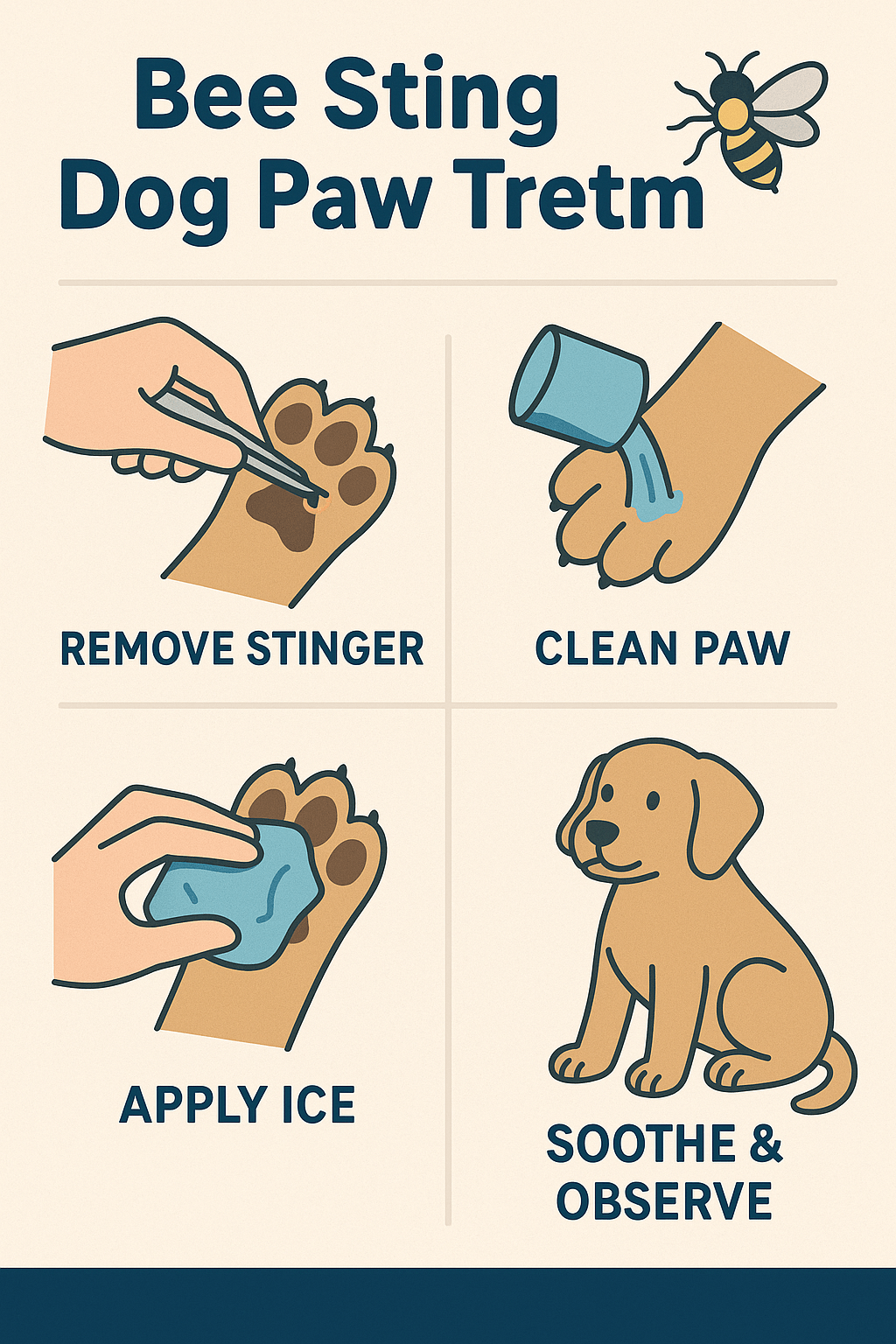
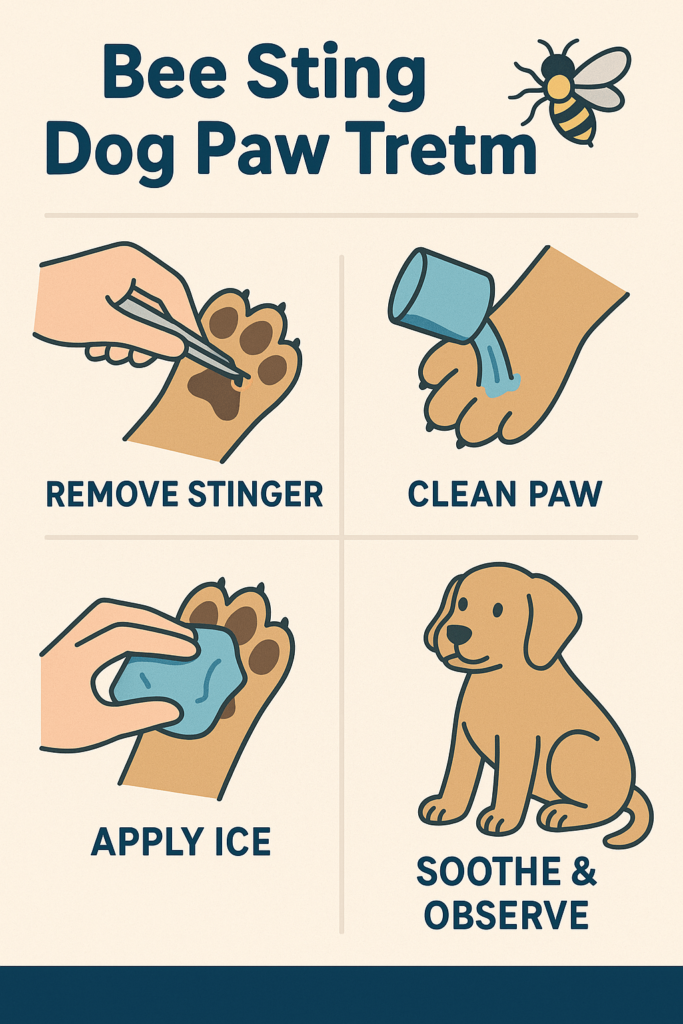
  • Remove the Stinger (If Present):
    Use a credit card or your fingernail to gently scrape away the stinger. Avoid using tweezers, as squeezing can release more venom into the skin.

  • Clean the Area:
    Wash the affected paw with mild soap and cool water to reduce the risk of infection and remove any dirt or debris.

  • Apply a Cold Compress:
    Use a clean cloth soaked in cold water or an ice pack wrapped in a towel to reduce swelling and numb the area. Apply for no more than 5-10 minutes at a time.

  • Monitor for Signs of Allergic Reactions:
    Keep an eye out for symptoms such as difficulty breathing, excessive swelling, vomiting, or lethargy, which may indicate an allergic reaction requiring urgent veterinary care.

  • Administer Antihistamines (If Approved by a Vet):
    Some over-the-counter antihistamines like Benadryl can help reduce mild allergic reactions, but consult your vet first for proper dosage and safety.


By following these steps promptly, you can minimize your dog’s discomfort and ensure their recovery stays on track.

Bee Sting Dog Paw Treatment: Best 7 Expert Tips!

Home Remedies to Soothe a Bee-Stung Paw


In addition to basic first aid, there are several natural remedies that can help soothe your dog’s stung paw and promote faster healing. Always test these remedies on a small area first to ensure your dog isn’t sensitive to them.

 
  • Baking Soda Paste:
    Mix baking soda with water to create a paste and apply it to the sting site. This alkaline mixture can neutralize the acidic venom from the sting.

  • Aloe Vera Gel:
    Pure aloe vera gel has soothing properties that can reduce inflammation and irritation. Ensure the product contains no added chemicals or fragrances.

  • Apple Cider Vinegar:
    Dilute apple cider vinegar with water and dab it gently on the sting using a cotton ball. Its antimicrobial properties can also help prevent infection.

  • Oatmeal Soak:
    Prepare a lukewarm oatmeal bath for your dog’s paw. Oatmeal is known for its anti-inflammatory and calming effects on irritated skin.

  • Chamomile Tea Compress:
    Steep chamomile tea bags in hot water, let them cool, then use them as a compress on the affected area to relieve pain and swelling.


These home remedies can provide additional comfort while supporting your dog’s natural healing process.

Prevention Tips for Bee Stings
Signs of Severe Allergic Reaction
Keep your dog away from flowering plants
Difficulty breathing
Avoid walking near beehives or nests
Excessive swelling around the face
Use pet-safe insect repellents
Vomiting or diarrhea
Supervise outdoor playtime closely
Lethargy or collapse
Check paws regularly after walks
Persistent scratching or licking

When to Seek Veterinary Care for a Bee Sting


While most bee stings can be treated at home, certain situations warrant professional medical attention to ensure your dog’s health and safety.

 
  • Severe Swelling or Redness:
    If the swelling worsens or spreads beyond the paw, it could indicate an infection or severe reaction requiring antibiotics or other treatments.

  • Persistent Pain or Limping:
    If your dog continues to limp or show signs of pain after initial treatment, consult your vet to rule out complications like embedded stingers or secondary infections.

  • Allergic Reactions:
    Symptoms such as hives, facial swelling, or difficulty breathing require immediate emergency care, as they may escalate rapidly.

  • Multiple Stings:
    Being stung multiple times increases the risk of toxicity or systemic reactions, especially in smaller dogs. Contact your vet right away.

  • Behavioral Changes:
    Unusual behaviors like aggression, extreme lethargy, or refusal to eat may signal underlying issues caused by the sting.


Recognizing these red flags ensures your dog receives timely care and avoids potential long-term problems.


Tips for Preventing Bee Stings on Your Dog’s Paw


Prevention is always better than cure when it comes to bee stings. Taking proactive steps can help protect your dog from painful encounters with bees and wasps.

 
  • Avoid Flowering Areas:
    Keep your dog away from gardens, fields, or parks with abundant flowers where bees are likely to gather.

  • Inspect Outdoor Spaces:
    Regularly check your yard for beehives or nests and have them professionally removed if found.

  • Use Protective Footwear:
    Consider using dog booties during hikes or walks in areas prone to insects to shield their paws from stings.

  • Teach Commands for Safety:
    Train your dog to respond to commands like “leave it” or “come” to prevent them from investigating potentially dangerous areas.

  • Supervise Playtime Outdoors:
    Always keep an eye on your dog during outdoor activities to intervene if they approach bees or other stinging insects.


By implementing these preventive measures, you can significantly reduce the likelihood of your dog experiencing a bee sting.

Common Mistakes to Avoid When Treating Bee Stings

Treating a bee sting incorrectly can worsen your dog’s condition or delay healing. Avoid these common mistakes to ensure proper care.

 
  • Using Hot Water Instead of Cold:
    Applying heat can increase inflammation and discomfort. Stick to cool water or ice packs instead.

  • Squeezing the Stinger:
    Squeezing the stinger releases more venom into the skin, intensifying the reaction. Always scrape it off gently.

  • Ignoring Symptoms of Allergies:
    Underestimating signs like facial swelling or difficulty breathing can lead to serious complications. Act quickly if these occur.

  • Overusing Home Remedies:
    Overapplying substances like baking soda or vinegar can irritate the skin further. Use them sparingly and observe your dog’s response.

  • Skipping Professional Advice:
    Relying solely on home treatments without consulting a vet can delay necessary interventions for severe cases.


Avoiding these errors ensures your dog receives the best possible care after a bee sting.

How to Calm Your Dog After a Bee Sting

A bee sting can leave your dog feeling anxious or frightened. Helping them relax is just as important as treating the physical injury.

 
  • Speak in a Soothing Voice:
    Talk to your dog calmly to reassure them and reduce their stress levels.

  • Offer Comfort Items:
    Provide their favorite blanket or toy to create a sense of security.

  • Distract with Play or Treats:
    Engage your dog in light play or offer treats to shift their focus away from the sting.

  • Maintain a Calm Environment:
    Keep noise and activity levels low to avoid overwhelming your dog further.

  • Limit Movement of the Affected Paw:
    Encourage rest and avoid activities that put pressure on the stung paw.


Calming your dog helps them recover emotionally while their body heals physically.


Seasonal Risks for Bee Stings

Bees are more active during certain seasons, increasing the likelihood of stings. Understanding seasonal risks can help you stay vigilant.

 
  • Spring Blooms:
    As flowers begin to bloom, bees become more active, making spring a high-risk season for stings.

  • Summer Heat:
    Warm weather encourages outdoor activities for both humans and bees, raising the chances of encounters.

  • Autumn Harvests:
    Late-season blooms and fruit trees attract bees, keeping the risk elevated even as temperatures drop.

  • Winter Dormancy:
    Bees are less active in winter, but indoor heating can sometimes lure them inside homes.

  • Geographic Variations:
    Regions with warmer climates may experience year-round bee activity, requiring constant caution.


Being aware of these patterns allows you to take extra precautions during peak bee seasons.

Frequently Asked Questions About Bee Sting Dog Paw Treatment

 
What should I do if my dog is stung on their paw?

Remove the stinger, clean the area, apply a cold compress, and monitor for signs of an allergic reaction.

Yes, but only after consulting your vet for the correct dosage based on your dog’s size and weight.

Mild stings typically resolve within a few hours to a couple of days, depending on the severity and treatment provided.

Curious or active dogs who spend a lot of time outdoors are at higher risk, as are those with allergies to insect venom.

Most swallowed bees won’t cause harm, but watch for signs of choking, throat swelling, or gastrointestinal upset, and contact your vet if concerned.

Staying Prepared for Bee Stings on Your Dog’s Paw


Bee stings are an unfortunate yet common occurrence for many dogs, but with the right knowledge and tools, you can handle them confidently and compassionately. By understanding how to treat a sting, recognizing warning signs, and taking preventive measures, you can ensure your dog stays safe and comfortable during outdoor adventures. Remember, while most stings are minor, never hesitate to seek veterinary care if you notice anything unusual or concerning. With vigilance and care, you can keep your furry companion happy and healthy—even in environments where bees buzz nearby.

Understanding Cryptosporidium in Cats: Best 7 Expert Tips!

Understanding Cryptosporidium in Cats: Best 7 Expert Tips! – Spot symptoms, treat safely, and stop parasite spread in your home.

Understanding Cryptosporidium in Dogs: Best 7 Expert Tips!

Understanding Cryptosporidium in Dogs: Best 7 Expert Tips! – Learn symptoms, treatment & prevention for this stubborn gut parasite.

Understanding Syringomyelia in Cats: Best 7 Expert Tips!

Understanding Syringomyelia in Cats: Best 7 Expert Tips! – Recognize signs, manage pain, and support your cat’s neurological health with vet-backed guidance.

Understanding Syringomyelia in Dogs: Best 7 Expert Tips!

Understanding Syringomyelia in Dogs: Best 7 Expert Tips! – Expert insights on symptoms, MRI diagnosis, pain management & quality of life.

Leave a Reply

Your email address will not be published. Required fields are marked *


