
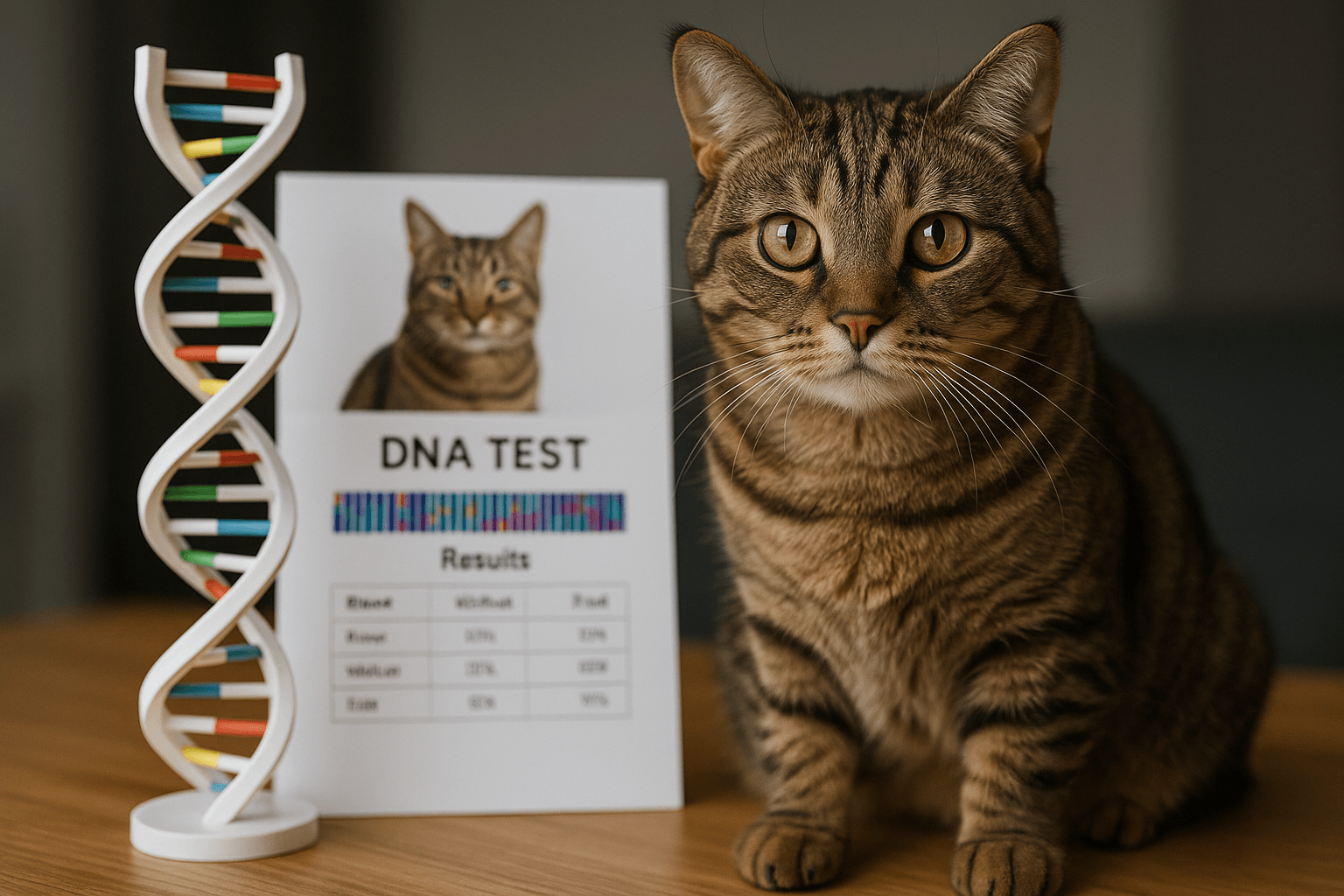

Are Cat DNA Tests Accurate? Best 7 Expert Tips!

Are Cat DNA Tests Accurate? Best 7 Expert Tips!

Are Cat DNA Tests Accurate?

If you’ve ever looked at your mysterious feline and wondered, “What breeds are hiding in that fluffy coat?”—you’re not alone. Cat DNA tests promise answers about ancestry, health risks, and even personality traits. But with so many kits on the market, it’s natural to ask: can you really trust those results? In this guide, we’ll explore how these tests work, what they can (and can’t) reveal, and whether they’re worth your time and money. Spoiler: the truth is a little more nuanced than the ads suggest.

How Cat DNA Tests Work


Modern cat DNA tests analyze genetic markers from a cheek swab or fur sample to compare your cat’s genome against known breed databases. But not all companies use the same science—or the same level of detail.

 
  • Sample collection is simple:
    Most kits require gently swabbing your cat’s inner cheek for 15–30 seconds; some even accept fur with roots intact.
     
  • Lab analysis focuses on SNPs:
    Single nucleotide polymorphisms (SNPs) are tiny genetic variations used to identify breed matches and inherited traits.
     
  • Breed databases vary in size:
    Some companies reference only 20–30 breeds; others include over 50, including rare and regional types like the Sokoke or Turkish Van.
     
  • Results take 2–8 weeks:
    Processing time depends on the company, lab workload, and shipping logistics—patience is required.
     
  • Reports include more than ancestry:
    Many kits also screen for genetic health risks, coat colors, and even behavioral tendencies linked to certain breeds.
 

While the process sounds high-tech (and it is!), accuracy ultimately depends on the quality of the reference data and the science behind the interpretation.

Are Cat DNA Tests Accurate? Best 7 Expert Tips!

What Cat DNA Tests Can Reveal


From heritage to hidden health clues, DNA kits aim to unlock your cat’s genetic story—but expectations should be realistic.

 
  • Breed composition estimates:
    Most results show percentages like “60% Domestic Shorthair, 25% Siamese, 15% unknown,” though purebreds are easier to identify than mixes.
     
  • Coat and color predictions:
    Tests can often confirm if your cat carries genes for long hair, white spotting, or dilute colors—even if not visibly expressed.
     
  • Genetic health markers:
    Some kits screen for conditions like hypertrophic cardiomyopathy (HCM), polycystic kidney disease (PKD), or retinal degeneration.
     
  • Trait insights:
    You might learn whether your cat has a genetic tendency for chattiness, curiosity, or sensitivity to certain foods.
     
  • Biogeographical ancestry (rarely):
    A few advanced tests hint at regional origins—e.g., “Mediterranean” or “Southeast Asian”—based on ancient feline migration patterns.
 

These insights can be fascinating and occasionally useful—but they’re not a substitute for veterinary diagnostics or professional care.

What DNA Tests Do Well Limitations to Keep in Mind
Identifying purebred ancestry Struggle with complex mixed-breed cats
Detecting known genetic mutations Can’t predict all health issues
Predicting coat traits accurately May overstate rare breed percentages
Engaging owners in feline genetics Results aren’t diagnostic for disease
Providing breed-linked behavior hints Environment shapes behavior more than genes

Factors That Affect Accuracy


Not all DNA test results are equally reliable. Several variables influence how trustworthy your cat’s report really is.

 
  • Database size and diversity:
    Larger, well-curated breed databases produce more accurate matches—especially for non-pedigree cats.
     
  • Sample quality:
    Contaminated swabs (e.g., from food or saliva) can lead to inconclusive or failed tests.
     
  • Company’s scientific rigor:
    Reputable brands publish validation studies; others offer flashy reports with minimal peer-reviewed backing.
     
  • Your cat’s genetic uniqueness:
    Most domestic cats share over 95% of their DNA—differences are subtle, making precise breed calls difficult.
     
  • Interpretation algorithms:
    Two companies might analyze the same DNA and give different ancestry percentages based on their software.
 

In short: the tech is improving, but it’s still more art than exact science—especially for rescue cats with no known lineage.


Top Commercial Cat DNA Tests Compared


Several companies dominate the pet genetics market, each with strengths and trade-offs.

 
  • Basepaws:
    Offers detailed health + breed reports, includes microbiome analysis, and uses one of the largest feline databases.
     
  • Wisdom Panel Complete for Cats:
    Backed by Mars Petcare, screens for 40+ health conditions and 70+ breeds, with vet-reviewed insights.
     
  • CatDNA by EasyDNA:
    Focuses heavily on inherited diseases and offers optional add-ons like blood type and coat trait reports.
     
  • Paw Print Genetics:
    Primarily health-oriented; ideal if you’re concerned about specific conditions rather than breed mix.
     
  • MyCatDNA (Genoscoper):
    Popular in Europe, includes over 50 traits and 40 diseases, with strong emphasis on breed-specific risks.
 

While all provide interesting data, health-focused tests often deliver more actionable value than ancestry alone.

Common Misconceptions About Cat DNA Tests


Marketing can blur the line between science and speculation—here’s what many owners get wrong.

 
  • “It will tell me my cat’s exact breed mix.”
    Reality: Most cats are domestic shorthairs with no purebred ancestors; results are educated estimates, not certificates.
     
  • “A clean health report means my cat won’t get sick.”
    Reality: Tests only screen for known genetic mutations—not infections, injuries, or lifestyle-related illnesses.
     
  • “Rare breed percentages mean my cat is special.”
    Reality: Small percentages (e.g., 3% Egyptian Mau) are often statistical noise, not proof of lineage.
     
  • “DNA determines personality completely.”
    Reality: Early life, socialization, and environment shape behavior far more than genetics.
     
  • “All kits are equally accurate.”
    Reality: Quality varies widely—some use outdated markers or tiny reference populations.
 

Understanding these myths helps you interpret results with healthy skepticism—and avoid disappointment.

When a DNA Test Might Be Worth It


For some cat owners, genetic testing offers real practical or emotional value beyond curiosity.

 
  • Adopted cats with unknown history:
    Helps anticipate potential health issues or understand quirks (e.g., why your cat chatters like a Siamese).
     
  • Breeding plans:
    Essential for identifying carriers of recessive diseases before mating.
     
  • Cats showing early symptoms:
    If your cat has heart murmurs or vision changes, a DNA screen can support faster diagnosis.
     
  • Purebred validation:
    Confirms lineage for registration or sale—though official papers are still required by most registries.
     
  • Deepening the human-cat bond:
    For many, learning about their cat’s “genetic story” fosters greater empathy and connection.
 

If you go in with realistic expectations, the experience can be both educational and meaningful.

Alternatives to DNA Testing


You don’t always need a lab kit to learn about your cat—observation and veterinary care often tell a richer story.

 
  • Phenotype clues:
    Coat length, ear shape, tail fluffiness, and eye color often hint at breed influences (e.g., lynx tips = Maine Coon ancestry?).
     
  • Behavioral patterns:
    Vocal, social cats may share traits with Orientals; quiet, lap-loving ones might lean Persian—even without pure bloodlines.
     
  • Veterinary screenings:
    Ultrasounds, blood work, and genetic tests ordered by your vet are far more reliable for diagnosing actual disease.
     
  • Adoption records:
    Shelters sometimes know a cat’s background or littermates’ traits, offering context no DNA kit can.
     
  • Photographic comparison:
    Posting your cat in breed-identification forums often yields surprisingly accurate guesses from experienced owners.
 

Sometimes, the simplest tools—your eyes, your vet, and your intuition—are the most powerful.

Frequently Asked Questions

Are cat DNA tests as accurate as dog DNA tests?

Generally, no. Dogs have more defined breed lines and larger genetic databases; cats have far more genetic homogeneity, making precise breed identification harder.

Prices range from $60 to $150, depending on whether the kit includes health screening, microbiome analysis, or breed-only reports.

No. No cat is truly hypoallergenic, and allergen production (like Fel d 1 protein) isn’t reliably predicted by current DNA kits.

Not accurately. Some companies estimate “genetic age” based on biomarkers, but chronological age requires veterinary assessment or records.

Only if you have individual questions about each one. Results don’t interact, and sibling cats can have very different genetic profiles.

Final Thoughts – Curiosity, Not Certainty


Cat DNA tests are a fun, modern window into your feline’s hidden heritage—but they’re best approached as storytelling tools, not scientific verdicts. While they can reveal useful health insights or satisfy your curiosity about that mysterious tabby’s origins, they won’t replace your vet, your intuition, or the quiet joy of simply knowing your cat as an individual. If you choose to test, do so with eyes wide open: embrace the surprises, question the odd claims, and remember that your cat’s true value lies not in its genetic code, but in the purrs, head-butts, and midnight zoomies that make it uniquely yours.

Dog Tapeworm Life Cycle: Best 7 Expert Tips!

Dog Tapeworm Life Cycle: Best 7 Expert Tips! – Learn how tapeworms infect dogs, spot symptoms, and break the cycle with expert prevention strategies.

Anxious Cat Body Language: Best 7 Expert Tips!

Anxious Cat Body Language: Best 7 Expert Tips! – Learn to spot signs of stress, understand triggers, and help your cat feel safe and relaxed.

Anxious Dog Body Language: Best 7 Expert Tips!

Anxious Dog Body Language: Best 7 Expert Tips! – Learn to spot signs of anxiety, respond effectively, and help your dog feel safe and secure.

Is Breeding Dogs Bad? Best 7 Expert Tips!

Is Breeding Dogs Bad? Best 7 Expert Tips! – Explore the ethics, benefits, and risks of dog breeding to make informed decisions for a better future.

Leave a Reply

Your email address will not be published. Required fields are marked *

Post Category


