
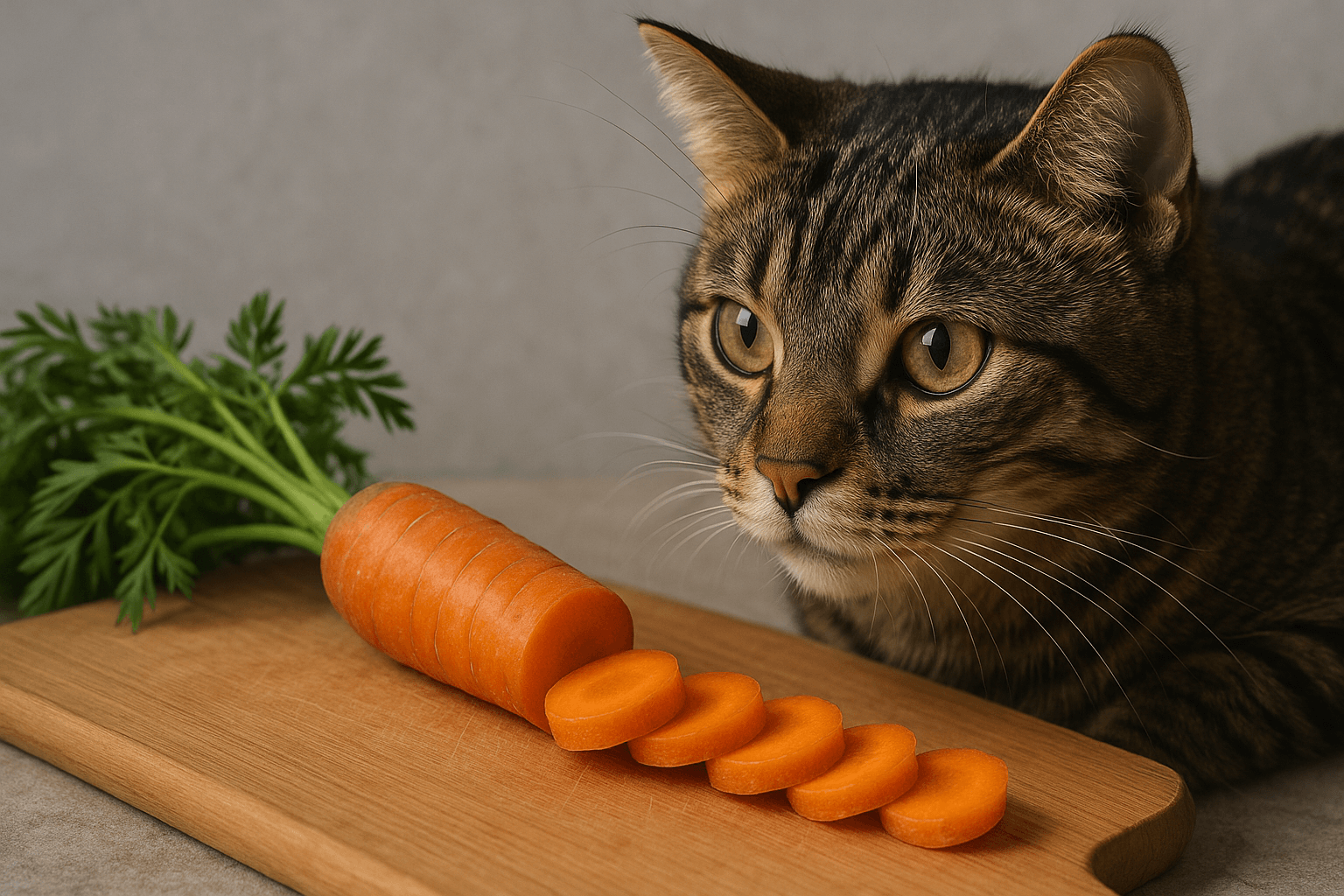

Are Carrots Good for Cats? Best 7 Expert Tips!

Are Carrots Good for Cats? Best 7 Expert Tips!

Are Carrots Good for Cats?

You’ve probably heard that carrots are a healthy snack for humans—but what about your whiskered companion? While cats are obligate carnivores with very different nutritional needs, many pet owners wonder if this crunchy orange veggie has a place in their feline’s diet. The short answer? Carrots aren’t harmful in small amounts, but they’re far from essential. In this guide, we’ll explore the truth about carrots and cats—what’s safe, what’s not, and how to offer them responsibly, if at all.

Nutritional Profile of Carrots and Feline Needs


Cats thrive on animal protein, fats, and specific nutrients like taurine—none of which carrots provide. Still, understanding what carrots do contain helps explain why they’re tolerated (but not needed) in a cat’s diet.

 
  • High in beta-carotene:
    A precursor to vitamin A, which cats can’t efficiently convert—unlike humans—making this benefit largely irrelevant for them.
     
  • Low in calories and fat:
    Makes carrots a “safe” occasional treat in tiny amounts, especially for cats watching their weight.
     
  • Rich in fiber:
    May aid digestion in humans, but cats lack the enzymes to break down plant fiber efficiently.
     
  • Contains vitamins K and B6:
    Minimal impact on feline health since cats synthesize or obtain these best from animal sources.
     
  • High water content:
    Offers slight hydration, though not a substitute for clean, fresh water.
 

While carrots aren’t toxic, they offer little nutritional value to a species designed to eat meat—not vegetables.

Are Carrots Good for Cats? Best 7 Expert Tips!

When Might a Vet Recommend Carrots?


In rare cases, veterinarians may suggest small amounts of cooked carrot as part of a tailored plan—but never as a dietary staple.

 
  • Mild constipation support:
    A tiny bit of cooked, mashed carrot may add bulk to stool in specific cases (but pumpkin is far more effective).
     
  • Low-calorie distraction during dieting:
    For overweight cats, a sliver of carrot might satisfy chewing urges without adding many calories.
     
  • Food puzzle enrichment:
    Some behaviorists use safe, firm foods like carrot pieces in slow-feed toys to stimulate mental activity.
     
  • Transition aid for picky eaters:
    Occasionally mixed into wet food to add texture—though most cats ignore it entirely.
     
  • Dental toy alternative (rare):
    Frozen or raw carrot chunks are sometimes used as chew toys, but safer commercial options exist.
 

These uses are highly situational—and always require professional guidance to avoid digestive upset.

Safe Ways to Offer Carrots Carrot Practices to Avoid
Tiny piece of steamed carrot (peeled) Raw, hard carrot chunks (choking hazard)
Occasional treat (once every few weeks) Daily feeding or large portions
Mixed into regular food (minimal amount) Carrot juice or puree with added sugar
Cooled, plain cooked carrot only Carrots with butter, salt, or seasoning
Given under supervision Left in bowl for extended periods

How to Safely Introduce Carrots to Your Cat


If you’re curious whether your cat will even nibble a carrot, proceed with caution and patience. Most cats show zero interest—but if yours does, prioritize safety.

 
  • Start with a rice-sized piece:
    Offer a tiny, soft, cooked sliver to test tolerance—never force it.
     
  • Always cook and peel:
    Raw carrots are too hard and pose a choking risk; peeling removes potential pesticide residue.
     
  • Avoid additives completely:
    No salt, oil, garlic, or herbs—plain is the only safe option.
     
  • Monitor for 24 hours:
    Watch for vomiting, diarrhea, or lethargy, which signal digestive upset.
     
  • Discontinue if ignored or rejected:
    Cats don’t need variety like humans—there’s no benefit in pushing a food they don’t want.
 

Remember: a cat’s curiosity doesn’t equal nutritional need. If they turn their nose up, respect it.

Health Risks of Feeding Carrots to Cats


Even “healthy” human foods can backfire in feline diets. Carrots carry subtle risks that many owners overlook.

 
  • Choking or dental damage:
    Hard, raw pieces can crack teeth or lodge in the throat—especially in small or senior cats.
     
  • Digestive upset:
    Cats lack amylase in their saliva to break down starches, leading to gas, bloating, or diarrhea.
     
  • Blood sugar spikes (in diabetic cats):
    Carrots contain natural sugars that may interfere with glucose management.
     
  • Nutrient displacement:
    Filling up on low-value veggies means less room for essential animal-based proteins.
     
  • Allergic reactions (rare but possible):
    Symptoms like itching, swelling, or hives require immediate vet attention.
 

While not toxic, carrots introduce unnecessary variables into a diet that should be simple and species-appropriate.

Better Vegetable Alternatives (If Any)


If you’re set on offering plant matter, some options are gentler—but none are truly necessary.

 
  • Cooked pumpkin (plain):
    Far more effective for digestion and commonly recommended by vets for mild constipation or diarrhea.
     
  • Steamed green beans:
    Lower in sugar, softer when cooked, and occasionally accepted as a low-cal treat.
     
  • Zucchini (tiny amounts):
    Mild flavor and high water content make it one of the least offensive veggies for curious cats.
     
  • Peas (mashed, plain):
    Sometimes found in commercial cat foods in trace amounts—still not essential, but better tolerated.
     
  • None at all:
    The best “vegetable” for a cat is no vegetable—focus instead on high-quality, meat-based nutrition.
 

Plants should never replace animal protein—ever.

What Commercial Cat Foods Say About Vegetables


You might notice carrots or other veggies listed in some cat food ingredients—but their role is minimal.

 
  • Used as binders or fillers:
    In wet or dry foods, small amounts help with texture, not nutrition.
     
  • Appeal to human buyers:
    Brands include “garden veggies” to market healthiness, even though cats derive little benefit.
     
  • Not a protein source:
    Carrots in kibble don’t contribute to amino acid needs like taurine or arginine.
     
  • Often highly processed:
    By the time they’re in food, any original nutrients are negligible.
     
  • Regulated in safe amounts:
    Reputable brands keep plant content low to avoid digestive stress.
 

Just because it’s on the label doesn’t mean your cat needs or wants it.

Special Considerations for Kittens, Seniors, and Sick Cats


Life stage and health status dramatically affect how a cat handles non-essential foods like carrots.

 
  • Kittens:
    Growing bodies need dense, species-specific nutrition—carrots offer empty calories during critical development.
     
  • Senior cats:
    Weaker teeth and slower digestion make hard or fibrous foods risky—stick to soft, vet-approved diets.
     
  • Cats with kidney disease:
    Carrots contain potassium and phosphorus, which may need restriction in renal diets.
     
  • Diabetic cats:
    Natural sugars in carrots can interfere with blood glucose control—avoid unless approved by a vet.
     
  • Cats on prescription diets:
    Adding any outside food (even healthy veggies) can disrupt therapeutic balance.
 

When health is compromised, simplicity and precision matter most—skip the extras.

Frequently Asked Questions

Can cats eat raw carrots?

No. Raw carrots are too hard and pose a choking hazard or risk of tooth fracture. If offered at all, they must be cooked and peeled.

Not in cats. Unlike humans, they can’t convert beta-carotene into usable vitamin A—they get it pre-formed from animal sources.

Curiosity, texture exploration, or the faint smell of human food—not nutritional interest. Most cats spit it out after tasting.

Only if cooked and peeled. “Baby” refers to size, not tenderness—they’re just as hard and carry the same risks as regular carrots.

No. Homemade feline diets must be carefully balanced with meat, organs, and supplements. Carrots add no essential nutrients and may dilute critical components.

The Verdict: Carrots Are Optional—But Not Optimal


So, are carrots good for cats? Technically, they’re not harmful in minuscule, properly prepared amounts—but they’re far from beneficial. Cats evolved to thrive on meat, not vegetables, and their bodies simply aren’t equipped to extract meaningful nutrition from plant matter like carrots. If your cat shows interest, an occasional tiny bite of plain, cooked carrot won’t hurt—but it’s not something to seek out or include regularly. Instead, focus on high-quality, protein-rich foods that honor your cat’s true biological needs. After all, your feline friend doesn’t need a rainbow of veggies—they need real meat, clean water, and your love. And that’s more than enough.

Newfoundland Dog Personality: Best 7 Expert Tips!

Newfoundland Dog Personality: Best 7 Expert Tips! – Discover the gentle, loyal, and protective nature of this giant breed perfect for families.

Can Hot Pavement Burn Your Cats Paws? Best 7 Expert Tips!

Can Hot Pavement Burn Your Cats Paws? Best 7 Expert Tips! – Learn how to protect your cat’s paws from hot surfaces and prevent painful burns this summer.

Can Hot Pavement Burn Your Dogs Paws? Best 7 Expert Tips!

Can Hot Pavement Burn Your Dogs Paws? Best 7 Expert Tips! – Learn how to protect your dog’s paws from hot surfaces and ensure safe summer walks.

Irish Wolfhound Size: Best 7 Expert Tips!

Irish Wolfhound Size: Best 7 Expert Tips! – Discover the ideal height, weight, and care tips for this majestic giant breed. Learn how to manage their impressive stature responsibly.

Leave a Reply

Your email address will not be published. Required fields are marked *


