
Understanding Anxious Cat Body Language
Common Signs of Anxiety in Cat Body Language
- Flattened Ears:
When a cat’s ears are pressed flat against their head, it indicates fear or aggression. This posture is often accompanied by wide eyes and a tense body, signaling that the cat feels threatened or cornered. - Puffed-Up Tail:
A tail that appears bushy or puffed up is a classic sign of anxiety or agitation. This reaction is part of the “fight or flight” response, where the cat tries to appear larger to deter perceived threats. - Dilated Pupils:
Dilated pupils are a clear indicator of heightened arousal, whether from fear, excitement, or stress. In anxious cats, this is often paired with rapid breathing or a crouched stance, showing they’re on high alert. - Hunched Posture:
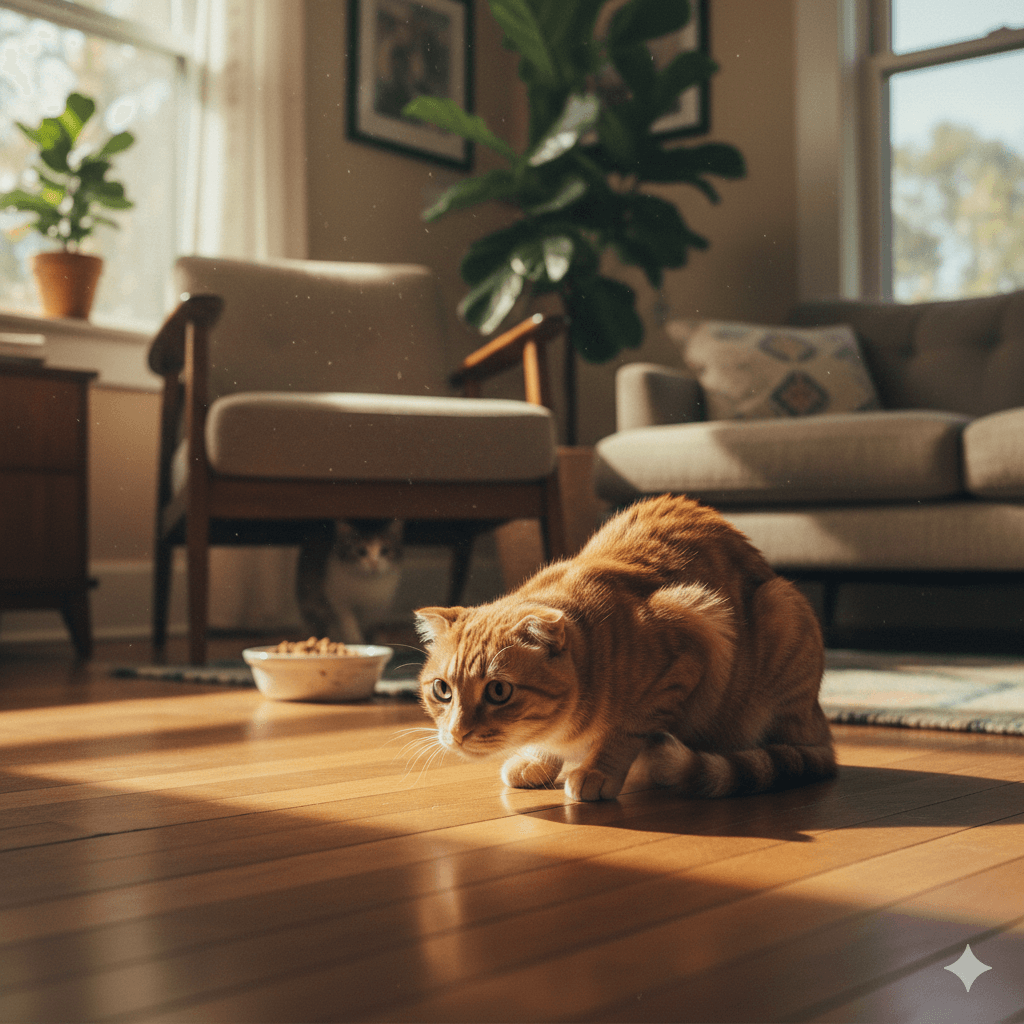
A cat that hunches close to the ground with its tail wrapped tightly around its body is likely feeling insecure or scared. This defensive posture helps them feel less exposed to potential danger. - Excessive Grooming:
Over-grooming is a displacement behavior that anxious cats use to self-soothe. While grooming is normal, excessive licking leading to bald patches or skin irritation points to chronic stress.
How Cats Use Vocalizations to Express Anxiety
- Loud or Persistent Meowing:
Nonstop meowing, especially at unusual times, often reflects unease. Cats may vocalize excessively when they’re lonely, frightened, or trying to get attention during stressful situations. - Growling or Hissing:
These aggressive sounds signal fear or defensiveness. A hissing cat is trying to warn others to stay away, indicating they feel threatened or unsafe in their environment. - High-Pitched Yowling:
Yowling is a loud, drawn-out cry that suggests extreme distress. It can occur during moments of panic, such as being trapped or startled by sudden noises. - Chattering or Teeth Clicking:
While sometimes linked to predatory excitement, chattering can also stem from frustration or anxiety, particularly if your cat is unable to reach something they desire. - Silent Crying (Mouth Open, No Sound):
Some anxious cats open their mouths as if to vocalize but produce no sound. This silent crying is often a sign of intense emotional turmoil or physical discomfort.
Check this guide 👉Playful Cat Body Language: Best 7 Expert Tips!
Check this guide 👉Understanding Cat Ear Body Language: Best 7 Expert Tips!
Check this guide 👉Decoding Sick Cat Body Language: Best 7 Health Tips!
| Signs of Anxiety | Signs of Relaxation |
|---|---|
| Flattened ears against the head | Ears facing forward or slightly tilted |
| Puffed-up or twitching tail | Tail held upright or gently swaying |
| Dilated pupils and wide eyes | Normal-sized pupils and soft gaze |
| Hunched posture with tense muscles | Loose, stretched-out body posture |
| Excessive grooming or hiding | Calm exploration or gentle purring |
Subtle Behavioral Changes Indicating Anxiety
- Avoidance of Interaction:
If your normally affectionate cat suddenly avoids contact or hides more than usual, it could be a sign of stress. Hiding is a coping mechanism for overwhelmed or fearful felines. - Changes in Eating Habits:
Anxious cats may eat less or refuse food altogether, while others may overeat as a form of stress relief. Both extremes indicate that something is troubling them emotionally. - Increased Startle Reflex:
Cats with anxiety often react strongly to minor stimuli, such as footsteps or door slams. Their exaggerated startle reflex shows they’re constantly on edge. - Restlessness or Pacing:
Some anxious cats pace back and forth without settling down. This restless behavior reflects inner turmoil and an inability to relax due to stress. - Inappropriate Elimination:
Urinating or defecating outside the litter box can stem from anxiety, especially if there’s been a recent change in the household or routine.
Physical Symptoms Linked to Chronic Anxiety
- Weight Loss or Gain:
Significant fluctuations in weight often accompany prolonged stress. Anxious cats may lose appetite or overeat, impacting their overall health. - Hair Loss or Bald Patches:
Stress-induced over-grooming leads to hair loss, particularly along the belly, legs, or tail. These bald patches are a visible sign of ongoing anxiety. - Digestive Issues:
Chronic diarrhea, vomiting, or constipation can result from stress-related hormonal imbalances. These symptoms require prompt attention to rule out underlying conditions. - Weakened Immune System:
Stressed cats are more prone to infections, illnesses, or slow wound healing due to elevated cortisol levels suppressing their immune function. - Skin Problems or Lesions:
Excessive scratching, biting, or licking caused by anxiety can damage the skin, leading to sores, infections, or hot spots requiring treatment.
Environmental Triggers for Cat Anxiety
- Loud Noises:
Thunderstorms, fireworks, or construction noise overwhelm sensitive cats, triggering fear responses like hiding or panting. - New Pets or People:
The introduction of new animals or unfamiliar humans can make cats feel territorial or insecure, leading to stress-related behaviors. - Furniture Rearrangements:
Even minor changes to the home layout can unsettle cats, who rely on familiarity for comfort and predictability. - Litter Box Issues:
Dirty, inaccessible, or poorly placed litter boxes contribute to anxiety, especially in multi-cat households where competition exists. - Outdoor Threats:
Seeing stray animals or birds through windows can provoke anxiety, especially if your cat feels unable to escape or defend themselves.
How to Comfort an Anxious Cat
- Provide Safe Spaces:
Designate quiet areas where your cat can retreat, such as a cozy bed or enclosed hideaway, ensuring they have uninterrupted downtime. - Use Calming Products:
Pheromone diffusers, sprays, or collars mimic natural feline pheromones, promoting relaxation and reducing anxiety-related behaviors. - Maintain a Routine:
Consistent feeding, play, and sleep schedules reassure cats, as they thrive on predictability and structure. - Engage in Play Therapy:
Interactive toys and games distract anxious cats, redirecting their energy and boosting confidence through positive reinforcement. - Consult a Veterinarian:
If anxiety persists despite interventions, consult your vet for advice on supplements, medications, or behavioral therapy tailored to your cat’s needs.
Preventing Future Episodes of Anxiety
- Gradual Introductions:
Introduce new pets, people, or objects slowly, allowing your cat time to adjust without feeling overwhelmed. - Environmental Enrichment:
Provide scratching posts, climbing trees, and interactive toys to keep your cat mentally stimulated and physically active. - Regular Health Check-Ups:
Routine vet visits detect underlying health issues that could contribute to anxiety, ensuring timely treatment. - Limit Exposure to Stressors:
Keep your cat away from known stressors, such as loud noises or aggressive animals, whenever possible. - Positive Reinforcement:
Reward calm behavior with treats, praise, or affection, reinforcing their ability to cope with stressful situations.
“Sometimes fearful cat body language, such as closing their eyes, hunching close to the ground and tucking their tail around them, may be an indication of pain. You should discuss any signs of anxiety, stress, or pain with your veterinarian.”
— Samantha Zurlinden
Frequently Asked Questions About Anxious Cat Body Language
How can I tell if my cat is anxious or just playful?
Playful cats often have relaxed body language, like forward-facing ears and a swishing tail, while anxious cats display signs like flattened ears, dilated pupils, or a puffed-up tail. Context matters—observe their overall behavior.
What should I do if my cat hides all the time?
Can anxiety in cats lead to aggression?
Yes, anxiety can manifest as aggression if a cat feels cornered or threatened. Look for warning signs like growling, hissing, or swatting, and address the underlying cause of their stress.
Are certain breeds more prone to anxiety?
Some breeds, like Siamese or Bengals, are naturally more sensitive and energetic, making them more susceptible to anxiety. However, any cat can develop anxiety due to environmental or health factors.
How long does it take for a cat to recover from anxiety?
Recovery depends on the severity of the anxiety and the steps taken to address it. Mild cases may resolve within days, while chronic anxiety may require weeks or months of consistent intervention.
Supporting Your Cat Through Anxiety: A Lifeline in Every Moment

Is Rawhide Bad for Cats? Best 7 Expert Tips! – Discover the risks, safe alternatives, and expert advice to keep your feline friend healthy and happy.

Is Rawhide Bad for Dogs? Best 7 Expert Tips! – Discover the risks, benefits, and safer alternatives to rawhides for your dog’s chewing needs.

Understanding Anorexia in Cats: Best 7 Expert Tips! – Learn why cats stop eating, spot warning signs, and discover how to help your feline regain appetite safely.

Understanding Anorexia in Dogs: Best 7 Expert Tips! – Learn causes, symptoms, and solutions to help your dog regain appetite and stay healthy.