
Alaskan Malamute vs Siberian Husky: What’s the Difference?
The Alaskan Malamute and the Siberian Husky are two of the most beloved Arctic breeds, often admired for their striking appearances and energetic personalities. While they share some similarities—such as their thick double coats and sled-pulling heritage—they are distinct in temperament, size, and care requirements. If you’re considering adding one of these majestic dogs to your family, it’s essential to understand what sets them apart. In this blog post, we’ll explore the key differences between the Alaskan Malamute and the Siberian Husky, helping you make an informed decision about which breed is the best fit for your lifestyle.
Key Differences Between the Alaskan Malamute and Siberian Husky
While both breeds originate from cold climates and have similar wolf-like appearances, their differences become apparent when you look closer at their physical traits, temperaments, and purposes. Here’s a breakdown of what makes each breed unique.
Size and Build:
The Alaskan Malamute is larger and more muscular, weighing between 75-100 pounds, while the Siberian Husky is smaller and leaner, typically weighing 35-60 pounds.Temperament and Personality:
Malamutes are known for their calm, loyal, and independent nature, whereas Huskies are playful, social, and often mischievous.Energy Levels:
Huskies are high-energy escape artists who need constant mental and physical stimulation, while Malamutes are more laid-back but still require regular exercise.Coat Maintenance:
Both breeds have thick double coats, but Malamutes tend to shed more heavily due to their denser fur, requiring extra grooming during shedding seasons.Purpose and Work Ethic:
Malamutes were bred for heavy freighting and strength, while Huskies excel at endurance tasks like long-distance sledding.
Understanding these distinctions helps you determine which breed aligns better with your preferences and capabilities as a dog owner.
Physical Characteristics of the Alaskan Malamute and Siberian Husky
Both breeds are visually stunning, but their physical features reflect their unique roles and origins. Here’s a closer look at their appearance and how they differ.
Coat Color Variations:
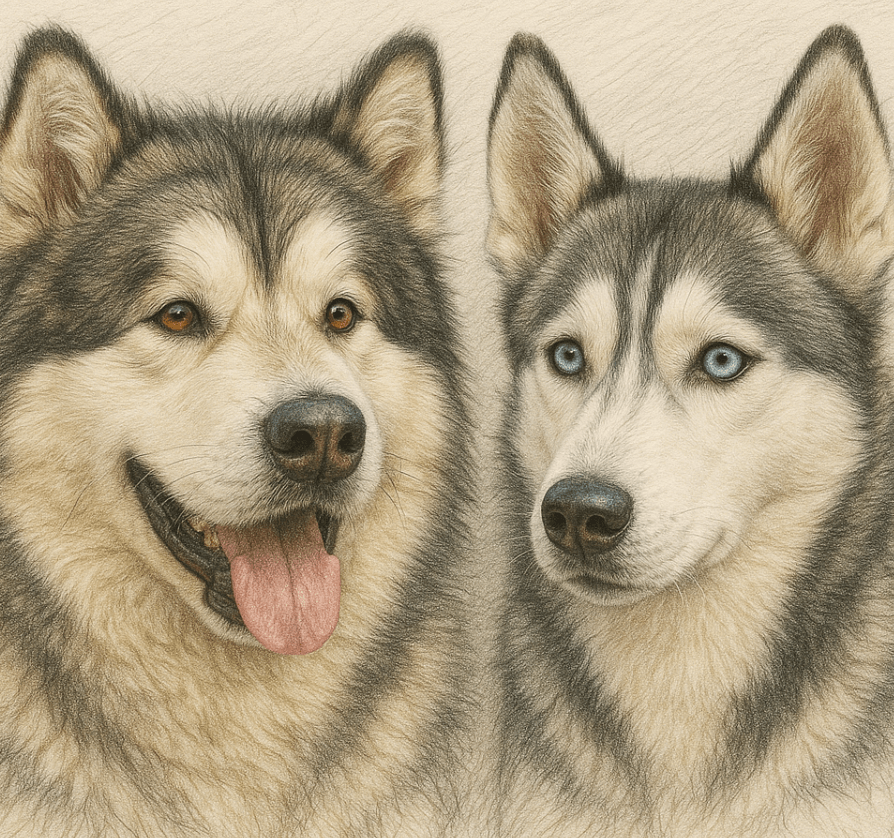
Malamutes come in shades of gray, black, sable, or red, always with white markings. Huskies display a wider variety of colors, including pure white, black, agouti, and even striking blue eyes.Facial Features:
Malamutes have broader heads and softer expressions, while Huskies have narrower muzzles and more fox-like faces.Eye Colors:
Malamutes typically have brown eyes, while Huskies can have blue, brown, or heterochromatic (two different colored) eyes.Tail Carriage:
Malamutes carry their tails high over their backs in a plume-like fashion, while Huskies’ tails hang lower and curve slightly upward.Height and Proportions:
Malamutes stand taller (23-25 inches) with a stocky build, while Huskies are shorter (20-23 inches) and more athletic-looking.
These physical traits not only define their beauty but also hint at their historical roles and adaptability to harsh environments.
Check this guide 👉Wolf vs Husky: Best 7 Expert Tips!
Check this guide 👉Swedish Vallhund vs Corgi: Best 7 Expert Tips!
Check this guide 👉Shiba Inu vs Corgi: Best 7 Expert Tips!
Alaskan Malamute Traits | Siberian Husky Traits |
|---|---|
Larger, heavier build (75-100 lbs) | Smaller, lighter frame (35-60 lbs) |
Calm, loyal, and independent | Playful, social, and mischievous |
Heavy shedder; requires frequent grooming | Moderate shedder; easier maintenance |
Bred for strength and hauling loads | Bred for speed and endurance sledding |
Typically brown eyes | Can have blue, brown, or mixed eyes |
Exercise and Activity Needs of Each Breed
Both the Alaskan Malamute and the Siberian Husky are active breeds, but their exercise requirements vary significantly based on their energy levels and working backgrounds.
Malamute Exercise Needs:
Malamutes thrive on moderate daily walks and playtime but don’t demand intense activity. A couple of 30-minute walks or backyard play sessions suffice.Husky Energy Levels:
Huskies are notorious for their boundless energy and need at least 1-2 hours of vigorous exercise daily, including runs, hikes, or agility training.Malamute Mental Stimulation:
While less demanding than Huskies, Malamutes still benefit from puzzle toys, obedience training, and interactive games to prevent boredom.Husky Escapism Tendencies:
Huskies are natural explorers and may attempt to escape fenced yards. Secure enclosures and supervised outdoor time are essential.Socialization Requirements:
Both breeds enjoy human interaction, but Huskies crave constant companionship and are more likely to develop separation anxiety if left alone.
Meeting their exercise needs ensures a happy, well-behaved dog that fits seamlessly into your household.
Training Challenges and Tips for Each Breed
Training these intelligent yet stubborn breeds requires patience, consistency, and tailored approaches to suit their individual personalities.
Malamute Training Approach:
Malamutes respond best to firm but gentle leadership. Avoid harsh methods, as they can become stubborn or resentful.Husky Training Approach:
Huskies are highly intelligent but easily distracted. Short, engaging training sessions with plenty of rewards work wonders.Malamute Independence:
Due to their independent nature, Malamutes may test boundaries. Reinforce commands consistently and use positive reinforcement.Husky Mischievousness:
Huskies are clever problem-solvers and may find creative ways to get into trouble. Supervision and secure environments are crucial.Socialization Importance:
Early socialization is vital for both breeds to ensure they interact well with other pets and strangers, reducing potential aggression or fearfulness.
With dedication and understanding, both breeds can become obedient and loving companions.
Common Health Issues in Alaskan Malamutes and Siberian Huskies
Like all breeds, these Arctic dogs are prone to certain health conditions. Being aware of potential issues allows you to provide proactive care.
Hip Dysplasia:
Both breeds are susceptible to hip dysplasia, so maintaining a healthy weight and avoiding strenuous activities during puppyhood is important.Cataracts and Eye Problems:
Huskies are prone to juvenile cataracts, while Malamutes may develop progressive retinal atrophy (PRA). Regular eye exams are recommended.Bloat (Gastric Torsion):
Large breeds like Malamutes are at risk of bloat; feeding smaller meals and avoiding vigorous exercise after eating helps reduce this risk.Zinc Deficiency:
Malamutes are particularly prone to zinc-responsive dermatosis, which requires dietary supplementation if diagnosed.Heat Sensitivity:
Their thick coats make both breeds vulnerable to overheating; always provide shade and water during warmer months.
Proactive healthcare ensures a longer, healthier life for your furry companion.
Living Arrangements for These Breeds
Your living situation plays a significant role in determining whether an Alaskan Malamute or Siberian Husky is suitable for your home.
Space Requirements:
Malamutes adapt better to apartments due to their calmer nature, while Huskies need ample space to burn off energy.Yard Security:
Huskies are notorious escape artists; tall, secure fencing is essential to prevent wandering.Climate Considerations:
Both breeds thrive in colder climates but may struggle in hot or humid areas without proper precautions.Companionship Needs:
Huskies dislike being left alone for long periods and may develop destructive behaviors, unlike the more independent Malamute.Noise Levels:
Huskies are vocal and may disturb neighbors with howling, while Malamutes tend to be quieter overall.
Considering these factors ensures a harmonious living environment for both you and your pet.
Dietary Needs of Alaskan Malamutes and Siberian Huskies
Feeding these active breeds requires careful attention to nutrition to support their energy levels and overall health.
High-Quality Protein:
Both breeds benefit from diets rich in animal-based proteins to fuel their muscles and energy demands.Balanced Fat Content:
Healthy fats like omega-3 fatty acids promote skin and coat health, especially important for their thick double coats.Portion Control:
Overfeeding can lead to obesity, which exacerbates joint problems like hip dysplasia. Measure portions carefully.Hydration Needs:
Ensure constant access to fresh water, as both breeds are prone to dehydration during exercise or in warm weather.Supplements for Specific Needs:
Malamutes may require zinc supplements, while Huskies benefit from joint-supporting supplements like glucosamine.
A well-balanced diet keeps these hardworking breeds healthy and thriving.
Frequently Asked Questions About Alaskan Malamutes and Siberian Huskies
Are Malamutes good family dogs?
Yes, Malamutes are affectionate and loyal, making them excellent family pets when properly trained and socialized.
Do Huskies bark a lot?
Huskies are more likely to “talk” through howls and whines rather than excessive barking, though some may vocalize frequently.
Can these breeds live in warm climates?
While adaptable, both breeds prefer cooler weather due to their thick coats and may struggle in extreme heat.
How much grooming do they need?
Both require regular brushing, but Malamutes shed more heavily during seasonal blowouts, needing extra attention.
Are they good with kids?
Yes, both breeds are generally great with children, provided they are raised together and trained properly.
Choosing Between the Alaskan Malamute and Siberian Husky
Deciding between an Alaskan Malamute and a Siberian Husky ultimately comes down to your lifestyle, preferences, and ability to meet their specific needs. Whether you’re drawn to the Malamute’s strength and calm demeanor or the Husky’s playful spirit and striking looks, both breeds offer incredible companionship for the right owner. By understanding their differences and committing to their care, you can create a lifelong bond with one of these remarkable Arctic dogs. Whichever you choose, you’re sure to gain a loyal, loving friend who will bring joy and adventure to your home.
Spleen Cancer in Cats: Best 7 Expert Tips! – Expert insights on symptoms, care, treatment & quality of life for feline spleen cancer.
Dog Mastitis Treatment: Best 7 Expert Tips! – Safe, vet-approved care for nursing moms & prevention strategies.
The Shikoku Ken Dog: Best 7 Expert Tips! – Discover expert care, training & health advice for this rare, loyal Japanese mountain breed.
The Cairn Terrier Dog Breed: Best 7 Expert Tips! – Discover care, training & health advice for this spirited, loyal Scottish terrier.