

Is Rawhide Bad for Dogs? What You Need to Know
1. What Are Rawhides and How Are They Made?
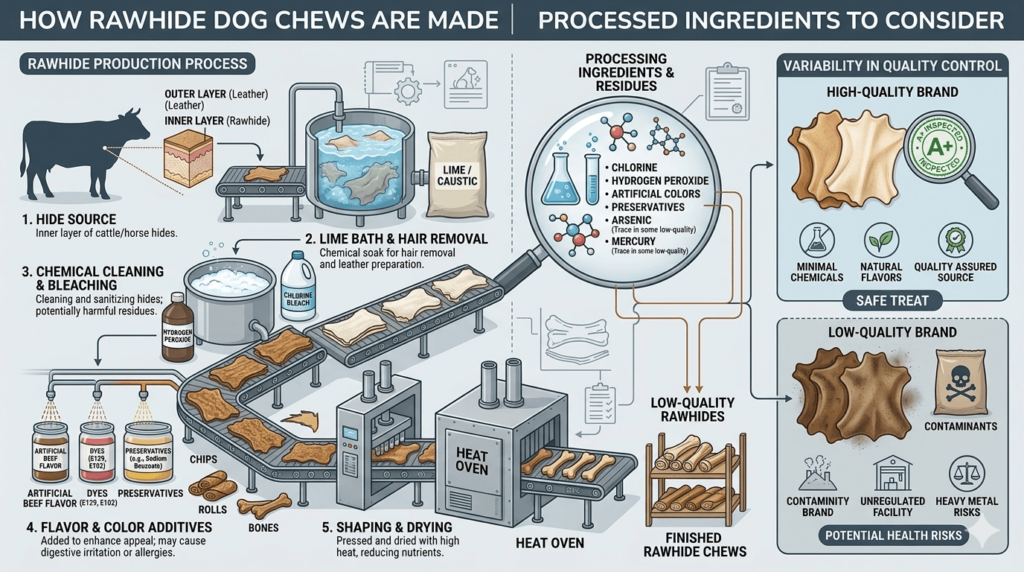
- Animal Hide Origins:
Rawhides are created by splitting animal skins into layers; the outer layer is used for leather goods, while the inner layer becomes rawhide chews. These hides often come from slaughterhouse byproducts, which are processed into dog treats. - Chemical Treatments During Production:
The hides undergo chemical treatments to clean and preserve them, including lime baths, bleach, or hydrogen peroxide. These chemicals can sometimes leave residues that may be harmful if ingested in large quantities. - Flavoring and Coloring Additives:
Some manufacturers add artificial flavors, colors, or preservatives to make rawhides more appealing to dogs. However, these additives can irritate sensitive stomachs or cause allergic reactions in certain pets. - Drying and Shaping Process:
Once cleaned and treated, the hides are pressed, rolled, or shaped into various forms like bones, chips, or sticks. This process often involves heat drying, which can reduce nutritional value but extends shelf life. - Variability in Quality Control:
Not all rawhides are created equal—some brands prioritize quality and safety, while others cut corners. Low-quality rawhides may contain contaminants or be sourced from unregulated facilities.
“Rawhide treats showed wide variation in digestibility, with some samples reaching only 77.5% disappearance after intestinal phase digestion, indicating potential risks for gastrointestinal blockage in dogs.”
– de Godoy et al., In vitro disappearance characteristics of selected categories of commercially available dog treats, Journal of Nutritional Science
2. Potential Risks of Feeding Rawhides to Dogs
- Choking Hazards:
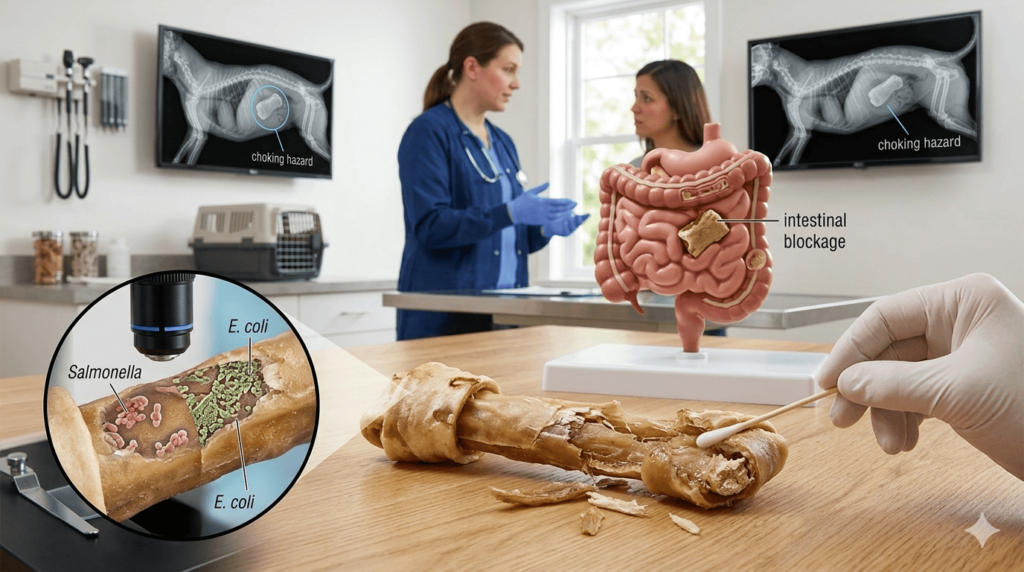
Large chunks of rawhide can break off during aggressive chewing, posing a serious choking risk—especially for smaller or more enthusiastic chewers. - Digestive Blockages:
If swallowed in large pieces, rawhides may not dissolve properly in the stomach, leading to intestinal blockages that require surgical removal. - Bacterial Contamination Concerns:
Poorly processed rawhides can harbor bacteria like Salmonella or E. coli, endangering both dogs and humans who handle the chews. - Chemical Residue Ingestion:
Residual chemicals from the tanning and cleaning process can accumulate in your dog’s system over time, potentially causing toxicity or other health issues. - Allergic Reactions or Sensitivities:
Some dogs develop allergies or sensitivities to ingredients in rawhides, such as artificial flavors, dyes, or preservatives. Symptoms include itching, vomiting, or diarrhea.
Pet parents should limit the amount of rawhide consumed at any given time and discourage consumption of significant pieces that could cause choking or gastrointestinal obstruction.”
– ASPCA
Check this guide 👉 Is Aloe Vera Safe for Dogs? Best 7 Expert Tips!
Check this guide 👉 Is NexGard Safe for My Dog? Best 7 Expert Tips!
Check this guide 👉 Is Peppermint Oil Safe for Dogs? Best 7 Expert Tips!
Pros of Rawhides | Cons of Rawhides |
|---|---|
Helps reduce plaque and tartar buildup | Choking hazard if swallowed in large pieces |
Keeps dogs entertained for extended periods | Risk of digestive blockages or irritation |
Satisfies natural chewing instincts | May contain harmful chemicals or additives |
Available in various sizes and shapes | Bacterial contamination in low-quality products |
Low-calorie compared to many dog treats | Not suitable for all dogs (e.g., aggressive chewers) |
3. Benefits of Rawhides for Dental Health
- Plaque and Tartar Reduction:
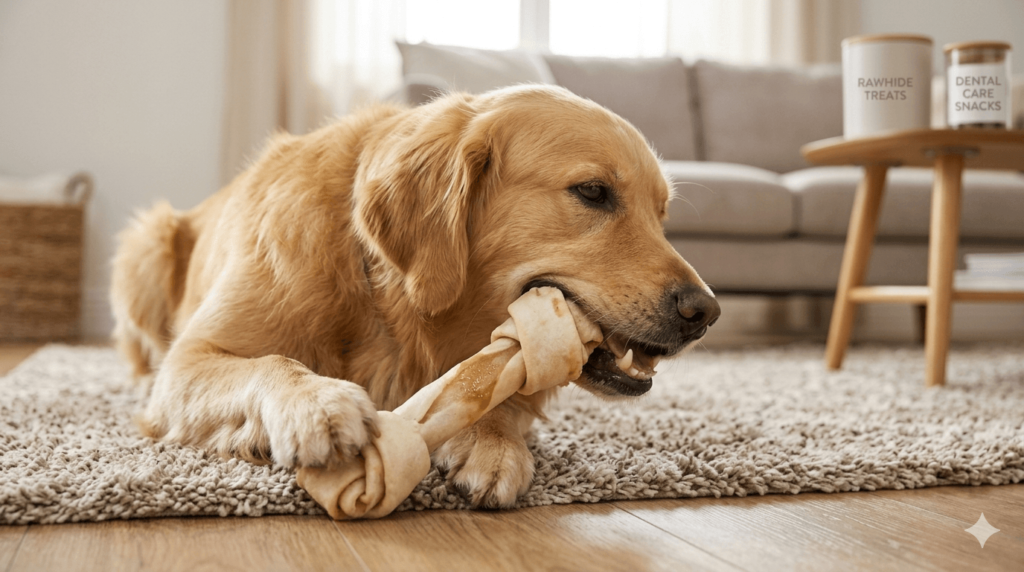
The act of chewing rawhides scrapes away food particles and plaque from the surface of your dog’s teeth, promoting better oral health. - Long-Lasting Entertainment Value:
Rawhides occupy dogs for extended periods, providing mental stimulation and reducing boredom-related behaviors like chewing furniture or shoes. - Natural Chewing Instinct Satisfaction:
Dogs have an innate desire to chew, and rawhides satisfy this instinct without damaging household items or personal belongings. - Low-Calorie Option Compared to Other Treats:
Many rawhides contain fewer calories than traditional dog treats, making them a relatively guilt-free indulgence for weight-conscious owners. - Variety of Shapes and Sizes Available:
From flat chips to knotted bones, rawhides come in diverse forms tailored to different breeds, sizes, and chewing preferences.
“The data indicated that once daily feeding of the soft rawhide chew product resulted in statistically significant reductions in the formation of dental calculus (28.0%), dental plaque (19.0%), and gingivitis (46.0%).”
– GK Stookey, Soft Rawhide Reduces Calculus Formation in Dogs
4. Safer Alternatives to Traditional Rawhides
- Edible Dental Chews:
Brands like Greenies or Whimzees offer digestible chews designed specifically for dental care, reducing plaque and tartar without the choking hazard. - Natural Antlers or Horns:
Deer or elk antlers provide durable, long-lasting chews that won’t splinter easily or pose ingestion risks. - Bully Sticks:
Made from dried beef muscle, bully sticks are fully digestible and packed with protein, making them a healthier option than rawhides. - Vegetable-Based Chews:
Products made from sweet potatoes, carrots, or other vegetables mimic the texture of rawhides without animal byproducts or harsh chemicals. - Frozen Kongs or Puzzle Toys:
Interactive toys stuffed with peanut butter or frozen treats engage your dog mentally and physically, reducing reliance on traditional chews.
“General guidelines for suitable toys for chewing include that the object should be bendable and be able to be indented with a fingernail.”
– Dr. Brian Collins, FDA

5. How to Choose Safe Rawhides for Your Dog
- Check the Country of Origin:
Opt for rawhides manufactured in countries with strict food safety regulations, such as the United States, Canada, or New Zealand. Avoid those from regions with lax oversight. - Look for Minimal Processing:
Choose products labeled as “natural” or “minimally processed,” avoiding those with artificial colors, flavors, or preservatives. - Verify Ingredient Transparency:
Reputable brands list all ingredients clearly, ensuring no hidden contaminants or harmful additives are present. - Consider Size Appropriateness:
Select rawhides sized appropriately for your dog’s breed and chewing style—larger chews reduce the risk of swallowing large pieces. - Monitor Usage Closely:
Limit rawhide consumption to short sessions under supervision, removing any small or jagged pieces before they become hazardous.
“Rawhide chews may become choking hazards if the dog isn’t supervised and the rawhide taken away when it becomes small enough to be swallowed.”
– Becky Lundgren, DVM

6. Signs Your Dog May Have a Problem with Rawhides
- Excessive Drooling or Vomiting:
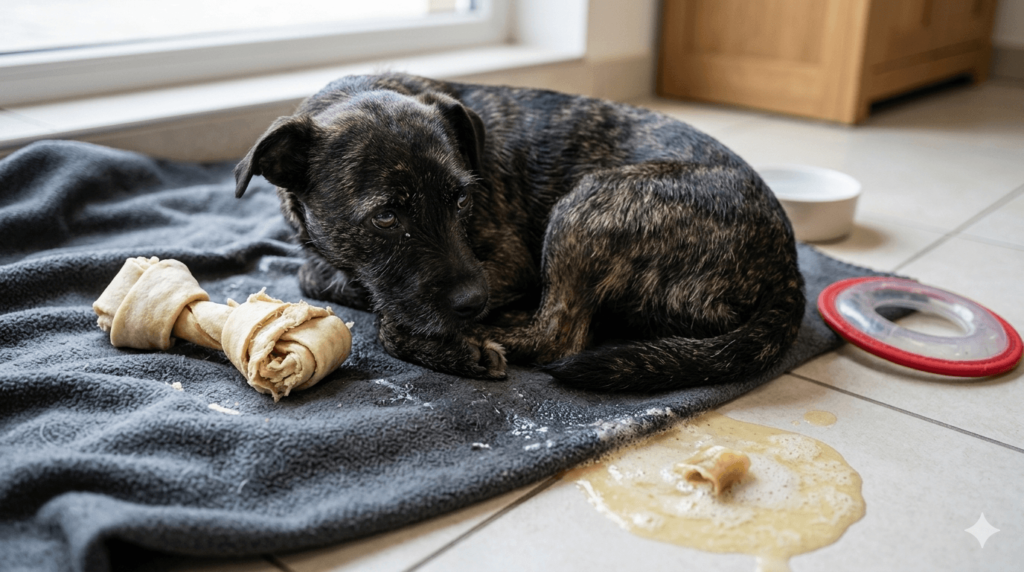
These symptoms indicate irritation or blockage in the digestive tract caused by rawhide ingestion. Immediate veterinary attention may be necessary. - Diarrhea or Constipation:
Changes in stool consistency often signal gastrointestinal distress triggered by indigestible materials or bacterial contamination. - Coughing or Gagging:
Persistent coughing suggests partial obstruction in the throat or esophagus due to large chunks of rawhide. - Lethargy or Loss of Appetite:
A sudden decline in energy levels or refusal to eat points to discomfort or pain related to rawhide consumption. - Abdominal Swelling or Pain:
Signs of bloating or tenderness around the belly area could indicate internal blockages requiring emergency treatment.
“Foreign bodies can cause life-threatening complications such as intestinal obstruction. Common signs include vomiting, diarrhea, abdominal pain, lethargy, and loss of appetite.”
– VCA Hospitals
7. Training Your Dog to Chew Responsibly
- Introduce Chews Gradually:
Start with small, manageable pieces to gauge your dog’s chewing style before progressing to larger rawhides. - Supervise Every Session:
Never leave your dog unattended with rawhides; watch closely to ensure they don’t bite off or swallow large chunks. - Use Command Words Like “Drop It”:
Teach commands that allow you to retrieve the chew safely if it becomes too small or damaged during use. - Reward Calm Behavior Around Chews:
Praise your dog for chewing gently and calmly, reinforcing positive habits and discouraging aggressive gnawing. - Rotate Treats Regularly:
Offer a variety of chews to prevent boredom and reduce dependency on rawhides alone for entertainment.
“To ensure that your puppy is encouraged and rewarded for chewing on its own toys, and discouraged from chewing on all other objects, it must be supervised at all times.”
– Debra Horwitz, DVM, DACVB & Gary Landsberg, DVM, DACVB, DECAWBM

Frequently Asked Questions About Rawhides for Dogs
Is rawhide safe for all dogs?
No—rawhides can pose choking or digestive risks, especially for aggressive chewers, small breeds, or dogs with sensitive stomachs.
How often can I give my dog rawhide?
Limit rawhide treats to once or twice a week, ensuring they’re fully digestible and appropriately sized for your dog.
Are there safer alternatives to rawhides?
Yes—options like bully sticks, vegetable-based chews, or antlers provide safer chewing experiences without the risks of traditional rawhides.
Can rawhides cause allergies?
Some dogs may react to artificial additives, dyes, or preservatives in rawhides; opt for natural, minimally processed options if concerned.
What should I do if my dog swallows a large piece of rawhide?
Monitor your dog closely for signs of choking or blockage, and contact your veterinarian immediately if symptoms like vomiting or lethargy occur.
A Balanced Perspective on Rawhides

Is Rawhide Bad for Cats? Best 7 Expert Tips! – Discover the risks, safe alternatives, and expert advice to keep your feline friend healthy and happy.
Is Rawhide Bad for Dogs? Best 7 Expert Tips! – Discover the risks, benefits, and safer alternatives to rawhides for your dog’s chewing needs.

Understanding Anorexia in Cats: Best 7 Expert Tips! – Learn why cats stop eating, spot warning signs, and discover how to help your feline regain appetite safely.

Understanding Anorexia in Dogs: Best 7 Expert Tips! – Learn causes, symptoms, and solutions to help your dog regain appetite and stay healthy.