
Understanding the Cat Tapeworm Life Cycle: A Closer Look
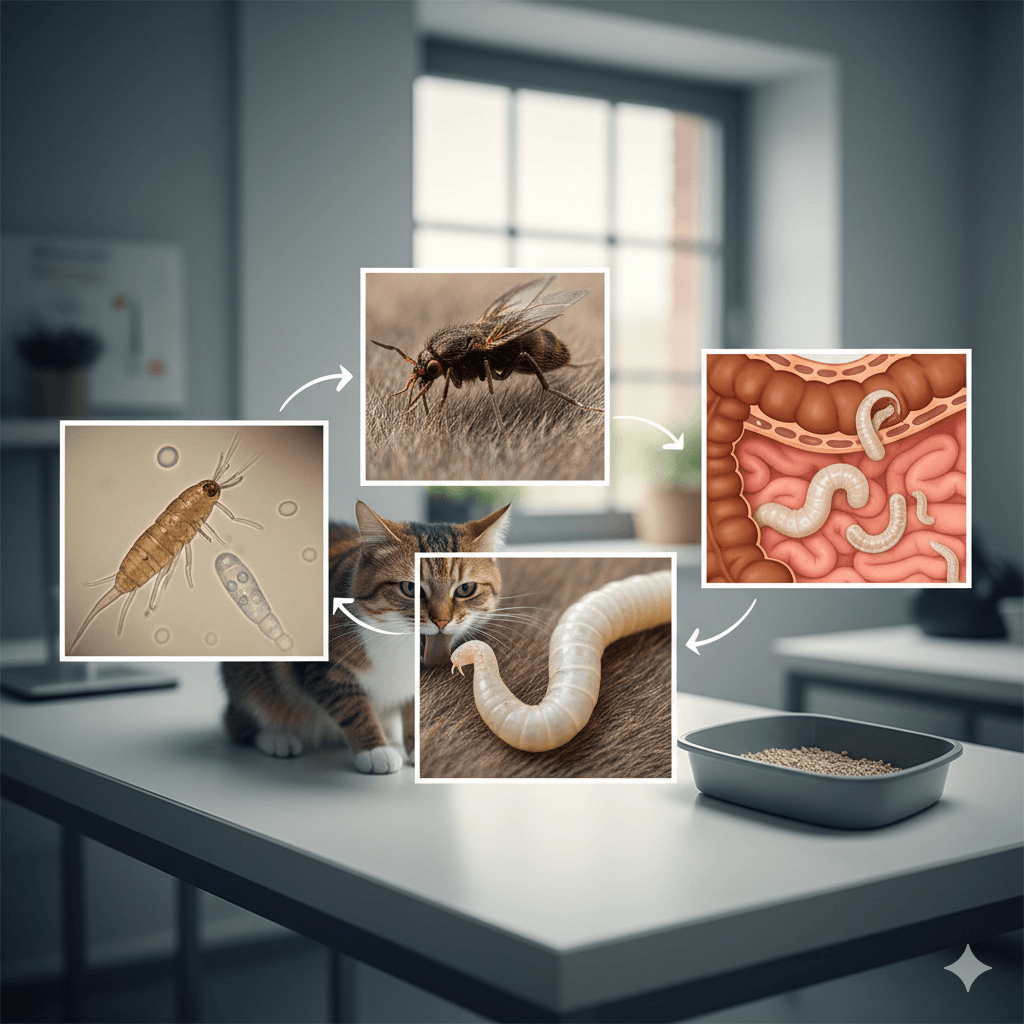
The Tapeworm Life Cycle: How It Begins
- Egg Release in the Environment:
Tapeworm segments, called proglottids, detach from the adult worm in your cat’s intestines and are passed in feces. These segments contain thousands of eggs that contaminate the environment. - Intermediate Host Ingestion:
Fleas or rodents ingest tapeworm eggs while feeding on contaminated feces or soil. Inside these hosts, the eggs hatch into larvae, continuing the lifecycle. - Larval Development in Fleas or Rodents:
Once ingested, tapeworm larvae migrate to specific tissues in the intermediate host, forming cysticercoids. These cysts remain dormant until ingested by a cat. - Cat Ingests the Intermediate Host:
Cats become infected when they groom themselves (ingesting fleas) or hunt and eat rodents carrying cysticercoids. This ingestion marks the beginning of the tapeworm’s growth inside the cat. - Adult Tapeworm Formation:
Inside the cat’s intestines, cysticercoids develop into adult tapeworms, which attach to the intestinal lining and begin producing new proglottids.
Identifying Signs of Tapeworms in Cats
- Visible Proglottids in Feces or Fur:
Rice-like segments around your cat’s anus or in feces are a clear sign of tapeworms. These segments may move initially, then dry up and resemble sesame seeds. - Scooting Behavior:
Cats with tapeworms may drag their rear end across the floor due to anal irritation caused by migrating proglottids. - Weight Loss Despite Normal Appetite:
Tapeworms absorb nutrients from your cat’s food, leading to unexplained weight loss even if they eat normally. - Excessive Licking or Grooming:
Infected cats often lick their rear end excessively to relieve itching or discomfort caused by tapeworm activity. - Vomiting with Worm Segments:
In severe cases, cats may vomit visible tapeworm segments, indicating a heavy infestation requiring immediate veterinary care.
Check this guide 👉Whipworms Symptoms in Cats: Best 7 Expert Tips!
Check this guide 👉Can I Get Hookworms from My Cat? Best 7 Expert Tips!
Check this guide 👉How to Know If Your Cat Has Tapeworm: Best 7 Expert Tips!
Preventive Measures | Signs of Infection |
|---|---|
Regular flea control treatments | Visible rice-like segments in feces or fur |
Environmental cleaning (vacuuming, washing bedding) | Scooting or dragging rear end on the floor |
Discouraging hunting behaviors | Excessive licking or grooming near the anus |
Routine veterinary check-ups | Unexplained weight loss despite normal appetite |
Year-round parasite prevention | Vomiting with visible worm segments |
The Role of Fleas in the Tapeworm Life Cycle
- Flea Larvae Consume Tapeworm Eggs:
Immature flea larvae ingest tapeworm eggs present in the environment, allowing the parasite to develop within the flea’s body. - Development of Infective Cysticercoids:
As fleas mature, tapeworm larvae grow into infective cysticercoids, which remain dormant until the flea is ingested by a cat. - Grooming Leads to Infection:
Cats often ingest fleas during grooming, unknowingly introducing tapeworm cysticercoids into their digestive system. - Flea Infestations Increase Risk:
Homes with flea problems significantly raise the likelihood of tapeworm infections, as fleas multiply rapidly and spread eggs. - Breaking the Cycle Through Flea Control:
Regular flea treatments, vacuuming, and environmental cleaning disrupt the tapeworm lifecycle by eliminating fleas at all stages.
How Tapeworms Impact Your Cat’s Health
- Nutrient Depletion:
Tapeworms consume nutrients from your cat’s food, potentially causing deficiencies in vitamins, minerals, and essential fats. - Digestive Discomfort:
The attachment of tapeworms to the intestinal wall can irritate the gut, leading to bloating, gas, or irregular bowel movements. - Weakened Immune System:
Chronic parasitic infections strain the immune system, making cats more susceptible to other illnesses or infections. - Behavioral Changes:
Irritation or discomfort from tapeworms may cause lethargy, restlessness, or aggression in otherwise calm cats. - Secondary Health Issues:
Severe infestations can result in anemia, dehydration, or malnutrition, particularly in kittens or senior cats with weaker immune systems.
Preventing Tapeworm Infections in Cats
- Regular Deworming Treatments:
Administer veterinarian-recommended deworming medications every 3–6 months to eliminate existing tapeworms and prevent new infections. - Consistent Flea Control:
Use monthly flea preventatives, such as topical treatments, collars, or oral medications, to keep fleas away from your cat and home. - Environmental Hygiene:
Vacuum carpets, wash bedding, and clean litter boxes frequently to remove flea eggs, larvae, and tapeworm eggs from the environment. - Discourage Hunting Behaviors:
Prevent your cat from hunting rodents or birds, as these animals often carry tapeworm cysts that infect cats upon ingestion. - Routine Veterinary Check-Ups:
Schedule annual exams to monitor your cat’s health and detect early signs of parasitic infections through stool tests.
Treating Tapeworm Infections in Cats
- Prescription Dewormers:
Medications like praziquantel or epsiprantel target and kill adult tapeworms, causing them to dissolve in the intestines. - Single-Dose Treatments:
Most dewormers require only one dose, though follow-up treatments may be necessary to address reinfections or lingering eggs. - Oral vs. Injectable Options:
Dewormers come in oral tablets, flavored chews, or injectable forms, depending on your cat’s preferences and vet recommendations. - Monitoring Post-Treatment:
Observe your cat for signs of improvement, such as reduced proglottid shedding or increased energy, after administering medication. - Environmental Deep Cleaning:
After treatment, thoroughly clean your home to remove any remaining tapeworm eggs or fleas that could re-infect your cat.
Long-Term Management of Tapeworm Risks
- Year-Round Parasite Prevention:
Continue using flea and tick preventatives year-round, even in winter, to avoid lapses in protection. - Education for Multi-Pet Households:
Ensure all pets in your household receive regular deworming and flea treatments to prevent cross-contamination. - Outdoor Supervision:
Limit unsupervised outdoor time for cats to reduce exposure to fleas, rodents, or contaminated environments. - Healthy Diet and Immune Support:
Provide a balanced diet rich in nutrients to strengthen your cat’s immune system and improve resistance to parasites. - Stay Informed About New Products:
Keep up with advancements in parasite prevention, such as innovative medications or natural supplements, to enhance your cat’s protection.
“Cats usually become infected with tapeworms by ingesting infected fleas while grooming or by eating infected rodents. Fleas and rodents become infected by eating tapeworm eggs in the environment.”
— Cornell Feline Health Center
Frequently Asked Questions About the Cat Tapeworm Life Cycle
What are the most common signs of tapeworms in cats?
Visible proglottids in feces or around the anus, scooting behavior, and weight loss despite normal appetite are key indicators of tapeworm infection.
How do cats get tapeworms?
Cats typically ingest tapeworm larvae by swallowing fleas during grooming or by eating rodents or birds that carry cysticercoids.
Can humans get tapeworms from cats?
While rare, humans can contract certain types of tapeworms if they accidentally ingest infected fleas or contaminated materials.
How often should I deworm my cat?
Veterinarians recommend deworming every 3–6 months, depending on your cat’s lifestyle, environment, and risk factors like hunting or flea exposure.
Are over-the-counter dewormers effective?
Some OTC products work for mild cases, but prescription medications from your vet are more reliable and tailored to your cat’s needs.
Protecting Your Cat from Tapeworms: A Lifelong Commitment

Is Rawhide Bad for Cats? Best 7 Expert Tips! – Discover the risks, safe alternatives, and expert advice to keep your feline friend healthy and happy.

Is Rawhide Bad for Dogs? Best 7 Expert Tips! – Discover the risks, benefits, and safer alternatives to rawhides for your dog’s chewing needs.

Understanding Anorexia in Cats: Best 7 Expert Tips! – Learn why cats stop eating, spot warning signs, and discover how to help your feline regain appetite safely.

Understanding Anorexia in Dogs: Best 7 Expert Tips! – Learn causes, symptoms, and solutions to help your dog regain appetite and stay healthy.