
Discover the Greenland Sled Dog: A Symbol of Arctic Resilience
Origins and History of the Greenland Sled Dog
- Ancient Roots in the Arctic:
Archaeological evidence suggests that sled dogs were used by the Thule people, ancestors of modern Inuit, as early as 1,000 years ago. They relied on these dogs for mobility across vast icy landscapes. - Role in Exploration:
Greenland sled dogs were vital during polar expeditions, including those led by explorers like Roald Amundsen and Robert Peary. Their endurance made them ideal for long treks in sub-zero temperatures. - Cultural Significance to the Inuit:
For the Inuit, these dogs are more than just workers; they are companions and symbols of tradition. The bond between dog and handler reflects mutual respect and trust forged over generations. - Isolation Preserves Purity:
Geographic isolation has kept the breed relatively pure, free from crossbreeding with other dog breeds. This purity ensures their physical and behavioral traits remain intact. - Modern Challenges to Survival:
Climate change, urbanization, and the rise of snowmobiles threaten the traditional use of Greenland sled dogs. Conservation efforts aim to preserve this living piece of history.
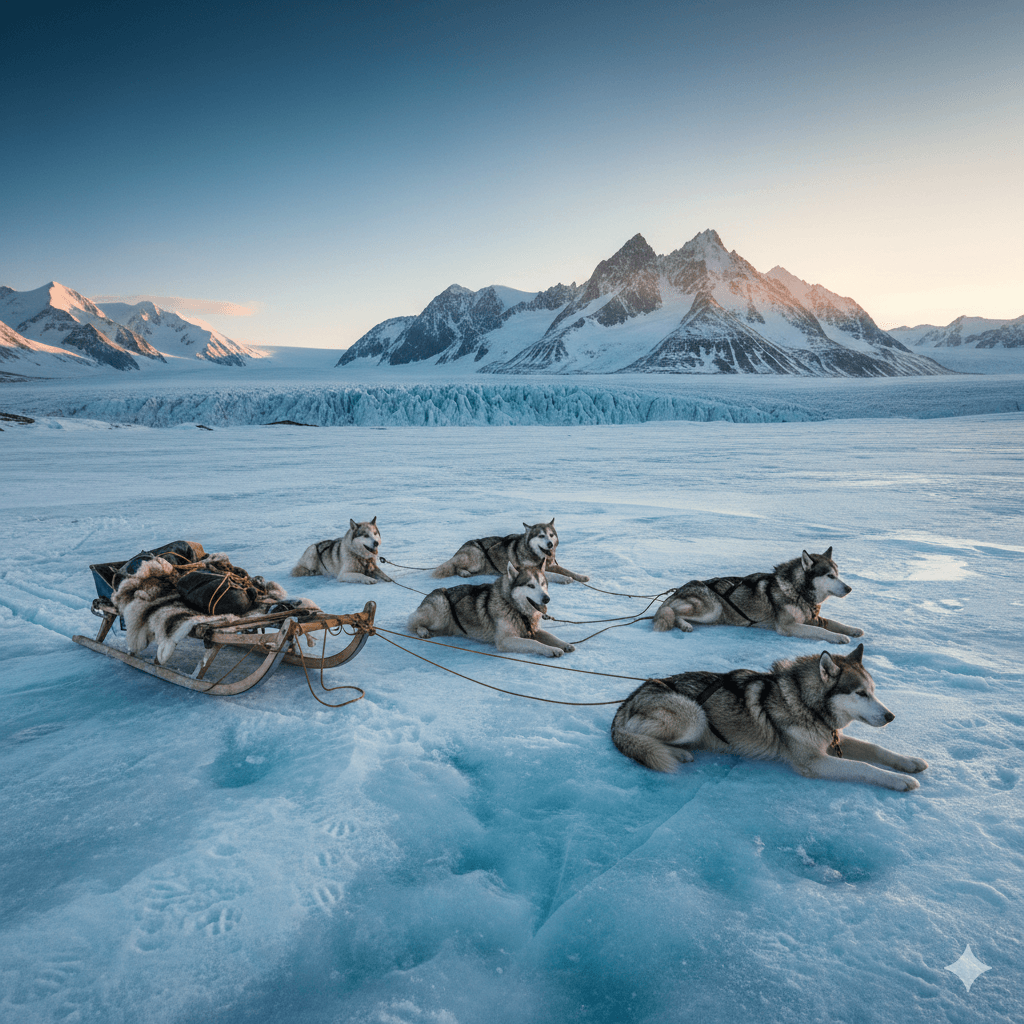
Distinctive Physical Traits of the Greenland Sled Dog
- Powerful Build and Muscular Frame:
Weighing between 66–99 pounds (30–45 kg), these dogs possess a robust physique designed for pulling heavy loads over long distances without fatigue. - Thick Double Coat for Insulation:
Their outer coat is coarse and water-resistant, while the dense undercoat provides insulation against freezing temperatures. This dual-layer coat allows them to thrive in -50°C (-58°F) conditions. - Webbed Feet for Traction:
Slightly webbed paws distribute weight evenly on snow and ice, preventing slips and improving traction during grueling journeys. - Tail Carried Over Back:
The tail curls tightly over the back, providing additional warmth by shielding the nose and face from biting winds during rest periods. - Varied Coat Colors:
Their coats come in shades of white, gray, black, or reddish-brown, often with striking patterns that help identify individuals within a team.
Check this guide 👉Dog Sledding in Norway: Best 7 Expert Tips!
Check this guide 👉How to Train Sled Dogs: Best 7 Expert Tips!
Check this guide 👉Dog Sledding in Alaska: Best 7 Expert Tips!
Key Characteristics | Care Requirements |
|---|---|
Origin: Arctic regions of Greenland | Daily exercise: 2+ hours of intense activity |
Weight: 66–99 lbs (30–45 kg) | Diet: High-protein, high-fat meals tailored to workload |
Coat: Thick double layer for insulation | Climate: Best suited for cold environments; avoid heat exposure |
Temperament: Independent, loyal, pack-oriented | Training: Early socialization and obedience training essential |
Lifespan: 10–12 years | Veterinary care: Regular check-ups for joint and dental health |
Temperament and Behavior of Greenland Sled Dogs
- Strong Work Ethic:
These dogs are bred for labor, thriving when given a job to do. Without regular exercise or mental stimulation, they may become restless or destructive. - Independent Nature:
While loyal to their handlers, Greenland sled dogs exhibit a degree of independence uncommon in domesticated breeds. This trait enables them to make quick decisions during challenging situations. - Pack-Oriented Mentality:
They function best as part of a team, displaying strong social bonds with other dogs. Hierarchy within the pack is essential for maintaining order and efficiency. - Reserved Around Strangers:
Unlike overly friendly companion breeds, these dogs tend to be cautious or aloof around unfamiliar people, prioritizing their handler’s commands instead. - High Energy Levels:
Their boundless energy requires extensive daily activity, making them unsuitable for sedentary lifestyles or novice owners.
Care Considerations for Greenland Sled Dogs
- Intensive Exercise Routine:
These dogs need several hours of vigorous exercise daily, such as running, hiking, or simulated sledding activities, to burn off excess energy. - Nutritional Needs Tailored to Activity Level:
A high-protein, high-fat diet mimicking their natural intake supports muscle growth, endurance, and recovery after strenuous work. - Cold Climate Preference:
Living in warm climates poses significant risks to their well-being; access to cool spaces and limited exposure to heat is critical. - Regular Veterinary Check-Ups:
Routine exams monitor joint health, dental hygiene, and overall fitness, addressing issues before they escalate into serious problems. - Socialization and Training:
Early training emphasizes obedience and teamwork, while consistent socialization prevents aggression toward unfamiliar dogs or humans.
Unique Uses of Greenland Sled Dogs Throughout History
- Hunting Companions:
Inuit hunters relied on sled dogs to track seals, polar bears, and other game across frozen tundra, increasing hunting efficiency significantly. - Search and Rescue Operations:
During emergencies in remote areas, these dogs assisted in locating lost travelers or delivering supplies to stranded individuals. - Scientific Expeditions:
Researchers studying glaciology, meteorology, and wildlife biology depended on sled teams to traverse inaccessible regions of the Arctic. - Cultural Ceremonies:
Sled dog races and festivals celebrate the breed’s heritage, preserving traditions and fostering community spirit among Arctic populations. - Symbol of National Pride:
Greenland recognizes the sled dog as a national treasure, representing resilience, strength, and connection to ancestral ways of life.
Challenges Facing Greenland Sled Dogs Today
- Climate Change Impact:
Melting sea ice reduces opportunities for traditional sledding routes, forcing communities to rely more heavily on motorized vehicles. - Declining Population Numbers:
Estimates suggest fewer than 15,000 purebred Greenland sled dogs remain worldwide, highlighting the urgency of conservation efforts. - Urbanization and Modernization:
Younger generations increasingly adopt modern technologies, diminishing reliance on sled dogs for transportation and trade. - Genetic Dilution Risks:
Crossbreeding with other dog breeds threatens the purity of the Greenland sled dog gene pool, eroding its distinct characteristics. - Economic Pressures:
Rising costs associated with feeding, housing, and caring for large teams discourage traditional ownership practices.
How to Support Conservation Efforts for Greenland Sled Dogs
- Advocate for Funding Research:
Support scientific studies examining population trends, genetic diversity, and environmental impacts affecting sled dog populations. - Promote Cultural Awareness Programs:
Educational campaigns raise awareness about the breed’s historical significance and encourage pride in its preservation. - Encourage Sustainable Tourism:
Ethical tourism initiatives provide economic incentives for communities to maintain sled dog traditions while minimizing ecological harm. - Adopt Responsible Breeding Practices:
Breed registries and kennel clubs promote ethical breeding standards to protect the breed’s integrity and prevent exploitation. - Engage Local Communities:
Empowering indigenous groups to continue using sled dogs fosters continuity and strengthens cultural ties to the land.
“The Greenland sled dogs are remarkably resilient, but they do suffer from a handful of common health conditions which are however preventable and typically related to their environment and lifestyle.”
– Emilie Ulrikka Andersen-Ranberg
Frequently Asked Questions About Greenland Sled Dogs
Are Greenland sled dogs good family pets?
How long do Greenland sled dogs live?
Can Greenland sled dogs adapt to warmer climates?
No—they thrive in cold environments and struggle in heat due to their thick double coats. Relocating them to warm regions poses serious health risks, including heatstroke.
What makes Greenland sled dogs different from Huskies?
Unlike Huskies, Greenland sled dogs are larger, more independent, and less sociable with strangers. They also have a stronger work ethic and are less prone to crossbreeding.
How many Greenland sled dogs are left today?
Estimates suggest fewer than 15,000 purebred Greenland sled dogs remain worldwide, emphasizing the urgent need for conservation efforts.
A Legacy of Strength and Resilience

Is Rawhide Bad for Cats? Best 7 Expert Tips! – Discover the risks, safe alternatives, and expert advice to keep your feline friend healthy and happy.

Is Rawhide Bad for Dogs? Best 7 Expert Tips! – Discover the risks, benefits, and safer alternatives to rawhides for your dog’s chewing needs.

Understanding Anorexia in Cats: Best 7 Expert Tips! – Learn why cats stop eating, spot warning signs, and discover how to help your feline regain appetite safely.

Understanding Anorexia in Dogs: Best 7 Expert Tips! – Learn causes, symptoms, and solutions to help your dog regain appetite and stay healthy.