
Understanding Natural Antioxidants for Cats
Why Natural Antioxidants Are Essential for Cats
- Combatting Free Radicals:
Free radicals are unstable molecules that form during normal metabolic processes or exposure to environmental toxins. Antioxidants neutralize these harmful molecules, preventing cellular damage and reducing inflammation. - Supporting Immune Function:
Antioxidants like vitamin C and E enhance your cat’s immune response, helping them fight infections and recover faster from illnesses. A strong immune system is especially important for senior cats prone to age-related conditions. - Protecting Cellular Health:
By stabilizing free radicals, antioxidants prevent oxidative stress, which can lead to premature aging, cancer, or degenerative diseases. This protection extends to vital organs like the liver, kidneys, and heart. - Improving Skin and Coat Condition:
Antioxidants promote healthier skin by reducing inflammation and improving collagen production. This results in a shinier coat, reduced shedding, and fewer skin irritations caused by allergies or dryness. - Enhancing Cognitive Function:
As cats age, oxidative stress can contribute to cognitive decline. Antioxidants such as omega-3 fatty acids and flavonoids support brain health, improving memory and slowing age-related mental deterioration.
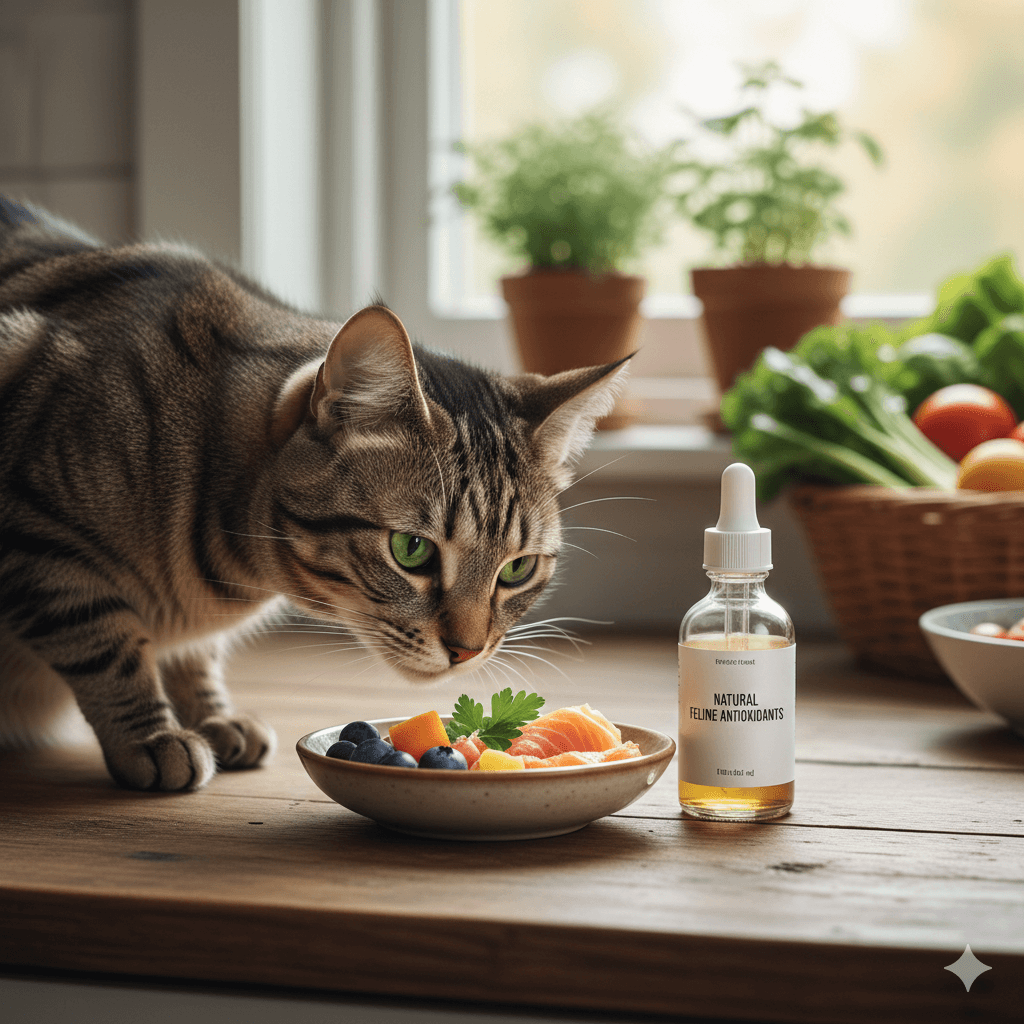
Best Food Sources of Natural Antioxidants for Cats
- Blueberries and Cranberries:
These berries are packed with vitamins C and E, along with flavonoids that support urinary tract health and reduce inflammation. They’re safe in small amounts as occasional treats. - Pumpkin and Sweet Potatoes:
Rich in beta-carotene, these vegetables boost eye health and strengthen the immune system. Their fiber content also aids digestion and prevents hairballs. - Green Leafy Vegetables:
Kale and spinach contain high levels of vitamins A, C, and K, which protect cells and support bone health. Always steam or puree them to make them easier to digest. - Fish Oil and Omega-3 Fatty Acids:
Salmon, sardines, and fish oil supplements are excellent sources of omega-3s, which reduce inflammation and support joint, heart, and brain health. Choose wild-caught options for optimal quality. - Turmeric and Ginger:
These spices contain curcumin and gingerol, powerful antioxidants that reduce inflammation, improve circulation, and aid digestion. Use them sparingly in powdered form or as supplements.
Check this guide 👉Poisonous Mushrooms for Cats: Best 7 Expert Tips!
Check this guide 👉Omega-3 for Cats: Best 7 Expert Tips!
Check this guide 👉Snake Avoidance Training for Cats: Best 7 Expert Tips!
Benefits of Natural Antioxidants | Signs Your Cat Needs Them |
|---|---|
Protect cells from free radical damage | Dull coat or excessive shedding |
Support immune system function | Frequent illnesses or infections |
Promote healthy skin and shiny coat | Lethargy or low energy levels |
Reduce inflammation and joint pain | Cognitive decline in senior cats |
Enhance longevity and overall wellness | Chronic digestive issues or allergies |
Signs Your Cat May Need More Antioxidants
- Frequent Illnesses:
A weak immune system makes cats more susceptible to infections, colds, or respiratory issues. Antioxidants help fortify their defenses against pathogens. - Dull Coat or Excessive Shedding:
Lackluster fur, dry skin, or excessive shedding often indicate nutritional gaps, including insufficient antioxidants to support skin and coat health. - Sluggish Energy Levels:
Oxidative stress can drain your cat’s energy, making them lethargic or disinterested in play. Antioxidants restore vitality by improving cellular function. - Cognitive Decline in Older Cats:
Senior cats may show confusion, forgetfulness, or changes in behavior due to oxidative damage in the brain. Antioxidants slow this process and improve mental clarity. - Chronic Inflammation or Joint Pain:
Persistent limping, stiffness, or swelling signals inflammatory conditions worsened by free radical activity. Antioxidants reduce inflammation and ease discomfort.
How Antioxidants Support Longevity in Cats
- Preventing Age-Related Diseases:
Antioxidants lower the risk of conditions like arthritis, kidney disease, and cancer by shielding cells from DNA damage caused by free radicals. - Supporting Organ Function:
The liver and kidneys benefit greatly from antioxidants, which detoxify harmful substances and maintain proper filtration and waste removal. - Reducing Risk of Heart Disease:
Antioxidants like coenzyme Q10 and selenium improve cardiovascular health by strengthening heart muscle function and reducing cholesterol oxidation. - Promoting Healthy Aging:
By combating oxidative stress, antioxidants preserve youthful energy levels, agility, and mental acuity, allowing older cats to enjoy life fully. - Strengthening Bone Density:
Vitamins C and E, along with minerals like zinc, enhance bone strength and flexibility, reducing fracture risks in aging felines.
Common Myths About Antioxidants in Cat Nutrition
- Myth: Cats Don’t Need Antioxidants Since They’re Carnivores:
While cats rely on animal-based proteins, they still require antioxidants found in meat, organs, and select plant-based ingredients to thrive. - Myth: Synthetic Antioxidants Are Just as Good as Natural Ones:
Synthetic versions lack the bioavailability and synergistic effects of natural antioxidants, making whole-food sources far superior. - Myth: High Doses of Antioxidants Are Always Beneficial:
Excessive supplementation can overwhelm your cat’s system; balance is key to reaping the benefits without causing harm. - Myth: All Commercial Foods Contain Adequate Antioxidants:
Many processed pet foods lose antioxidant potency during manufacturing, so additional supplementation may be necessary. - Myth: Only Senior Cats Benefit from Antioxidants:
Cats of all ages benefit from antioxidants, as they protect growing tissues in kittens and maintain peak health in adults.
How to Safely Add Antioxidants to Your Cat’s Diet
- Start Slowly:
Gradually introduce new foods or supplements to allow your cat’s digestive system time to adjust and minimize gastrointestinal upset. - Choose Species-Appropriate Options:
Stick to foods and supplements specifically formulated for cats, avoiding ingredients toxic to them, such as onions or garlic. - Consult Your Veterinarian:
Before adding supplements, discuss dosage and compatibility with your vet to prevent interactions with existing medications or conditions. - Use High-Quality Supplements:
Opt for reputable brands offering third-party tested products free from fillers, artificial additives, or contaminants. - Monitor for Reactions:
Watch for changes in appetite, stool consistency, or behavior after introducing antioxidants, adjusting quantities if needed.
Potential Risks of Overusing Antioxidants
- Imbalance in Nutrient Ratios:
Excessive antioxidants can interfere with the absorption of other essential nutrients, leading to deficiencies or imbalances. - Gastrointestinal Upset:
High doses of certain antioxidants, like vitamin C, may cause diarrhea, vomiting, or stomach irritation in sensitive cats. - Pro-Oxidant Effects at High Levels:
Ironically, very high concentrations of some antioxidants can act as pro-oxidants, increasing oxidative stress rather than reducing it. - Interference with Medications:
Certain antioxidants, such as vitamin E, may interact with blood thinners or other medications, altering their effectiveness. - Masking Underlying Conditions:
Relying solely on antioxidants without addressing root causes of poor health delays proper diagnosis and treatment.
“The best way to ensure your pet is receiving optimum levels of antioxidants is to feed them complete and balanced nutrition for their life stage.” — Dr. Sarah Wooten
Frequently Asked Questions About Natural Antioxidants for Cats
Can I give my cat human antioxidant supplements?
No, human supplements often contain ingredients or dosages unsafe for cats; always choose feline-specific products.
Are there any risks to feeding my cat antioxidant-rich foods?
In moderation, antioxidant-rich foods are safe, but overfeeding can lead to digestive upset or nutrient imbalances.
How long does it take to see results from adding antioxidants?
You may notice improvements in coat shine, energy levels, or overall health within a few weeks of consistent use.
Do kittens need antioxidants too?
Yes, kittens benefit from antioxidants to support growth, immune function, and cellular development during their formative months.
Can antioxidants cure chronic diseases in cats?
While antioxidants support overall health, they are not a cure; they work best as part of a comprehensive treatment plan under veterinary guidance.
Supporting Your Cat’s Health with Natural Antioxidants

Is Rawhide Bad for Cats? Best 7 Expert Tips! – Discover the risks, safe alternatives, and expert advice to keep your feline friend healthy and happy.

Is Rawhide Bad for Dogs? Best 7 Expert Tips! – Discover the risks, benefits, and safer alternatives to rawhides for your dog’s chewing needs.

Understanding Anorexia in Cats: Best 7 Expert Tips! – Learn why cats stop eating, spot warning signs, and discover how to help your feline regain appetite safely.

Understanding Anorexia in Dogs: Best 7 Expert Tips! – Learn causes, symptoms, and solutions to help your dog regain appetite and stay healthy.