
Understanding Service Dog vs Emotional Support Dog Laws
Key Differences Between Service Dogs and Emotional Support Dogs
- Definition of a Service Dog:
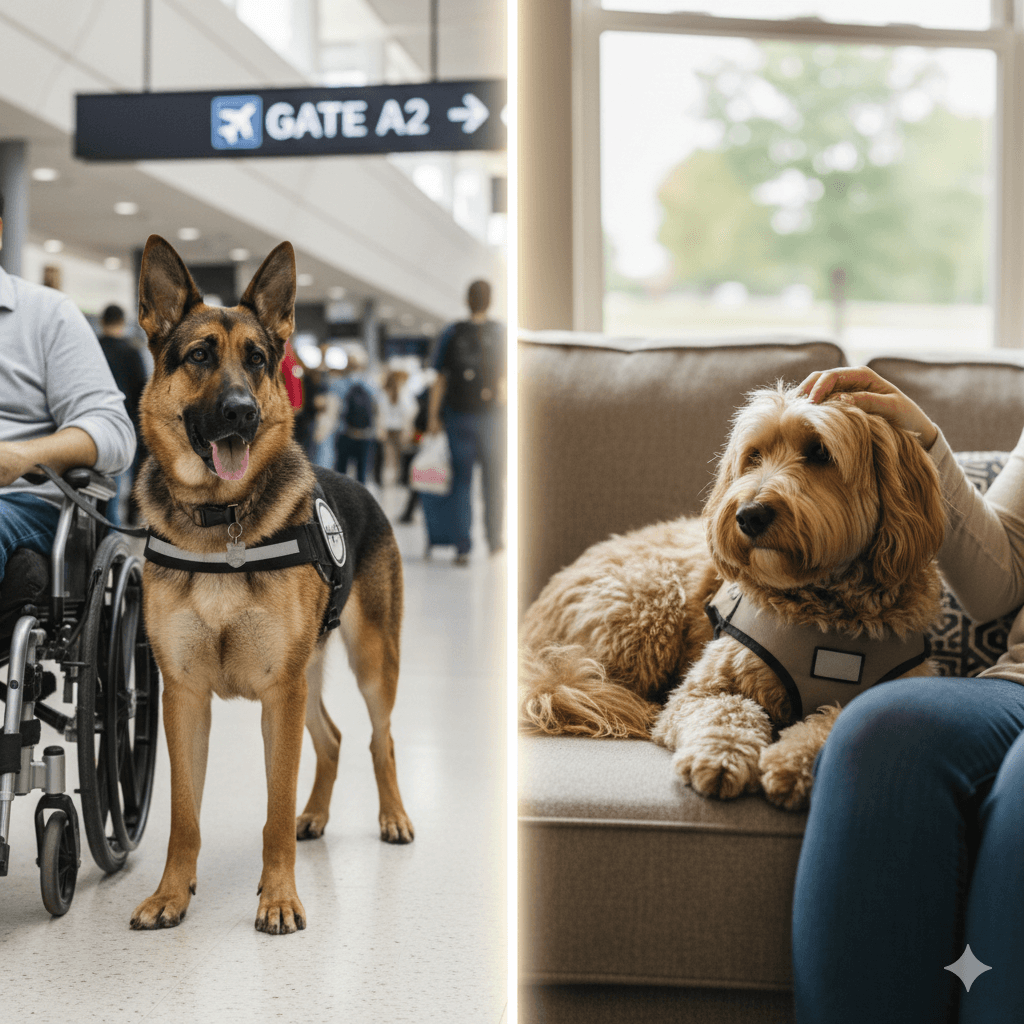
Service dogs are specially trained to perform specific tasks for individuals with disabilities, such as guiding the blind, alerting to seizures, or retrieving items. Their training ensures they can operate reliably in public settings. - Definition of an Emotional Support Dog:
Emotional support dogs (ESDs) offer comfort and companionship to individuals with mental health conditions like anxiety, depression, or PTSD. Unlike service dogs, ESDs do not require specialized task training. - Legal Protections Under the ADA:
The Americans with Disabilities Act (ADA) grants service dogs full public access rights, allowing them to accompany handlers in businesses, transportation, and housing. Emotional support dogs are not covered under the ADA. - Housing Rights Under the FHA:
The Fair Housing Act (FHA) protects both service dogs and emotional support dogs, requiring landlords to make reasonable accommodations for individuals with disabilities. However, documentation may be required for ESDs. - Air Travel Regulations:
Until recently, emotional support animals were allowed on flights under the Air Carrier Access Act (ACAA). However, new regulations now align with the ADA, limiting airline accommodations to trained service dogs only.
Legal Rights of Service Dogs in Public Spaces
- Unrestricted Access to Businesses:
Service dogs are permitted in restaurants, stores, hotels, and other public venues, regardless of pet policies. Handlers cannot be charged extra fees for their presence. - Transportation Access Rights:
Public transportation systems, including buses, trains, and taxis, must allow service dogs without restrictions. Airlines also accommodate service dogs under updated regulations. - No Size or Breed Restrictions:
Unlike some local pet laws, service dogs are not subject to size or breed limitations. Any dog capable of performing necessary tasks qualifies as a service animal. - Handler Responsibilities:
Handlers must ensure their service dogs are well-behaved, leashed, and under control at all times. Disruptive behavior can result in removal from the premises. - Prohibition of Inquiries About Disability:
Businesses cannot ask about the nature of a handler’s disability but may inquire if the dog is required for a disability and what tasks it performs.
Check this guide 👉How to Train a PTSD Service Dog: Best 7 Expert Tips!
Check this guide 👉Can Pitbulls Be Service Dogs: Best 7 Expert Tips!
Check this guide 👉What Does a PTSD Service Dog Do? Best 7 Expert Tips!
| Service Dogs | Emotional Support Dogs |
|---|---|
| Trained to perform specific tasks for disabilities | Provide comfort through their presence (no task training) |
| Full public access rights under the ADA | No public access rights |
| Covered under the Fair Housing Act (FHA) | Covered under the Fair Housing Act (FHA) |
| Allowed on flights as service animals | Treated as pets on flights (as of 2021) |
| No official certification required | Requires a letter from a licensed healthcare provider |
Emotional Support Dog Laws and Limitations
- No Public Access Rights:
Unlike service dogs, ESDs do not have the right to enter businesses, restaurants, or other public spaces. Their access is restricted to housing and, until recently, air travel. - Housing Accommodations Under the FHA:
Landlords must allow emotional support dogs in rental properties, even if they have no-pet policies. Documentation from a licensed healthcare provider is typically required. - Documentation Requirements:
To qualify for housing accommodations, individuals must provide a letter from a licensed professional verifying the need for an ESD. This document must meet specific criteria to be valid. - Air Travel Changes in 2021:
The U.S. Department of Transportation revised its rules, removing emotional support animals from the ACAA. Airlines now treat ESDs as pets, subject to carrier-specific policies. - State and Local Variations:
Some states offer additional protections for ESDs, such as expanded access rights or tax incentives for handlers. Researching local laws is essential for compliance.
Training Requirements for Service Dogs vs Emotional Support Dogs
- Rigorous Training for Service Dogs:
Service dogs undergo months of intensive training to master tasks like opening doors, detecting allergens, or interrupting panic attacks. This ensures reliability in diverse environments. - Task-Specific Skills:
Each service dog is trained to address the unique needs of their handler, such as mobility assistance for wheelchair users or diabetic alert responses. - Public Access Training:
Service dogs learn to remain calm and focused in crowded or chaotic settings, ensuring they do not disrupt public spaces. - No Formal Training for Emotional Support Dogs:
ESDs do not require specialized training beyond basic obedience. Their primary role is to provide comfort through their presence. - Certification and Registration Myths:
Neither service dogs nor ESDs need official certification or registration, though many handlers choose to obtain identification cards or vests for convenience.
Misconceptions About Assistance Animal Laws
- Service Dogs Are Not Pets:
Service dogs are working animals, not pets, and their presence in public spaces is protected by law. Treating them as ordinary pets undermines their purpose. - Vests and IDs Are Not Mandatory:
While many handlers use vests or ID cards for convenience, these are not legally required for service dogs. Businesses cannot demand proof beyond verbal confirmation. - Emotional Support Dogs Lack Task Training:
A common myth is that ESDs perform tasks like service dogs. In reality, their role is purely supportive, without specialized skills. - Fake Service Dogs Undermine the System:
The rise of fraudulent service dogs has led to stricter enforcement and skepticism, making it harder for legitimate handlers to gain acceptance. - Not All Disabilities Are Visible:
Many disabilities, such as PTSD or diabetes, are invisible. Assuming someone doesn’t “look disabled” invalidates their need for a service dog.
How to Qualify for a Service Dog or Emotional Support Dog
- Medical Documentation for Service Dogs:
Individuals must demonstrate a qualifying disability and obtain a recommendation from a healthcare professional to begin the process of acquiring a service dog. - Partnering with Accredited Organizations:
Many handlers work with accredited organizations that train and place service dogs. These programs often involve application fees and waiting periods. - Self-Training Options for Service Dogs:
Handlers may choose to self-train their service dogs, provided the dog meets behavioral and task performance standards outlined by the ADA. - Obtaining an Emotional Support Dog Letter:
To qualify for an ESD, individuals need a letter from a licensed therapist or doctor confirming their mental health condition and the need for an emotional support animal. - Renewal and Updates for Documentation:
ESD letters typically expire annually and must be renewed to maintain housing or travel accommodations. Staying proactive ensures continuous protection.
Challenges Faced by Handlers and Advocacy Efforts
- Public Misunderstanding and Hostility:
Handlers frequently face questions, stares, or hostility from people who don’t understand their rights or the role of assistance animals. - Discrimination in Housing and Travel:
Some landlords and airlines refuse to comply with assistance animal laws, forcing handlers to fight for their rights through legal channels. - Lack of Awareness Among Businesses:
Many businesses are unaware of the ADA or misinterpret its provisions, leading to unlawful denials of access for service dog handlers. - Fraudulent Claims Undermine Legitimacy:
The prevalence of fake service dogs and ESDs erodes trust and complicates enforcement of legitimate rights. - Advocacy Groups and Resources:
Organizations like Assistance Dogs International and the National Service Animal Registry work tirelessly to educate the public, support handlers, and advocate for stronger legal protections.
“Service animals are defined as dogs that are individually trained to do work or perform tasks for people with disabilities… Dogs whose sole function is to provide comfort or emotional support do not qualify as service animals under the ADA.” – U.S. Department of Justice
Frequently Asked Questions About Service Dog vs Emotional Support Dog Laws
What is the main difference between a service dog and an emotional support dog?
Service dogs are trained to perform specific tasks for individuals with disabilities, while emotional support dogs provide comfort through their presence without specialized training.
Can I take my emotional support dog to restaurants or stores?
No, emotional support dogs do not have public access rights under the ADA. Only service dogs are allowed in businesses, restaurants, and other public spaces.
Do I need to register my service dog or emotional support dog?
No, registration is not legally required for either type of assistance animal. However, some handlers choose to use identification cards or vests for convenience.
Can landlords charge fees for service dogs or emotional support dogs?
No, landlords cannot charge pet fees for assistance animals. However, they may request documentation for emotional support dogs and can hold handlers accountable for property damage caused by their animals.
Are emotional support dogs allowed on airplanes?
Supporting Equal Access for All Assistance Animals

Is Rawhide Bad for Cats? Best 7 Expert Tips! – Discover the risks, safe alternatives, and expert advice to keep your feline friend healthy and happy.

Is Rawhide Bad for Dogs? Best 7 Expert Tips! – Discover the risks, benefits, and safer alternatives to rawhides for your dog’s chewing needs.

Understanding Anorexia in Cats: Best 7 Expert Tips! – Learn why cats stop eating, spot warning signs, and discover how to help your feline regain appetite safely.

Understanding Anorexia in Dogs: Best 7 Expert Tips! – Learn causes, symptoms, and solutions to help your dog regain appetite and stay healthy.