
Understanding Australian Cattle Dog Shedding: What You Need to Know
Why Australian Cattle Dogs Shed: Understanding the Science
- Double Coat Functionality:
The double coat consists of a protective outer layer and a soft, insulating undercoat. This combination helps regulate body temperature in extreme conditions but also contributes to significant shedding. - Seasonal Shedding Patterns:
During spring and fall, Australian Cattle Dogs undergo heavy shedding, known as “blowing their coat.” This process removes old or damaged fur to make way for new growth. - Genetic Factors:
Shedding intensity can vary slightly among individual dogs due to genetics. Some may shed more heavily than others, even within the same breed. - Environmental Influences:
Indoor dogs exposed to artificial heating or air conditioning may experience year-round shedding rather than distinct seasonal changes. - Health Implications:
Excessive shedding outside of seasonal patterns could signal nutritional deficiencies, allergies, or hormonal imbalances requiring veterinary evaluation.
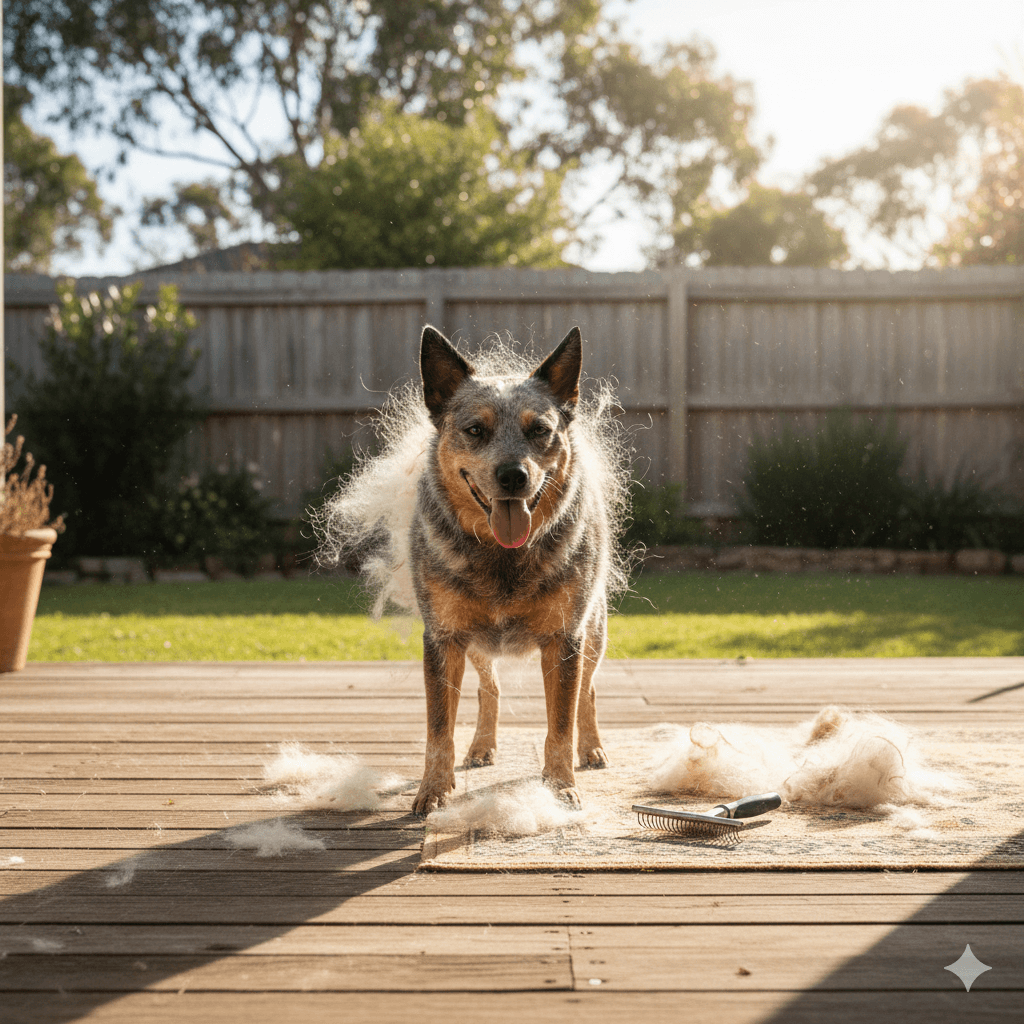
How to Manage Australian Cattle Dog Shedding Effectively
- Daily Brushing Routine:
Using a slicker brush or deshedding tool daily removes loose fur before it spreads throughout your house. Focus on areas prone to matting, such as behind the ears and under the legs. - Bathing During Shedding Seasons:
Bathe your dog every 4–6 weeks with a gentle shampoo designed for double-coated breeds. This loosens dead hair and promotes healthy skin and coat growth. - Dietary Support for Coat Health:
Ensure your dog’s diet includes omega-3 fatty acids, biotin, and zinc, which support skin elasticity and reduce excessive shedding. - Hydration Is Key:
Dehydration affects skin and coat quality, leading to brittle fur and increased shedding. Always provide fresh, clean water to maintain optimal hydration levels. - Environmental Adjustments:
Use a humidifier indoors to combat dry air, which can exacerbate shedding by causing flaky skin and irritation.
Check this guide 👉Australian Cattle Dog Life Expectancy: Best 7 Expert Tips!
Check this guide 👉Doberman Cattle Dog Mix: Best 7 Expert Tips!
Check this guide 👉Australian Cattle Dog Labrador Mix: Best 7 Expert Tips!
| Shedding Management Tips | Common Tools and Products |
|---|---|
| Daily brushing with a deshedding tool | Furminator or Undercoat Rake |
| Bathing every 4–6 weeks | Gentle shampoo for double-coated breeds |
| Supplementing diet with omega-3s | Fish oil or canine multivitamins |
| Using a humidifier indoors | Humidifiers to combat dry air |
| Monitoring skin health regularly | Slicker brush and detangling spray |
Tools and Products to Combat Shedding in Australian Cattle Dogs
- Deshedding Tools:
Products like the Furminator or Undercoat Rake penetrate deep into the undercoat to remove loose fur without damaging the topcoat. - Slicker Brushes:
These brushes feature fine, bent wires that gently detangle mats and lift out shedding hair, leaving the coat smooth and shiny. - Grooming Gloves:
Rubber grooming gloves massage your dog’s skin while collecting loose fur, making brushing sessions more enjoyable for both of you. - Detangling Sprays:
For particularly stubborn mats or tangles, detangling sprays soften the fur and make brushing easier without causing discomfort. - Coat Conditioners:
Leave-in conditioners or spritzes enriched with natural oils nourish the coat and prevent dryness, reducing shedding over time.
Common Triggers for Excessive Shedding in Australian Cattle Dogs
- Nutritional Deficiencies:
A lack of essential vitamins, minerals, or proteins weakens the coat and leads to increased shedding. Ensure your dog’s diet meets all nutritional requirements. - Allergies:
Food allergies, flea bites, or environmental allergens like pollen irritate the skin, resulting in patchy fur loss and excessive shedding. - Parasites:
Fleas, ticks, and mites cause itching and inflammation, prompting dogs to scratch excessively and lose fur. - Hormonal Imbalances:
Conditions like hypothyroidism disrupt hormone production, affecting skin and coat health and increasing shedding. - Stress or Anxiety:
Emotional distress can manifest physically, including through sudden bouts of heavy shedding.
Seasonal vs. Year-Round Shedding in Australian Cattle Dogs
- Seasonal Shedding Explained:
Spring and fall are peak shedding seasons as the dog prepares for warmer or colder weather. This process involves heavy shedding of the undercoat. - Year-Round Shedding Causes:
Indoor dogs exposed to consistent indoor temperatures may shed continuously instead of following seasonal cycles. - Climate Impact:
Colder climates trigger thicker undercoats, increasing shedding volume when temperatures rise. Warmer climates reduce overall shedding but don’t eliminate it entirely. - Activity Level Influence:
High-energy activities outdoors can increase shedding temporarily as the dog sweats and sheds excess fur. - Age Factor:
Older dogs tend to shed more due to slower cell turnover and reduced skin elasticity, requiring extra care during grooming sessions.
Preventive Measures to Minimize Shedding in Australian Cattle Dogs
- Regular Grooming Schedule:
Establish a consistent grooming routine to remove loose fur before it accumulates around your home. Aim for at least 3–4 times per week. - Supplemental Nutrition:
Add supplements like fish oil, coconut oil, or specialized canine multivitamins to boost coat health and reduce shedding naturally. - Avoid Over-Bathing:
Excessive bathing strips natural oils from the skin, leading to dryness and increased shedding. Stick to baths every 4–6 weeks unless advised otherwise. - Monitor Skin Health:
Check for signs of redness, flakiness, or irritation during grooming sessions. Early detection prevents minor issues from escalating into major problems. - Reduce Stressors:
Create a calm environment with predictable routines to minimize stress-related shedding. Provide plenty of mental stimulation and physical exercise.
When to Seek Veterinary Help for Excessive Shedding
- Patchy Hair Loss:
Uneven bald spots suggest infections, parasites, or autoimmune disorders requiring diagnosis and treatment. - Skin Irritation or Sores:
Red, inflamed, or scabbed skin indicates allergies, bacterial infections, or other dermatological conditions. - Behavioral Changes:
Excessive licking, scratching, or biting signals discomfort likely linked to skin or coat issues. - Weight Loss or Lethargy:
Unexplained weight loss or decreased energy levels point to systemic illnesses affecting shedding indirectly. - No Improvement Despite Efforts:
If shedding persists despite dietary changes, grooming, and environmental adjustments, consult your vet for further testing.
“Australian Cattle Dogs shed a moderate to high amount and will benefit from daily brushing. Twice per year, they will shed their dense undercoats and can benefit from blowout by a professional groomer or bather.” – Dr. Veronica Higgs, DVM
Frequently Asked Questions About Australian Cattle Dog Shedding
How much do Australian Cattle Dogs shed?
They shed moderately year-round and heavily during seasonal shedding periods (spring and fall). Regular grooming minimizes loose fur around your home.
Do Australian Cattle Dogs shed more than other breeds?
While they shed significantly due to their double coat, proper grooming keeps shedding manageable compared to other heavy-shedding breeds like Huskies or German Shepherds.
Can diet reduce shedding in Australian Cattle Dogs?
Is shedding a sign of health problems?
Not always—seasonal shedding is normal. However, sudden or patchy hair loss may indicate allergies, parasites, or hormonal imbalances requiring veterinary care.
Are there hypoallergenic Australian Cattle Dogs?
No, Australian Cattle Dogs are not hypoallergenic due to their double coat and shedding tendencies. Regular grooming helps reduce allergens for sensitive individuals.
A Lifeline in Every Moment of Grooming

Is Rawhide Bad for Cats? Best 7 Expert Tips! – Discover the risks, safe alternatives, and expert advice to keep your feline friend healthy and happy.

Is Rawhide Bad for Dogs? Best 7 Expert Tips! – Discover the risks, benefits, and safer alternatives to rawhides for your dog’s chewing needs.

Understanding Anorexia in Cats: Best 7 Expert Tips! – Learn why cats stop eating, spot warning signs, and discover how to help your feline regain appetite safely.

Understanding Anorexia in Dogs: Best 7 Expert Tips! – Learn causes, symptoms, and solutions to help your dog regain appetite and stay healthy.