
How to Make a Snuffle Mat for Your Cat
Materials You’ll Need to Make a Snuffle Mat
- Fleece Fabric Strips:
Fleece is soft, non-toxic, and easy to work with, making it ideal for hiding treats. Cut strips about 1–2 inches wide and 6–8 inches long to create the “grass-like” texture. - A Non-Slip Base or Mat:
Choose a sturdy base like an anti-fatigue mat, rubber shelf liner, or even an old yoga mat. The material should have holes or grooves to weave the fleece through securely. - Scissors or Rotary Cutter:
Sharp scissors or a rotary cutter ensure clean cuts without fraying the fabric. A cutting mat can also help protect surfaces during preparation. - Optional Decorative Elements:
Add colorful fleece strips or patterns to make the mat visually appealing. Avoid small decorations like beads or buttons, as they could pose choking hazards. - Non-Toxic Glue or Thread (Optional):
If you’re worried about the fleece slipping out of the base, use non-toxic glue or thread to secure the ends. This step isn’t mandatory but adds extra stability.
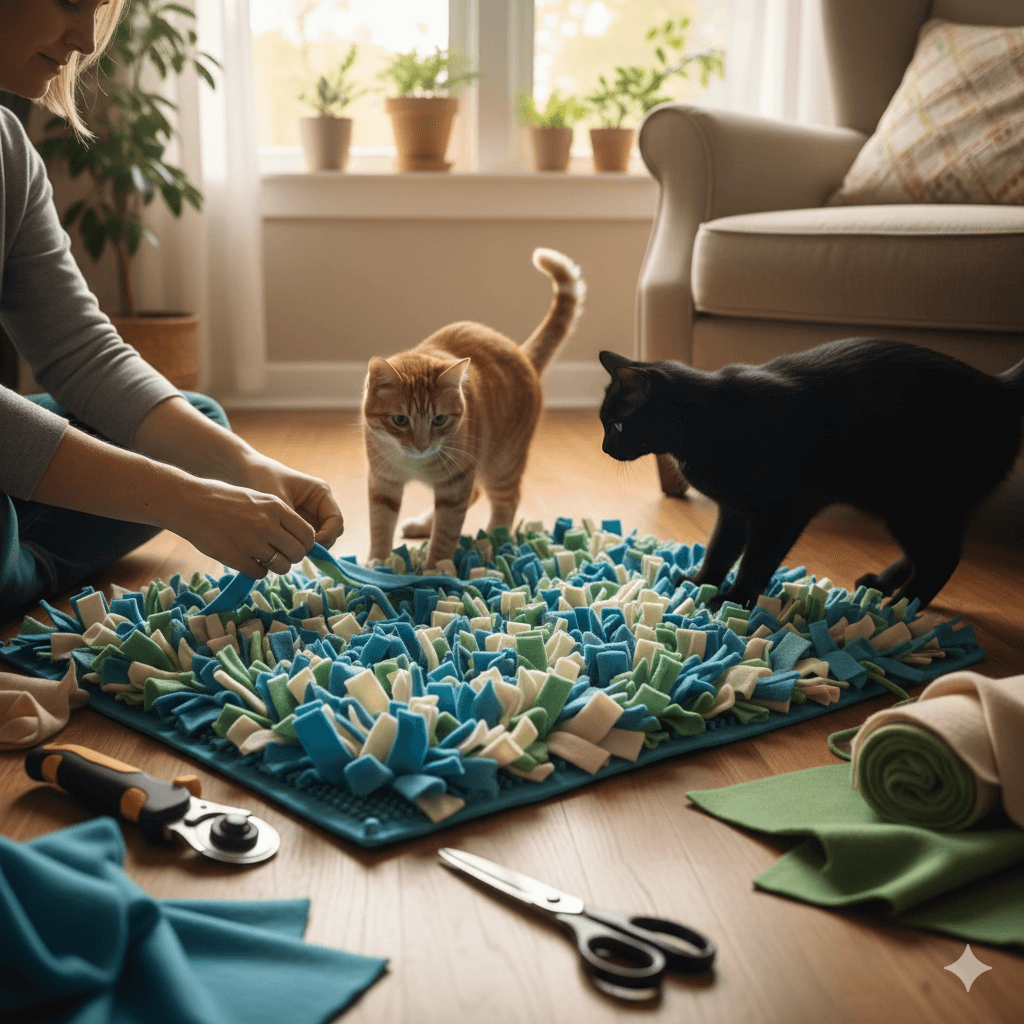
Step-by-Step Instructions for Making the Snuffle Mat
- Prepare the Fleece Strips:
Cut the fleece into consistent strips, ensuring they’re long enough to weave through the base without being too short to hide treats effectively. - Weave the Fleece Through the Base:
Thread each strip through the holes or grooves in the base, tying a knot at the bottom to secure it. Space the strips evenly to mimic natural grass or foliage. - Secure Loose Ends:
If any strips feel loose, reinforce them with non-toxic glue or thread to prevent your cat from pulling them out during play. Trim excess fabric for a tidy finish. - Test for Safety:
Inspect the mat thoroughly for sharp edges, loose threads, or other potential hazards. Ensure all components are pet-safe and durable enough for regular use. - Customize the Design:
Arrange the fleece strips in varying heights or patterns to create different levels of difficulty. This keeps your cat engaged and challenges their sniffing skills.
Check this guide 👉Why Does My Cat Smell My Breath? Best 7 Expert Tips!
Check this guide 👉How Far Can a Cat Smell? Best 7 Expert Tips!
Check this guide 👉Why Does My Cat Smell So Good? Best 7 Expert Tips!
| Snuffle Mat Benefits | Other Cat Toys |
|---|---|
| Mimics natural foraging behavior | Focuses on chasing or batting |
| Provides mental stimulation | Primarily encourages physical activity |
| Slows down eating habits | No impact on eating pace |
| Customizable difficulty levels | Fixed design with limited variety |
| Durable and reusable | May wear out quickly or lose appeal |
Benefits of Using a Snuffle Mat for Cats
- Mental Stimulation:
The act of sniffing and foraging engages your cat’s brain, reducing boredom and preventing destructive behaviors caused by lack of stimulation. - Stress Reduction:
Sniffing releases calming hormones like endorphins, helping anxious or high-energy cats relax and feel more content. - Encourages Natural Behaviors:
Cats are natural hunters; a snuffle mat mimics the experience of searching for prey, satisfying their instincts in a safe environment. - Slows Down Eating:
For cats who eat too quickly, hiding food in the mat encourages slower, healthier consumption and aids digestion. - Improves Physical Health:
The activity involved in using a snuffle mat promotes movement, which helps maintain a healthy weight and supports joint flexibility.
Creative Ways to Use a Snuffle Mat
- Hide Dry Food or Treats:
Place kibble or favorite treats within the fleece strips to encourage exploration and reward your cat’s efforts. - Incorporate Puzzle Games:
Layer lightweight objects like small balls or crinkled paper over the treats to add an extra challenge for your cat to solve. - Use During Training Sessions:
Reward good behavior by letting your cat find treats on the mat, reinforcing positive actions in a fun way. - Rotate Scents for Variety:
Sprinkle catnip or sprinkle water with a hint of tuna juice on the mat to stimulate your cat’s sense of smell and curiosity. - Introduce New Textures:
Occasionally swap out fleece strips for other pet-safe fabrics like cotton or felt to provide novel sensory experiences.
Common Mistakes to Avoid When Making a Snuffle Mat
- Using Toxic Materials:
Avoid fabrics treated with chemicals or dyes that could harm your cat if ingested. Stick to pet-safe options like fleece or organic cotton. - Making Strips Too Short:
Short strips won’t hold treats securely and may discourage your cat from playing. Aim for lengths of at least 6–8 inches for optimal functionality. - Skipping Safety Checks:
Failing to inspect the mat for loose threads, sharp edges, or insecure knots puts your cat at risk of injury or choking hazards. - Overloading with Treats:
Placing too many treats makes the game too easy, reducing its mental stimulation value. Start with a few hidden items and increase difficulty gradually. - Neglecting Regular Cleaning:
Dirt, saliva, or food residue can accumulate on the mat, posing hygiene risks. Wash it regularly with mild soap and water to keep it fresh and safe.
How to Introduce Your Cat to the Snuffle Mat
- Start with Visible Treats:
Place treats on top of the fleece strips instead of hiding them initially. This builds confidence and shows your cat where to look. - Gradually Increase Difficulty:
Once your cat gets the hang of finding visible treats, tuck them deeper into the fleece to encourage more thorough sniffing and exploration. - Use High-Value Treats:
Choose irresistible treats like freeze-dried chicken or fish to motivate your cat and make the experience rewarding. - Supervise Initial Play Sessions:
Stay nearby to guide your cat and ensure they don’t chew or ingest parts of the mat accidentally. Praise them for interacting with it correctly. - Keep Sessions Short and Fun:
Limit playtime to 10–15 minutes initially to prevent frustration or overstimulation. Gradually extend sessions as your cat becomes more comfortable.
Troubleshooting Tips for Snuffle Mat Challenges
- Cat Shows No Interest:
If your cat ignores the mat, try using higher-value treats or sprinkling catnip on it to spark curiosity. Some cats need time to warm up to new toys. - Treats Fall Out Too Easily:
Ensure the fleece strips are tied tightly and spaced closely together to prevent treats from slipping out prematurely. Adjust the design as needed. - Mat Becomes Dirty Quickly:
Regularly clean the mat with mild soap and water or toss it in the washing machine (if machine-safe) to maintain hygiene and freshness. - Cat Pulls Out Fleece Strips:
Reinforce loose strips with non-toxic glue or thread to prevent destruction. Supervise play sessions to discourage chewing behavior. - Difficulty Level Is Too High:
If your cat seems frustrated, simplify the setup by placing treats closer to the surface or spacing the fleece strips farther apart for easier access.
“Puzzle feeders are a great way to encourage mental and physical stimulation during feeding and allow your cat to express natural hunting behaviour.”
– icatcare
Frequently Asked Questions About Making Snuffle Mats for Cats
Can I use materials other than fleece for the strips?
How often should I let my cat use the snuffle mat?
Limit sessions to 10–15 minutes daily to prevent overstimulation. Gradually increase playtime as your cat becomes more comfortable with the toy.
Is a snuffle mat safe for kittens?
Yes, but supervise kittens closely to ensure they don’t chew or ingest parts of the mat. Use larger fleece strips and secure knots tightly to minimize risks.
Can I wash the snuffle mat?
Absolutely! Hand-wash the mat with mild soap and water or toss it in the washing machine (if machine-safe) to keep it clean and hygienic.
What if my cat doesn’t like the snuffle mat?
Some cats need time to adjust. Try using higher-value treats, incorporating catnip, or simplifying the setup to encourage interaction. Patience is key!
A Fun and Rewarding DIY Project for Your Cat

Is Rawhide Bad for Cats? Best 7 Expert Tips! – Discover the risks, safe alternatives, and expert advice to keep your feline friend healthy and happy.

Is Rawhide Bad for Dogs? Best 7 Expert Tips! – Discover the risks, benefits, and safer alternatives to rawhides for your dog’s chewing needs.

Understanding Anorexia in Cats: Best 7 Expert Tips! – Learn why cats stop eating, spot warning signs, and discover how to help your feline regain appetite safely.

Understanding Anorexia in Dogs: Best 7 Expert Tips! – Learn causes, symptoms, and solutions to help your dog regain appetite and stay healthy.