
Discover the Majestic World of Dog Mastiff Breeds
Mastiff breeds are known for their impressive size, strength, and gentle nature, making them beloved companions and loyal protectors. From the English Mastiff to the Bullmastiff, each breed carries a unique history and set of traits that cater to different lifestyles. Whether you’re drawn to their calm demeanor or their natural guarding instincts, mastiffs offer a blend of power and affection that’s hard to resist.
Origins and History of Mastiff Breeds
Mastiff breeds trace their roots back thousands of years, with some of the earliest records dating to ancient civilizations. These dogs were originally bred for guarding, hunting, and even warfare due to their immense size and protective instincts. Over time, mastiffs evolved into distinct breeds, each with unique characteristics while retaining the hallmark traits of strength and loyalty. Understanding their history provides insight into their roles in modern times.
- Ancient Beginnings:
Mastiffs are believed to have originated in Asia over 5,000 years ago, where they were used as war dogs and guardians by emperors and armies. - Roman Influence:
The Romans brought mastiffs to Europe, using them in battles and as working dogs. Their descendants became foundational stock for many European mastiff breeds. - Medieval Roles:
During the Middle Ages, mastiffs served as estate guardians, protecting homes and livestock from intruders and predators like wolves or bears. - Modern Adaptation:
Today, mastiffs are primarily companion animals, valued for their calm temperaments and protective instincts rather than their historical combat roles. - Cultural Significance:
Mastiffs appear in literature, art, and folklore, symbolizing strength, loyalty, and resilience across various cultures throughout history.
Their rich legacy continues to shape how mastiffs are perceived and appreciated worldwide.
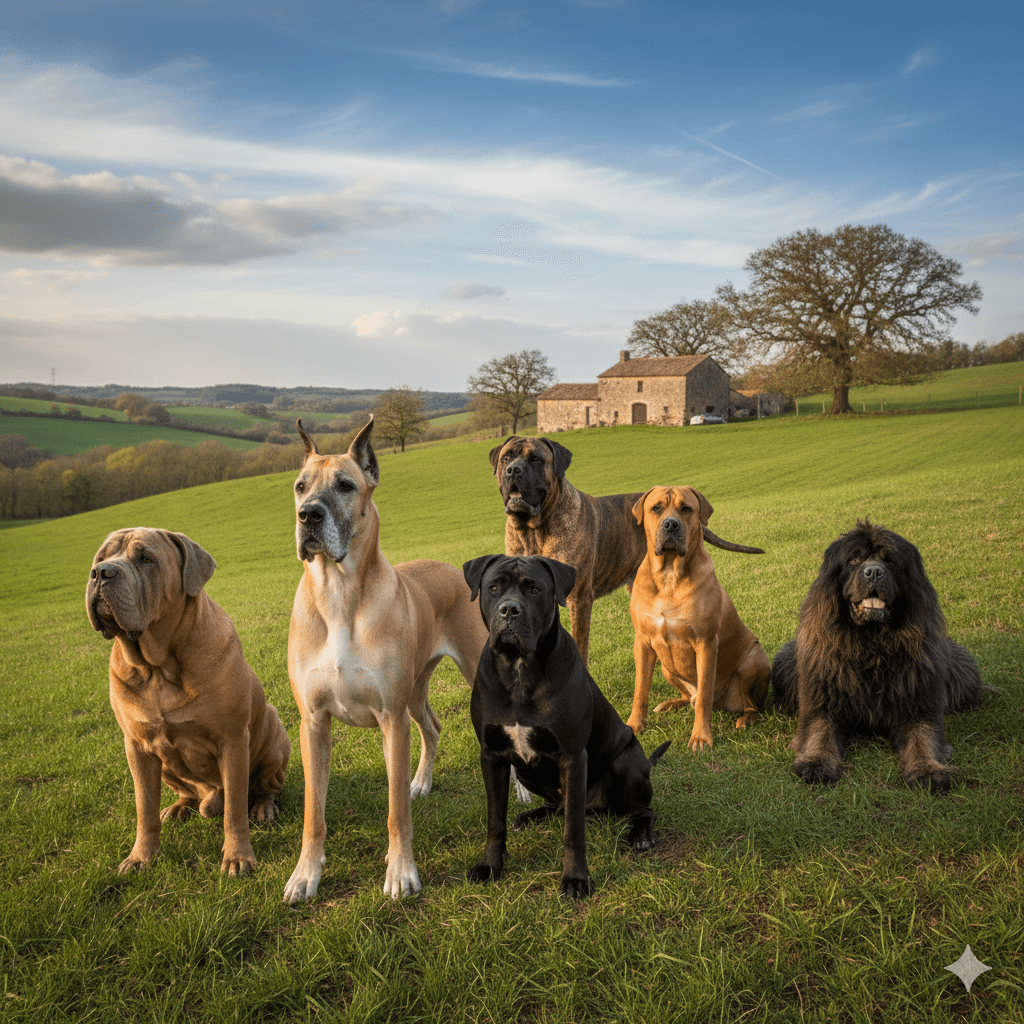
Physical Traits That Define Mastiff Breeds
Mastiff breeds are instantly recognizable due to their massive size, muscular build, and distinctive facial features. These physical traits not only contribute to their imposing presence but also reflect their historical roles as protectors and workers. Understanding these characteristics helps prospective owners appreciate the breed’s unique needs and abilities.
- Impressive Size:
Mastiffs rank among the largest dog breeds, often weighing between 120–230 pounds and standing up to 36 inches tall at the shoulder. - Powerful Build:
Their robust, muscular bodies enable them to perform physically demanding tasks, such as pulling carts or subduing threats. - Distinctive Facial Features:
A broad head, wrinkled forehead, and drooping jowls give mastiffs a dignified yet approachable appearance. - Coat Variations:
Most mastiffs have short, dense coats in colors like fawn, brindle, or apricot, though some breeds feature longer or darker fur. - Lifespan Considerations:
Despite their size, mastiffs typically live 6–10 years, requiring attentive care to ensure a healthy and fulfilling life.
These traits make mastiffs stand out, both in appearance and functionality, as loyal companions and guardians.
Check this guide 👉How Much Does a Mastiff Dog Weigh? Best 7 Expert Tips!
Check this guide 👉The Neapolitan Mastiff: Best 7 Expert Tips!
Check this guide 👉The English Mastiff: Best 7 Expert Tips!
Key Traits of Mastiff Breeds | Considerations for Owners |
|---|---|
Gentle and affectionate nature | Prone to drooling, especially after meals |
Protective instincts make them excellent guardians | Require early socialization to prevent shyness |
Low energy levels; minimal exercise needs | Sensitive to extreme temperatures (heat/cold) |
Strong bond with families; great with kids | Large size demands space and sturdy furniture |
Intelligent but can be stubborn during training | Lifespan is shorter than smaller breeds (6–12 years) |
Temperament Highlights of Mastiff Breeds
Mastiffs are often described as gentle giants, combining a calm demeanor with an innate protective instinct. Their temperament makes them excellent family pets, though proper training and socialization are essential to nurture their best qualities. Understanding their behavioral tendencies ensures harmonious coexistence.
- Gentle Nature:
Despite their size, mastiffs are known for being patient and affectionate, especially with children, earning them the nickname “nanny dogs.” - Protective Instincts:
Mastiffs are natural watchdogs, alerting owners to potential threats without unnecessary aggression unless provoked. - Low Energy Levels:
Unlike high-energy breeds, mastiffs prefer lounging indoors and require moderate exercise to stay healthy and content. - Socialization Needs:
Early exposure to people, animals, and environments prevents shyness or territorial behavior in adulthood. - Bonding with Owners:
Mastiffs form deep attachments to their families, thriving on companionship and becoming distressed when left alone for long periods.
Their balanced temperament makes mastiffs ideal for households seeking both protection and affection.
Health Concerns Common to Mastiff Breeds
While mastiffs are generally hardy dogs, their large size predisposes them to certain health issues that owners should be aware of. Regular veterinary care and preventive measures can mitigate risks and ensure a longer, healthier life for these gentle giants.
- Hip Dysplasia:
A common condition in large breeds, hip dysplasia causes joint instability and arthritis, requiring weight management and joint supplements. - Bloat (Gastric Torsion):
Mastiffs are prone to bloat, a life-threatening condition where the stomach twists; feeding smaller meals and avoiding vigorous activity post-meal reduces risk. - Heart Conditions:
Dilated cardiomyopathy affects some mastiffs, weakening the heart muscle and necessitating routine cardiac screenings. - Joint Problems:
Elbow dysplasia and arthritis are prevalent due to their heavy frames; low-impact exercise and orthopedic beds help alleviate discomfort. - Skin Fold Infections:
The wrinkles on their faces can trap moisture and bacteria, leading to infections if not cleaned regularly.
Awareness of these health concerns empowers owners to provide proactive care tailored to mastiff needs.
Training Tips for Mastiff Breeds
Training a mastiff requires patience, consistency, and positive reinforcement to harness their intelligence and willingness to please. While they are eager learners, their independent streak and size demand early intervention to instill good manners. Proper training strengthens the bond between owner and dog while ensuring a well-behaved companion.
- Start Early:
Begin obedience training and socialization during puppyhood to establish boundaries and prevent stubbornness later in life. - Use Positive Reinforcement:
Reward-based methods, such as treats, praise, or playtime, motivate mastiffs more effectively than harsh corrections. - Focus on Leash Training:
Due to their size, teaching loose-leash walking prevents pulling and ensures safe outings for both dog and handler. - Incorporate Mental Stimulation:
Puzzle toys, scent games, and interactive activities keep mastiffs mentally engaged and prevent boredom-related behaviors. - Be Patient and Consistent:
Mastiffs respond best to calm, repetitive instruction; rushing or losing patience undermines progress and trust.
With dedication and understanding, training transforms mastiffs into obedient, confident companions.
Best Living Conditions for Mastiff Breeds
Mastiffs adapt well to various living situations, provided their needs for space, comfort, and companionship are met. Their large size and laid-back nature influence what type of environment suits them best. Creating an ideal setting ensures their happiness and minimizes stress for both pet and owner.
- Space Requirements:
While mastiffs don’t need excessive room, a home with a fenced yard allows them to stretch and explore safely. - Indoor Comforts:
Soft bedding, cool surfaces, and ample shade accommodate their preference for lounging indoors and sensitivity to heat. - Climate Considerations:
Mastiffs struggle in extreme temperatures; air conditioning in summer and warmth in winter protect them from discomfort or illness. - Family Dynamics:
They thrive in homes with loving families, though supervision is necessary around very young children due to their sheer size. - Routine and Structure:
Establishing daily routines for feeding, walks, and rest fosters a sense of security and reinforces good habits.
Providing a stable, comfortable environment enhances the quality of life for mastiffs and their human companions.
Popular Mastiff Breeds and Their Unique Qualities
Each mastiff breed has its own personality, appearance, and suitability for different lifestyles. Exploring these variations helps potential owners choose the right match for their household. Whether you seek a devoted guardian or a cuddly couch potato, there’s a mastiff breed for everyone.
- English Mastiff:
Known as the heaviest dog breed, English Mastiffs are gentle, dignified, and excel as family protectors. - Bullmastiff:
A mix of Mastiff and Bulldog, Bullmastiffs are agile, courageous, and highly trainable, making them excellent watchdogs. - Tibetan Mastiff:
Independent and aloof, Tibetan Mastiffs boast thick coats and strong territorial instincts, ideal for rural settings. - Neapolitan Mastiff:
With loose skin and a stoic expression, Neapolitan Mastiffs are fiercely loyal and reserved with strangers. - French Mastiff (Dogue de Bordeaux):
Compact yet powerful, French Mastiffs are affectionate, adaptable, and great for active families.
Each breed offers something special, ensuring mastiff enthusiasts find the perfect fit for their preferences and lifestyle.
“Mastiffs are patient, lovable companions and guardians who take best to gentle training. Eternally loyal Mastiffs are protective of family, and a natural wariness of strangers makes early training and socialization essential.” – American Kennel Club
Frequently Asked Questions About Dog Mastiff Breeds
Are mastiffs good with children?
Yes, mastiffs are known for their gentle nature and patience, making them excellent companions for kids when properly socialized.
How much exercise do mastiffs need daily?
Mastiffs require about 30–60 minutes of moderate exercise per day, such as walks or playtime, to stay healthy without overexertion.
Do mastiffs drool a lot?
Yes, many mastiff breeds drool due to their loose jowls, especially after eating or drinking, so be prepared for cleanup.
Are mastiffs easy to train?
Mastiffs are intelligent but can be stubborn; consistent, reward-based training works best to bring out their cooperative side.
What is the lifespan of a mastiff?
Most mastiffs live 6–10 years, requiring attentive care to ensure a happy, healthy life within this timeframe.
A Lifeline in Every Moment of Companionship
Mastiff breeds embody the perfect blend of strength, loyalty, and affection, making them cherished members of countless families worldwide. Whether you’re captivated by their imposing size or their gentle demeanor, mastiffs leave an indelible mark on your heart and home. By understanding their needs, respecting their history, and providing proper care, you create a bond that transcends words—a partnership built on trust, love, and mutual respect. Remember, these majestic dogs may be giants in stature, but their hearts are even bigger.

Is Rawhide Bad for Cats? Best 7 Expert Tips! – Discover the risks, safe alternatives, and expert advice to keep your feline friend healthy and happy.

Is Rawhide Bad for Dogs? Best 7 Expert Tips! – Discover the risks, benefits, and safer alternatives to rawhides for your dog’s chewing needs.

Understanding Anorexia in Cats: Best 7 Expert Tips! – Learn why cats stop eating, spot warning signs, and discover how to help your feline regain appetite safely.

Understanding Anorexia in Dogs: Best 7 Expert Tips! – Learn causes, symptoms, and solutions to help your dog regain appetite and stay healthy.