
Why Snake Avoidance Training for Cats Is Essential
Encounters with snakes can pose serious risks to your cat’s safety, especially in areas where venomous species are common. Snake avoidance training teaches cats to recognize and steer clear of these potentially dangerous reptiles, reducing the likelihood of bites or injuries. By investing in this proactive measure, you not only protect your feline companion but also give yourself peace of mind during outdoor adventures.
Why Snake Avoidance Training Is Crucial for Cats
Snake encounters can be life-threatening for cats, especially in regions where venomous snakes like rattlesnakes or copperheads are prevalent. Cats are naturally curious and may approach snakes out of instinct, increasing the risk of bites. Snake avoidance training equips your cat with the skills to identify and avoid these dangers, potentially saving their life. Beyond just teaching avoidance, this training also helps reduce stress during outdoor activities by fostering a safer environment. Understanding the importance of snake avoidance training ensures you take proactive steps to protect your feline companion.
- Preventing Venomous Bites:
Venomous snakes inject toxins that can cause severe tissue damage, organ failure, or even death if left untreated. Training reduces the likelihood of such encounters. - Curbing Natural Curiosity:
Cats are naturally drawn to moving objects, including snakes. Training redirects this curiosity into caution, minimizing risky behavior. - Enhancing Outdoor Safety:
For indoor-outdoor cats, snake avoidance training provides an extra layer of protection during supervised outdoor time. - Reducing Veterinary Costs:
Snakebite treatment is expensive and often involves hospitalization. Prevention through training saves both money and emotional distress. - Peace of Mind for Owners:
Knowing your cat is less likely to engage with snakes allows you to enjoy outdoor time together without constant worry.
This training not only safeguards your cat but also strengthens the bond between you as you prioritize their well-being.
Common Signs Your Cat May Need Snake Avoidance Training
Certain behaviors or environmental factors indicate that your cat could benefit from snake avoidance training. If you live in snake-prone areas or notice specific warning signs, enrolling your cat in training becomes essential. Recognizing these indicators ensures timely intervention and minimizes risks during outdoor exploration.
- Frequent Snake Encounters:
If you’ve spotted snakes in your yard or neighborhood, your cat is at higher risk of encountering them. - Outdoor Roaming Habits:
Cats that spend significant time outdoors are more likely to stumble upon snakes accidentally. - Curiosity Toward Reptiles:
If your cat shows interest in lizards, frogs, or other reptiles, they may react similarly to snakes. - Living in Rural or Forested Areas:
These environments are natural snake habitats, making avoidance training particularly important. - Previous Close Calls:
If your cat has already encountered a snake or been bitten, training prevents future incidents.
Addressing these signs proactively ensures your cat’s safety and reduces anxiety about potential snake encounters.
Check this guide 👉Intensive Cat Training: Best 7 Expert Tips!
Check this guide 👉Therapy Cat Training: Best 7 Expert Tips!
Check this guide 👉Cat Behaviorist Training: Best 7 Expert Tips!
| Signs Your Cat Needs Training | Benefits of Snake Avoidance Training |
|---|---|
| Frequent snake sightings in your area | Reduces risk of venomous snakebites |
| Your cat roams outdoors unsupervised | Enhances outdoor safety and confidence |
| Curiosity toward reptiles or moving objects | Lowers veterinary costs from emergencies |
| Previous close calls with snakes | Strengthens owner-cat trust and communication |
| Living in rural or forested regions | Promotes healthier, stress-free outdoor time |
How Snake Avoidance Training Works for Cats
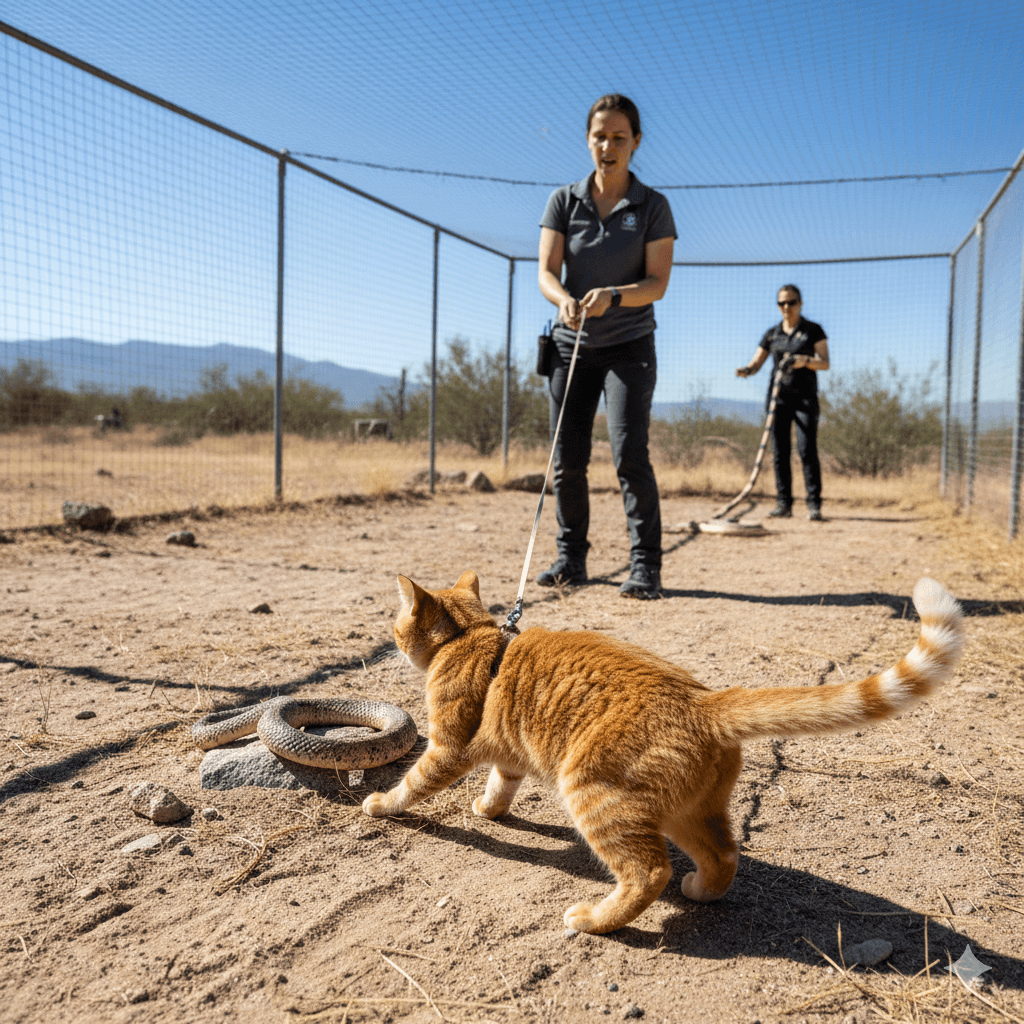
Snake avoidance training uses positive reinforcement and controlled exposure to teach cats to recognize and avoid snakes. The process is designed to be safe, effective, and tailored to each cat’s temperament. Understanding how this training works helps you choose the right program and set realistic expectations.
- Controlled Exposure to Snakes:
Training involves introducing cats to non-venomous, muzzled snakes in a secure setting to simulate real-life encounters. - Positive Reinforcement Techniques:
Rewards like treats or praise encourage cats to associate snakes with negative outcomes rather than curiosity. - Scent and Sound Recognition:
Cats learn to identify snake scents and sounds, helping them detect snakes before visual contact occurs. - Gradual Desensitization:
Trainers gradually increase exposure intensity to ensure cats remain calm while learning avoidance behaviors. - Customized Training Plans:
Programs adapt to individual cats’ personalities, ensuring effectiveness regardless of age, breed, or prior experiences.
This structured approach ensures long-lasting results while prioritizing your cat’s comfort and safety.
Benefits of Snake Avoidance Training for Cats
Snake avoidance training offers numerous benefits beyond just preventing snakebites. It enhances your cat’s overall safety and confidence during outdoor activities, making it a worthwhile investment for any pet owner. These advantages extend to both cats and their human companions.
- Improved Survival Skills:
Cats gain valuable instincts to avoid dangerous situations, enhancing their ability to navigate outdoor environments safely. - Strengthened Bond with Owners:
Training sessions provide quality time together, reinforcing trust and communication between you and your cat. - Increased Confidence Outdoors:
With reduced fear of snakes, cats explore their surroundings more confidently and securely. - Lower Risk of Injury:
Avoidance training minimizes the chances of snake-related injuries, keeping your cat healthier in the long run. - Proactive Health Protection:
By preventing bites, you avoid costly vet bills and the emotional toll of emergency treatments.
These benefits make snake avoidance training a practical and impactful choice for cat owners in snake-prone areas.
Choosing the Right Trainer for Snake Avoidance
Selecting a qualified trainer is crucial to ensure your cat receives effective and ethical snake avoidance training. Not all trainers are created equal, so thorough research is essential. Here’s what to look for when choosing a professional.
- Certification and Experience:
Choose trainers with certifications in animal behavior or specialized experience in snake avoidance techniques. - Ethical Training Methods:
Ensure the trainer uses positive reinforcement rather than fear-based tactics that could traumatize your cat. - Client Reviews and Testimonials:
Check online reviews or ask for references to gauge the trainer’s success rate and reputation. - Customized Programs:
The best trainers tailor sessions to your cat’s unique needs, ensuring maximum effectiveness. - Safe Training Environment:
Verify that the training area is secure and free from unnecessary risks during exposure exercises.
A qualified trainer sets the foundation for successful and stress-free learning.
Common Misconceptions About Snake Avoidance Training
Many misconceptions surround snake avoidance training, leading some pet owners to hesitate or avoid it altogether. Dispelling these myths ensures you make informed decisions about your cat’s safety.
- “Cats Can’t Be Trained Like Dogs”:
While cats have independent personalities, they respond well to positive reinforcement and can learn avoidance behaviors effectively. - “Indoor Cats Don’t Need Training”:
Even indoor cats may encounter snakes during supervised outdoor time or accidental escapes, making training beneficial for all cats. - “One Training Session Is Enough”:
Avoidance training requires periodic refreshers to reinforce learned behaviors and maintain effectiveness over time. - “Training Uses Fear Tactics”:
Reputable trainers focus on positive reinforcement, avoiding harmful methods that could damage your cat’s mental health. - “It’s Too Expensive”:
While there’s an upfront cost, the investment pales in comparison to the expense of treating a snakebite or losing your cat.
Understanding the truth behind these misconceptions empowers you to prioritize your cat’s safety.
Long-Term Benefits of Snake Avoidance Training
Snake avoidance training isn’t just a one-time solution—it provides lasting benefits that enhance your cat’s quality of life. Over time, these advantages become increasingly apparent, solidifying the value of the training.
- Lifelong Safety Skills:
Once trained, cats retain avoidance instincts, reducing the risk of snake encounters throughout their lives. - Confidence in New Environments:
Trained cats adapt more easily to unfamiliar settings, knowing how to respond to potential threats. - Reduced Stress for Owners:
Knowing your cat is prepared for snake encounters alleviates anxiety during outdoor adventures or travel. - Healthier Outdoor Lifestyle:
With fewer snake-related risks, you can confidently allow your cat supervised outdoor time, promoting physical and mental stimulation. - Community Awareness:
Sharing your experience encourages other cat owners to invest in training, creating safer neighborhoods for pets.
These long-term benefits highlight why snake avoidance training is a wise and compassionate choice for every cat owner.
“You could clicker train some cats with very low prey drive to come to you when they saw a critter, if you are present. You could reduce your cat’s inclination to hunt by raising the cat with no opportunities to hunt and rewarding the cat for leaving all critters alone. Cats are so highly instinctive that I think the only way to have an effect would be to keep all that prey drive dormant. It’s probably not possible with most cats.”
Frequently Asked Questions About Snake Avoidance Training for Cats
Is snake avoidance training safe for cats?
Yes—reputable trainers use controlled environments and positive reinforcement to ensure the training is both safe and effective for your cat.
How long does the training take?
Most programs last between 1–3 hours per session, with periodic refreshers recommended to reinforce learned behaviors.
Can indoor cats benefit from this training?
Absolutely—even indoor cats may encounter snakes during supervised outdoor time or accidental escapes, making training a valuable precaution.
What if my cat has already been bitten by a snake?
While prior incidents can make training more challenging, it’s still beneficial to enroll your cat to prevent future encounters.
How much does snake avoidance training cost?
Costs vary depending on the trainer and location but typically range from $100–$300 per session—a worthwhile investment compared to snakebite treatment expenses.
Supporting Your Cat Through Snake Avoidance Training
Snake avoidance training is more than just a safety measure—it’s a commitment to your cat’s long-term well-being. By equipping them with the skills to navigate their environment confidently, you empower them to explore without fear while minimizing risks. This training not only protects your feline companion but also strengthens the bond you share as you prioritize their health and happiness. Remember, every step you take to safeguard your cat reflects the depth of your love and dedication. With proactive measures like snake avoidance training, you ensure that your adventurous companion enjoys a safer, fuller life by your side.

Is Rawhide Bad for Cats? Best 7 Expert Tips! – Discover the risks, safe alternatives, and expert advice to keep your feline friend healthy and happy.

Is Rawhide Bad for Dogs? Best 7 Expert Tips! – Discover the risks, benefits, and safer alternatives to rawhides for your dog’s chewing needs.

Understanding Anorexia in Cats: Best 7 Expert Tips! – Learn why cats stop eating, spot warning signs, and discover how to help your feline regain appetite safely.

Understanding Anorexia in Dogs: Best 7 Expert Tips! – Learn causes, symptoms, and solutions to help your dog regain appetite and stay healthy.