
Understanding Shar Pei Dog Size: What You Need to Know
The Shar Pei is a distinctive breed known for its wrinkled skin and compact, muscular build. While they are medium-sized dogs, their unique body structure often makes them appear larger or more robust than they actually are. Understanding the typical size range of Shar Peis helps potential owners ensure they can provide the right environment and care for this loyal companion.
Factors Influencing Shar Pei Dog Size
The size of a Shar Pei is influenced by a combination of genetics, nutrition, and overall health. While the breed standard defines their size as medium, individual dogs may vary slightly depending on these factors. Understanding what contributes to their growth ensures you can support your Shar Pei’s development effectively.
- Genetic Heritage:
A Shar Pei’s size is largely determined by its lineage; parents with larger frames often produce pups with similar proportions. Responsible breeding practices help maintain consistency within the breed standard. - Nutrition During Puppyhood:
Proper nutrition plays a critical role in achieving optimal size. High-quality puppy food rich in protein, fats, and essential nutrients supports healthy bone and muscle development. Overfeeding or underfeeding can lead to stunted growth or obesity, both of which affect size. - Health Conditions Impacting Growth:
Certain health issues, such as hypothyroidism or joint problems, can influence a Shar Pei’s final size. Regular veterinary check-ups ensure early detection and management of conditions that might hinder growth. - Exercise and Activity Levels:
Moderate exercise during puppyhood promotes strong muscles and bones without overstraining developing joints. Excessive physical activity too early can stunt growth, while insufficient exercise may lead to poor muscle tone. - Environmental Factors:
Living conditions, stress levels, and exposure to toxins can subtly impact growth patterns. Providing a safe, nurturing environment helps your Shar Pei reach its full potential size.
By addressing these factors proactively, you can ensure your Shar Pei grows into a healthy, well-proportioned adult dog that aligns with breed expectations.
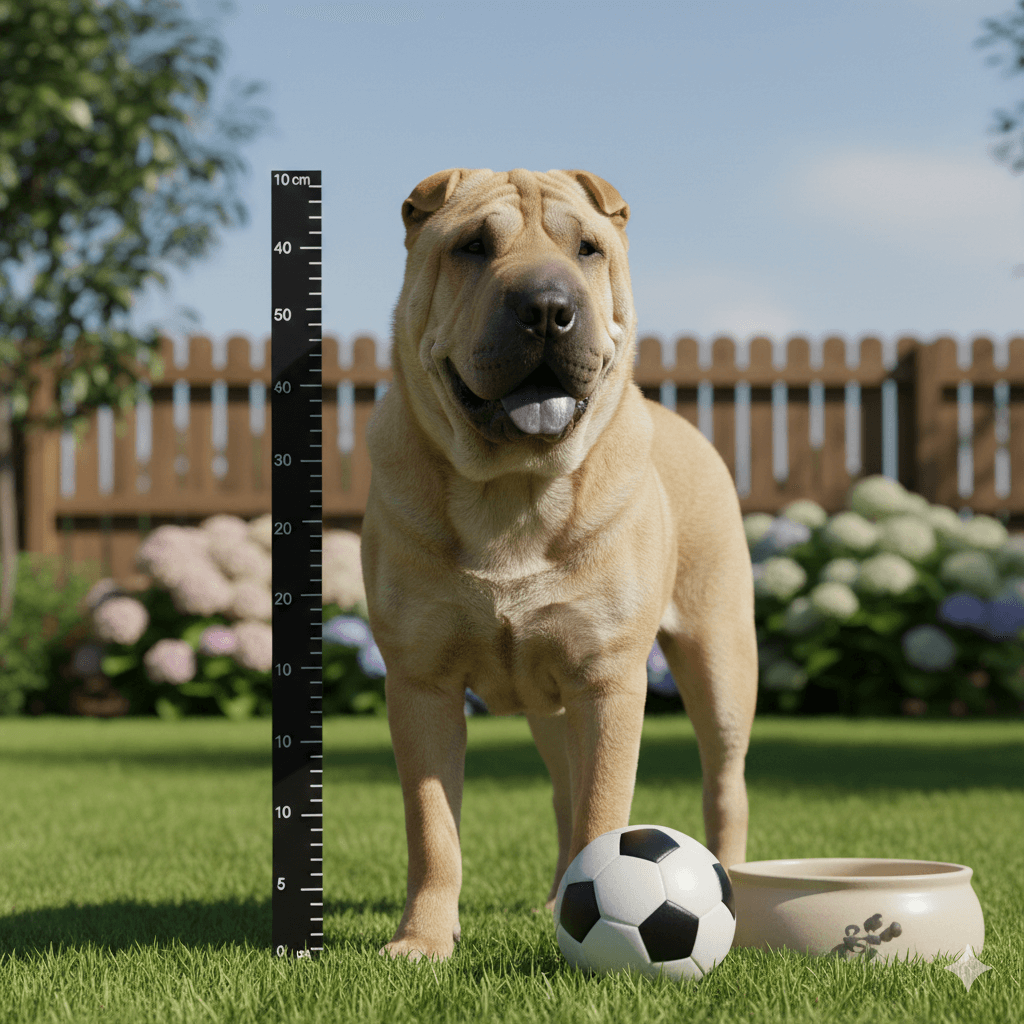
Typical Height and Weight Range for Shar Peis
Shar Peis are classified as medium-sized dogs, but their exact measurements can vary based on gender, age, and regional breeding standards. Knowing the typical height and weight range helps owners monitor their dog’s growth and identify any deviations early.
- Height Standards for Adult Shar Peis:
Male Shar Peis typically stand 18–20 inches (46–51 cm) tall at the shoulder, while females are slightly shorter, ranging from 17–19 inches (43–48 cm). These measurements are consistent across most kennel clubs. - Weight Expectations for Males and Females:
Adult males usually weigh between 45–60 pounds (20–27 kg), whereas females tend to be lighter, weighing 35–50 pounds (16–23 kg). Proper diet and exercise keep them within this healthy range. - Regional Variations in Size:
Some breeders outside the United States focus on producing slightly smaller or stockier Shar Peis, leading to minor variations in size. Always consult breed-specific resources for clarity. - Growth Phases in Puppies:
Shar Pei puppies grow rapidly during their first six months, reaching about half their adult size by four months. Growth slows after one year but continues until around 18 months. - Signs Your Shar Pei Is Underweight or Overweight:
Underweight Shar Peis appear bony, with visible ribs, while overweight ones have excessive fat deposits and difficulty moving. Regular weigh-ins and body condition scoring prevent extremes.
Monitoring these metrics ensures your Shar Pei stays within a healthy size range throughout its life.
Check this guide 👉The Shar Pei Labrador Mix: Best 7 Expert Tips!
Check this guide 👉Shar Pei Dalmatian Mix: Best 7 Expert Tips!
Check this guide 👉Cane Corso Shar Pei Mix: Best 7 Expert Tips!
Metric | Details |
|---|---|
Average Height (Male) | 18–20 inches (46–51 cm) |
Average Height (Female) | 17–19 inches (43–48 cm) |
Average Weight (Male) | 45–60 pounds (20–27 kg) |
Average Weight (Female) | 35–50 pounds (16–23 kg) |
Growth Completion Age | 12–18 months |
Lifespan | 8–12 years |
Common Health Concerns | Hip dysplasia, allergies, skin issues |
How Wrinkles Affect Perceived Size in Shar Peis
The Shar Pei’s signature wrinkles contribute significantly to how their size is perceived. While they are medium-sized dogs, their loose, folded skin can make them appear bulkier than they truly are. Understanding this dynamic helps avoid misjudgments about their actual dimensions.
- Wrinkles Add Visual Bulk:
The folds of skin give Shar Peis a more substantial appearance, especially as puppies when their wrinkles are most pronounced. This can create the illusion of a larger frame. - Wrinkle Distribution Across the Body:
Wrinkles are concentrated around the head, neck, and shoulders, making these areas seem wider or heavier. As Shar Peis mature, some wrinkles naturally tighten, altering their silhouette. - Impact on Movement Perception:
Their wrinkled skin affects how they carry themselves, sometimes giving the impression of slower or heavier movement despite being agile and athletic underneath. - Breed Standards and Wrinkle Expectations:
Show-quality Shar Peis must have moderate wrinkling—not excessive enough to obscure their structure nor too minimal to lose their characteristic look. This balance influences perceived size. - Wrinkle Care and Its Role in Appearance:
Proper grooming and maintenance of the skin folds prevent irritation and swelling, ensuring their wrinkles remain proportional and don’t distort their size perception.
Recognizing how wrinkles shape our view of Shar Peis provides a clearer understanding of their true size and proportions.
Comparing Shar Pei Size to Other Breeds
When evaluating Shar Pei size, it’s helpful to compare them to other popular breeds. This comparison highlights their unique characteristics and places their medium stature into perspective.
- Similarity to Bulldogs:
Like Bulldogs, Shar Peis share a compact, muscular build, though Shar Peis are generally taller and less prone to obesity if exercised regularly. - Contrast with Labrador Retrievers:
Labradors are larger, standing 21–24 inches (53–61 cm) tall and weighing 55–80 pounds (25–36 kg). Their leaner frame contrasts with the Shar Pei’s stocky appearance. - Comparison to Beagles:
Beagles are closer in height (13–16 inches/33–41 cm) but significantly lighter (20–30 pounds/9–14 kg), emphasizing the Shar Pei’s solid build. - Differences from Great Danes:
Great Danes dwarf Shar Peis in both height (up to 32 inches/81 cm) and weight (100–175 pounds/45–79 kg), showcasing the vast diversity among dog breeds. - Unique Proportions Among Medium Breeds:
Compared to other medium breeds like Boxers or Cocker Spaniels, Shar Peis have shorter legs relative to their body length, giving them a distinctive silhouette.
These comparisons underscore the Shar Pei’s place as a medium-sized breed with a uniquely robust and wrinkled profile.
Managing Weight for Optimal Shar Pei Size
Maintaining a healthy weight is crucial for preserving the ideal size of a Shar Pei. Excess weight not only affects their mobility but also exacerbates common breed-related health issues. Here’s how to manage your Shar Pei’s weight effectively.
- Balanced Diet for Lifelong Health:
Feed high-quality dog food tailored to medium breeds, ensuring it contains adequate protein, fiber, and limited fillers to prevent unnecessary weight gain. - Portion Control Based on Age:
Puppies require frequent small meals to fuel growth, while adults thrive on two meals daily. Adjust portions according to activity level and metabolism changes. - Regular Exercise Routine:
Daily walks, playtime, and mental stimulation burn calories and maintain muscle tone without straining their joints. Aim for at least 30–60 minutes of low-impact activity. - Monitoring Treat Intake:
Limit treats to no more than 10% of daily caloric intake, opting for healthy options like carrots or apples instead of high-calorie commercial snacks. - Veterinary Guidance for Weight Management:
Schedule regular vet visits to assess weight trends and receive personalized advice on maintaining an ideal size for your Shar Pei.
Proactive weight management keeps your Shar Pei fit, active, and within the recommended size range for their breed.
Common Misconceptions About Shar Pei Size
Several misconceptions surround Shar Pei size, often leading to confusion among prospective owners. Clarifying these myths ensures realistic expectations about the breed.
- Myth: Shar Peis Are Large Dogs:
Despite their bulky appearance due to wrinkles, Shar Peis are medium-sized dogs with heights and weights comparable to other mid-sized breeds. - Myth: All Shar Peis Look Identical in Size:
Variations exist even within purebred lines; some individuals may appear stockier or taller depending on genetics and upbringing. - Myth: Wrinkles Determine Size Potential:
While wrinkles enhance their visual presence, they do not directly correlate with actual height or weight measurements. - Myth: Shar Peis Grow Continuously Throughout Life:
Most Shar Peis stop growing between 12–18 months, contrary to beliefs that they continue expanding indefinitely. - Myth: Smaller Shar Peis Are Less Authentic:
Size alone does not determine authenticity; temperament, conformation, and adherence to breed standards matter more than slight variations in size.
Dispelling these myths fosters a better understanding of Shar Pei size and what makes them unique.
Long-Term Considerations for Shar Pei Size Maintenance
Once your Shar Pei reaches adulthood, maintaining their size requires ongoing effort and vigilance. Consistent care ensures they remain healthy, comfortable, and true to their breed standards.
- Preventing Obesity Through Routine Monitoring:
Regular weigh-ins and body condition assessments catch weight gain early, allowing timely dietary adjustments to stay within the ideal range. - Joint Health and Mobility Support:
As Shar Peis age, joint issues like hip dysplasia may arise. Supplements like glucosamine and chondroitin, along with controlled exercise, preserve mobility and prevent weight-related strain. - Adapting Nutrition for Senior Years:
Older Shar Peis benefit from senior-specific diets lower in calories but higher in nutrients to maintain muscle mass without promoting weight gain. - Seasonal Adjustments for Activity Levels:
Weather changes may impact activity levels; indoor play sessions compensate for reduced outdoor time during harsh seasons, keeping weight stable year-round. - Emotional Well-being and Stress Reduction:
Stress can indirectly affect size by influencing appetite and energy levels. Providing a calm, enriching environment minimizes stress-related fluctuations.
With dedication and attention to detail, you can ensure your Shar Pei maintains their ideal size and thrives throughout their life.
“The height is 18 to 20 inches at the withers. The weight is 45 to 60 pounds,”
– American Kennel Club
Frequently Asked Questions About Shar Pei Dog Size
What is the average size of a Shar Pei?
Male Shar Peis typically stand 18–20 inches (46–51 cm) tall and weigh 45–60 pounds (20–27 kg), while females are slightly smaller at 17–19 inches (43–48 cm) and 35–50 pounds (16–23 kg).
How can I tell if my Shar Pei is overweight?
Check for excess fat deposits, difficulty moving, or an inability to feel their ribs without pressing too hard. Regular weigh-ins and body condition scoring help monitor weight.
When do Shar Peis stop growing?
Shar Peis generally stop growing between 12–18 months, though some may continue filling out slightly until they are two years old.
Are Shar Peis considered large or medium-sized dogs?
Despite their bulky appearance due to wrinkles, Shar Peis are classified as medium-sized dogs by most kennel clubs worldwide.
Do Shar Pei puppies look the same size as adults?
No—puppies have more pronounced wrinkles and appear stockier. As they mature, their wrinkles tighten, and their proportions become more defined.
A Lifeline in Every Moment of Growth
Understanding Shar Pei dog size goes beyond mere numbers—it’s about appreciating their unique proportions, supporting their growth, and ensuring they thrive in a healthy environment. Whether you’re a new owner marveling at their wrinkled charm or a seasoned enthusiast fine-tuning their care routine, every step you take shapes their journey toward becoming the best version of themselves. Remember, their size reflects not just their physical stature but also the depth of your commitment to their well-being. With love, knowledge, and dedication, your Shar Pei will grow into a confident, happy companion who fits perfectly into your life.

Is Rawhide Bad for Cats? Best 7 Expert Tips! – Discover the risks, safe alternatives, and expert advice to keep your feline friend healthy and happy.

Is Rawhide Bad for Dogs? Best 7 Expert Tips! – Discover the risks, benefits, and safer alternatives to rawhides for your dog’s chewing needs.

Understanding Anorexia in Cats: Best 7 Expert Tips! – Learn why cats stop eating, spot warning signs, and discover how to help your feline regain appetite safely.

Understanding Anorexia in Dogs: Best 7 Expert Tips! – Learn causes, symptoms, and solutions to help your dog regain appetite and stay healthy.