
What is Toxic to Dogs: Understanding Hidden Dangers
Many common household items and foods that are safe for humans can be harmful or even deadly to dogs. From chocolate and grapes to cleaning products and certain plants, these toxins can cause a range of symptoms, from mild discomfort to life-threatening conditions. Knowing what to avoid and recognizing the signs of poisoning are essential steps in keeping your furry friend safe and healthy.
Common Foods That Are Toxic to Dogs
While many human foods are safe for dogs in moderation, others can cause severe health issues. Familiarizing yourself with these toxic foods helps prevent accidental poisoning and ensures your dog’s diet remains safe. Even small amounts of certain ingredients can lead to gastrointestinal upset, organ failure, or worse. Always double-check before sharing table scraps or snacks with your furry companion.
- Chocolate:
Chocolate contains theobromine and caffeine, both of which are toxic to dogs. Dark chocolate and baking chocolate pose the highest risk due to higher cocoa content. Symptoms include vomiting, diarrhea, rapid breathing, seizures, and even death in severe cases. - Grapes and Raisins:
These fruits cause kidney failure in dogs, though the exact toxin remains unknown. Even a small handful can lead to symptoms like vomiting, lethargy, dehydration, and decreased urination within hours. Immediate veterinary care is crucial if ingestion occurs. - Onions and Garlic:
All forms—raw, cooked, powdered, or dehydrated—contain compounds that damage red blood cells, leading to anemia. Symptoms such as weakness, pale gums, and dark urine may not appear for several days, making early detection challenging. - Xylitol (Sugar Substitute):
Found in sugar-free gum, candies, and baked goods, xylitol triggers insulin release in dogs, causing hypoglycemia (low blood sugar). Signs include vomiting, weakness, seizures, and liver failure if left untreated. - Alcohol and Yeast Dough:
Alcoholic beverages and raw yeast dough are dangerous because they produce ethanol or carbon dioxide gas during fermentation. This can lead to bloating, respiratory distress, and central nervous system depression.
Understanding which foods to avoid is critical for preventing accidental exposure. Always store these items securely and educate family members about their dangers to ensure your dog’s safety.
Household Items That Pose Risks to Dogs
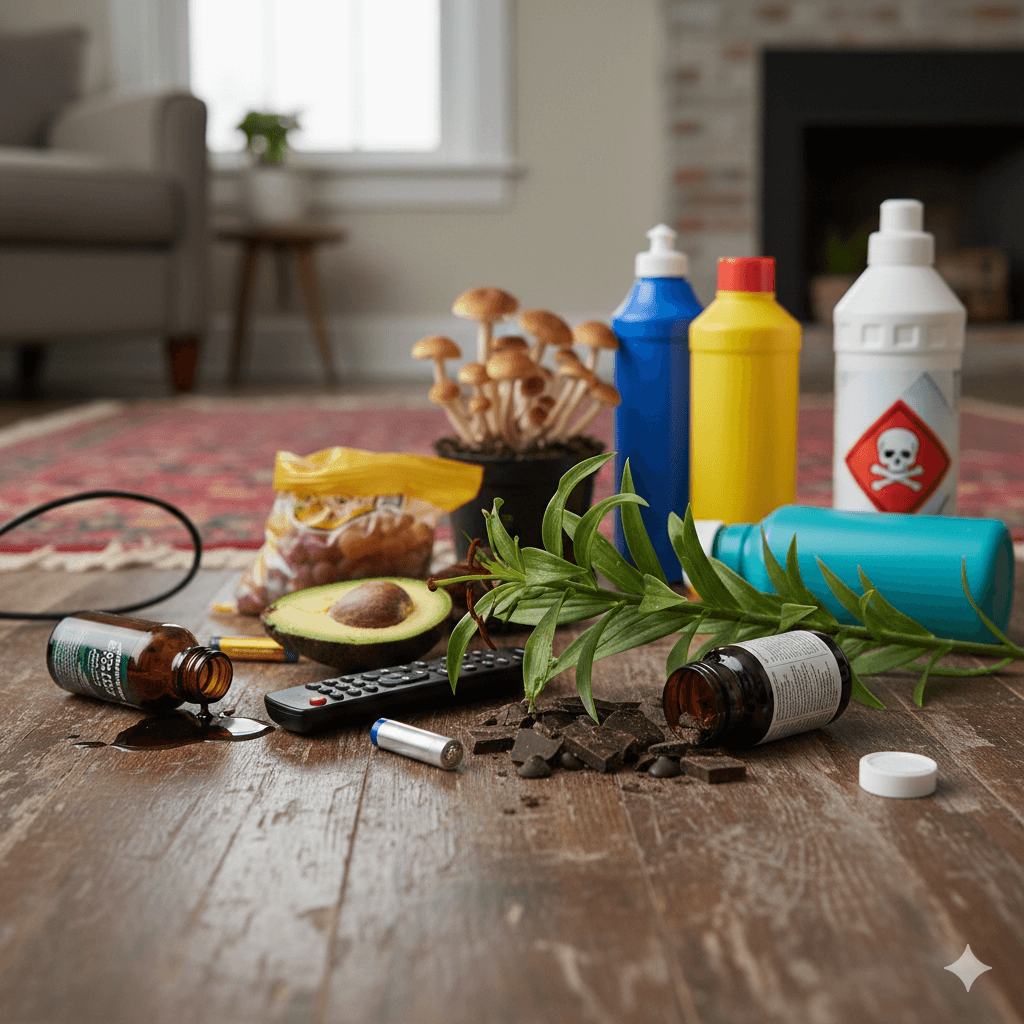
Many everyday household products are surprisingly hazardous to dogs. Curious pups often explore their environment by chewing or licking objects, increasing the likelihood of accidental ingestion. Being aware of these risks allows you to create a safer home environment for your pet.
- Cleaning Products:
Bleach, detergents, and disinfectants irritate the skin, eyes, and respiratory tract when inhaled or licked. Ingestion can cause chemical burns, drooling, vomiting, and difficulty breathing. - Medications:
Over-the-counter drugs like ibuprofen, acetaminophen, and antidepressants are highly toxic to dogs. Even small doses can lead to kidney failure, liver damage, or gastrointestinal ulcers. - Batteries:
Swallowed batteries leak corrosive chemicals that burn the esophagus and stomach lining. Symptoms include drooling, vomiting, abdominal pain, and difficulty swallowing. - Antifreeze:
This sweet-tasting liquid contains ethylene glycol, which causes acute kidney failure. Early signs include vomiting, stumbling, and increased thirst, while delayed treatment leads to seizures and coma. - Plants and Flowers:
Houseplants like lilies, sago palms, and philodendrons are toxic. For example, lilies cause kidney failure in cats but also harm dogs through ingestion or pollen exposure.
Proactive measures, such as keeping harmful items out of reach and using pet-safe alternatives, significantly reduce risks. Regular supervision prevents accidents and keeps your dog safe from hidden dangers.
Check this guide 👉Dog Toxicity Treatment at Home: Best 7 Expert Tips!
Check this guide 👉Is Aspirin Toxic to Dogs: Best 7 Expert Tips!
Check this guide 👉Are Elephant Ears Toxic to Dogs? Best 7 Expert Tips!
Toxin | Symptoms to Watch For |
|---|---|
Chocolate, caffeine | Vomiting, diarrhea, seizures |
Grapes, raisins | Vomiting, lethargy, decreased urination |
Xylitol (sugar substitute) | Weakness, seizures, liver failure |
Antifreeze | Stumbling, vomiting, seizures |
Household cleaners | Drooling, burns, respiratory distress |
Outdoor Toxins That Endanger Dogs
Outdoor environments harbor numerous hazards that can endanger curious dogs. From garden plants to automotive fluids, these toxins require vigilance to avoid accidental exposure. Awareness of potential outdoor threats ensures your dog enjoys outdoor time without compromising their health.
- Pesticides and Herbicides:
Chemicals used on lawns and gardens irritate the skin, eyes, and digestive tract. Long-term exposure increases cancer risks, particularly lymphoma in dogs. - Mushrooms:
Wild mushrooms vary in toxicity; some cause mild stomach upset, while others lead to liver failure or neurological symptoms. Avoid letting your dog sniff or eat unknown fungi. - Fertilizers:
Bone meal, blood meal, and other fertilizers attract dogs but cause pancreatitis or intestinal blockages if ingested. Symptoms include vomiting, diarrhea, and abdominal pain. - Snail Bait and Rodenticides:
These poisons contain anticoagulants or bromethalin, causing internal bleeding or brain swelling. Signs include lethargy, bruising, seizures, and difficulty walking. - Automotive Fluids:
Oil, brake fluid, and coolant spill onto driveways and streets. Ingestion leads to gastrointestinal irritation, neurological symptoms, or organ damage depending on the substance.
Creating a dog-friendly yard and avoiding areas treated with chemicals protects your pet. Always supervise outdoor activities and clean up spills immediately to minimize risks.
Seasonal Hazards That Threaten Dogs
Seasonal changes bring unique dangers for dogs, ranging from holiday decorations to weather-related toxins. Recognizing these seasonal hazards helps you prepare and protect your dog year-round. Each season presents distinct challenges requiring tailored precautions.
- Winter Salt and Ice Melts:
Rock salt and ice melts irritate paws and can be toxic if licked off. Symptoms include excessive drooling, vomiting, and electrolyte imbalances. - Holiday Decorations:
Ornaments, tinsel, and lights pose choking hazards or electrical shock risks. Poinsettias, holly, and mistletoe add festive cheer but are toxic to pets. - Spring Bulbs:
Tulips, daffodils, and hyacinths contain alkaloids that irritate the mouth and stomach. Ingestion causes drooling, vomiting, and diarrhea. - Summer Fireworks:
Fireworks contain perchlorates and heavy metals that poison dogs if ingested. Noise phobia also stresses pets, leading to escape attempts or self-harm. - Fall Mushrooms and Acorns:
Toxic mushrooms thrive in damp conditions, while acorns cause intestinal blockages. Both require prompt veterinary attention if consumed.
Adapting your home and routines to seasonal changes ensures your dog stays safe throughout the year. Stay informed and proactive to mitigate these seasonal risks effectively.
Signs of Toxic Exposure in Dogs
Recognizing the signs of toxic exposure enables quick intervention, potentially saving your dog’s life. Symptoms vary widely depending on the toxin but share common patterns. Early detection improves outcomes significantly.
- Gastrointestinal Symptoms:
Vomiting, diarrhea, drooling, and loss of appetite indicate ingestion of irritants or poisons affecting the digestive tract. - Neurological Symptoms:
Seizures, tremors, disorientation, and abnormal behavior suggest neurotoxins like pesticides or medications disrupting brain function. - Respiratory Issues:
Coughing, wheezing, labored breathing, or cyanosis (blue gums) signal inhalation of fumes or ingestion of substances impacting oxygen levels. - Kidney or Liver Failure:
Increased thirst, frequent urination, jaundice, and lethargy point to organ damage caused by toxins like grapes, antifreeze, or certain medications. - Skin Irritation:
Redness, swelling, itching, or burns around the mouth, paws, or body indicate contact with irritants like cleaning products or plants.
Monitoring your dog closely and seeking veterinary care at the first sign of trouble ensures timely treatment. Keep a list of emergency contacts handy for peace of mind.
Steps to Take If Your Dog Is Exposed to Toxins
If your dog comes into contact with or ingests something toxic, acting quickly saves lives. Knowing the correct steps minimizes harm and provides clarity during stressful situations.
- Identify the Toxin:
Determine what your dog ingested or came into contact with. Bring packaging or samples to the vet for accurate diagnosis and treatment. - Call a Pet Poison Helpline:
Experts provide immediate advice based on your dog’s weight, breed, and the suspected toxin. Follow their instructions carefully until professional help arrives. - Do Not Induce Vomiting Without Guidance:
Forcing vomiting can worsen irritation or aspiration risks unless explicitly advised by a veterinarian. - Rinse Off External Toxins:
If your dog has been exposed to chemicals or irritants on their skin or fur, rinse thoroughly with lukewarm water to remove residues. - Transport to the Vet Safely:
Keep your dog calm and secure during transport. Provide all relevant information to the vet upon arrival for efficient care.
Quick thinking and clear communication with professionals ensure the best possible outcome for your dog. Stay calm and focused during emergencies.
Preventing Accidental Toxic Exposure in Dogs
Preventing access to toxins is far easier than treating accidental exposure. Simple precautions create a safe environment where your dog can thrive without unnecessary risks.
- Secure Hazardous Items:
Store medications, cleaning supplies, and chemicals in locked cabinets or high shelves inaccessible to curious dogs. - Use Pet-Safe Alternatives:
Choose non-toxic plants, pest control methods, and lawn treatments designed specifically for pet-friendly homes. - Supervise Outdoor Time:
Monitor your dog closely during walks or playtime outdoors to prevent ingestion of harmful substances like mushrooms or dropped food. - Train Basic Commands:
Teaching commands like “leave it” or “drop it” prevents your dog from picking up dangerous items or eating unknown objects. - Educate Family Members:
Ensure everyone in the household understands which items and foods are unsafe for dogs to consume or interact with.
A proactive approach reduces risks significantly, giving you peace of mind knowing your dog is protected. Prevention is always better than cure when it comes to toxic exposures.
Chocolate, coffee, and caffeine contain methylxanthines that can cause vomiting, diarrhea, panting, excessive thirst, abnormal heart rhythm, tremors, seizures, and even death in pets,” explains Cristine Hayes, DVM
Frequently Asked Questions About What Is Toxic to Dogs
What should I do if my dog eats something toxic?
Call your vet or a pet poison helpline immediately. Do not induce vomiting unless instructed, and provide details about the toxin and quantity ingested.
How long does it take for symptoms of poisoning to appear?
Symptoms can appear within minutes to hours, depending on the toxin. Some, like antifreeze or certain plants, cause delayed reactions up to 24–72 hours later.
Are all human foods unsafe for dogs?
No, but many are. Stick to dog-safe options like plain cooked chicken, carrots, or green beans, and avoid sharing processed or seasoned foods.
Can houseplants harm my dog?
Yes, many houseplants like lilies, philodendrons, and sago palms are highly toxic. Research pet-safe plants or keep them out of reach entirely.
Is it safe to use natural cleaning products around dogs?
Some natural products still contain irritants or essential oils that are harmful to pets. Always check labels and opt for pet-safe certified cleaners.
Protecting Your Dog from Hidden Dangers
Understanding what is toxic to dogs empowers you to create a safer environment where your furry companion can thrive without unnecessary risks. Prevention is always better than cure—simple measures like securing hazardous items, supervising outdoor time, and educating family members go a long way in safeguarding your pet’s health. Remember, accidents happen, but staying informed and prepared ensures you respond quickly and effectively. With vigilance, love, and proactive care, you give your dog the best chance at a happy, healthy life free from hidden dangers.

Is Rawhide Bad for Cats? Best 7 Expert Tips! – Discover the risks, safe alternatives, and expert advice to keep your feline friend healthy and happy.

Is Rawhide Bad for Dogs? Best 7 Expert Tips! – Discover the risks, benefits, and safer alternatives to rawhides for your dog’s chewing needs.

Understanding Anorexia in Cats: Best 7 Expert Tips! – Learn why cats stop eating, spot warning signs, and discover how to help your feline regain appetite safely.

Understanding Anorexia in Dogs: Best 7 Expert Tips! – Learn causes, symptoms, and solutions to help your dog regain appetite and stay healthy.