
Exploring the Diversity of Shepherd Dog Breeds
Shepherd dogs have long been cherished for their intelligence, loyalty, and versatility, making them invaluable companions for work and family life. From herding livestock to serving in law enforcement, these breeds excel in a variety of roles thanks to their keen instincts and trainability. Discover the unique characteristics and traits that set different types of shepherd dogs apart and make them beloved worldwide.
Origins and History of Shepherd Dog Breeds
Shepherd dogs have a rich history rooted in their roles as working companions for humans. These breeds were developed to assist with herding livestock, guarding property, and performing other essential tasks. Over centuries, they have evolved into distinct types, each tailored to specific environments and purposes. Understanding their origins sheds light on their unique traits and enduring popularity.
- Ancient Roots in Herding:
Shepherd dogs trace their lineage back thousands of years to regions like the Middle East, Europe, and Asia, where they helped nomadic tribes manage flocks. Their natural herding instincts made them indispensable for protecting and organizing livestock. - Development of Regional Variations:
Geographical isolation and environmental factors led to the creation of specialized breeds. For example, the German Shepherd originated in Germany for police and military work, while the Border Collie hails from the rugged hills of Scotland and England. - Influence of Industrialization:
The rise of industrial farming reduced the need for traditional herding dogs, but their versatility ensured their survival in roles like search-and-rescue, therapy, and companionship. - Modern Recognition by Kennel Clubs:
Breed standards were established in the late 19th and early 20th centuries, formalizing the classification of shepherd dogs. Organizations like the AKC and FCI now recognize many breeds for their unique qualities. - Cultural Significance Worldwide:
Shepherd dogs are celebrated globally for their loyalty and adaptability. They appear in folklore, art, and literature, symbolizing dedication, intelligence, and resilience.
Their diverse origins highlight how shepherd dogs have adapted to human needs across time and geography, making them some of the most versatile canine companions today.
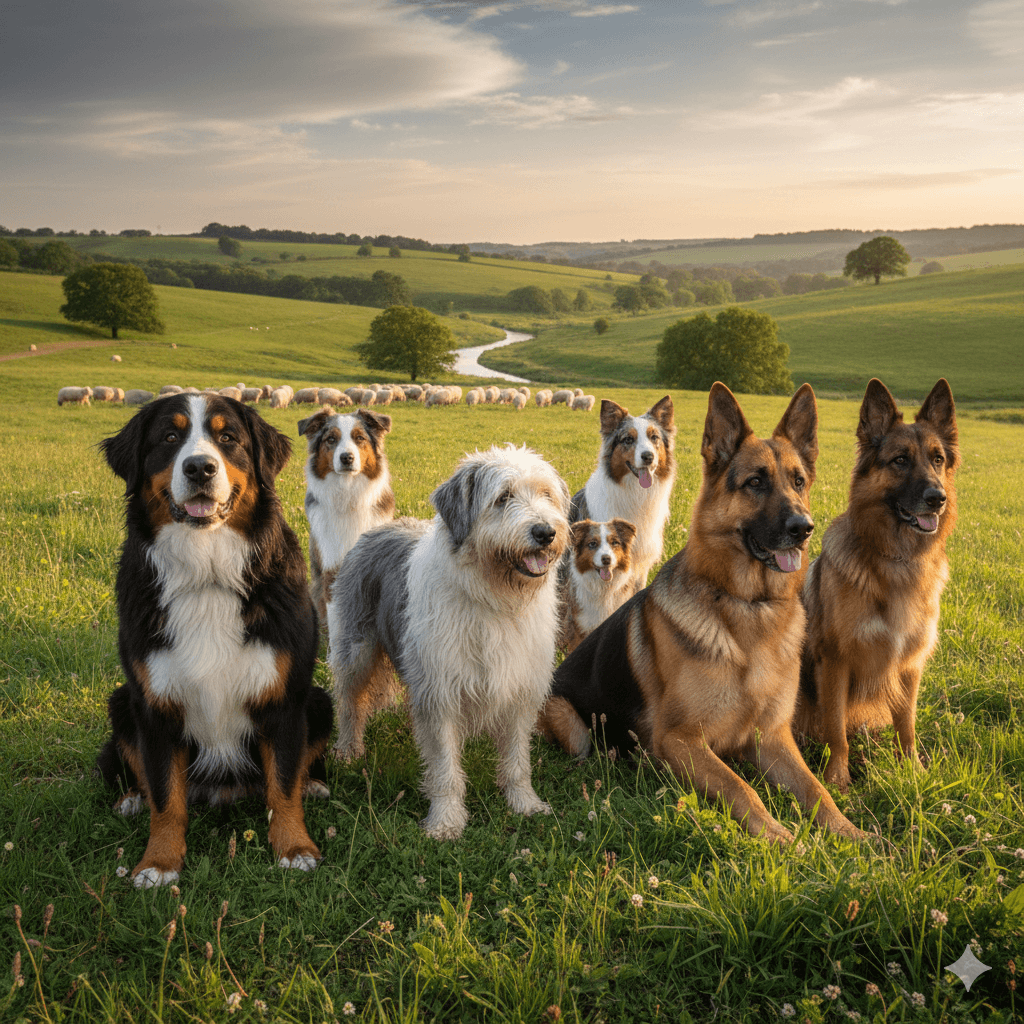
Physical Characteristics of Shepherd Dogs
Shepherd dogs exhibit a wide range of physical traits that reflect their original purposes and environments. While no two breeds look exactly alike, they share certain features that make them well-suited for active lifestyles.
- Size and Build:
Most shepherd dogs are medium to large-sized, with muscular builds designed for endurance and strength. Breeds like the Belgian Malinois and Australian Shepherd are compact yet powerful. - Coat Types and Colors:
Their coats vary widely—some have short, sleek fur (e.g., Dutch Shepherd), while others boast thick double coats (e.g., Icelandic Sheepdog). Common colors include black, tan, sable, and merle patterns. - Distinctive Facial Features:
Many shepherd dogs have expressive eyes, erect or semi-erect ears, and alert expressions. The German Shepherd’s noble profile is iconic, while the Border Collie’s intense gaze reflects its focus. - Adaptability to Climate:
Breeds like the Bergamasco Sheepdog have long, matted coats to withstand cold climates, whereas the Anatolian Shepherd’s shorter coat suits warmer regions. - Agility and Stamina:
Shepherd dogs are built for movement, with lean bodies and strong legs enabling them to cover vast distances quickly. This athleticism makes them excellent competitors in dog sports.
These physical attributes underscore why shepherd dogs remain highly valued for both practical work and recreational activities.
Check this guide 👉German Shepherd Work Dog: Best 7 Expert Tips!
Check this guide 👉The Romanian Carpathian Shepherd Dog: Best 7 Expert Tips!
Check this guide 👉Caucasian Shepherd Size: Best 7 Expert Tips!
Key Traits of Popular Shepherd Breeds | Suitability for Families |
|---|---|
German Shepherd: Intelligent, protective, versatile | Excellent with proper training and socialization |
Border Collie: Energetic, focused, agile | Best for active families or experienced handlers |
Australian Shepherd: Loyal, playful, adaptable | Great for homes with kids and outdoor space |
Belgian Malinois: Brave, athletic, task-oriented | Better suited for experienced owners or professionals |
Shetland Sheepdog: Gentle, affectionate, alert | Ideal for families seeking a loving companion |
Temperament and Personality Traits
Shepherd dogs are known for their remarkable temperaments, which combine intelligence, loyalty, and energy. These traits make them ideal partners for various tasks but also require responsible ownership.
- Highly Trainable Nature:
Shepherd dogs excel in obedience training due to their eagerness to please and problem-solving abilities. The Pembroke Welsh Corgi, for instance, thrives on mental challenges. - Strong Work Ethic:
These breeds are driven by purpose and thrive when given jobs to do. Without adequate stimulation, they may become restless or develop destructive behaviors. - Protective Instincts:
Many shepherd dogs, such as the Caucasian Shepherd or Kangal, are fiercely protective of their families and territory, making them excellent guard dogs. - Social vs Independent Tendencies:
While some, like the Shetland Sheepdog, crave constant companionship, others, like the Basque Shepherd Dog, are more independent and self-reliant. - Compatibility with Families:
Despite their working backgrounds, many shepherd dogs form deep bonds with children and enjoy being part of family life. Proper socialization ensures harmonious relationships.
Understanding these personality traits helps potential owners choose the right breed for their lifestyle.
Popular Working Roles of Shepherd Dogs
Shepherd dogs are renowned for their versatility, excelling in numerous professional and service-oriented roles. Their innate skills and adaptability make them indispensable in various fields.
- Herding Livestock:
Breeds like the Border Collie and Australian Cattle Dog dominate herding competitions and continue to assist farmers worldwide. Their ability to control large groups of animals is unmatched. - Search-and-Rescue Operations:
The German Shepherd and Belgian Malinois are staples in disaster response teams, using their keen sense of smell and agility to locate missing persons. - Law Enforcement and Military Service:
These breeds’ courage and trainability make them ideal for detecting explosives, narcotics, and apprehending suspects. - Service and Therapy Work:
Shepherd dogs often serve as guide dogs, emotional support animals, or therapy dogs, providing comfort and assistance to individuals in need. - Competitive Sports Participation:
From agility trials to obedience championships, breeds like the Australian Shepherd shine in competitive events showcasing their athleticism and intelligence.
Their diverse skill sets demonstrate why shepherd dogs remain among the most respected and utilized breeds globally.
Health Considerations for Shepherd Dogs
Like all breeds, shepherd dogs are prone to specific health issues that prospective owners should be aware of. Responsible breeding and proactive care help mitigate these risks.
- Hip and Elbow Dysplasia:
Large breeds like the German Shepherd and Bernese Mountain Dog are susceptible to joint disorders, requiring regular vet check-ups and weight management. - Degenerative Myelopathy:
This progressive neurological disease affects mobility in older dogs, particularly German Shepherds, necessitating early diagnosis and supportive therapies. - Eye Conditions:
Breeds like the Rough Collie and Shetland Sheepdog are prone to conditions such as Progressive Retinal Atrophy (PRA) and Collie Eye Anomaly (CEA). - Gastric Torsion (Bloat):
Deep-chested breeds like the Great Pyrenees are at risk of bloat, a life-threatening condition requiring immediate veterinary attention. - Allergies and Skin Issues:
Some shepherd dogs, such as the Berger Picard, suffer from allergies or dermatitis, often managed through dietary adjustments and topical treatments.
Awareness of these health concerns ensures better care and longevity for your beloved companion.
Training and Exercise Needs of Shepherd Dogs
Shepherd dogs are high-energy, intelligent breeds that demand substantial physical and mental stimulation. Meeting their exercise and training needs is crucial for their well-being.
- Daily Exercise Requirements:
Most shepherd dogs need at least 1–2 hours of vigorous activity daily, including walks, runs, or playtime. The Australian Shepherd, for example, thrives on outdoor adventures. - Mental Stimulation Through Games:
Interactive toys, puzzle feeders, and scent-based games prevent boredom and sharpen cognitive abilities. - Obedience Training Fundamentals:
Early socialization and consistent training establish good behavior and strengthen the bond between owner and dog. - Advanced Training Opportunities:
Engaging in advanced commands, trick training, or dog sports channels their energy productively and enhances their skill set. - Behavioral Challenges Without Adequate Stimulation:
Without sufficient outlets for their energy, shepherd dogs may exhibit anxiety, excessive barking, or destructive chewing.
Providing structured routines satisfies their needs and fosters a happy, balanced pet.
Choosing the Right Shepherd Dog for Your Lifestyle
Selecting the perfect shepherd dog involves evaluating your living situation, activity level, and personal preferences. Each breed has unique characteristics suited to different households.
- Urban vs Rural Living:
Smaller breeds like the Miniature American Shepherd adapt well to apartment life, while larger ones like the Anatolian Shepherd require spacious rural settings. - Energy Levels and Commitment:
High-energy breeds like the Border Collie suit active owners who can dedicate time to exercise and training. - Grooming Needs Based on Coat Type:
Long-haired breeds like the Rough Collie require frequent brushing, whereas short-coated varieties like the Dutch Shepherd are lower maintenance. - Family Compatibility:
Breeds like the Shetland Sheepdog are gentle with children, while others, like the Caucasian Shepherd, may be better suited for experienced handlers. - Budgetary Considerations:
Factor in costs for food, grooming, healthcare, and potential breed-specific medical treatments when choosing a shepherd dog.
Careful consideration ensures you find a breed that aligns perfectly with your lifestyle and brings joy for years to come.
“German shepherd dogs are among the most popular breeds globally, valued for their intelligence, loyalty, and athleticism. These large brown-and-black dogs have a streamlined build, making them strong and agile.” – Jenna Stregowski, RVN
Frequently Asked Questions About Types of Shepherd Dogs
What is the most popular shepherd dog breed?
The German Shepherd is one of the most widely recognized and versatile breeds, valued for its intelligence, loyalty, and adaptability in various roles.
Are shepherd dogs good with children?
Many shepherd dogs, such as the Shetland Sheepdog and Australian Shepherd, are excellent family pets when properly socialized and trained.
How much exercise do shepherd dogs need daily?
Most shepherd dogs require 1–2 hours of vigorous exercise daily to stay physically and mentally stimulated.
Do shepherd dogs shed a lot?
Yes, many shepherd dogs, like the Belgian Malinois and Rough Collie, are heavy shedders and require regular grooming to manage their coats.
Are shepherd dogs easy to train?
Shepherd dogs are highly trainable due to their intelligence and eagerness to please, but consistency and positive reinforcement are key.
Finding Your Perfect Shepherd Companion
Shepherd dogs embody a remarkable blend of intelligence, loyalty, and versatility, making them some of the most cherished canine companions worldwide. Whether you’re looking for a working partner, a family pet, or a competitive sports athlete, there’s a shepherd breed perfectly suited to your needs. By understanding their unique traits, exercise requirements, and care considerations, you can make an informed decision and build a lifelong bond with your new furry friend. Remember, choosing a shepherd dog means committing to their physical and emotional well-being—but the love and joy they bring into your life will be well worth it.

Is Rawhide Bad for Cats? Best 7 Expert Tips! – Discover the risks, safe alternatives, and expert advice to keep your feline friend healthy and happy.

Is Rawhide Bad for Dogs? Best 7 Expert Tips! – Discover the risks, benefits, and safer alternatives to rawhides for your dog’s chewing needs.

Understanding Anorexia in Cats: Best 7 Expert Tips! – Learn why cats stop eating, spot warning signs, and discover how to help your feline regain appetite safely.

Understanding Anorexia in Dogs: Best 7 Expert Tips! – Learn causes, symptoms, and solutions to help your dog regain appetite and stay healthy.