
Why Do Dogs Bark at Fireworks?
Fireworks may be a dazzling spectacle for humans, but for dogs, they often trigger fear and confusion. The loud, unpredictable noises can overwhelm their sensitive hearing, leading to barking as a natural response to stress or alarm. Understanding why this happens helps you comfort your dog and minimize their anxiety during firework events.
Why Are Dogs So Sensitive to Fireworks?
Dogs have highly developed senses, particularly their hearing, which makes them more vulnerable to the intense sounds of fireworks. Their acute sensitivity to noise explains why they react so strongly compared to humans. Understanding these sensory differences helps us empathize with their distress and take steps to protect them during loud celebrations.
- Superior Hearing Range:
Dogs can hear frequencies up to 65 kHz, far beyond the human range of 20 kHz. This means they pick up on high-pitched sounds from fireworks that we might not even notice. - Heightened Sound Perception:
The decibel level of fireworks often exceeds 120 dB, which is painful for dogs. Their ears are designed to detect faint noises, making such loud bursts overwhelming. - Lack of Contextual Understanding:
Unlike humans, dogs don’t associate fireworks with celebrations or joy. To them, the sudden booms and flashes are unpredictable and frightening. - Instinctual Reactions to Loud Noises:
In the wild, loud noises often signal danger, triggering a fight-or-flight response. Domesticated dogs retain this instinct, leading to barking or attempts to flee. - Emotional Sensitivity to Environment:
Dogs are deeply attuned to their surroundings and the emotions of their owners. If they sense panic or tension in others, it amplifies their own fear response.
Recognizing these factors allows us to create a safer, calmer environment for our dogs during firework displays.
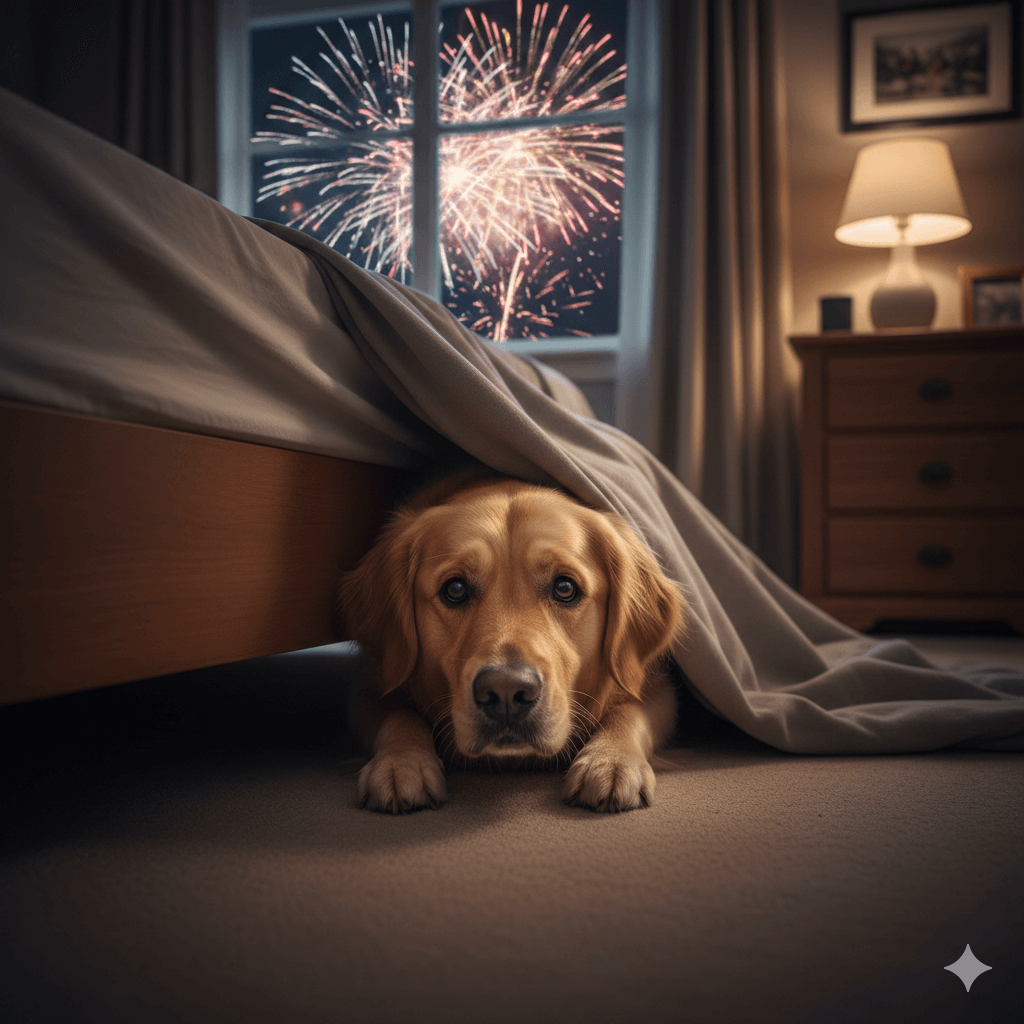
Common Reasons Dogs Bark at Fireworks
Barking is a dog’s primary way of communicating discomfort, fear, or territorial instincts. When fireworks light up the sky, dogs bark as a natural reaction to the chaos around them. Exploring these reasons helps us address the root causes of their behavior.
- Fear and Anxiety:
The loud, sudden noises trigger a stress response, causing dogs to bark as a way of expressing their unease and seeking reassurance. - Territorial Instincts:
Fireworks mimic the sounds of intruders or threats, prompting dogs to bark as a defensive mechanism to protect their home and family. - Seeking Attention:
Some dogs bark during fireworks because they’re looking for comfort or companionship from their owners amidst the chaos. - Disorientation and Confusion:
The combination of bright lights, vibrations, and deafening sounds disorients dogs, leading them to bark out of confusion. - Habitual Behavior:
If a dog has barked at fireworks before, they may repeat the behavior each time, especially if it previously elicited attention or relief.
Understanding these motivations enables us to respond effectively and provide the support our dogs need during stressful situations.
Check this guide 👉Why Dogs Kick Their Back Legs: Best 7 Expert Tips!
Check this guide 👉Understanding Why Dogs Show Their Teeth: Best 7 Expert Tips!
Check this guide 👉Why Does My Dog Sniff My Ears? Best 7 Expert Tips!
Signs Your Dog Is Stressed | Ways to Help Them Cope |
|---|---|
Excessive barking or whining | Create a safe, quiet space away from noise |
Pacing or restlessness | Use white noise machines or calming music |
Trembling or shaking | Provide comfort items like blankets or toys |
Destructive behavior (chewing, scratching) | Distract with interactive puzzles or treats |
Loss of appetite or refusal to eat | Stay calm and avoid reinforcing fearful behavior |
How to Calm Your Dog During Fireworks
Helping your dog stay calm during fireworks requires preparation and patience. By creating a safe space and using calming techniques, you can reduce their anxiety and prevent excessive barking. These strategies ensure your dog feels secure despite the noise outside.
- Create a Safe Haven:
Designate a quiet room or crate where your dog feels secure. Add familiar items like blankets, toys, or clothing with your scent for comfort. - Use White Noise or Music:
Playing white noise, classical music, or calming sounds masks the noise of fireworks, helping your dog relax and focus on something soothing. - Provide Distractions:
Engage your dog with interactive toys, puzzles, or treats to redirect their attention away from the fireworks and reduce barking. - Practice Desensitization:
Gradually expose your dog to recorded firework sounds at low volumes, rewarding calm behavior to help them build tolerance over time. - Stay Calm and Reassuring:
Your dog takes cues from your emotions. Remain calm and avoid coddling excessively, as this reinforces fearful behavior.
With consistent effort, you can help your dog feel safer and more relaxed during firework events.
Signs Your Dog Is Stressed by Fireworks
Dogs display various physical and behavioral signs when stressed by fireworks. Recognizing these indicators allows you to intervene early and alleviate their discomfort. Early detection minimizes the risk of long-term anxiety or trauma.
- Excessive Panting or Drooling:
Rapid breathing and drooling are common signs of stress, indicating heightened arousal or fear in response to the noise. - Pacing or Restlessness:
Dogs unable to settle down may pace back and forth, searching for an escape or a way to cope with their anxiety. - Trembling or Shaking:
Physical trembling often accompanies fear, as the body reacts to the perceived threat of loud noises. - Destructive Behavior:
Some dogs chew furniture, scratch doors, or attempt to escape confinement when overwhelmed by fireworks. - Loss of Appetite:
Stress can suppress hunger, causing dogs to refuse food or treats they would normally enjoy.
Identifying these signs promptly ensures you can provide timely comfort and prevent escalation of their distress.
Long-Term Solutions for Firework Anxiety
Addressing firework anxiety goes beyond short-term fixes; long-term strategies build resilience and reduce your dog’s fear over time. Consistent training and environmental adjustments create lasting improvements in their ability to cope.
- Behavioral Training:
Teach commands like “quiet” or “settle” to give your dog tools for managing their reactions during stressful situations. - Professional Guidance:
Consult a veterinarian or animal behaviorist for tailored advice, including potential medications or therapies for severe cases. - Calming Supplements:
Natural remedies like melatonin, chamomile, or CBD oil can promote relaxation without sedation when used responsibly. - Thundershirts or Anxiety Wraps:
These snug garments apply gentle pressure, mimicking swaddling and providing a sense of security during fireworks. - Routine Exposure Therapy:
Regularly exposing your dog to controlled, low-level stimuli helps desensitize them to loud noises over time.
Implementing these solutions fosters confidence and reduces your dog’s reliance on reactive behaviors like barking.
The Role of Breed and Personality in Firework Reactions
Different breeds and individual personalities influence how dogs react to fireworks. Some breeds are naturally more sensitive to noise, while others may show resilience based on temperament or upbringing. Understanding these variations helps tailor your approach to each dog’s needs.
- Herding Breeds:
Breeds like Border Collies or Australian Shepherds are highly sensitive to noise due to their alert nature and strong herding instincts. - Small Toy Breeds:
Tiny dogs like Chihuahuas or Pomeranians tend to be more prone to anxiety and vocalize their distress loudly. - Brachycephalic Breeds:
Flat-faced breeds like Bulldogs or Pugs may struggle with breathing during stress, exacerbating their reactions to loud noises. - Rescue Dogs:
Dogs with traumatic pasts or limited socialization may exhibit heightened fear responses to fireworks and other loud events. - Confident vs. Timid Personalities:
Some dogs are naturally bold and unfazed by fireworks, while timid or shy dogs require extra support to manage their anxiety.
Tailoring interventions based on breed traits and personality ensures a more effective and compassionate response.
Preventive Measures Before Firework Season Begins
Preparation is key to minimizing your dog’s stress during firework season. Taking proactive steps well in advance reduces the likelihood of severe reactions and ensures a smoother experience for both you and your pet.
- Update Identification Tags:
Ensure your dog’s ID tags and microchip information are current in case they bolt during fireworks. - Secure Your Home:
Close windows, draw curtains, and block exits to prevent escape attempts and muffle external noise. - Schedule Exercise Earlier:
Tire your dog out with vigorous exercise earlier in the day so they’re more likely to rest during fireworks. - Stock Up on Supplies:
Gather calming aids, treats, and toys beforehand to keep your dog occupied and relaxed during the event. - Communicate with Neighbors:
Inform neighbors about your dog’s sensitivity to fireworks, encouraging quieter celebrations or advance warnings.
Being prepared transforms firework season from a source of dread into a manageable challenge for you and your furry companion.
“Because they have such sensitive hearing, even when indoors, sounds will seem louder to them and more confusing than to you. For your dog, who doesn’t know what’s happening, the surprise can be much worse. Fireworks can seem to come out of nowhere and every bang will be a shock, making your dog feel out of control, out of routine and threatened.” – Adaptil Team
Frequently Asked Questions About Dogs and Fireworks
Why are some dogs more afraid of fireworks than others?
Dogs’ fear levels vary based on breed, personality, past experiences, and sensitivity to noise—some breeds are naturally more reactive.
How can I prepare my dog for firework season?
Update ID tags, secure your home, stock up on calming aids, and practice desensitization techniques before the event.
Are there medications to help with firework anxiety?
Yes, veterinarians may prescribe anti-anxiety meds or sedatives for severe cases, but consult your vet before using them.
Can I train my dog not to bark at fireworks?
While you can’t eliminate their reaction entirely, training and desensitization reduce barking and improve coping mechanisms.
What should I do if my dog runs away during fireworks?
Stay calm, search nearby areas immediately, notify local shelters, and use microchip information to aid in recovery efforts.
Supporting Your Dog Through Firework Fear
Fireworks may be an unavoidable part of celebrations, but your dog’s comfort and safety should always come first. By understanding why they bark and taking proactive steps to ease their anxiety, you strengthen the bond of trust between you and your furry companion. Whether through creating a calming environment, using training techniques, or seeking professional guidance, every effort counts toward helping them feel secure. Remember, your presence and reassurance are the greatest gifts you can offer during moments of fear. Together, you can navigate firework season with confidence and compassion.

Is Rawhide Bad for Cats? Best 7 Expert Tips! – Discover the risks, safe alternatives, and expert advice to keep your feline friend healthy and happy.

Is Rawhide Bad for Dogs? Best 7 Expert Tips! – Discover the risks, benefits, and safer alternatives to rawhides for your dog’s chewing needs.

Understanding Anorexia in Cats: Best 7 Expert Tips! – Learn why cats stop eating, spot warning signs, and discover how to help your feline regain appetite safely.

Understanding Anorexia in Dogs: Best 7 Expert Tips! – Learn causes, symptoms, and solutions to help your dog regain appetite and stay healthy.