
Understanding Ethoxyquin in Dog Food: What You Need to Know
Ethoxyquin is a synthetic antioxidant commonly used in dog food to preserve the freshness of ingredients and extend shelf life. While it effectively prevents fat spoilage, concerns have arisen regarding its potential health effects on dogs. By understanding what ethoxyquin is and how it impacts your pet’s diet, you can make informed decisions about their nutrition and well-being.
What Is Ethoxyquin and Why Is It Used in Dog Food?
Ethoxyquin is a synthetic antioxidant that has been widely used in the pet food industry to prevent the oxidation of fats and oils, thereby extending the shelf life of dog food. While it is effective at preserving food quality, its use has sparked debates among pet owners and veterinarians. Understanding its purpose and function helps clarify why it remains a controversial ingredient in commercial pet foods.
- Preservation of Nutritional Value:
Ethoxyquin prevents the breakdown of essential fatty acids, ensuring that the nutritional content of dog food remains stable during storage. This is particularly important for kibble, which may sit on shelves for months. - Extension of Shelf Life:
By inhibiting fat rancidity, ethoxyquin significantly extends the usability period of dog food, reducing waste and spoilage risks for manufacturers and consumers alike. - Synthetic Origin and Stability:
Unlike natural antioxidants like vitamin E or rosemary extract, ethoxyquin is highly stable and effective in small quantities, making it cost-efficient for large-scale production. - Regulatory Approval Despite Controversy:
Although ethoxyquin is approved by organizations like the FDA and EFSA, its safety limits have been revised over time due to emerging concerns about potential side effects. - Use in Animal Feed Beyond Pets:
Ethoxyquin is not exclusive to dog food; it is also used in livestock feed to protect ingredients from degradation during transportation and storage.
The dual role of ethoxyquin as both a preservative and a point of contention highlights the need for ongoing research into safer alternatives without compromising food quality.
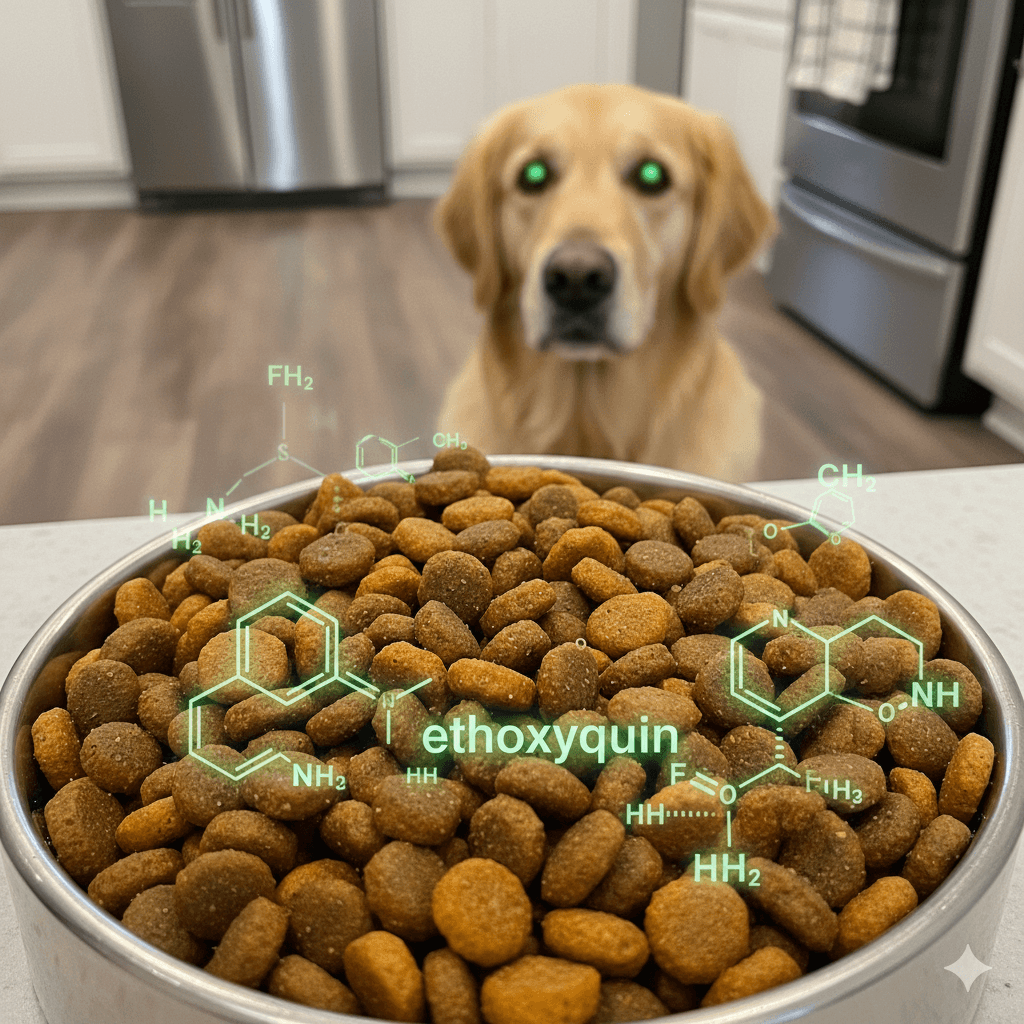
Potential Health Risks of Ethoxyquin in Dog Food
While ethoxyquin effectively preserves dog food, studies and anecdotal evidence suggest potential health risks when consumed regularly or in excessive amounts. These risks range from mild sensitivities to more severe systemic issues, prompting many pet owners to seek ethoxyquin-free options.
- Liver and Kidney Stress:
Prolonged exposure to ethoxyquin may place additional strain on a dog’s liver and kidneys, organs responsible for filtering toxins from the body. - Allergic Reactions or Sensitivities:
Some dogs exhibit skin irritations, itching, or gastrointestinal upset after consuming foods containing ethoxyquin, indicating possible allergic responses. - Impact on Reproductive Health:
Animal studies have raised concerns about ethoxyquin’s effects on fertility and fetal development, though direct links in dogs remain under investigation. - Potential Carcinogenic Properties:
While no definitive proof exists for dogs, high doses of ethoxyquin in lab animals have shown carcinogenic tendencies, fueling worries among pet owners. - Behavioral Changes or Lethargy:
Anecdotal reports describe dogs becoming unusually lethargic or irritable after prolonged consumption of ethoxyquin-containing diets.
Understanding these risks empowers pet owners to weigh the benefits of preserved food against the potential harm caused by this controversial additive.
Check this guide 👉Can Humans Eat Dog Food? Best 7 Expert Tips!
Check this guide 👉Understanding Garlic Powder in Dog Food: Best 7 Expert Tips!
Check this guide 👉Most Affordable Fresh Dog Food: Best 7 Expert Tips!
| Features of Ethoxyquin | Benefits of Natural Antioxidants |
|---|---|
| Synthetic preservative with high stability. | Derived from natural sources like vitamin E or rosemary. |
| Extends shelf life significantly (up to 12+ months). | Appeals to health-conscious pet owners seeking transparency. |
| Cost-effective for manufacturers due to low required dosage. | Reduces risk of adverse reactions or sensitivities in dogs. |
| Regulatory approval but ongoing safety concerns. | Shorter shelf life but perceived as safer and cleaner. |
| Potential health risks with long-term exposure. | Higher production costs passed on to consumers. |
How Ethoxyquin Compares to Natural Antioxidants
In response to growing concerns about synthetic preservatives, many pet food manufacturers are turning to natural antioxidants as alternatives to ethoxyquin. Comparing these options reveals distinct advantages and limitations for each approach.
- Vitamin E (Tocopherols):
Derived from plant sources, vitamin E is a popular natural antioxidant that provides similar preservation benefits without synthetic concerns. However, it is less stable than ethoxyquin and may degrade faster. - Rosemary Extract:
Known for its antimicrobial properties, rosemary extract serves as another natural preservative but requires higher concentrations to match ethoxyquin’s efficacy. - Cost Implications:
Natural antioxidants are typically more expensive to produce, leading to higher costs for ethoxyquin-free dog food products. - Shelf Life Limitations:
Unlike ethoxyquin, natural preservatives often result in shorter shelf lives, requiring stricter storage conditions and quicker consumption. - Consumer Preference Trends:
Many pet owners prioritize transparency and natural ingredients, driving demand for ethoxyquin-free formulations despite their shorter durability.
This comparison underscores the trade-offs between synthetic efficiency and natural appeal in modern pet nutrition practices.
Regulatory Standards and Safety Limits for Ethoxyquin
To address public concerns, regulatory bodies have established strict guidelines governing the use of ethoxyquin in pet food. These standards aim to balance preservation needs with animal health protection while addressing gaps in scientific understanding.
- FDA and EFSA Guidelines:
The FDA permits ethoxyquin use up to 150 parts per million (ppm) in complete dog foods, while the EFSA recommends even lower thresholds based on recent studies. - Reevaluation of Safety Data:
Ongoing research continues to assess long-term effects, prompting periodic updates to allowable concentrations and usage restrictions. - Industry Self-Regulation Efforts:
Some manufacturers voluntarily phase out ethoxyquin ahead of regulatory mandates to align with consumer preferences for cleaner labels. - Testing and Compliance Measures:
Regular testing ensures compliance with safety limits, though inconsistencies in enforcement remain a challenge globally. - Transparency Initiatives:
Increased scrutiny has led to clearer labeling requirements, enabling consumers to make informed choices about ethoxyquin-containing products.
These measures reflect an evolving commitment to safeguarding pet health while maintaining food quality standards.
Identifying Ethoxyquin in Dog Food Labels
For pet owners concerned about ethoxyquin, learning how to read ingredient labels is crucial. Manufacturers are required to disclose certain additives, but indirect sources can complicate detection efforts.
- Direct Listing of Ethoxyquin:
If added directly, ethoxyquin must appear explicitly on the label, allowing vigilant consumers to avoid it easily. - Indirect Sources Through Ingredients:
Fish meal and other animal by-products may contain residual ethoxyquin used during processing, even if not listed separately on the label. - Terms to Watch For:
Phrases like “preserved with mixed tocopherols” indicate natural alternatives, whereas vague terms may signal undisclosed synthetic preservatives. - Third-Party Certifications:
Look for certifications from organizations promoting clean, ethoxyquin-free formulations as reassurance of safer choices. - Contacting Manufacturers Directly:
When in doubt, contacting the manufacturer provides clarity about whether ethoxyquin or its derivatives are present in the product.
Label literacy empowers pet owners to navigate complex ingredient lists confidently and choose safer options for their furry companions.
Alternatives to Ethoxyquin: Safer Preservation Methods
As awareness grows about ethoxyquin’s potential risks, pet food companies are exploring safer preservation methods that meet consumer demands for transparency and safety. These alternatives offer promising solutions for extending shelf life without compromising health.
- Blends of Natural Antioxidants:
Combining vitamin E, vitamin C, and rosemary extract creates synergistic effects that enhance preservation capabilities naturally. - Vacuum-Sealed Packaging:
Advanced packaging techniques reduce oxygen exposure, slowing oxidation and eliminating the need for chemical preservatives altogether. - Freeze-Dried Ingredients:
Freeze-drying removes moisture from raw materials, preventing spoilage and maintaining nutrient integrity without additives. - Cold-Pressed Processing:
This gentle manufacturing method minimizes heat exposure, preserving nutrients and reducing reliance on synthetic preservatives. - Shorter Production-to-Shelf Times:
Streamlining supply chains ensures fresher products reach consumers faster, mitigating the need for extended preservation periods.
These innovations demonstrate a shift toward holistic approaches that prioritize pet health while meeting practical preservation needs.
Making Informed Choices About Ethoxyquin-Free Dog Food
Choosing ethoxyquin-free dog food involves balancing nutritional needs, budget constraints, and personal values. By considering key factors and available resources, pet owners can make decisions aligned with their priorities and their dog’s well-being.
- Researching Brands Thoroughly:
Investigate brands committed to ethoxyquin-free formulations, reading reviews and testimonials to gauge reliability and quality. - Prioritizing Whole Foods:
Opt for diets rich in whole, minimally processed ingredients to reduce reliance on preservatives altogether. - Consulting Your Veterinarian:
Seek professional advice tailored to your dog’s specific dietary requirements and sensitivities before switching foods. - Balancing Cost vs. Quality:
While ethoxyquin-free options may cost more, investing in premium nutrition often pays off in long-term health benefits. - Monitoring Your Dog’s Response:
Observe changes in energy levels, coat condition, and overall health after transitioning to ethoxyquin-free diets to confirm suitability.
Empowered decision-making ensures your dog enjoys optimal nutrition free from unnecessary additives or risks associated with synthetic preservatives.
“Ethoxyquin is approved and regulated by the Food and Drug Administration (FDA) and the Association of American Feed Control Officials (AAFCO) for use as a preservative in animal feeds.” — IAMS
Frequently Asked Questions About Ethoxyquin in Dog Food
What is ethoxyquin, and why is it controversial?
Ethoxyquin is a synthetic antioxidant used to preserve dog food, but its potential health risks, including liver stress and carcinogenic concerns, have made it a contentious ingredient among pet owners.
How can I tell if my dog’s food contains ethoxyquin?
Check the ingredient list for direct mentions of ethoxyquin or contact the manufacturer, as residual amounts may be present in fish meal or other by-products.
Is ethoxyquin banned in pet food?
While some countries have restricted its use, ethoxyquin is still permitted in many regions, though regulatory bodies continue to reassess its safety limits.
Are there safer alternatives to ethoxyquin?
Yes, natural antioxidants like vitamin E, rosemary extract, and tocopherols are widely used as safer alternatives in ethoxyquin-free dog foods.
Should I switch to an ethoxyquin-free diet for my dog?
If your dog shows signs of sensitivity or you prefer cleaner ingredients, transitioning to an ethoxyquin-free diet may provide peace of mind and potential health benefits.
Prioritizing Your Dog’s Health
Making informed decisions about ethoxyquin in dog food is a crucial step toward ensuring your pet’s long-term health and happiness. By understanding its uses, risks, and alternatives, you empower yourself to choose nutritionally sound and safe options tailored to your dog’s needs. Whether you opt for ethoxyquin-free formulations or explore natural preservation methods, your dedication reflects the deep bond you share with your furry companion. Remember, every small choice you make contributes to a healthier, happier life for your dog—and that’s a legacy worth celebrating.

Is Rawhide Bad for Cats? Best 7 Expert Tips! – Discover the risks, safe alternatives, and expert advice to keep your feline friend healthy and happy.

Is Rawhide Bad for Dogs? Best 7 Expert Tips! – Discover the risks, benefits, and safer alternatives to rawhides for your dog’s chewing needs.

Understanding Anorexia in Cats: Best 7 Expert Tips! – Learn why cats stop eating, spot warning signs, and discover how to help your feline regain appetite safely.

Understanding Anorexia in Dogs: Best 7 Expert Tips! – Learn causes, symptoms, and solutions to help your dog regain appetite and stay healthy.