
Understanding Frostbite on Cat Paws: Best 7 Expert Tips!
Frostbite on cat paws is a serious cold-weather emergency that can occur when tissue freezes due to prolonged exposure to subfreezing temperatures. Outdoor and stray cats are especially vulnerable, but even indoor cats can be at risk during brief winter excursions. Early detection is vital—frostbitten paws may appear deceptively mild at first but can lead to tissue death or infection if untreated. Recognizing the warning signs, knowing how to respond safely, and preventing future exposure are key to protecting your feline friend during icy months. With expert care and awareness, frostbite is both treatable and largely preventable.
Causes and Risk Factors for Frostbite in Cats
Frostbite happens when blood vessels near the skin constrict severely in freezing conditions, reducing blood flow and oxygen to extremities like paws, ears, and tails. Cats may not show discomfort immediately, which makes proactive monitoring essential during cold snaps:
- Prolonged Exposure to Freezing Temperatures:
Even 10–15 minutes outdoors in below-freezing weather can trigger frostbite in sensitive cats, especially if wet or wind-chilled. - Wet Fur or Snow Between Toes:
Moisture accelerates heat loss—snow packed between paw pads acts like an ice pack, rapidly chilling delicate tissue. - Poor Circulation Due to Health Conditions:
Cats with heart disease, diabetes, or hypothyroidism have impaired circulation, increasing frostbite susceptibility. - Thin Fur or Low Body Fat:
Senior cats, kittens, or naturally lean breeds (like Siamese or Oriental Shorthairs) lack insulation against cold. - Lack of Shelter for Outdoor Cats:
Stray or barn cats without access to insulated, dry bedding are at high risk during winter storms or extended cold spells.
While frostbite is rare in strictly indoor cats, any unsupervised outdoor time in winter warrants vigilance and immediate paw checks upon return.
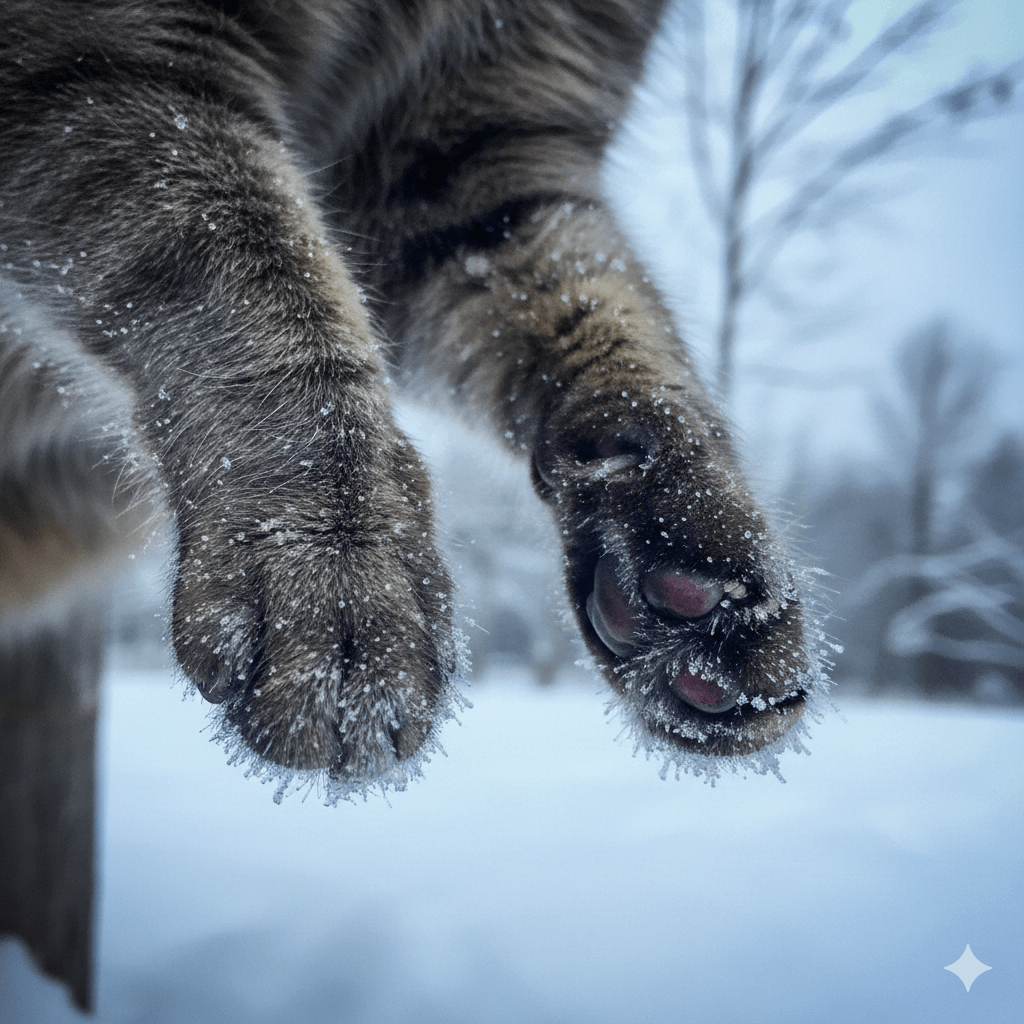
Early Warning Signs of Frostbite on Cat Paws
Frostbite often starts subtly, with changes that are easy to miss unless you inspect your cat’s paws closely. Knowing what to look for in the first hours after cold exposure can make a critical difference:
- Pale, Gray, or Bluish Paw Pads:
Affected tissue loses color due to reduced blood flow—normal pink pads may turn white, gray, or even waxy. - Cold or Brittle-Feeling Paws:
Gently touch your cat’s pads; frostbitten areas feel significantly colder than the rest of the body and may seem stiff. - Swelling or Blistering (Later Stage):
As blood flow returns, inflammation sets in—paws may swell, develop blisters, or become painful to the touch. - Limping or Reluctance to Walk:
Your cat may hold up a paw, walk gingerly, or avoid putting weight on affected limbs due to discomfort. - Excessive Licking of Paws:
Cats often lick injured areas instinctively—this may signal pain or irritation from early tissue damage.
If you suspect frostbite, avoid rubbing the area (which can worsen injury) and seek veterinary care immediately—even if symptoms seem mild.
Check this guide 👉Mast Cell Tumor in Cat Paws: Best 7 Expert Tips!
Check this guide 👉Why Do Cats Cross Their Paws? Best 7 Expert Tips!
Check this guide 👉Horned Paws in Cats: Best 7 Expert Tips!
Immediate Signs to Watch For | Delayed Complications (24–72 Hours) |
|---|---|
Pale or white paw pads | Skin turning black as tissue dies |
Paws feel icy to the touch | Oozing sores or ulcers on pads |
Mild limping | Loss of sensation in toes |
Reduced activity after cold exposure | Secondary bacterial infection |
Hiding or unusual quietness | Sloughing of dead skin or nail loss |
Safe First Aid for Suspected Frostbite
If you notice signs of frostbite, your immediate actions can minimize permanent damage—but improper handling can make things worse. Always prioritize gentle rewarming and professional guidance:
- Bring Your Cat Indoors Immediately:
Move to a warm, draft-free room. Do not use direct heat (like a hair dryer or heating pad), which can burn numb skin. - Warm Paws Gradually with Lukewarm Water:
Use water around 100–102°F (38–39°C)—never hot—and soak paws for 15–20 minutes until color returns. - Dry Gently and Keep Warm:
Pat paws dry with a soft towel, wrap your cat in a warm blanket, and offer a quiet recovery space. - Do NOT Rub or Massage Affected Areas:
This can rupture fragile blood vessels and increase tissue damage. Avoid breaking any blisters that form. - Contact Your Veterinarian Right Away:
Even after rewarming, internal damage may persist. Your vet may prescribe pain relief, antibiotics, or wound care.
Never delay professional evaluation—frostbite can progress silently, and early treatment prevents long-term disability.
Preventing Frostbite in Cats During Winter
Prevention is far more effective than treatment when it comes to frostbite. Simple seasonal adjustments can keep your cat’s paws safe all winter long:
- Limit Outdoor Time in Freezing Weather:
Keep outdoor visits under 10 minutes when temperatures drop below 32°F (0°C), especially with wind chill. - Use Pet-Safe Ice Melt Around Your Home:
Many commercial de-icers contain salts or chemicals that irritate paws and increase frostbite risk—opt for cat-safe alternatives. - Wipe Paws After Every Outdoor Trip:
Remove snow, ice, or chemical residue with a warm, damp cloth to prevent moisture buildup and irritation. - Provide Insulated Outdoor Shelters (for Community Cats):
Use straw (not hay or blankets) in small, windproof boxes placed off the ground to retain body heat. - Consider Indoor-Only Lifestyle in Winter:
Transitioning outdoor cats indoors during extreme cold is the safest way to eliminate frostbite risk entirely.
A few mindful habits can ensure your cat enjoys winter safely—without sacrificing warmth or comfort.
Breeds and Life Stages Most at Risk
While any cat can suffer frostbite, some are biologically or situationally more vulnerable. Understanding these risk profiles helps you tailor protection strategies accordingly:
- Short-Haired or Hairless Breeds:
Sphynx, Devon Rex, and Oriental Shorthairs lack insulating fur, making them highly susceptible even in mildly cold conditions. - Kittens Under 6 Months:
Their thermoregulation systems aren’t fully developed—they lose body heat faster and can’t shiver effectively to warm up. - Senior Cats (10+ Years):
Aging reduces circulation and fat stores, and older cats may not seek shelter due to cognitive decline or arthritis pain. - Outdoor or Feral Cats:
Without access to heated spaces, these cats rely on human-provided shelters, which may be insufficient during deep freezes. - Cats with Preexisting Conditions:
Heart disease, anemia, or endocrine disorders impair blood flow to extremities, heightening frostbite danger.
Extra vigilance for these groups can mean the difference between a close call and a life-threatening emergency.
Long-Term Care After Frostbite Exposure
Even after successful initial treatment, frostbitten paws require ongoing attention to heal properly and avoid complications like infection or chronic pain:
- Follow Veterinary Wound Care Instructions:
This may include topical ointments, bandage changes, or oral antibiotics—never skip doses or remove bandages early. - Monitor for Signs of Infection:
Redness, pus, foul odor, or increased swelling indicate infection and require immediate vet re-evaluation. - Protect Healing Paws from Further Injury:
Use soft bedding, avoid rough surfaces, and consider medical booties if your vet approves. - Adjust Mobility as Needed:
Some cats may limp for weeks; provide low-sided litter boxes and easy access to food, water, and resting spots. - Schedule Follow-Up Appointments:
Tissue damage can evolve over days—your vet may need to reassess healing and decide if dead tissue requires removal.
Full recovery can take weeks to months, but with consistent care, many cats regain full paw function and comfort.
Expert-Backed Prevention Strategies for Frostbite on Cat Paws
Preventing frostbite is always safer and kinder than treating it after the fact. Veterinarians and feline care experts agree that proactive measures—especially during winter months—can fully protect your cat’s delicate paws from freezing injury:
- Create a Winter Paw Inspection Routine:
Check your cat’s paws immediately after any outdoor exposure, even brief trips to the porch or yard, looking for discoloration, ice, or stiffness. - Use Cat-Safe Paw Balm Before Going Out:
Apply a vet-approved balm (like Musher’s Secret or a petroleum-free alternative) to form a protective barrier against ice, salt, and cold. - Avoid Outdoor Access During Extreme Cold Snaps:
When temperatures fall below 20°F (-6°C), keep cats indoors entirely—wind chill can cause frostbite in under 10 minutes. - Install a Heated Outdoor Shelter for Community Cats:
Use safe, thermostatically controlled heating pads under straw bedding to maintain above-freezing temperatures in outdoor cat houses. - Trim Long Fur Between Paw Pads:
Excess hair traps snow and ice, accelerating heat loss—gently trim or comb fur between toes during winter grooming sessions.
By integrating these expert tips into your cold-weather routine, you dramatically reduce the risk of frostbite and keep your cat’s paws healthy, pain-free, and protected all season long.
“Initially, the affected areas may appear pale or bluish and feel very cold to the touch” – Malcolm Weir, DVM, MSc, MPH
Frequently Asked Questions About Frostbite on Cat Paws
Can indoor cats get frostbite?
Yes—if they escape outdoors briefly during extreme cold, especially at night or during storms, they’re at risk due to lack of acclimation.
How long does it take for frostbite to show on cat paws?
Signs may appear within minutes (pale pads) or take several hours to develop fully (swelling, pain)—always inspect after cold exposure.
Is frostbite on cat paws life-threatening?
Not directly, but severe cases can lead to sepsis from infected dead tissue, or necessitate amputation—making prompt care essential.
Can I use human frostbite cream on my cat?
No—many contain ingredients toxic to cats. Only use products specifically prescribed by your veterinarian.
Will my cat lose toes from frostbite?
In severe cases, yes—dead tissue may slough off or require surgical removal, but mild cases often heal without permanent loss.
Keeping Your Cat Safe All Winter Long
Frostbite on cat paws is a stark reminder that winter’s beauty can hide real dangers for our feline companions. Yet with awareness, preparation, and compassion, you can shield your cat from harm while still honoring their curiosity and independence. Whether you’re caring for a pampered indoor pet or supporting a colony of outdoor cats, your actions matter—each wiped paw, each warm shelter, each moment of vigilance builds a safer season for them. Let this knowledge empower you to act swiftly when needed and preventively when possible. After all, those tiny paws carry your cat through life—protecting them is one of the deepest forms of love you can show.

Is Rawhide Bad for Cats? Best 7 Expert Tips! – Discover the risks, safe alternatives, and expert advice to keep your feline friend healthy and happy.

Is Rawhide Bad for Dogs? Best 7 Expert Tips! – Discover the risks, benefits, and safer alternatives to rawhides for your dog’s chewing needs.

Understanding Anorexia in Cats: Best 7 Expert Tips! – Learn why cats stop eating, spot warning signs, and discover how to help your feline regain appetite safely.

Understanding Anorexia in Dogs: Best 7 Expert Tips! – Learn causes, symptoms, and solutions to help your dog regain appetite and stay healthy.