
Understanding Human Allergic Reaction to Cat Saliva
For many cat lovers, discovering they’re allergic to their feline friend can be heartbreaking—especially when the trigger is something as intimate as saliva. Unlike common assumptions that fur is the main culprit, it’s actually proteins in cat saliva that often provoke allergic responses. When cats groom themselves, they spread these allergens across their fur and into the environment, where they linger for weeks. Recognizing symptoms early can help you manage reactions while still sharing your life with a beloved pet. With smart strategies and expert insights, coexistence is not only possible—it can be comfortable and joyful.
Common Symptoms of Allergy to Cat Saliva
Reactions to cat saliva allergens vary widely, from mild irritation to severe respiratory distress. The primary trigger is a protein called Fel d 1, found in saliva, sebaceous glands, and dander. When cats lick their coats, this protein becomes airborne or settles on surfaces, leading to exposure even without direct contact. Watch for these typical signs after being near a cat:
- Sneezing or Runny Nose:
Frequent sneezing, nasal congestion, or a clear, persistent runny nose often appear within minutes of exposure. - Itchy, Watery Eyes:
Redness, swelling, and intense itching in the eyes are hallmark signs of airborne allergen contact. - Skin Rashes or Hives:
Direct contact with cat saliva—such as a lick on the hand—can cause red, raised welts or eczema-like patches. - Coughing or Wheezing:
In sensitive individuals, inhaled allergens may trigger throat irritation, chest tightness, or asthma-like symptoms. - Fatigue or Headaches:
Chronic exposure can lead to sinus pressure, poor sleep, and general malaise due to ongoing inflammation.
While symptoms often mimic seasonal allergies, their consistent link to cat presence helps pinpoint the true cause.
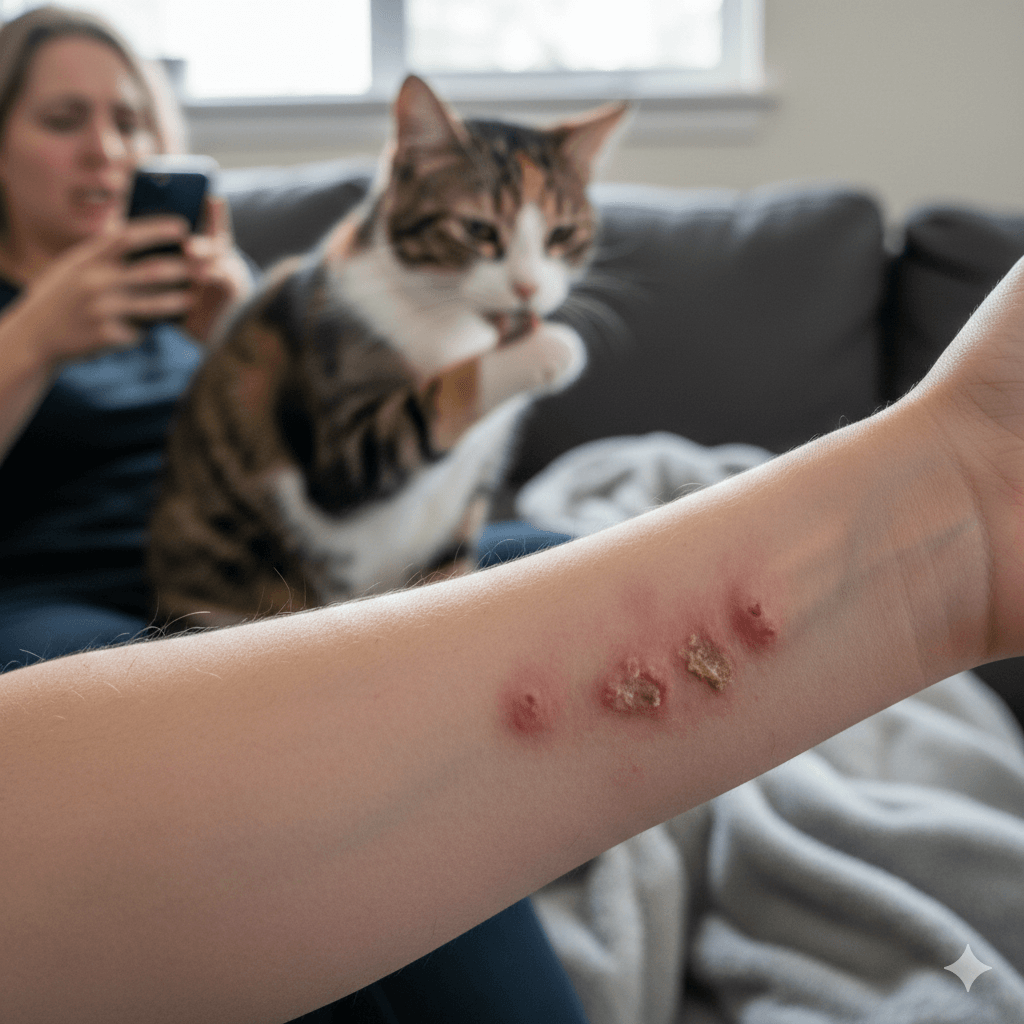
How Cat Saliva Triggers Allergic Reactions
The allergic response isn’t to the saliva itself, but to specific proteins secreted in it—primarily Fel d 1, produced in salivary and sebaceous glands. During grooming, cats transfer these proteins to their fur, which then sheds into the air and onto furniture, bedding, and clothing. Understanding this mechanism clarifies why allergens persist long after the cat is gone:
- Protein Stability:
Fel d 1 is extremely resilient—it can remain active in home environments for months, even after thorough cleaning. - Airborne Transmission:
Tiny allergen particles attach to dust and dander, becoming easily inhalable and spreading throughout the house via airflow. - Direct Contact Risk:
A cat’s lick on skin or face introduces concentrated allergens directly, often causing immediate localized reactions. - Secondary Transfer:
Petting a cat transfers allergens to your hands, which can then spread to your eyes, nose, or other surfaces. - Individual Sensitivity Levels:
Some people react to trace amounts, while others tolerate close contact—genetics and immune history play key roles.
This invisible but pervasive nature makes cat saliva allergies particularly challenging to avoid without proactive measures.
Check this guide 👉Cat Saliva in Eye: Best 7 Expert Tips!
Check this guide 👉Why Is My Cat Drooling Thick Saliva? Best 7 Expert Tips!
Check this guide 👉Is Cat Saliva Antibacterial? Best 7 Expert Tips!
Early Warning Signs | High-Risk Exposure Scenarios |
|---|---|
Mild eye itching after petting a cat | Being licked on the face or hands |
Occasional sneezing in cat-owning homes | Sleeping in a bed a cat regularly uses |
Brief nasal congestion | Wearing clothing exposed to cat dander |
Slight throat tickle | Cleaning litter boxes or brushing cats |
Localized skin redness | Living in poorly ventilated, carpeted spaces with cats |
Diagnosis and Testing Options
If you suspect a cat saliva allergy, confirmation prevents unnecessary pet rehoming and guides effective management. Allergists use reliable methods to identify sensitivities and rule out other triggers like dust mites or pollen:
- Skin Prick Test:
A tiny amount of cat allergen extract is applied to the skin; a raised bump within 15–20 minutes confirms allergy. - Blood Test (sIgE):
Measures levels of specific IgE antibodies to Fel d 1, useful if skin testing isn’t feasible due to medications or skin conditions. - Elimination Trial:
Temporarily avoiding cat contact and monitoring symptom improvement can support clinical diagnosis. - Component Testing:
Advanced tests distinguish between Fel d 1 and other cat proteins, helping predict severity and treatment response. - Environmental Assessment:
Allergists may evaluate your home’s allergen load to tailor personalized reduction strategies.
Accurate diagnosis is the first step toward living comfortably—either with or without feline companions.
Effective Management and Relief Strategies
You don’t have to choose between your health and your love for cats. With consistent, multi-layered approaches, most people significantly reduce symptoms while keeping their pets:
- Create Allergen-Free Zones:
Keep cats out of bedrooms and use HEPA air purifiers to lower airborne protein levels in key living areas. - Wash Hands and Change Clothes:
Always wash after petting a cat, and avoid touching your face until you’ve cleaned your hands thoroughly. - Bathe or Wipe Your Cat Weekly:
Use allergen-reducing pet wipes or gentle shampoos (approved by your vet) to remove saliva residue from fur. - Use HEPA Vacuums and Washable Covers:
Vacuum carpets and upholstery frequently, and opt for leather or tightly woven fabrics that trap fewer allergens. - Consider Allergen-Neutralizing Sprays:
Products that bind to Fel d 1 can reduce its allergenic potential on surfaces and pet fur when used regularly.
Consistency matters more than perfection—small daily habits create cumulative relief over time.
Medical and Immunological Treatment Options
For persistent or severe reactions, clinical interventions offer long-term control and even potential tolerance:
- Antihistamines:
Over-the-counter options like cetirizine or loratadine block histamine release, reducing sneezing, itching, and runny nose. - Nasal Corticosteroids:
Prescription sprays (e.g., fluticasone) decrease nasal inflammation and are more effective for daily symptom control than antihistamines alone. - Allergen Immunotherapy (Allergy Shots):
Gradual, controlled exposure to cat allergens can retrain the immune system, with 70–80% of patients reporting significant improvement over 3–5 years. - Sublingual Immunotherapy (SLIT):
Daily drops or tablets under the tongue offer a needle-free alternative, though availability for cat allergy varies by region. - Emergency Epinephrine (Rare Cases):
In extremely sensitive individuals with anaphylaxis risk—though exceedingly uncommon—carrying epinephrine may be advised.
Work with an allergist to match treatment intensity to your symptom profile and lifestyle goals.
Special Considerations for Children and At-Risk Groups
Kids, pregnant individuals, and those with asthma require tailored approaches, as cat allergies can impact development and respiratory health:
- Early Exposure and Immune Development:
Some studies suggest early childhood cat exposure may reduce allergy risk, but this isn’t guaranteed—genetics play a major role. - Asthma Triggers:
Cat allergens can worsen or provoke asthma attacks; children with both conditions need strict environmental control. - School and Social Settings:
Teach kids to avoid petting unfamiliar cats and to wash hands after playdates in homes with pets. - Pregnancy and Allergy Onset:
Hormonal changes may heighten sensitivity, but cat ownership during pregnancy doesn’t significantly increase baby’s allergy risk. - Elderly or Immune-Compromised Individuals:
While allergies aren’t infectious, secondary infections from poor sleep or chronic inflammation warrant extra caution.
Always involve pediatricians or specialists when managing allergies in vulnerable populations.
Debunking Common Myths About Cat Saliva Allergies
Misinformation can lead to unnecessary stress or ineffective solutions. Let’s clarify what’s true—and what’s not—about feline allergies:
- Myth: Hypoallergenic Cats Don’t Trigger Reactions:
No cat is truly hypoallergenic; breeds like Siberians may produce less Fel d 1, but individual variation is high. - Myth: Short-Haired Cats Are Safer:
Fur length doesn’t determine allergen levels—saliva and dander are the real issues, not hair itself. - Myth: Bathing Cats Eliminates Allergens Completely:
Bathing helps temporarily, but proteins regenerate within days as cats groom themselves again. - Myth: Allergic Reactions Mean You Must Rehome Your Cat:
Most people successfully manage symptoms without rehoming, especially with combined environmental and medical strategies. - Myth: Allergies Only Affect the Respiratory System:
Skin, eyes, and even digestive symptoms (rarely) can occur, especially with direct saliva contact.
Armed with facts, you can make informed, compassionate choices for both your health and your pet’s well-being.
“When it comes to cats, the protein we’re allergic to lasts and lingers for a long time, so that protein doesn’t break down for up to four months. If a family decided to remove a cat from their home environment, or if you visited a family with cats, the protein lingers for four months.”
— Dr. Sandra Hong, MD
Frequently Asked Questions About Human Allergic Reaction to Cat Saliva
Can you be allergic only to a cat’s saliva and not its fur?
Yes—the fur itself isn’t the allergen; it’s the saliva (and dander) transferred onto the fur during grooming that causes reactions.
How long do cat allergens stay in a home after the cat is gone?
Fel d 1 can persist for 4–6 months or longer in carpets, furniture, and dust, even after deep cleaning.
Is it possible to develop a cat allergy later in life?
Absolutely—adult-onset allergies are common, often triggered by increased exposure, immune changes, or environmental shifts.
Do air purifiers really help with cat allergies?
Yes, HEPA-filter purifiers significantly reduce airborne allergens, especially when used in bedrooms and living areas.
Can immunotherapy cure a cat allergy?
While not a “cure,” allergen immunotherapy can induce long-term tolerance, allowing many to live symptom-free with cats.
Living in Harmony Despite Allergies
A cat allergy doesn’t have to mean goodbye to feline companionship. With awareness, smart routines, and modern treatments, millions of people share happy, healthy homes with cats—even when saliva proteins are the hidden trigger. The key lies in respecting your body’s limits while embracing practical solutions that protect both your well-being and your pet’s place in your life. By combining environmental control, medical support, and a dose of patience, you can turn what feels like a barrier into a manageable part of your daily rhythm. After all, love for a cat runs deeper than an allergic reaction—and with the right tools, that love can thrive without compromise.

Is Rawhide Bad for Cats? Best 7 Expert Tips! – Discover the risks, safe alternatives, and expert advice to keep your feline friend healthy and happy.

Is Rawhide Bad for Dogs? Best 7 Expert Tips! – Discover the risks, benefits, and safer alternatives to rawhides for your dog’s chewing needs.

Understanding Anorexia in Cats: Best 7 Expert Tips! – Learn why cats stop eating, spot warning signs, and discover how to help your feline regain appetite safely.

Understanding Anorexia in Dogs: Best 7 Expert Tips! – Learn causes, symptoms, and solutions to help your dog regain appetite and stay healthy.