
Glucosamine for Cats: Best 7 Expert Tips!
Joint health isn’t just a concern for aging dogs—cats need support too, especially as they grow older or face mobility challenges. Glucosamine, a naturally occurring compound found in cartilage, has gained attention as a supplement to promote feline joint comfort and flexibility. While cats are masters at hiding discomfort, subtle changes in movement or behavior may signal underlying joint stress. Understanding how glucosamine works, when it’s beneficial, and how to use it safely empowers you to enhance your cat’s quality of life. With the right guidance, this simple supplement can make a meaningful difference in your feline friend’s daily comfort.
How Glucosamine Supports Feline Joint Health
Glucosamine plays a vital role in maintaining healthy cartilage—the cushioning tissue between bones that allows smooth, pain-free movement. In cats, especially seniors or those with past injuries, natural glucosamine production declines over time, leading to stiffness or reduced agility. Supplementing can help rebuild cartilage, reduce inflammation, and support overall joint resilience:
- Cartilage Repair Support:
Glucosamine provides the building blocks needed to regenerate and maintain healthy cartilage in aging or stressed joints. - Natural Anti-Inflammatory Effects:
It helps modulate the body’s inflammatory response, potentially easing discomfort without the side effects of strong medications. - Improved Mobility Over Time:
Many cat owners notice their pets jump more easily, groom more thoroughly, or walk with greater confidence after consistent use. - Synergy with Other Nutrients:
Often combined with chondroitin and MSM, glucosamine works more effectively as part of a comprehensive joint formula. - Gut-Friendly Absorption:
High-quality feline glucosamine is formulated for easy digestion, minimizing stomach upset even in sensitive cats.
While results may take 4–8 weeks to appear, consistent daily use often leads to noticeable improvements in your cat’s ease of movement and overall demeanor.
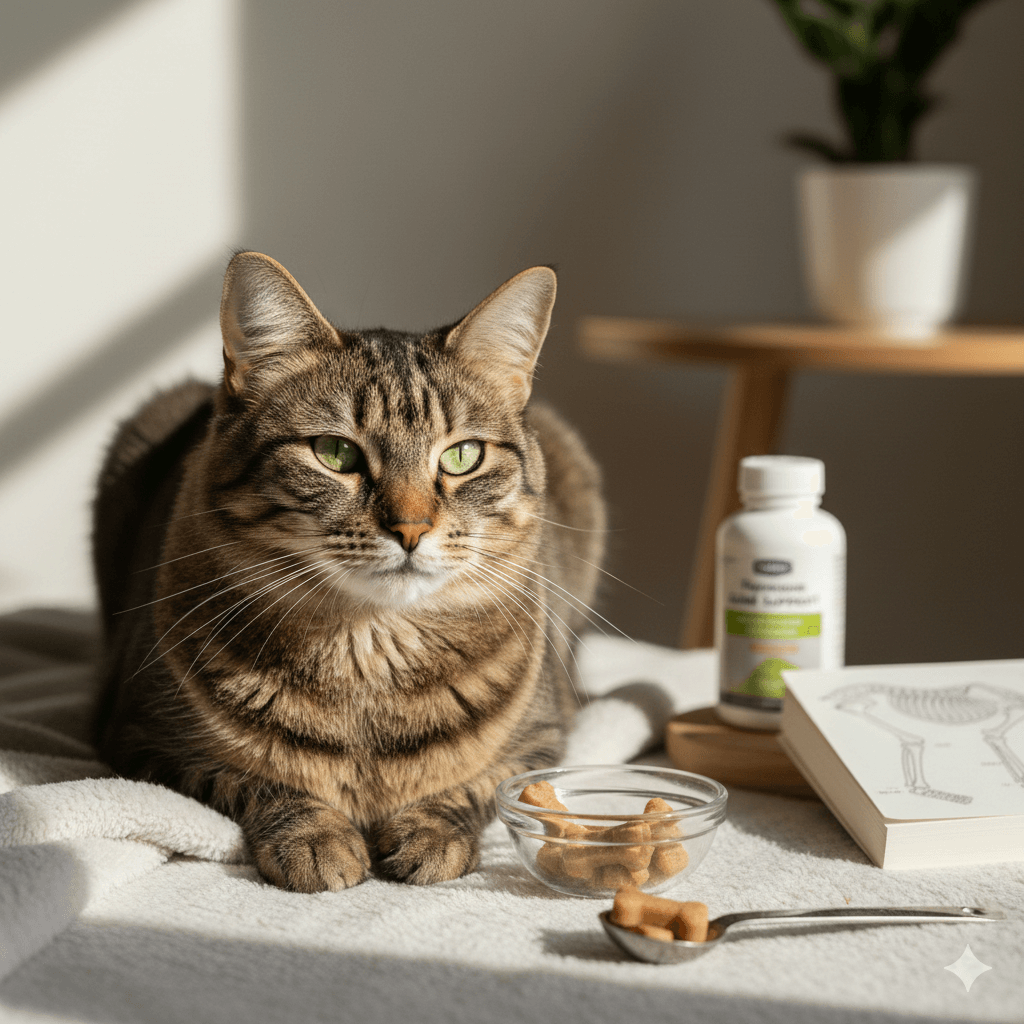
Signs Your Cat May Benefit from Glucosamine
Cats rarely limp or vocalize joint pain, so observing subtle behavioral shifts is key. If your feline companion shows any of these signs, joint support like glucosamine could be worth considering—always under veterinary guidance:
- Reluctance to Jump:
Hesitation or failure to leap onto favorite perches, windowsills, or furniture may indicate discomfort. - Reduced Grooming:
Stiffness in the spine or hips can make it difficult for cats to twist and clean themselves thoroughly, leading to a matted coat. - Changes in Litter Box Habits:
Avoiding the box or eliminating outside it may stem from pain when squatting or climbing into high-sided trays. - Increased Sleeping or Withdrawal:
A cat in discomfort may become less interactive, sleep more, or avoid play sessions they once enjoyed. - Visible Stiffness After Rest:
You might notice your cat moving slowly or gingerly when first getting up, then gradually loosening up.
These quiet cues are your cat’s way of communicating—addressing them early with supportive care like glucosamine can preserve their independence and joy.
Check this guide 👉Ivermectin Dosage for Cats: Best 7 Expert Tips!
Check this guide 👉Fish Oil Dosage for Cats: Best 7 Expert Tips!
Check this guide 👉Chlorhexidine for Cats: Best 7 Expert Tips!
Behavioral Red Flags | Physical Indicators |
|---|---|
Avoiding stairs or high places | Limping (rare but possible) |
Less interest in play | Swollen or warm joints |
Hiding more than usual | Muscle loss around hips or legs |
Vocalizing during movement | Altered sitting or lying posture |
Grooming only easy-to-reach areas | Clicking or grinding sounds in joints |
Types of Glucosamine Supplements for Cats
Not all glucosamine products are created equal—especially when formulated for feline physiology. Choosing the right type ensures safety, palatability, and effectiveness for your sensitive companion:
- Glucosamine Hydrochloride (HCl):
More concentrated than sulfate forms, often preferred for cats due to lower sodium content and better absorption. - Glucosamine Sulfate:
Commonly used in human and dog supplements, but may contain excess salts less suitable for feline kidneys. - Liquid Formulations:
Easy to mix into wet food, ideal for finicky eaters or cats who resist pills—often flavored with chicken or fish. - Chewable or Soft Gels:
Some cats accept these as treats, but many owners find liquids or powders more reliably consumed. - Veterinary-Grade vs. Over-the-Counter:
Vet-recommended brands undergo stricter quality control and are dosed specifically for cats’ smaller systems.
Always choose products labeled specifically for cats—never repurpose dog or human supplements, which may contain unsafe additives like xylitol.
Safety, Dosage, and Potential Side Effects
Glucosamine is generally well-tolerated by cats, but proper dosing and monitoring are essential to avoid adverse reactions—especially in cats with preexisting conditions:
- Typical Dosage Range:
Most feline supplements provide 120–250 mg per day, adjusted by weight and health status—always follow label or vet instructions. - Possible Digestive Upset:
Mild vomiting, diarrhea, or loss of appetite can occur initially; starting with a half dose may help ease tolerance. - Shellfish Allergy Consideration:
Since many glucosamine sources are shellfish-derived, discuss alternatives if your cat has known sensitivities. - Kidney or Liver Disease Caution:
Cats with compromised organ function should only use glucosamine under veterinary supervision due to metabolic processing. - Drug Interactions:
While rare, glucosamine may interact with blood thinners or certain diabetes medications—disclose all treatments to your vet.
When introduced carefully and monitored, glucosamine offers a low-risk, high-reward option for supporting long-term feline mobility.
Integrating Glucosamine Into Your Cat’s Daily Routine
Consistency is key—glucosamine works cumulatively, so daily administration yields the best outcomes. Making it part of your cat’s routine ensures they receive steady support without stress:
- Mix with Wet Food:
The most reliable method—stir liquid or powder into a small portion of their favorite pâté or stew. - Use a Pill Pocket (If Necessary):
For tablet forms, hide in a feline-specific treat, though many cats detect and reject disguised pills. - Administer at the Same Time Daily:
Link it to a regular event like morning feeding to build a habit and prevent missed doses. - Monitor for Palatability Issues:
If your cat suddenly avoids food, try a different flavor or brand—some are more appealing than others. - Track Behavioral Changes:
Keep a simple journal noting activity levels, grooming habits, and litter box use to assess progress over weeks.
Patience and routine turn supplementation from a chore into a quiet act of care that your cat will feel in their joints—and show in their renewed zest for life.
Complementary Approaches to Feline Joint Wellness
Glucosamine shines brightest when paired with other joint-supportive strategies. A holistic approach addresses mobility from multiple angles, enhancing overall well-being:
- Maintain a Healthy Weight:
Excess pounds strain joints—feed measured portions and encourage gentle play to keep your cat lean and agile. - Provide Low-Impact Exercise:
Wand toys, slow chases, or food puzzles stimulate movement without high-impact jumping or twisting. - Optimize Home Accessibility:
Install ramps, steps, or low-sided litter boxes to reduce strain on aging joints during daily activities. - Warm, Supportive Bedding:
Orthopedic or memory foam beds offer cushioning that eases pressure on hips and spine during rest. - Omega-3 Fatty Acids:
Fish oil supplements (cat-safe doses) add anti-inflammatory support that complements glucosamine’s effects.
Together, these practices create a nurturing environment where your cat can move freely, comfortably, and with dignity at any age.
Why Glucosamine Works Best as Part of a Long-Term Wellness Plan
Glucosamine isn’t a quick fix—it’s a foundational element of ongoing joint care for cats, especially as they age or face mobility challenges. When viewed as part of a lifelong strategy rather than a temporary remedy, its benefits multiply through synergy with daily habits and preventive health practices:
- Cumulative Cartilage Support:
Glucosamine builds and maintains joint tissue over time, meaning consistent use yields better results than sporadic dosing. - Early Intervention Pays Off:
Starting supplementation in middle age (7+ years) can delay the onset of stiffness, even before obvious symptoms appear. - Enhanced Quality of Life:
Cats with healthier joints groom more effectively, explore their environment with confidence, and maintain independence longer. - Reduced Reliance on Medications:
By supporting natural joint function, glucosamine may lessen the need for stronger anti-inflammatories that carry more risks. - Peace of Mind for Owners:
Knowing you’re proactively supporting your cat’s mobility allows you to enjoy their golden years without constant worry about hidden pain.
Treating glucosamine as a daily ritual—like feeding or brushing—embeds it into a compassionate, forward-looking approach to feline wellness.
“Glucosamine/chondroitin is a dietary supplement you can give your dog or cat to help treat osteoarthritis. Glucosamine is an anti-inflammatory and helps your pet’s joints make cartilage, while chondroitin prevents their cartilage from breaking down and also helps their body produce more cartilage.” – Kathleen Claussen
Frequently Asked Questions About Glucosamine for Cats
Can I give my cat human glucosamine?
No—human formulas often contain xylitol, excessive sodium, or dosages unsafe for cats. Always use feline-specific products.
How long before I see results from glucosamine?
Most cats show improvement in 4 to 8 weeks, though some may take up to 12 weeks for full effects to become noticeable.
Is glucosamine safe for young cats?
Generally reserved for seniors or cats with joint issues, but may be used preventively in high-risk breeds or post-injury under vet guidance.
Can glucosamine help with arthritis in cats?
Yes—it’s a cornerstone of managing feline osteoarthritis by supporting cartilage health and reducing inflammation.
What if my cat refuses the supplement?
Try different forms (liquid vs. powder), mix with highly aromatic foods, or ask your vet about compounded flavored versions.
Nurturing Your Cat’s Comfort, One Joint at a Time
Your cat’s quiet grace masks a deep need for physical ease—something glucosamine can gently restore. By recognizing subtle signs of stiffness and responding with thoughtful, science-backed support, you honor your feline companion’s dignity and joy. Mobility isn’t just about movement; it’s about access to favorite sunbeams, the confidence to leap, and the freedom to express natural behaviors. With consistent care, the right supplement, and a home adapted to their changing needs, your cat can thrive well into their golden years. In the soft purr that follows a pain-free stretch, you’ll know you’ve given them one of the greatest gifts: comfort in their own body.

Is Rawhide Bad for Cats? Best 7 Expert Tips! – Discover the risks, safe alternatives, and expert advice to keep your feline friend healthy and happy.

Is Rawhide Bad for Dogs? Best 7 Expert Tips! – Discover the risks, benefits, and safer alternatives to rawhides for your dog’s chewing needs.

Understanding Anorexia in Cats: Best 7 Expert Tips! – Learn why cats stop eating, spot warning signs, and discover how to help your feline regain appetite safely.

Understanding Anorexia in Dogs: Best 7 Expert Tips! – Learn causes, symptoms, and solutions to help your dog regain appetite and stay healthy.