
Understanding Cat Brain Capacity: Best 7 Expert Tips!
Cats are often admired for their grace, independence, and mysterious behavior—but how much of that stems from their brain power? While smaller than a human’s, a cat’s brain is remarkably complex and efficient. Understanding feline brain capacity reveals insights into their learning, memory, and emotional depth. Though your cat may not solve algebra, they excel at spatial reasoning, social cues, and adaptive survival skills. Exploring the science behind their cognition helps deepen your bond and meet their mental needs.
Feline Brain Anatomy and Structure
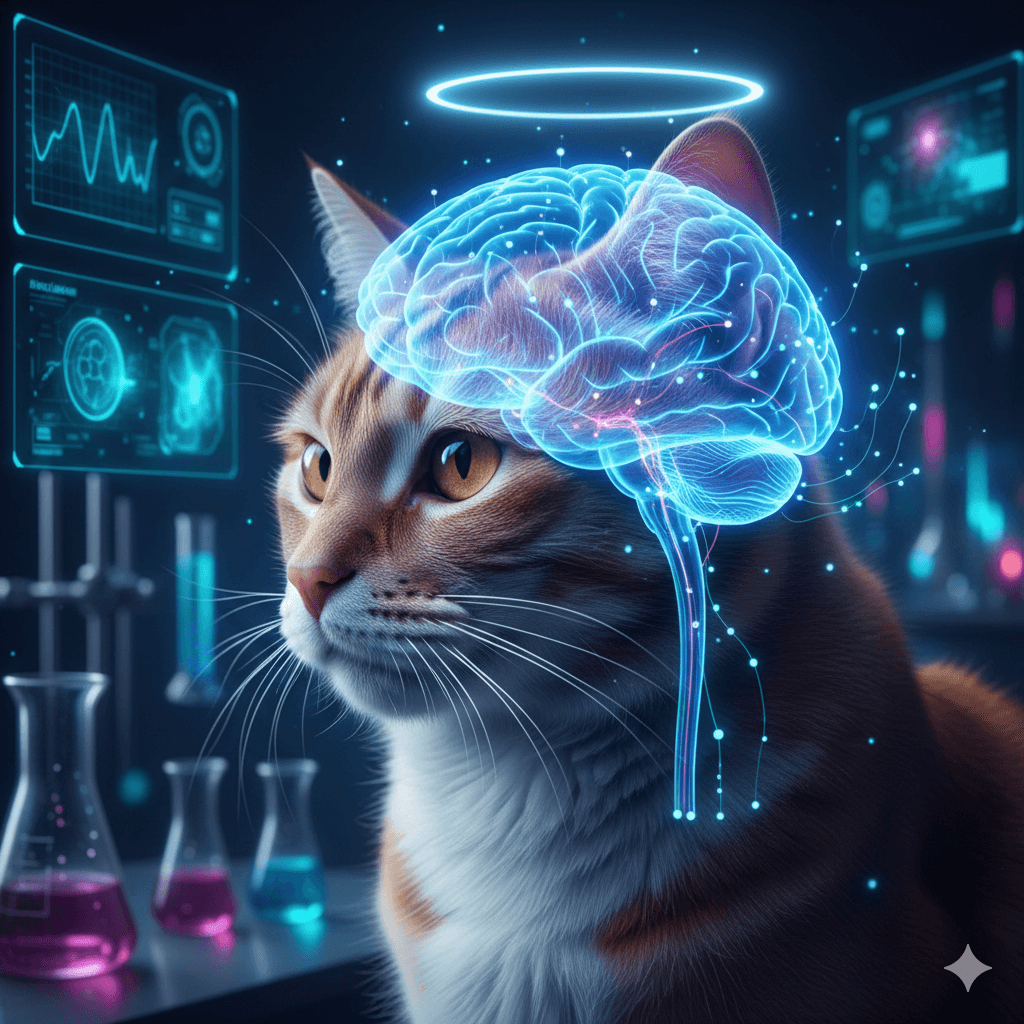
A cat’s brain, while only about the size of a walnut, shares striking structural similarities with the human brain—especially in areas governing emotion and memory. This sophisticated neural architecture enables behaviors far beyond basic instinct. Key features include well-developed cerebral cortices and specialized sensory processing centers that support their hunting prowess and social awareness:
- Cerebral Cortex Complexity:
The cortex governs problem-solving and decision-making; in cats, it contains about 250 million neurons—more than dogs or rabbits. - Highly Developed Cerebellum:
This region fine-tunes balance, coordination, and precise motor control, essential for pouncing and navigating narrow ledges. - Limbic System for Emotions:
Cats experience fear, joy, and attachment through a limbic system analogous to ours, though expressed more subtly. - Visual and Auditory Processing Centers:
Over 30% of their brain processes sight and sound, allowing them to detect the faintest rustle or rapid movement. - Olfactory Bulb Integration:
While less dominant than in dogs, their sense of smell still links strongly to memory and social recognition.
This compact yet powerful brain design allows cats to adapt quickly to changing environments while maintaining emotional depth often underestimated by owners.
Cognitive Abilities Compared to Other Animals
When evaluating cat intelligence, direct comparisons to dogs or primates can be misleading—cats excel in different cognitive domains shaped by their evolutionary path as solitary hunters. Their brain capacity supports a unique blend of independence, observational learning, and sensory acuity rather than obedience-based tasks:
- Problem-Solving Skills:
Cats can navigate mazes, open simple latches, and remember solutions for months—demonstrating spatial memory rivaling rodents. - Object Permanence Understanding:
By 6 months, kittens grasp that hidden objects still exist, a cognitive milestone once thought exclusive to primates. - Social Learning Through Observation:
Kittens learn hunting techniques and litter use by watching their mothers, not just through trial and error. - Memory Retention:
Cats recall familiar people, routines, and locations for years, especially when tied to emotional or survival relevance. - Emotional Intelligence:
They recognize human moods through tone and facial cues, often adjusting behavior in response—like offering quiet companionship.
While they may not fetch on command, cats display a quiet, strategic intelligence finely tuned to their ecological niche and social bonds.
Check this guide 👉Understanding Cat Brain Scans: Best 7 Health Tips!
Check this guide 👉How Big Are Cat Brains? Best 7 Expert Tips!
Check this guide 👉Cat Ear Infection Spread to Brain: Best 7 Expert Tips!
Cognitive Strengths | Common Misconceptions |
|---|---|
Exceptional spatial memory | “Cats aren’t trainable” – they learn differently |
Strong associative learning | “Cats don’t feel love” – they bond deeply, just subtly |
Rapid environmental adaptation | “Cats are aloof” – they observe before engaging |
Long-term episodic recall | “Cats act on pure instinct” – they use reasoning |
Sensory-driven decision-making | “Cats are less intelligent than dogs” – different, not lesser |
How Brain Size Relates to Intelligence
Brain size alone doesn’t determine intelligence—what matters more is neuron density, connectivity, and specialized regions. A cat’s brain weighs only 25–30 grams (about 1% of body weight), yet its neural efficiency rivals much larger animals. This compact design supports agility without sacrificing cognitive power:
- Neuron Density Over Volume:
Despite small size, cats pack neurons densely in key areas like the visual cortex and motor control centers. - Brain-to-Body Ratio:
Their ratio is comparable to that of chimpanzees and significantly higher than many domestic mammals. - Energy Efficiency:
The feline brain uses minimal energy for maximum output, ideal for an animal evolved to conserve resources. - Specialized Neural Pathways:
Unique wiring supports whisker-to-brain communication for real-time 3D environmental mapping. - Evolutionary Optimization:
Millions of years as ambush predators shaped a brain prioritizing stealth, timing, and sensory integration.
Thus, a cat’s intelligence isn’t reflected in brain bulk but in how elegantly it processes information critical to survival and social nuance.
Emotional and Social Intelligence
Contrary to the myth of the solitary cat, feline brains are wired for nuanced social interaction—especially with trusted humans and feline companions. Their emotional intelligence manifests through subtle cues, long-term bonds, and context-aware responses:
- Attachment Behaviors:
Securely bonded cats show separation anxiety and greet owners with purring, head-butts, or slow blinks. - Empathetic Responses:
Many cats mirror human emotions—curling up when you’re sad or retreating when you’re agitated. - Recognition of Individual Voices:
Studies show cats distinguish their owner’s voice from strangers, even if they choose not to respond overtly. - Conflict Avoidance Strategies:
They use body language (flattened ears, tail flicks) to de-escalate tension rather than confront directly. - Social Memory:
Cats remember positive and negative interactions with specific people or animals for months or years.
This emotional depth stems from a limbic system that processes feelings much like ours—just expressed through a quieter, more reserved language.
Enriching Your Cat’s Cognitive Health
Just like humans, cats thrive mentally when challenged and stimulated. Environmental enrichment isn’t just “fun”—it’s essential for neural plasticity, stress reduction, and preventing cognitive decline in aging cats:
- Interactive Puzzle Feeders:
These mimic hunting by requiring problem-solving to access food, engaging memory and dexterity. - Vertical Space and Climbing Structures:
High perches stimulate spatial awareness and provide mental security through environmental control. - Novel Toys with Rotation:
Introducing new textures, sounds, or scents prevents boredom and maintains curiosity-driven learning. - Gentle Training Sessions:
Clicker training for simple commands (sit, high-five) builds focus and strengthens human-cat communication. - Safe Outdoor Exposure (e.g., Catio):
Controlled outdoor access offers rich sensory input that activates multiple brain regions simultaneously.
A mentally engaged cat is not only happier but also less prone to stress-related behaviors like overgrooming or aggression.
Special Considerations for Aging Cats
As cats age, their brain undergoes natural changes that can affect memory, learning, and behavior—similar to cognitive decline in elderly humans. Recognizing early signs allows you to adapt their environment and support neural health proactively:
- Cognitive Dysfunction Syndrome (CDS):
Affects over 50% of cats over 15; symptoms include disorientation, litter box accidents, or altered sleep cycles. - Reduced Neuroplasticity:
Older brains adapt slower, so sudden changes in routine or environment can cause confusion or anxiety. - Sensory Decline Impact:
Hearing or vision loss may be mistaken for “stubbornness” when it’s actually the brain receiving less input. - Dietary Support Needs:
Antioxidants (vitamin E, C), omega-3s, and medium-chain triglycerides can support aging brain function. - Gentle Mental Stimulation:
Short, familiar games or scent trails help maintain neural pathways without overwhelming senior cats.
With patience and tailored care, many older cats maintain sharp minds well into their golden years.
Fun Facts About Cat Brain Capacity That Might Surprise You
Beyond their sleek movements and quiet dignity, cats harbor fascinating neurological quirks that reveal just how extraordinary their minds truly are. Their brain structure supports behaviors that blend instinct with intelligence in ways scientists are still unraveling. Here are some lesser-known, science-backed insights into feline cognition:
- Dreams Include Real-Life Experiences:
Studies using EEG scans show cats replay hunting sequences during REM sleep—paws twitching as if chasing invisible prey. - Brain Folding Similar to Humans:
Despite its small size, a cat’s cerebral cortex has surface folds (gyri and sulci) that increase processing power—much like in primates. - They Recognize Human Emotions by Voice Alone:
Cats can distinguish between happy, angry, or sad tones in their owner’s voice, even without visual cues. - Memory Spans Can Last Years:
Cats remember people, places, and routines associated with strong emotions or rewards for up to 10 years or more. - They Use “Theory of Mind” in Subtle Ways:
Research suggests cats understand that others have intentions—like waiting for you to open a door they can’t manage alone.
These surprising traits highlight that your cat isn’t just reacting—they’re observing, remembering, and even anticipating, all with the quiet brilliance of a natural-born strategist.
“I believe the absolute number of neurons an animal has, especially in the cerebral cortex, determines the richness of their internal mental state and their ability to predict what is about to happen in their environment based on past experience.” – Suzana Herculano-Houzel
Frequently Asked Questions About Cat Brain Capacity
Do cats have better memory than dogs?
Cats excel in long-term associative memory (e.g., remembering a dangerous location for years), while dogs often outperform in short-term social recall—but direct comparison isn’t meaningful due to different evolutionary priorities.
Can cats recognize their names?
Yes—studies confirm cats distinguish their name from other words, though they may choose not to respond based on mood or perceived relevance.
How many neurons do cats have?
Approximately 250 million cortical neurons—less than humans (16 billion) but more than dogs (~160 million) in key reasoning areas.
Do cats dream?
Absolutely. During REM sleep, brain activity mirrors waking states, suggesting they replay experiences like hunting or playing.
Are some cat breeds smarter than others?
Intelligence varies more by individual than breed, though highly interactive breeds like Siamese or Bengals often display more overt problem-solving behaviors.
Nurturing the Quiet Genius of Your Feline Companion
Your cat’s brain may be small in size, but its capacity for emotion, memory, and adaptive intelligence is profound. By understanding the science behind their cognition, you move beyond stereotypes of aloofness and appreciate the thoughtful, observant creature sharing your home. Whether they’re solving a puzzle toy, recalling your footsteps from across the house, or offering silent comfort on a hard day, your cat is constantly processing the world with remarkable depth. Honor their mental needs through enrichment, routine, and respectful interaction—and you’ll unlock a richer, more connected relationship. After all, the quiet intelligence of a cat isn’t about performing tricks; it’s about thriving with grace in a complex world, one thoughtful blink at a time.

Is Rawhide Bad for Cats? Best 7 Expert Tips! – Discover the risks, safe alternatives, and expert advice to keep your feline friend healthy and happy.

Is Rawhide Bad for Dogs? Best 7 Expert Tips! – Discover the risks, benefits, and safer alternatives to rawhides for your dog’s chewing needs.

Understanding Anorexia in Cats: Best 7 Expert Tips! – Learn why cats stop eating, spot warning signs, and discover how to help your feline regain appetite safely.

Understanding Anorexia in Dogs: Best 7 Expert Tips! – Learn causes, symptoms, and solutions to help your dog regain appetite and stay healthy.