
Portuguese Dog Breeds: Best 7 Expert Tips!
Portugal’s rugged coastlines and pastoral hills have given rise to resilient, intelligent, and loyal dog breeds shaped by centuries of work and companionship. From water-loving retrievers to steadfast guardians, these native dogs reflect the soul of Portuguese heritage. Whether you’re drawn to their striking looks, versatile talents, or affectionate nature, understanding their origins and needs is key. These breeds are more than just pets—they’re living pieces of Iberian history. Let’s explore the seven essential insights every enthusiast should know.
Origins and History of Portuguese Dog Breeds
Portuguese dog breeds evolved in close partnership with farmers, fishermen, and herders, adapting to the country’s diverse climates and demanding lifestyles. Their development was driven by function, not fashion, resulting in hardy, versatile canines. These breeds often remained isolated in rural regions, preserving their genetic authenticity for generations. Below are defining historical traits that shaped them:
- Tied to Maritime Culture:
Many Portuguese breeds, like the Cão de Água (Water Dog), worked alongside fishermen, retrieving nets and herding fish into boats along the Atlantic coast. - Rural Farming Roots:
Breeds such as the Rafeiro do Alentejo were bred as livestock guardians in southern Portugal’s open plains, protecting flocks from wolves and thieves. - Royal and Noble Patronage:
Some breeds gained favor among Portuguese nobility; the Portuguese Pointer, for instance, was refined in royal hunting estates during the Renaissance. - Geographic Isolation:
Mountainous terrain and regional traditions helped preserve distinct types—like the Estrela Mountain Dog—without significant outside crossbreeding. - Near-Extinction and Revival:
Several breeds, including the Portuguese Sheepdog, dwindled during industrialization but were revived by dedicated breeders in the 20th century.
These historical roles still echo in their instincts, energy levels, and temperament—making them uniquely suited for purpose-driven homes today.
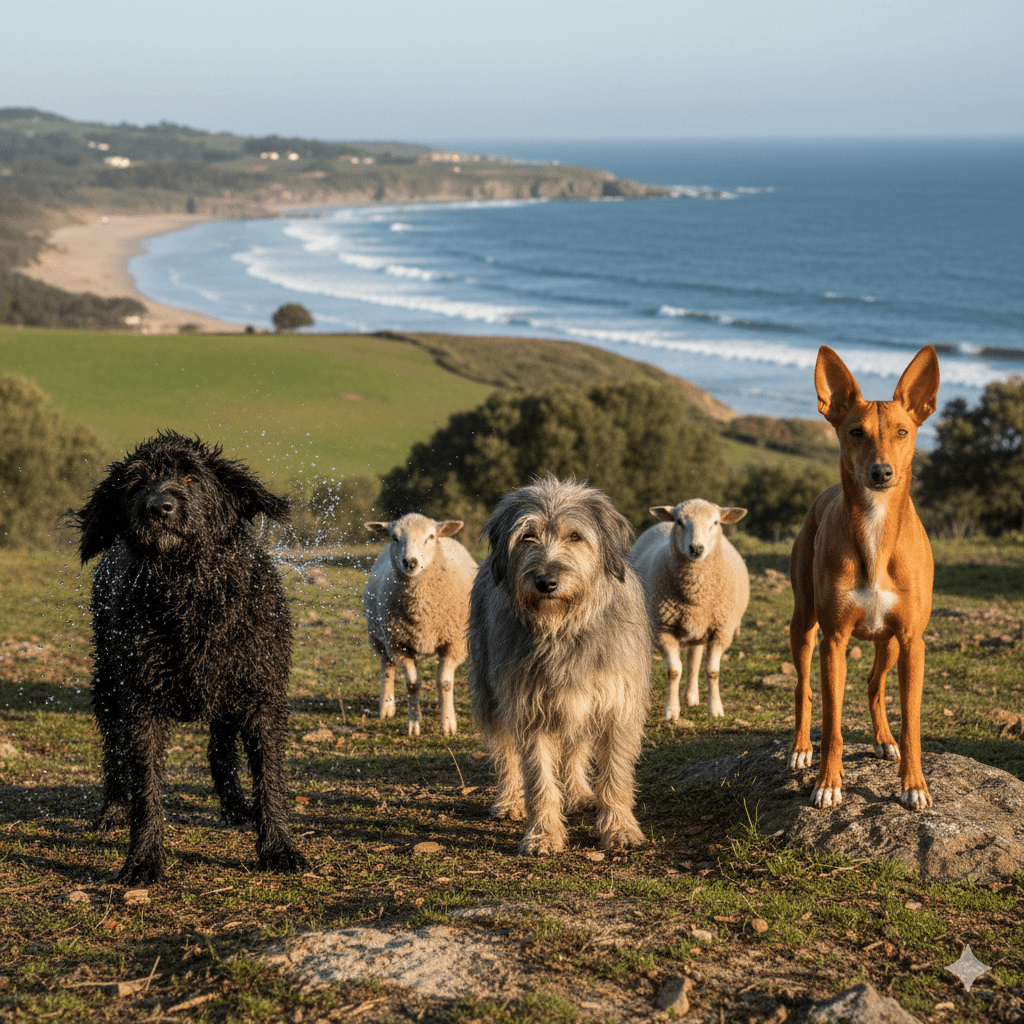
Distinctive Physical Traits Across Portuguese Breeds
While diverse, Portuguese native breeds share certain rugged, functional characteristics honed by centuries of outdoor work. Their coats, builds, and expressions reflect adaptation rather than aesthetic trends. Here’s what sets their appearance apart:
- Dense, Weather-Resistant Coats:
Most have double coats—either long or wiry—that shield against rain, sun, and cold in Portugal’s varied regions, from coastal cliffs to inland mountains. - Strong, Balanced Builds:
Athletic yet sturdy, these dogs are built for endurance—whether herding, guarding, or swimming—never overly bulky or fragile. - Almond-Shaped, Intelligent Eyes:
Expressive eyes convey alertness and calm confidence, often in amber or dark brown, complementing their watchful nature. - Natural, Undocked Tails:
Portuguese breeds typically retain their full tails, often carried low or with a gentle curve, used for balance and communication. - Distinctive Coat Variations:
The Portuguese Water Dog comes in both curly and wavy coats, while the Estrela may be short or long—each suited to regional conditions.
These physical traits aren’t just charming—they’re practical adaptations that contribute to the breed’s health and performance.
Check this guide 👉Swedish Dog Breeds: Best 7 Expert Tips!
Check this guide 👉Cuban Dog Breeds: Best 7 Expert Tips!
Check this guide 👉Understanding Norwegian Dog Breeds: Best 7 Expert Tips!
Working Instincts | Care & Compatibility Needs |
|---|---|
Strong herding or guarding drive | Require early socialization to prevent overprotectiveness |
High trainability with consistent leadership | Need mental challenges to avoid boredom |
Natural affinity for water (in some breeds) | Regular grooming essential, especially for double-coated types |
Loyalty to family, reserved with strangers | Thrive in active homes with space to roam |
Low prey drive in guardians, moderate in hunters | Not ideal for apartment living without ample exercise |
Temperament and Behavioral Characteristics
Portuguese breeds are renowned for their loyalty, intelligence, and steady demeanor—traits forged through generations of close human cooperation. They bond deeply with their families but aren’t overly needy, striking a balance between devotion and independence. Key temperament traits include:
- Calm Confidence:
These dogs rarely panic; instead, they assess situations with quiet assurance—ideal for both guarding and companionship. - Protective but Not Aggressive:
Bred as guardians, they’re naturally watchful and will alert to strangers, but well-socialized individuals are rarely hostile without cause. - Strong Work Ethic:
Whether herding sheep or retrieving gear from boats, they thrive when given tasks—idle time can lead to frustration or mischief. - Deep Bond with Family:
They form intense attachments and prefer to be near their people, often following them from room to room like gentle shadows. - Reserved with New People:
While not shy, they take time to warm up—making early, positive exposure to varied people and environments essential.
Their temperament makes them excellent for experienced owners who value a thoughtful, reliable partner over a high-energy entertainer.
Grooming and Maintenance Needs
Despite their rugged origins, many Portuguese breeds require consistent grooming to stay healthy and comfortable. Their dense coats trap dirt, moisture, and debris—especially in working or outdoor settings. Proper care prevents skin issues and keeps them looking their best:
- Regular Brushing is Essential:
Double-coated breeds like the Estrela Mountain Dog need brushing 2–3 times weekly; increase during seasonal shedding. - Bathing Based on Lifestyle:
Water dogs may need more frequent baths if swimming often, while guardians may only require occasional cleansing. - Ear and Nail Attention:
Floppy-eared breeds (e.g., Portuguese Water Dog) are prone to infections—check weekly and clean as needed. - Coat Trimming for Function, Not Fashion:
Traditional trims (like the lion cut for Water Dogs) served practical purposes—remove excess hair around paws and tail base for hygiene. - Dental and Skin Checks:
Include oral care and skin inspections during grooming sessions to catch early signs of irritation or dental disease.
Consistent grooming isn’t just cosmetic—it’s a vital part of health monitoring and bonding with your Portuguese-bred dog.
Training and Socialization Essentials
These intelligent, independent breeds respond best to positive, consistent methods that respect their dignity. Harsh corrections backfire; instead, build trust through clarity and rewards. Early socialization is non-negotiable, especially for guardian types. Key strategies include:
- Start Socialization Early:
Expose puppies to diverse people, sounds, and environments before 16 weeks to prevent wariness or reactivity. - Use Positive Reinforcement:
They thrive on praise, play, and food rewards—never force or intimidation, which can shut down their cooperation. - Incorporate Mental Challenges:
Puzzle toys, scent games, or obedience drills engage their problem-solving minds and prevent boredom. - Establish Clear Leadership:
These dogs need a calm, confident guide—they won’t respect inconsistency or permissiveness. - Channel Instincts Productively:
Teach herding breeds controlled fetch or treibball; guardians can excel in watchdog or rally obedience roles.
With the right approach, Portuguese breeds become not just obedient, but eager, intuitive partners in daily life.
Health Considerations and Longevity
Generally robust, Portuguese native breeds benefit from centuries of natural selection—but responsible ownership still requires awareness of potential health issues. Most enjoy long lives (10–14 years) with proper care. Key concerns include:
- Hip and Elbow Dysplasia:
Larger breeds like the Estrela and Rafeiro may inherit joint issues—screen breeding stock and maintain healthy weight. - Eye Conditions:
Some lines carry risks for PRA (progressive retinal atrophy) or cataracts; annual vet eye exams are wise. - Allergies and Skin Sensitivities:
Dense coats can hide hot spots or yeast infections—watch for scratching, redness, or odor. - Bloat (Gastric Dilatation-Volvulus):
Deep-chested breeds should eat smaller meals and avoid vigorous exercise around feeding times. - Genetic Diversity Advantages:
Many Portuguese breeds avoided extreme inbreeding, contributing to overall hardiness compared to some modern purebreds.
Preventive care, quality nutrition, and regular vet check-ups help ensure these heritage dogs live full, vibrant lives.
Ideal Living Environments and Lifestyle Fit
Portuguese breeds are not “one-size-fits-all” pets—they flourish best in homes that honor their instincts and energy. While adaptable, they thrive under specific conditions that match their historical roles. Consider these lifestyle factors:
- Need for Space and Purpose:
Most do best in rural or suburban settings with fenced yards; apartment living is possible only with intense daily exercise. - Incompatible with Passive Owners:
They require engaged, active families who enjoy hiking, training, or outdoor work—not those seeking a couch companion. - Strong Cold and Heat Tolerance:
Their coats protect in varied climates, but all dogs need shelter, fresh water, and shade in extremes. - Excellent with Livestock or Active Families:
Guardian breeds bond protectively with children or animals they’re raised with—making them superb farm or homestead partners. - Travel and Routine Sensitivity:
While loyal, they can be sensitive to chaotic environments; gradual acclimation helps them adapt to travel or new routines.
Matching your lifestyle to their innate needs is the secret to a harmonious, lifelong relationship with these noble dogs.
“Portuguese Podengos are lively, agile, playful, alert, highly intelligent but not always easy to train, independent yet loving with the family and sometimes suspicious of strangers.”
Frequently Asked Questions About Portuguese Dog Breeds
Are Portuguese dog breeds good with children?
Yes—especially when raised together. Breeds like the Estrela and Water Dog are naturally protective and gentle with family kids, though supervision is always wise.
Do they shed a lot?
It varies: the Portuguese Water Dog is low-shedding (hypoallergenic), while the Estrela and Rafeiro have heavy seasonal shedding requiring regular grooming.
Are they easy to train?
They’re intelligent and eager to please but can be independent. Consistent, positive training from puppyhood yields excellent results.
Can they live in hot climates?
Yes—with precautions. Their coats insulate against heat, but they need shade, water, and limited midday activity in very hot regions.
Where can I find a reputable breeder?
Look for breeders affiliated with national clubs (e.g., Clube Português de Canicultura) who health-test parents and prioritize temperament over looks.
Embracing the Legacy of Portugal’s Noble Canines
Portuguese dog breeds carry the spirit of a seafaring, pastoral nation in their steady eyes and resilient hearts. More than just beautiful or rare, they are living testaments to centuries of human-canine partnership rooted in trust, work, and loyalty. To bring one into your home is to welcome not just a pet, but a guardian, a companion, and a piece of cultural heritage. With the right care, training, and respect for their nature, these remarkable dogs reward you with unwavering devotion and quiet courage. Let their legacy continue—not in museums, but in loving homes where their instincts are honored and their bonds cherished.

Is Rawhide Bad for Cats? Best 7 Expert Tips! – Discover the risks, safe alternatives, and expert advice to keep your feline friend healthy and happy.

Is Rawhide Bad for Dogs? Best 7 Expert Tips! – Discover the risks, benefits, and safer alternatives to rawhides for your dog’s chewing needs.

Understanding Anorexia in Cats: Best 7 Expert Tips! – Learn why cats stop eating, spot warning signs, and discover how to help your feline regain appetite safely.

Understanding Anorexia in Dogs: Best 7 Expert Tips! – Learn causes, symptoms, and solutions to help your dog regain appetite and stay healthy.