
Understanding Bernese Mountain Dog Energy Level
Gentle, loyal, and famously calm, the Bernese Mountain Dog carries a quiet strength that endears them to families worldwide. Despite their large size, they’re not high-energy sprinters but steady, affectionate companions who thrive on moderate activity. Understanding their natural energy rhythm helps owners provide the right balance of exercise, rest, and mental engagement. While they enjoy walks and play, these Swiss giants also love lounging at your feet after a fulfilling day. Matching your lifestyle to their relaxed pace ensures a happy, healthy life together.
Origins and Historical Working Role
Originally bred in the Swiss Alps, Bernese Mountain Dogs were versatile farm helpers whose energy was carefully calibrated for endurance, not bursts of speed. Their calm demeanor and steady stamina made them ideal for draft work, herding, and guarding—tasks requiring reliability over hours, not minutes. This heritage still shapes their modern temperament and daily needs:
- Draft and Cart-Pulling Heritage:
Bred to pull milk carts to market, they developed strong, sustained energy suited for steady, low-impact work over long periods. - Mountain Farm Adaptation:
Life in rugged terrain favored dogs with efficient movement and calm resilience, not frantic activity or hyper-alertness. - All-Day Companionship Role:
On farms, they worked alongside humans all day—neither idle nor overstimulated—creating a balanced activity baseline. - Selective Breeding for Temperament:
Swiss farmers prioritized calm, trainable dogs who conserved energy, avoiding nervous or overly excitable traits. - Seasonal Work Patterns:
Their energy naturally aligned with farm cycles—more active in planting/harvest seasons, quieter in winter—instilling natural rhythm.
This thoughtful working origin explains why Berners are naturally moderate in drive and deeply content with predictable, peaceful routines.
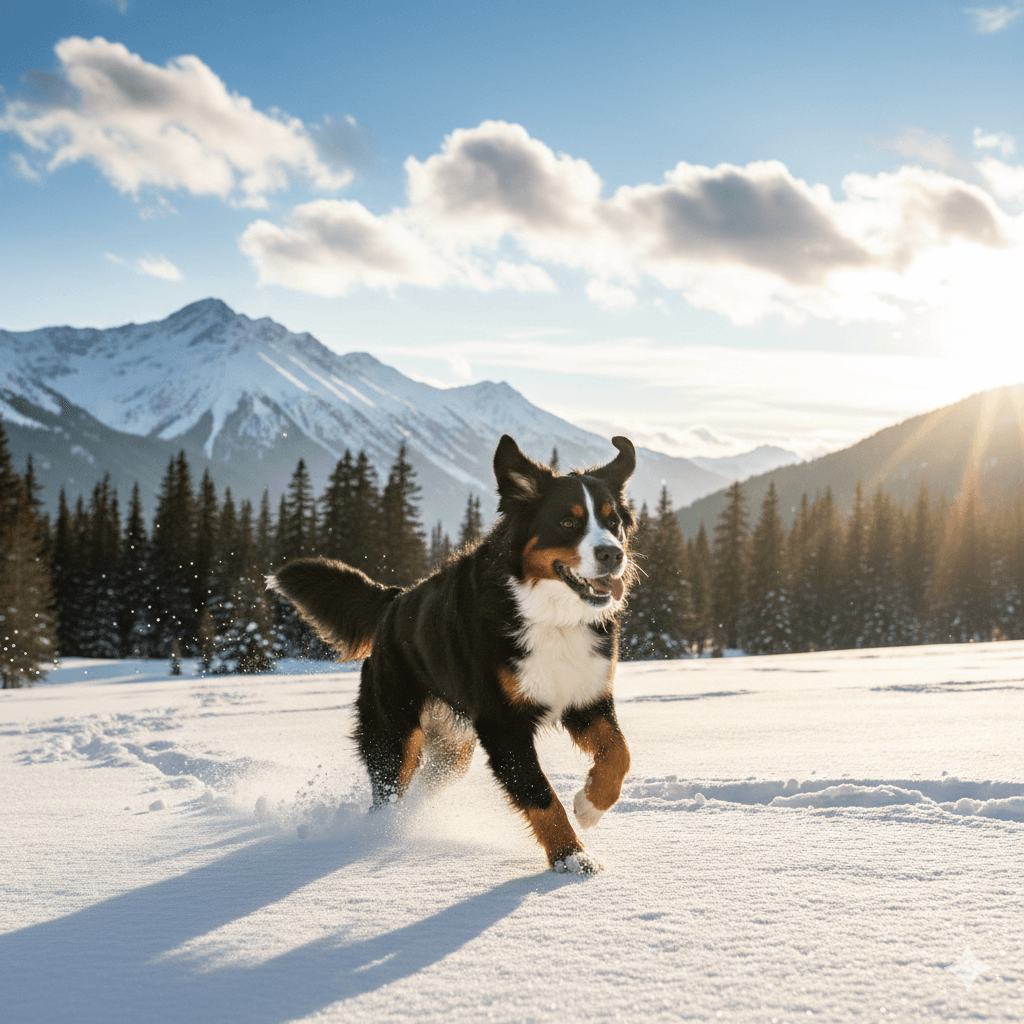
Distinctive Physical Traits Influencing Energy
Their powerful build and thick double coat directly impact how Bernese Mountain Dogs move, rest, and regulate energy. These physical traits aren’t just aesthetic—they’re functional adaptations that shape daily activity needs:
- Heavy Bone Structure and Musculature:
Their substantial frame supports strength but limits high-impact or prolonged intense exercise, especially in heat. - Dense Double Coat:
Designed for alpine cold, this insulation makes them prone to overheating, naturally discouraging excessive exertion in warm weather. - Large Size and Growth Rate:
Rapid puppy growth (often 80+ lbs by maturity) requires careful exercise management to protect developing joints and conserve energy. - Low Center of Gravity:
Their broad, stable build favors walking and pulling over leaping or sprinting—ideal for calm, grounded movement. - Facial Structure and Breathing:
While not brachycephalic, their broad head and moderate muzzle mean they’re less efficient at cooling during intense activity.
These physical realities make the Berner naturally inclined toward calm, purposeful movement rather than endless play or high-energy antics.
Check this guide 👉Dogs Similar to Bernese Mountain Dog: Best 7 Expert Tips!
Check this guide 👉Bernese Mountain Dog Weight: Best 7 Expert Tips!
Check this guide 👉Bernese Mountain Dog Poodle Mix: Best 7 Expert Tips!
Temperament Highlights | Care Considerations |
|---|---|
Affectionate and people-oriented | Needs daily moderate exercise (30–60 min) |
Calm indoors, even as puppies | Avoid strenuous activity in hot/humid weather |
Enjoys gentle play and walks | Mental stimulation prevents boredom-related lethargy |
Thrives on routine and predictability | Monitor weight—obesity drastically lowers energy |
Naturally unhurried and observant | Respect rest periods; they’re not built for marathons |
Daily Exercise Needs and Ideal Routines
Bernese Mountain Dogs flourish with consistent, moderate activity that matches their endurance-based energy. They don’t need vigorous runs but do require daily movement to stay mentally and physically healthy:
- Morning and Evening Walks:
Two 20–30 minute walks at a relaxed pace satisfy their need for exploration and routine without overexertion. - Leisurely Hikes or Trail Time:
They adore slow, scenic hikes on cool days—especially with pauses to sniff, rest, and bond with you. - Gentle Play Sessions:
Tug-of-war, soft fetch with lightweight toys, or backyard romps for 10–15 minutes keep them engaged without strain. - Draft or Cart Work (Optional):
Some Berners enjoy historical activities like light cart-pulling, which channels their natural strength in a controlled, satisfying way. - Consistency Over Intensity:
A predictable daily routine—same walk times, same play rituals—helps regulate their energy and reduces anxiety.
Regular, low-intensity movement keeps their joints supple, mood bright, and weight stable without pushing their physical limits.
Energy Level Changes Across Life Stages
A Berner’s energy isn’t static—it evolves dramatically from puppyhood to senior years, requiring adaptable care at every phase:
- Puppy Stage (2–12 months):
Bursty but brief energy spikes; needs short, frequent play (5–10 min) with ample naps—never forced long walks. - Adolescence (1–2 years):
Slight increase in stamina, but still clumsy; focus on obedience and controlled socialization over endurance. - Prime Adulthood (2–5 years):
Peak physical condition—calm, reliable energy ideal for hiking, cart work, or family outings. - Mature Years (6–8 years):
Gradual slowdown; may skip play some days, prefer quiet walks, and seek more comfort time indoors. - Senior Stage (8+ years):
Energy declines noticeably; short potty walks and gentle indoor interaction become the norm.
Understanding these shifts prevents over- or under-exercising your dog at any age, supporting lifelong joint and heart health.
Mental Stimulation vs. Physical Exertion
While not hyperactive, Berners need mental engagement to stay emotionally fulfilled—boredom can lead to low-energy depression or destructive chewing. Mental challenges often matter more than extra walks:
- Food Puzzle Toys:
Slow feeders or treat-dispensing puzzles turn meals into brain games, satisfying curiosity without physical strain. - Basic Obedience Practice:
Daily 5-minute training sessions (sit, stay, leave-it) build confidence and strengthen your bond through calm focus. - Scent Games:
Hide treats in grass or use a snuffle mat to engage their natural tracking instincts in a low-energy way. - Novel Walk Routes:
Changing scenery—even slightly—provides mental refreshment without increasing physical demand. - Calm Interaction Time:
Simply sitting with you while you read or garden fulfills their need for companionship, which recharges their emotional battery.
For Berners, a peaceful mind often leads to balanced physical energy—proof that “busy” doesn’t always mean “active.”
Health Factors That Impact Energy
Underlying health issues can significantly alter a Berner’s natural energy baseline. Because they tend to hide discomfort, sudden lethargy or reduced activity often signals medical concern:
- Hip and Elbow Dysplasia:
Extremely common in the breed; causes stiffness, reluctance to move, or slower gait—often mistaken for “just getting lazy.” - Obesity:
Extra weight dramatically reduces stamina and increases joint stress, making even short walks feel exhausting. - Heat Intolerance:
Their thick coat and size make them vulnerable to overheating, causing them to shut down activity long before they’re truly “tired.” - Cancer Risk (High in Berners):
This breed has elevated cancer rates; unexplained fatigue can be an early warning sign requiring vet evaluation. - Hypothyroidism:
A common endocrine disorder in Berners that leads to lethargy, weight gain, and dull coat—easily managed with medication.
Regular vet check-ups and attentive observation help distinguish normal calmness from illness-related energy decline.
Common Misconceptions About Bernese Mountain Dog Energy
Many people assume large breeds are either lazy couch potatoes or tireless working machines—but the Bernese Mountain Dog defies both stereotypes. Their energy level is nuanced, shaped by history, physiology, and temperament. Clearing up myths helps owners set realistic expectations and provide truly supportive care:
- “They’re low-energy, so they don’t need daily walks.”
While calm indoors, Berners still require consistent daily movement to maintain joint health, mental balance, and emotional well-being. - “They can handle long hikes because they’re big.”
Their size and coat make them prone to overheating and joint stress—extended or intense exercise, especially in warm weather, can be harmful. - “If they’re not bouncing around, something’s wrong.”
Berners are naturally composed; their default state is relaxed alertness, not exuberance. Quiet contentment is normal, not a red flag. - “Puppies should be energetic all day.”
Berner puppies have short bursts of play followed by long naps. Forcing constant activity risks bone and joint damage during rapid growth. - “Older Berners just get lazy.”
A sudden drop in activity may signal pain (often from arthritis or dysplasia), not laziness—early vet assessment is crucial for quality of life.
Understanding these truths ensures your Bernese Mountain Dog lives not just longer, but more joyfully, in alignment with their true nature.
Frequently Asked Questions About Bernese Mountain Dog Energy Level
Are Bernese Mountain Dogs good for apartment living?
Yes—if given daily walks and mental engagement. Their calm indoor nature suits apartments, but they still need outdoor time.
Do Berners need a fenced yard?
Highly recommended. While not escape artists, they enjoy safe space to amble, sniff, and relax outdoors without leashing stress.
Can Berners hike or backpack with me?
Yes, on cool days and moderate trails. They’re not built for long, steep, or hot hikes—always carry water and watch for overheating.
Why does my Berner sleep so much?
It’s normal! Adults sleep 12–14 hours daily. Their energy is conserved for meaningful activity, not constant motion like high-drive breeds.
Will my Berner play fetch for hours?
Unlikely. Most enjoy a few gentle rounds but prefer calm interaction or rest over repetitive, high-energy games.
Living in Harmony with Your Berner’s Natural Rhythm
Embracing the Bernese Mountain Dog’s gentle energy isn’t about managing a limitation—it’s about celebrating a profound gift. In a world full of speed and noise, their calm presence offers steady companionship, quiet loyalty, and unhurried affection. They don’t demand marathons or agility trials; they ask only for walks hand-in-paw, shared naps in sunbeams, and the dignity of a pace that honors their sturdy, sweet nature. By aligning your expectations with their authentic rhythm, you unlock a deeply fulfilling partnership—one built on trust, respect, and peaceful coexistence. Let their serene energy remind you that sometimes, the most powerful bond is found not in motion, but in stillness together.

Is Rawhide Bad for Cats? Best 7 Expert Tips! – Discover the risks, safe alternatives, and expert advice to keep your feline friend healthy and happy.

Is Rawhide Bad for Dogs? Best 7 Expert Tips! – Discover the risks, benefits, and safer alternatives to rawhides for your dog’s chewing needs.

Understanding Anorexia in Cats: Best 7 Expert Tips! – Learn why cats stop eating, spot warning signs, and discover how to help your feline regain appetite safely.

Understanding Anorexia in Dogs: Best 7 Expert Tips! – Learn causes, symptoms, and solutions to help your dog regain appetite and stay healthy.