
Laser Therapy for Cats: Best 7 Expert Tips!
Laser therapy is gaining popularity as a gentle, non-invasive treatment for a range of feline health issues—from arthritis to wound healing. Many cat owners are discovering its potential to reduce pain, accelerate recovery, and improve their pet’s quality of life without drugs or surgery. While it may sound high-tech, therapeutic laser is safe, painless, and often well-tolerated by even the most anxious cats. With proper veterinary guidance, it can be a valuable part of your cat’s care plan. Here’s what every cat parent should know before considering this innovative therapy.
How Laser Therapy Works for Feline Patients
Laser therapy uses specific wavelengths of light to stimulate cellular activity in targeted tissues. This process, known as photobiomodulation, enhances circulation, reduces inflammation, and triggers natural healing mechanisms. Unlike surgical lasers that cut or burn, therapeutic lasers emit low-level energy that penetrates skin and muscle without causing discomfort or damage.
- Cellular Regeneration Boost:
Laser energy increases ATP production in cells, helping damaged tissues repair faster and more efficiently. - Pain Signal Reduction:
It modulates nerve sensitivity, decreasing the transmission of pain signals to the brain—ideal for chronic conditions like osteoarthritis. - Improved Blood Flow:
The therapy dilates blood vessels, enhancing oxygen and nutrient delivery to injured or inflamed areas. - Anti-Inflammatory Effects:
Laser treatment reduces pro-inflammatory cytokines, lowering swelling and stiffness in joints or soft tissues. - Lymphatic Drainage Support:
It encourages fluid movement through the lymphatic system, helping reduce edema and speed recovery after injury.
This biological cascade creates a healing environment at the cellular level—without sedation, incisions, or side effects commonly seen with medications.
Common Conditions Treated with Laser Therapy
Veterinarians increasingly recommend laser therapy for both acute injuries and long-term ailments, especially in senior or medically sensitive cats. Its versatility makes it suitable for a wide array of conditions where pain, inflammation, or slow healing are concerns:
- Osteoarthritis and Joint Pain:
One of the most common uses—laser therapy eases stiffness and improves mobility in aging cats with degenerative joint disease. - Post-Surgical Recovery:
After procedures like dental extractions or spays, laser sessions can minimize swelling and accelerate incision healing. - Dental Diseases:
It helps manage pain and inflammation from gingivitis or stomatitis, often reducing reliance on long-term anti-inflammatories. - Skin Wounds or Ulcers:
Laser stimulates tissue repair in traumatic injuries, lick granulomas, or non-healing sores, including those linked to autoimmune conditions. - Neurological Issues:
Cats with nerve damage or mild paralysis (e.g., from intervertebral disc disease) may benefit from improved nerve regeneration.
While not a cure-all, laser therapy offers meaningful relief and functional improvement for many feline patients when used as part of a comprehensive plan.
Check this guide 👉Physical Therapy for Cats: Best 7 Expert Tips!
Check this guide 👉How to Register a Therapy Cat: Best 7 Expert Tips!
Check this guide 👉Chiropractic for Cats: Best 7 Expert Tips!
Benefits for Cats | What Owners Should Know |
|---|---|
Non-invasive and pain-free | Sessions typically last 5–15 minutes |
No known serious side effects | Requires multiple treatments for chronic issues |
Reduces need for medications | Eye protection is used for safety |
Well-tolerated by stressed cats | Not all clinics offer feline-specific protocols |
Improves daily comfort and mobility | Costs vary—often $40–$100 per session |
What to Expect During a Laser Therapy Session
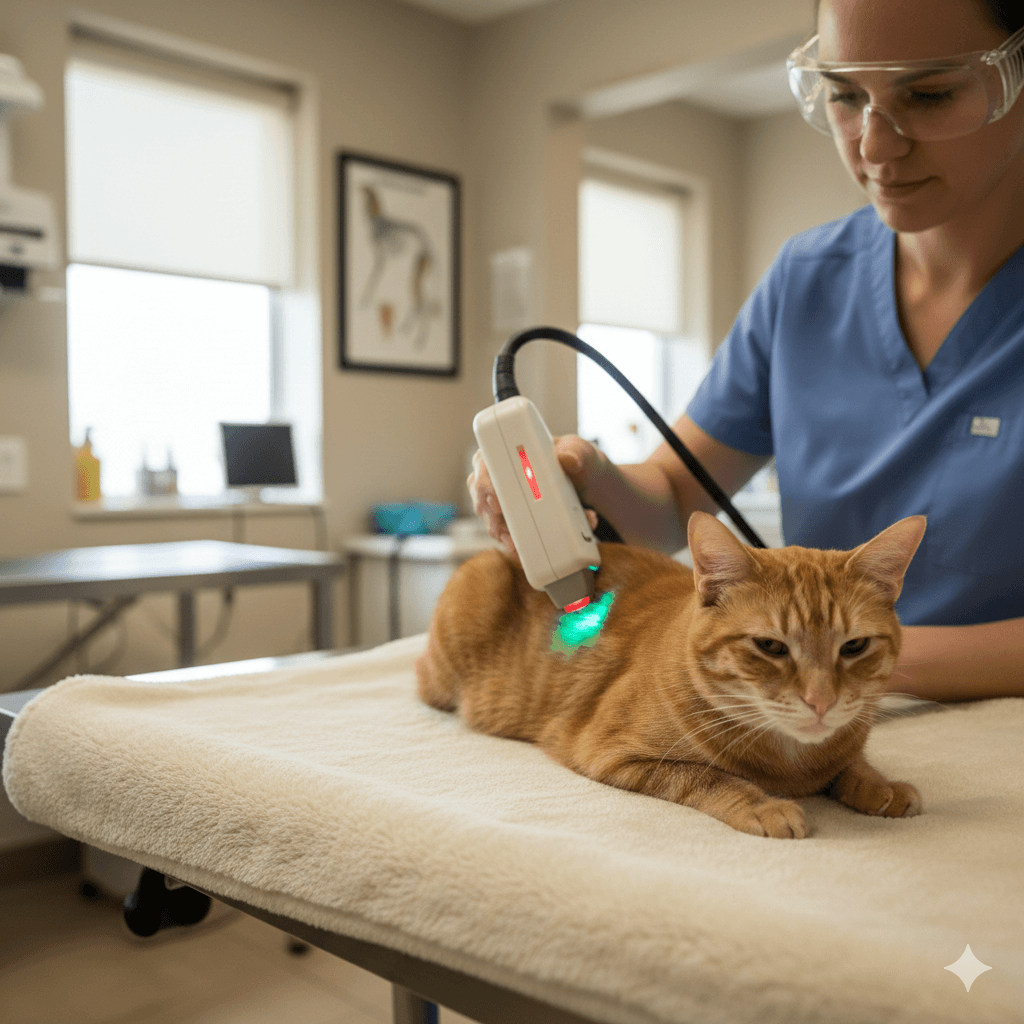
Most cats remain calm during treatment, often purring or dozing as the handheld device gently glides over their fur. No shaving or restraint is usually needed, making it far less stressful than injections or imaging. Your veterinary team will ensure a quiet, comfortable environment to keep your cat relaxed throughout.
- Initial Consultation First:
A full exam ensures laser therapy is appropriate—some cancers or active infections may be contraindications. - No Sedation Required:
The procedure is completely non-invasive, and most cats accept it willingly, especially with treats or gentle handling. - Eye Protection Provided:
Both staff and your cat wear special goggles to block reflected laser light—a safety standard, not a sign of risk. - Warm, Tingling Sensation (If Any):
Some cats feel mild warmth, but there’s no pain, heat, or sound that typically startles them. - Immediate Return Home:
There’s no recovery time—your cat can eat, play, and rest normally right after the session.
Many owners are surprised by how effortlessly their cats accept the treatment—often perceiving it as a soothing massage rather than medical care.
Treatment Protocols and Frequency Guidelines
The number and spacing of sessions depend on whether the condition is acute (recent) or chronic (long-standing). Your vet will design a tailored plan based on your cat’s diagnosis, age, and response to therapy. Consistency is key to achieving optimal results.
- Acute Injuries (e.g., sprains, bites):
Typically treated daily or every other day for 3–5 sessions to control inflammation and speed healing. - Chronic Conditions (e.g., arthritis):
Often start with 2–3 weekly sessions for 2–4 weeks, then taper to maintenance (e.g., once every 2–4 weeks). - Post-Op Healing:
Usually scheduled on days 1, 3, and 7 after surgery to support tissue repair and reduce pain. - Dental or Oral Inflammation:
May require weekly treatments for 4–6 weeks, especially in refractory stomatitis cases. - Long-Term Management:
Many senior cats benefit from monthly “tune-up” sessions to maintain comfort and mobility over time.
Skipping sessions or stopping too early can reduce effectiveness—so follow your vet’s recommended schedule closely.
Safety Considerations and Rare Contraindications
Laser therapy is exceptionally safe when performed by trained professionals using veterinary-grade devices. However, certain situations warrant caution or avoidance to protect your cat’s health and ensure ethical care standards.
- Avoid Over Malignant Tumors:
Laser energy may theoretically stimulate cancer cell activity, so it’s avoided directly over known tumors. - Pregnancy Precaution:
Though not proven harmful, lasers are generally not used over the abdomen of pregnant cats as a conservative measure. - Thyroid Area Caution:
Some vets avoid direct application over the neck/thyroid due to theoretical hormonal interaction risks. - Use Only Vet-Approved Devices:
Human “cold laser” gadgets lack calibration for animal tissue depth and can be ineffective or unsafe. - Monitor for Overuse:
Excessive sessions won’t speed healing—and may irritate tissues—so always follow prescribed protocols.
When administered correctly, therapeutic laser has an excellent safety profile with no documented long-term adverse effects in cats.
Maximizing Results at Home Between Sessions
Your role at home significantly influences how well your cat responds. Supporting their therapy with thoughtful daily care enhances cellular healing and overall well-being during the treatment period and beyond.
- Maintain a Stress-Free Environment:
Minimize loud noises, unfamiliar visitors, or changes in routine that can trigger inflammation or pain flares. - Encourage Gentle Movement:
Short, calm play or assisted standing helps circulation—just avoid overexertion after a session. - Provide Easy Access to Essentials:
Place food, water, litter box, and resting spots on one level to reduce painful jumping or climbing. - Continue Prescribed Medications:
Unless directed otherwise, don’t stop pain meds abruptly—laser often complements, not replaces, them initially. - Track Behavioral Changes:
Note improvements in grooming, jumping, or litter box posture to share with your vet for plan adjustments.
Small, consistent efforts at home amplify the biological benefits of each laser treatment—helping your cat feel better, faster.
Why Laser Therapy Is Gaining Trust Among Feline Veterinarians
More veterinary clinics are integrating laser therapy into their feline care protocols—and for good reason. Its evidence-backed benefits, combined with cats’ natural aversion to stress and medication, make it a uniquely suited modality for this sensitive species. From improving surgical outcomes to enhancing senior cat comfort, laser therapy aligns with the growing emphasis on gentle, holistic pet care.
- Science-Backed Healing Mechanism:
Decades of research support photobiomodulation’s role in accelerating tissue repair and reducing inflammation at the cellular level. - Medication-Sparing Approach:
Especially valuable for cats with kidney or liver disease who can’t tolerate long-term NSAIDs or steroids. - Stress-Reduced Treatment Experience:
Unlike injections or handling for wound care, laser sessions are quiet, non-restrictive, and often calming for anxious cats. - Versatility Across Life Stages:
Effective for kittens recovering from trauma, adults with dental pain, and seniors managing chronic arthritis—all with the same safe protocol. - Growing Clinical Adoption:
Leading veterinary schools and specialty hospitals now include laser therapy in pain management guidelines for feline patients.
As veterinary medicine evolves toward more compassionate, individualized care, laser therapy stands out as a tool that respects both the biology and the behavioral needs of cats.
Frequently Asked Questions About Laser Therapy for Cats
Is laser therapy painful for cats?
No—it’s completely painless. Most cats relax or even fall asleep during the session, feeling only slight warmth if anything.
How soon will I see results?
Acute issues may improve after 1–2 sessions; chronic conditions like arthritis often show noticeable changes by the 3rd or 4th treatment.
Can laser therapy replace pain medication?
In some cases, yes—especially for mild arthritis. But many vets use it alongside reduced medication doses for better, safer control.
Is it safe for elderly cats?
Absolutely. In fact, seniors benefit greatly because it avoids drugs that strain the liver or kidneys.
Do I need a special vet for this?
Look for a clinic with certified veterinary laser practitioners and experience treating cats specifically—feline protocols differ from dogs.
A Brighter, More Comfortable Future for Your Feline Friend
Laser therapy represents a compassionate leap forward in feline medicine—offering relief without pills, injections, or stress. For cats who hide their pain or react poorly to medications, it can be life-changing. By reducing inflammation and awakening the body’s innate healing power, it helps your cat move more freely, sleep more deeply, and enjoy the simple pleasures of daily life again. Whether managing age-related stiffness or speeding recovery from an injury, this gentle technology puts your cat’s comfort first. With expert guidance and your loving support, laser therapy may just be the missing piece in your pet’s wellness journey—giving them more golden moments of purring, playing, and peaceful rest.

Is Rawhide Bad for Cats? Best 7 Expert Tips! – Discover the risks, safe alternatives, and expert advice to keep your feline friend healthy and happy.

Is Rawhide Bad for Dogs? Best 7 Expert Tips! – Discover the risks, benefits, and safer alternatives to rawhides for your dog’s chewing needs.

Understanding Anorexia in Cats: Best 7 Expert Tips! – Learn why cats stop eating, spot warning signs, and discover how to help your feline regain appetite safely.

Understanding Anorexia in Dogs: Best 7 Expert Tips! – Learn causes, symptoms, and solutions to help your dog regain appetite and stay healthy.