

How Long a Dog Bite Takes to Get Infected: Best 7 Expert Tips!

How Long a Dog Bite Takes to Get Infected: Best 7 Expert Tips!

Understanding How Long a Dog Bite Takes to Get Infected: Best 7 Expert Tips!


A dog bite—whether from your own pet or a stray—can seem minor at first but may quickly turn serious if infection sets in. While not every bite leads to complications, bacteria from a dog’s mouth or the environment can invade broken skin within hours. Knowing the typical infection timeline helps you act fast and protect your dog’s health. With prompt care and careful monitoring, most bites heal without issue. Here’s what every dog owner should know about the infection window and how to respond wisely.

Typical Infection Timeline After a Dog Bite


Infection doesn’t always happen immediately, but the risk begins the moment skin is broken. Most bacterial infections develop within 24 to 72 hours, though some may appear as early as 12 hours or as late as 5 days. Early signs are subtle, so close observation is crucial during this window:

 
  • First 6–12 Hours:
    The wound may look clean but is already exposed to bacteria like Pasteurella, Staphylococcus, or Streptococcus from the dog’s mouth or surrounding skin.
     
  • 12–24 Hours:
    Mild redness, warmth, or slight swelling may emerge—early inflammation, not necessarily infection yet.
     
  • 24–48 Hours:
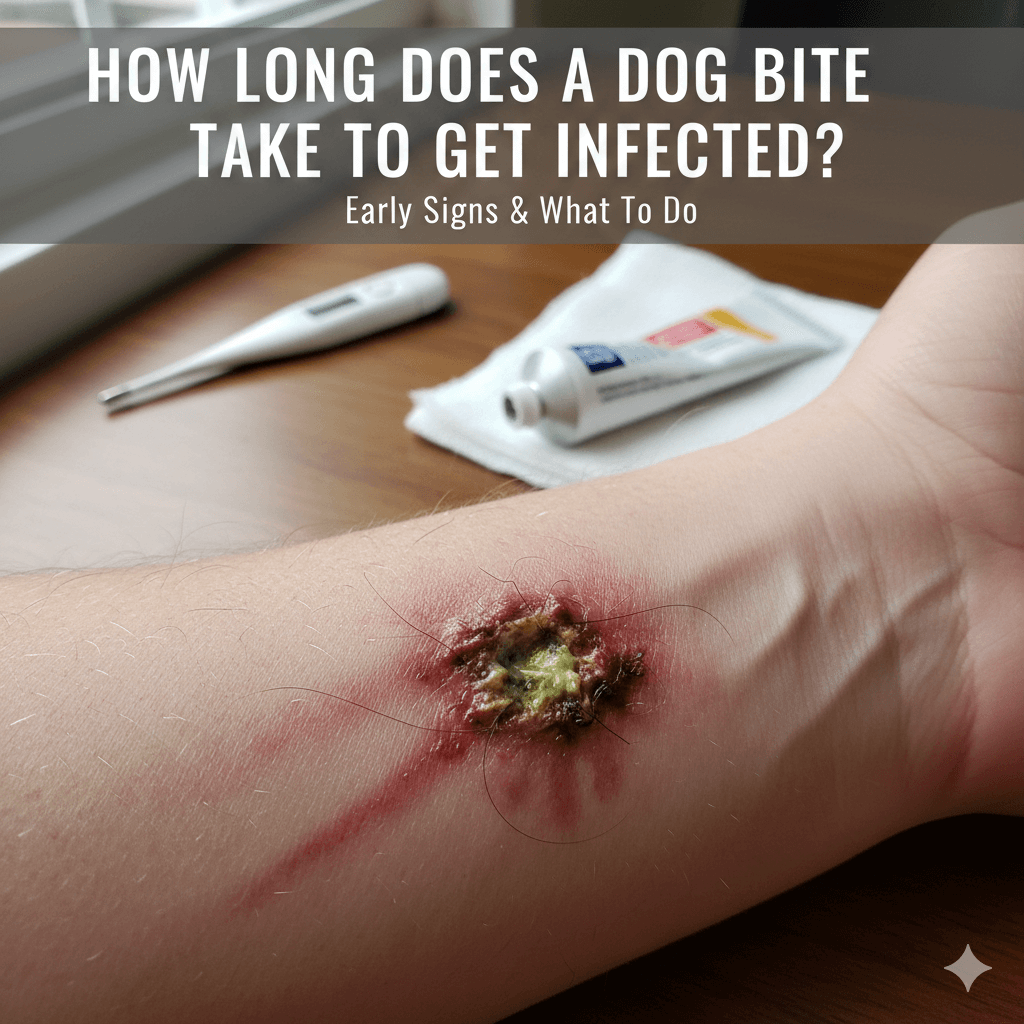
    This is the most common window for clear infection signs: increased redness, pus, pain, or oozing fluid.
     
  • 48–72 Hours:
    If untreated, infection can spread deeper, causing fever, lethargy, or swollen lymph nodes near the bite site.
     
  • Beyond 72 Hours:
    Delayed infections (e.g., from Capnocytophaga) are rare but possible, especially in immunocompromised dogs or deep puncture wounds.
 

Most dog bites that become infected show clear signs within three days—making this the critical monitoring period for owners.

 
How Long a Dog Bite Takes to Get Infected: Best 7 Expert Tips!

When to Worry: Red Flags That Signal Infection


Not all bites require a vet visit, but certain symptoms mean trouble is brewing. Recognizing these warning signs early can prevent systemic illness or the need for surgery:

 
  • Pus or Cloudy Discharge:
    Yellow, green, or foul-smelling fluid is a strong indicator of bacterial infection.
     
  • Spreading Redness or Swelling:
    Red streaks radiating from the wound suggest the infection is moving through lymphatic channels.
     
  • Persistent Pain or Sensitivity:
    Your dog flinches, licks obsessively, or whines when the area is touched—even gently.
     
  • Fever or Lethargy:
    A temperature above 103°F (39.4°C) or unusual tiredness signals the body is fighting a larger battle.
     
  • Delayed Healing:
    After 3–4 days, the wound should be scabbing or shrinking; if it’s worsening, infection is likely present.
 

If you notice any of these signs, don’t wait—schedule a vet appointment immediately to avoid complications.


Early Warning Signs
Signs Requiring Urgent Vet Care
Mild redness around the bite
Redness spreading beyond the wound
Slight swelling
Swelling that worsens after 24 hours
Occasional licking
Constant licking or guarding the area
Small amount of clear fluid
Pus, blood, or foul-smelling discharge
Normal energy and appetite
Fever, lethargy, or loss of appetite

Common Causes of Infection in Dog Bites


Dog bites introduce bacteria in multiple ways—and the wound type greatly influences infection risk. Understanding these factors helps you assess severity:

 
  • Oral Bacteria Transfer:
    A dog’s mouth harbors dozens of bacterial species; even a clean-looking bite can deposit harmful microbes under the skin.
     
  • Puncture Wounds:
    Deep bites from canine teeth trap bacteria beneath the skin surface, creating an ideal low-oxygen environment for infection.
     
  • Environmental Contamination:
    Dirt, grass, or debris forced into the wound during a fight or scuffle adds external pathogens.
     
  • Delayed Cleaning:
    Waiting more than a few hours to clean the wound significantly increases infection chances.
     
  • Bite Location:
    Wounds on the legs, face, or abdomen heal slower and are more prone to infection due to movement or moisture.
 

The deeper and dirtier the bite, the higher the infection risk—even if it initially seems minor.


Immediate First Aid to Prevent Infection


What you do in the first hour after a bite can dramatically reduce infection risk. Quick, calm action sets the stage for clean healing:

 
  • Restrain Your Dog Safely:
    Use a leash or towel muzzle if needed—pain may cause even gentle dogs to snap during handling.
     
  • Flush the Wound Thoroughly:
    Rinse under lukewarm running water for 3–5 minutes to remove saliva, dirt, and surface bacteria.
     
  • Clean with Mild Antiseptic:
    Use diluted chlorhexidine or povidone-iodine (never hydrogen peroxide or alcohol—they damage tissue).
     
  • Apply a Light Bandage (If Appropriate):
    Only for wounds on limbs; avoid bandaging punctures on the torso or face, which need air to heal.
     
  • Contact Your Veterinarian:
    Even for small bites, a quick call helps determine if antibiotics or an exam are needed.
 

Proper first aid doesn’t guarantee infection prevention—but it drastically improves your dog’s odds of clean, fast healing.


Veterinary Treatments for Infected Bites


If infection develops, your vet will tailor treatment based on severity, location, and your dog’s health. Early intervention usually leads to full recovery:

 
  • Oral Antibiotics:
    Broad-spectrum antibiotics like amoxicillin-clavulanate are commonly prescribed for 7–14 days.
     
  • Wound Debridement:
    Removing dead or contaminated tissue helps healthy tissue regenerate and reduces bacterial load.
     
  • Pain Management:
    Anti-inflammatories or pain relievers improve comfort and reduce stress during healing.
     
  • Culture and Sensitivity Testing:
    For stubborn or recurrent infections, labs identify the exact bacteria and best antibiotic match.
     
  • Follow-Up Monitoring:
    Rechecks ensure healing is on track and prevent hidden abscesses from forming.
 

With professional care, most infected bites resolve within 1–2 weeks without long-term effects.

Special Considerations for Puppies, Seniors, and High-Risk Dogs


Some dogs face greater danger from bite infections due to weaker immunity or slower healing. Extra caution is essential in these cases:

 
  • Puppies Under 6 Months:
    Immature immune systems struggle to contain infections—treat all bites as potentially serious.
     
  • Senior Dogs:
    Chronic conditions like diabetes or kidney disease impair wound healing and increase complication risks.
     
  • Dogs on Immunosuppressants:
    Steroids or chemotherapy reduce the body’s ability to fight off even mild bacterial invasions.
     
  • Brachycephalic Breeds:
    Facial bites in dogs like Pugs or Bulldogs are especially risky due to sensitive anatomy and breathing challenges.
     
  • Dogs with Skin Folds or Allergies:
    Moist, irritated skin (e.g., in Shar-Peis or Bulldogs) creates a breeding ground for bacteria post-bite.
 

For these vulnerable groups, assume infection risk is high and seek veterinary advice promptly—even for tiny wounds.

Preventing Dog Bites and Future Infections


While no dog is immune to altercations, smart prevention reduces bite risk and keeps your pet safer overall:

 
  • Socialize Early and Positively:
    Well-socialized dogs are less likely to react with fear or aggression in new situations.
     
  • Supervise Interactions:
    Never leave dogs unattended during first meetings, playdates, or multi-dog households without monitoring.
     
  • Recognize Stress Signals:
    Lip licking, yawning, stiff posture, or whale eye often precede bites—intervene before tension escalates.
     
  • Keep Vaccinations Current:
    Rabies and distemper vaccines protect your dog if they’re bitten by an unknown or stray animal.
     
  • Use Professional Trainers for Aggression:
    If your dog shows bite tendencies, work with a certified behaviorist—not punishment-based methods.
 

Prevention isn’t just about avoiding fights—it’s about building a calmer, more resilient dog who navigates the world safely.

“Median time to signs and symptoms of infection: dog bite – approximately 24 hours.”

Frequently Asked Questions About Dog Bite Infections

How soon after a bite can infection start?

Infection can begin within 12 hours, but most signs appear between 24 and 72 hours post-injury.

Yes—even tiny punctures can trap bacteria deep under the skin, especially from canine teeth.

No. It kills healthy cells and delays healing. Use mild antiseptics like chlorhexidine instead.

Not always. Superficial scrapes may heal with cleaning alone, but punctures or contaminated wounds often require antibiotics.

Seek vet care immediately. Stray bites carry higher risks of rabies, resistant bacteria, and unknown health status.

Keeping Your Dog Safe From Bite Complications


A dog bite can be frightening—but with knowledge and calm action, you can protect your pet from serious harm. The key lies in understanding the infection timeline, acting swiftly with first aid, and never underestimating even small wounds. By watching closely during those critical first 72 hours and partnering with your veterinarian when needed, you give your dog the best chance at a smooth, complication-free recovery. More importantly, use this experience to strengthen your dog’s social skills and your own awareness of canine body language. In the end, your vigilance and care are the strongest shields against infection—and the greatest gift you can give your loyal companion.

Is Rawhide Bad for Cats? Best 7 Expert Tips!

Is Rawhide Bad for Cats? Best 7 Expert Tips! – Discover the risks, safe alternatives, and expert advice to keep your feline friend healthy and happy.

Is Rawhide Bad for Dogs? Best 7 Expert Tips!

Is Rawhide Bad for Dogs? Best 7 Expert Tips! – Discover the risks, benefits, and safer alternatives to rawhides for your dog’s chewing needs.

Understanding Anorexia in Cats: Best 7 Expert Tips!

Understanding Anorexia in Cats: Best 7 Expert Tips! – Learn why cats stop eating, spot warning signs, and discover how to help your feline regain appetite safely.

Understanding Anorexia in Dogs: Best 7 Expert Tips!

Understanding Anorexia in Dogs: Best 7 Expert Tips! – Learn causes, symptoms, and solutions to help your dog regain appetite and stay healthy.

Leave a Reply

Your email address will not be published. Required fields are marked *