
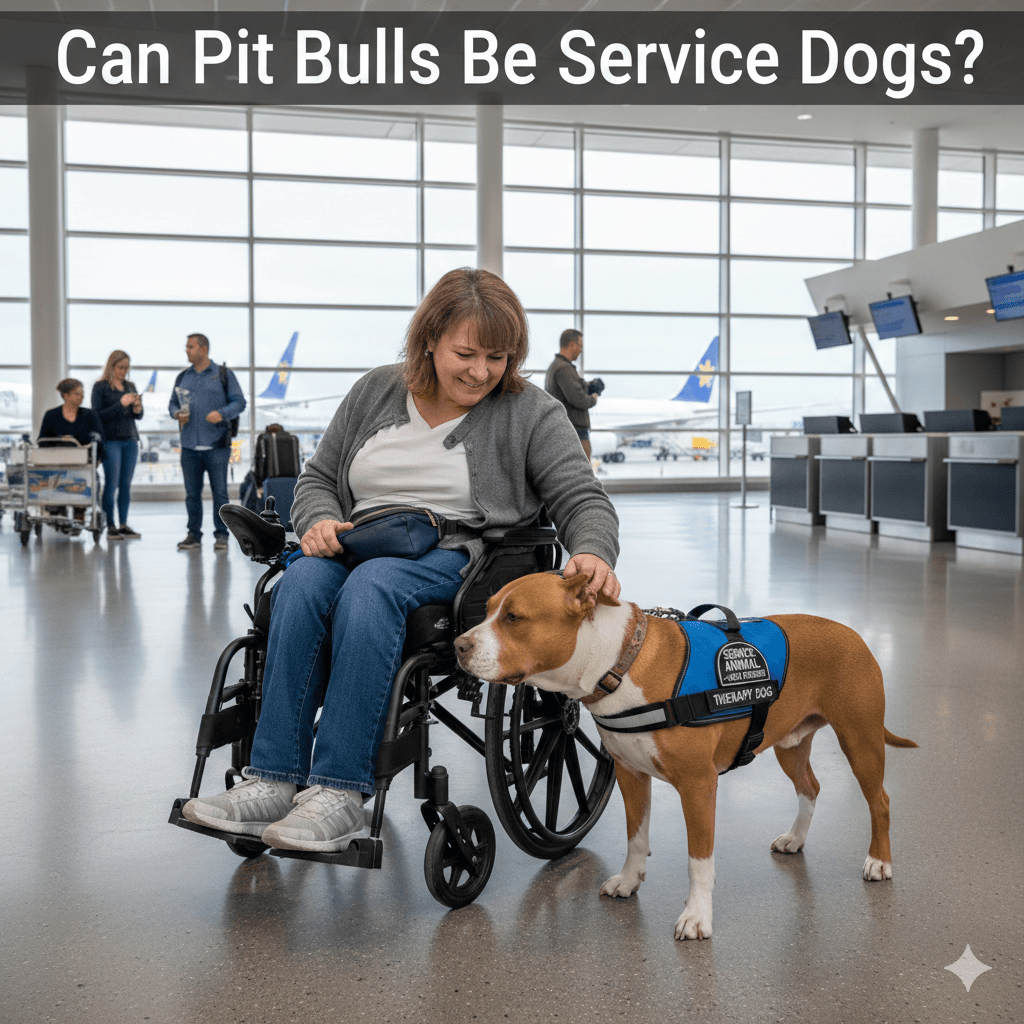

Can Pitbulls Be Service Dogs: Best 7 Expert Tips!

Can Pitbulls Be Service Dogs: Best 7 Expert Tips!

Can Pitbulls Be Service Dogs

Pitbulls are often misunderstood, but their intelligence, loyalty, and eagerness to please make them excellent candidates for service work. With proper training and temperament, they can perform a wide range of tasks for people with disabilities. Despite breed stigma, many pitbull-type dogs already serve as psychiatric, mobility, or medical alert service animals. Their strong bond with humans and adaptability shine in structured roles. Discover why these devoted dogs deserve a fair chance in the service world.


Temperament and Traits That Suit Service Work

Successful service dogs share key characteristics: focus, trainability, calmness under pressure, and a strong desire to assist. Pitbulls—when responsibly bred and socialized—often embody these qualities with remarkable consistency. Their emotional attunement is especially valuable in psychiatric or PTSD support roles:

 
  • High Trainability:
    Pitbulls learn commands quickly and thrive on positive reinforcement, making them responsive to complex task training.
     
  • Strong Human Bonding:
    Their deep attachment to handlers enhances reliability during emotional or physical crises.
     
  • Resilience in Stressful Situations:
    With early exposure, they remain composed in public spaces, noise, or unpredictable environments.
     
  • Athletic Build for Physical Tasks:
    Their muscular frame supports mobility assistance, such as bracing, retrieving items, or opening doors.
     
  • Alert but Non-Aggressive Nature:
    Contrary to myth, well-socialized pitbulls are typically friendly and observant—not reactive—ideal for public access.
 

These traits, combined with consistency in training, enable many pitbulls to excel in service roles across the U.S. and beyond.

Can Pitbulls Be Service Dogs: Best 7 Expert Tips!

Legal Rights and Public Misconceptions

While the Americans with Disabilities Act (ADA) protects the right to use any breed as a service dog, pitbulls still face housing restrictions, airline policies, and public bias. Understanding legal realities empowers handlers to advocate confidently:

 
  • ADA Does Not Restrict Breeds:
    Federal law explicitly prohibits breed bans against service animals, including pitbull-type dogs.
     
  • Landlord and HOA Challenges:
    Some housing providers wrongly deny pitbull service dogs—documentation and legal letters often resolve disputes.
     
  • Air Travel Limitations:
    Certain airlines restrict “pitbull-type” dogs regardless of service status; research carrier policies carefully.
     
  • Public Confrontations:
    Handlers may face questions or fear; carrying ADA informational cards can help de-escalate situations.
     
  • Local Breed-Specific Legislation (BSL):
    Though ADA overrides BSL for service dogs, enforcement varies—consult a disability rights attorney if denied access.
 

Knowledge of your rights ensures your service pitbull can work without unnecessary barriers.

Service Aptitude Strengths
Common Misconceptions to Overcome
Eager to learn and please
“Too aggressive for public work”
Calm with proper socialization
“Unpredictable around strangers”
Highly attuned to emotions
“Not suitable for children”
Excellent focus in training
“Only good for protection”
Strong physical stamina
“Banned everywhere as service dogs”

Types of Service Tasks Pitbulls Excel At

Pitbulls aren’t one-size-fits-all, but many thrive in roles that leverage their sensitivity, strength, and steadiness. Their versatility spans physical, medical, and emotional support functions:

 
  • Psychiatric Service Tasks:
    They can interrupt panic attacks, provide deep pressure therapy, or create personal space in crowds.
     
  • Mobility Assistance:
    Their build supports bracing during walking, retrieving dropped items, or pulling wheelchairs short distances.
     
  • Seizure Response:
    Trained to activate alarms, fetch medication, or position themselves to cushion a falling handler.
     
  • Diabetic Alert Work:
    Some detect blood sugar changes through scent—though this requires specialized, early scent training.
     
  • PTSD Support in Public:
    They’re adept at “blocking” (standing behind or beside handler) and guiding during dissociative episodes.
 

When matched to the right handler’s needs, pitbulls perform these tasks with unwavering dedication.

Training Requirements and Certification Facts

No national “certification” is legally required for service dogs in the U.S., but rigorous training is essential for public access and task reliability. Pitbulls benefit from structured, consistent methods:

 
  • Start Early with Socialization:
    Expose puppies to diverse people, surfaces, sounds, and animals before 16 weeks of age.
     
  • Focus on Public Access Skills:
    Master loose-leash walking, settling on cue, ignoring distractions, and remaining calm in stores or transit.
     
  • Task-Specific Drills:
    Train medical or psychiatric tasks in realistic scenarios—repetition builds reliability under stress.
     
  • Avoid Aversive Methods:
    Positive reinforcement preserves their trusting nature and prevents anxiety-based reactivity.
     
  • Optional Public Access Test:
    While not mandatory, passing a community test (like the AKC Canine Good Citizen) builds confidence.
 

Remember: A service dog’s legitimacy comes from training—not paperwork, vests, or registration.


Overcoming Breed Stigma as a Handler

Choosing a pitbull as a service dog may mean confronting prejudice—but preparation and confidence turn challenges into advocacy opportunities:

 
  • Carry ADA Information Cards:
    Brief, polite handouts explain legal rights without confrontation.
     
  • Use a Professional Vest or Patch:
    Clearly labeled “Service Dog – Do Not Pet” reduces interactions and signals legitimacy.
     
  • Practice Calm Responses:
    Rehearse phrases like, “He’s a task-trained service dog protected under federal law.”
     
  • Document Incidents:
    If denied access, note names, times, and policies—this supports potential legal action.
     
  • Connect with Support Communities:
    Online groups for pitbull service dog handlers offer advice, encouragement, and resources.
 

Your composure in public reflects your dog’s training—and slowly shifts public perception.

Real-Life Success Stories and Advocacy Impact

Across the country, pitbull service dogs are changing lives—and minds. From veterans with PTSD to children with autism, these dogs prove that breed doesn’t define ability:

 
  • Military Veterans:
    Many report pitbulls provide grounding during flashbacks better than other breeds due to their intuitive nature.
     
  • Autism Support:
    Their gentle focus helps children regulate emotions and navigate overwhelming social settings.
     
  • Wheelchair Users:
    Strong, steady pitbulls assist with daily tasks often overlooked by smaller service breeds.
     
  • Diabetic Alert Partners:
    Handlers praise their persistence in alerting, even during nighttime lows.
     
  • Mental Health Advocates:
    Teams use social media to showcase their dog’s skills, challenging stereotypes with every post.
 

These stories don’t just highlight individual success—they fuel broader acceptance of capable dogs of all breeds.

Why Pitbulls Make Surprisingly Effective Service Dogs

Beyond stereotypes and headlines, pitbulls possess a suite of innate qualities that align closely with the core requirements of service dog work. Their reputation for loyalty isn’t just emotional—it translates into reliable, task-focused behavior when properly guided. Here’s why many trainers and handlers increasingly recognize their potential:

 
  • Exceptional Emotional Intelligence:
    Pitbulls often sense shifts in their handler’s mood or physiology, making them ideal for anxiety, PTSD, or seizure response roles.
     
  • Strong Work Ethic and Drive:
    Bred originally for stamina and persistence, they approach training with enthusiasm and consistency.
     
  • Adaptability to Urban and Indoor Settings:
    Despite their strength, they’re typically calm indoors and adjust well to apartment or city living when exercised.
     
  • High Motivation for Human Praise:
    Their desire to please means they thrive on positive feedback, reducing reliance on constant treat rewards over time.
     
  • Natural Confidence Without Aggression:
    A well-bred, well-socialized pitbull carries quiet self-assurance—key for navigating crowded or chaotic environments.
 

These traits, when nurtured with ethical training and consistent boundaries, enable pitbulls to serve with both competence and compassion.

Frequently Asked Questions About Pitbulls as Service Dogs

Are pitbulls allowed as service dogs in all 50 states?

Yes—under the ADA, no U.S. state can ban a specific breed from serving as a legitimate service animal.

No. Like all service dogs, they only need to be individually trained to perform disability-related tasks.

Absolutely—but ESAs have fewer legal rights than service dogs and are not granted public access.

Unfortunately, yes—due to stigma, but knowing your rights helps protect your team’s access.

Some nonprofit programs do! Organizations like “Pit Bull Rescue Central” support service training for adoptable dogs.

Embracing Capability Over Stereotype

Your service dog’s value lies not in their breed—but in their heart, training, and unwavering commitment to you. Pitbulls, with their courage, empathy, and resilience, embody the true spirit of service. By choosing one, you do more than gain a helper—you become part of a movement that redefines what’s possible. Every public outing, every task performed, every calm response to judgment chips away at outdated myths. In the end, it’s not about proving others wrong—it’s about trusting your dog, honoring your needs, and walking forward together with pride. Because service isn’t about appearance—it’s about action, loyalty, and love without limits.

Dog Seizure Symptoms: Best 7 Expert Tips!

Dog Seizure Symptoms: Best 7 Expert Tips! – Learn to spot signs, respond effectively, and manage seizures in dogs for a healthier, happier life.

Carprofen Dosage for Cats: Best 7 Expert Tips!

Carprofen Dosage for Cats: Best 7 Expert Tips! – Learn safe dosing, risks, and alternatives to manage pain and inflammation in cats effectively.

Africanis Dog Breed: Best 7 Expert Tips!

Africanis Dog Breed: Best 7 Expert Tips! – Explore the resilience, loyalty, and adaptability of this ancient African breed, perfect for diverse lifestyles.

Cruciate Ligament Injury Symptoms in Dogs: Best 7 Tips!

Cruciate Ligament Injury Symptoms in Dogs: Best 7 Tips! – Discover key signs like limping, swelling, and joint instability to ensure prompt treatment.

Leave a Reply

Your email address will not be published. Required fields are marked *

Post Category


