
Understanding Toxins That Cause Hypoglycemia in Cats: Best 7 Expert Tips!
If your cat seems suddenly weak, disoriented, or is having seizures, low blood sugar—hypoglycemia—could be to blame. While hypoglycemia can stem from medical conditions like insulinoma or liver disease, certain toxins are also dangerous triggers that act rapidly and silently. Recognizing which household or environmental substances pose this risk is vital for prevention and fast action. Quick intervention can mean the difference between a full recovery and a life-threatening emergency. Use these expert insights to protect your feline companion from hidden dangers lurking in everyday products.
Common Household and Environmental Toxins Linked to Feline Hypoglycemia
Cats are highly sensitive to specific chemicals, and even small exposures can disrupt their blood sugar regulation. These toxins interfere with glucose production, metabolism, or insulin balance, leading to dangerously low levels. Below are the most frequent culprits responsible for toxic hypoglycemia in cats:
- Xylitol (Artificial Sweetener):
Found in sugar-free gum, candies, and some peanut butters, xylitol triggers a rapid insulin release in many mammals—though cats are less sensitive than dogs, high doses can still cause hypoglycemia. - Sago Palm (Cycas revoluta):
All parts of this ornamental plant are toxic, especially the seeds. Ingestion can lead to liver failure and secondary hypoglycemia due to impaired glucose production. - Certain Medications (e.g., Insulin, Sulfonylureas):
Accidental ingestion of human diabetes drugs like glipizide or glyburide can cause severe, prolonged hypoglycemia in cats within hours. - Ethylene Glycol (Antifreeze):
This sweet-tasting liquid is highly toxic. While kidney failure is the primary concern, metabolic disruption from antifreeze poisoning can also contribute to hypoglycemia. - Mushrooms (Toxic Species):
Wild mushrooms like Amanita species cause liver damage and metabolic derangements, potentially leading to low blood sugar as a secondary effect.
Prompt identification of exposure and immediate veterinary care are crucial—many of these toxins act within 30 minutes to 12 hours.
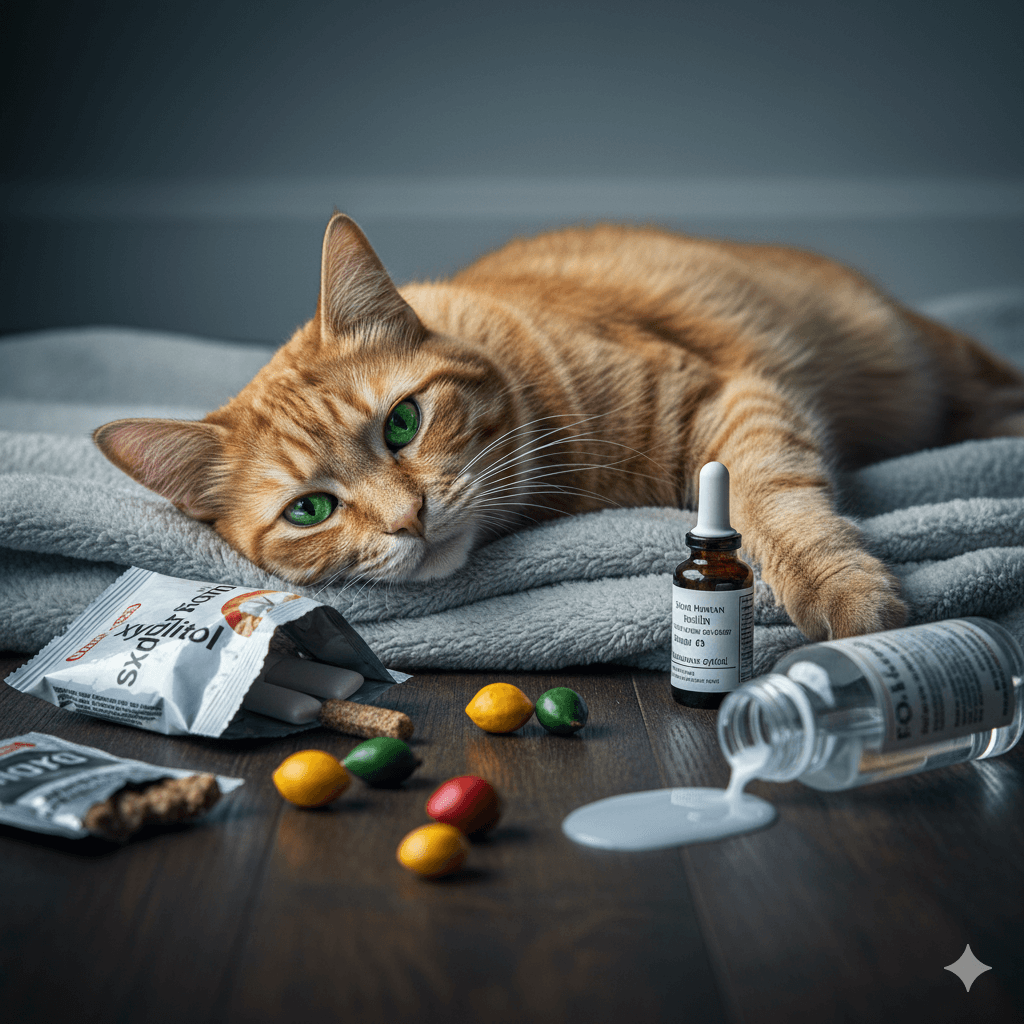
When Hypoglycemia Becomes an Emergency: Critical Warning Signs
Low blood sugar in cats progresses quickly and can mimic other neurological or metabolic crises. Knowing the red flags helps you respond before the situation becomes irreversible:
- Lethargy or Collapse:
Your cat may appear unusually sleepy, unresponsive, or unable to stand—often one of the first signs of falling glucose levels. - Muscle Tremors or Seizures:
Neurological symptoms occur as the brain is deprived of its primary fuel; seizures can be brief or prolonged and require urgent intervention. - Disorientation or Wobbliness:
Cats may stumble, walk in circles, or seem “drunk”—a sign their brain isn’t getting enough glucose to function properly. - Weak Pulse or Pale Gums:
These indicate poor circulation and metabolic stress, often accompanying severe hypoglycemia or systemic toxicity. - Loss of Appetite with Vomiting:
While non-specific, sudden nausea combined with refusal to eat may signal toxin ingestion and impending metabolic crisis.
If you observe any of these signs—especially after suspected toxin exposure—seek emergency veterinary care immediately; every minute counts.
Check this guide 👉Understanding Cat Blood Sugar Levels: Best 7 Expert Tips!
Check this guide 👉How to Take Cat Blood Pressure: Best 7 Expert Tips!
Check this guide 👉Understanding Cat Bloodwork Costs: Best 7 Health Tips!
Early Hypoglycemia Clues | Toxin-Specific Danger Signs |
|---|---|
Mild weakness or hiding | Vomiting after chewing a houseplant |
Slight wobbliness | Access to spilled antifreeze or medication |
Reduced appetite | Seizures within hours of unknown ingestion |
Glassy eyes or staring | History of outdoor access with mushroom exposure |
Excessive salivation | Known xylitol product left within reach |
How Toxins Disrupt Blood Sugar Regulation in Cats
Hypoglycemia occurs when toxins interfere with the liver’s ability to produce glucose, overstimulate insulin release, or damage metabolic pathways. Understanding these mechanisms helps you appreciate the urgency of treatment:
- Insulin Surge from Sulfonylureas:
These diabetes drugs force the pancreas to secrete insulin regardless of blood sugar levels, causing a dangerous drop even in healthy cats. - Liver Damage from Sago Palm or Mushrooms:
The liver stores and releases glucose; when damaged, it can’t maintain blood sugar between meals, leading to fasting hypoglycemia. - Metabolic Acidosis from Antifreeze:
Ethylene glycol metabolites disrupt cellular energy production, indirectly impairing glucose utilization and contributing to low levels. - Xylitol-Induced Insulin Response:
Though debated in cats, high doses may still stimulate insulin release, especially in kittens or small individuals, overwhelming glucose reserves. - Secondary Effects from Toxin-Induced Vomiting/Anorexia:
Prolonged lack of food intake due to nausea can deplete glycogen stores, particularly in young or lean cats with limited reserves.
Even if the primary toxin doesn’t directly cause hypoglycemia, the cascade of organ stress often leads to it as a life-threatening complication.
Immediate First Aid and Emergency Response Steps
If you suspect your cat ingested a toxin that could cause hypoglycemia, act fast—but stay calm. Your quick response can stabilize them until professional help arrives:
- Check for Visible Toxin Residue:
Look for plant fragments, spilled pills, or open containers near your cat; take a photo if safe to do so. - Offer a Small Amount of Sugar (If Conscious):
Rub a tiny bit of corn syrup or honey on their gums—only if they are alert and not seizing—to provide immediate glucose. - Do NOT Induce Vomiting:
Never give hydrogen peroxide or other emetics without veterinary instruction—some toxins cause more harm coming back up. - Call a Pet Poison Helpline Immediately:
Contact ASPCA Animal Poison Control (888-426-4435) or Pet Poison Helpline (855-764-7661) for real-time guidance. - Transport to a Vet Without Delay:
Even if your cat seems fine, some toxins have delayed effects; early blood work and IV dextrose can be lifesaving.
Time is glucose—and every minute without treatment increases the risk of brain damage or death.
Preventing Toxic Hypoglycemia: Proactive Safety Measures
Prevention is far safer than emergency treatment. Secure your home and habits to eliminate access to known hypoglycemia-inducing toxins:
- Keep All Medications Locked Away:
Store human and pet prescriptions in child-proof containers out of reach—never leave pill bottles on counters. - Remove Toxic Plants Entirely:
Sago palm, lilies, and wild mushrooms should never be in homes or yards accessible to cats. - Use Pet-Safe Antifreeze Alternatives:
Choose propylene glycol–based antifreeze instead of ethylene glycol—it’s far less toxic if spilled or leaked. - Avoid Xylitol-Containing Products Indoors:
Even if labeled “safe for dogs,” assume any sugar-free product poses a risk to curious cats. - Supervise Outdoor Time or Keep Cats Indoors:
This eliminates exposure to wild mushrooms, antifreeze puddles, and unknown toxins in neighbors’ yards.
A toxin-proof environment is the best defense against accidental hypoglycemia and its devastating consequences.
Special Considerations for Kittens, Seniors, and At-Risk Cats
Certain cats face higher vulnerability to toxin-induced hypoglycemia due to size, age, or health status. Their lower glycogen reserves and reduced metabolic flexibility make them less able to compensate:
- Kittens Under 6 Months:
Have minimal fat and glycogen stores; even brief fasting after toxin exposure can trigger severe hypoglycemia. - Senior Cats with Liver or Kidney Disease:
Preexisting organ dysfunction reduces their ability to detoxify substances or maintain glucose homeostasis. - Diabetic Cats on Insulin Therapy:
Accidental double-dosing or ingestion of human sulfonylureas can cause profound, prolonged hypoglycemia. - Underweight or Chronically Ill Cats:
Lack energy reserves to buffer metabolic stress, making them more prone to rapid decline after toxin exposure. - Cats with Seizure History:
Hypoglycemia can lower the seizure threshold, turning a mild toxin reaction into a neurological emergency.
For these groups, prevention isn’t optional—it’s essential for survival.
What to Expect at the Vet After Toxin Exposure
Veterinary care for toxin-induced hypoglycemia focuses on stabilizing blood sugar, supporting organ function, and removing or neutralizing the toxin:
- Immediate Blood Glucose Testing:
A quick ear prick or paw pad test confirms hypoglycemia and guides dextrose administration. - IV Fluids with Dextrose Supplementation:
Continuous glucose infusion helps maintain safe levels while the toxin is metabolized. - Liver Protectants and Antidotes:
For sago palm or mushroom toxicity, medications like SAMe or N-acetylcysteine may be started immediately. - Advanced Monitoring:
Blood work, ECG, and neurological checks track organ function and response to treatment over 24–72 hours. - Decontamination (If Recent Ingestion):
Activated charcoal may be given to bind remaining toxin in the gut—only if your cat is stable and conscious.
Hospitalization is often required, as hypoglycemia can rebound or worsen even after initial improvement.
“Animals that ingest this toxin will develop low blood sugar (hypoglycemia) as quickly as 10 minutes if enough is consumed, which can lead to seizures. Additionally, this toxin also causes liver damage which can be lethal if left untreated.”
— Savannah Charnas, DVM
Frequently Asked Questions About Toxins That Cause Hypoglycemia in Cats
Can a cat get hypoglycemia from eating a small piece of sugar-free gum?
While cats are less sensitive to xylitol than dogs, large amounts can still pose a risk—always contact a vet if ingestion occurs.
How quickly do symptoms appear after toxin exposure?
It depends on the toxin: sulfonylureas may cause hypoglycemia in 1–4 hours, while sago palm effects can take 12–24 hours to manifest.
Is honey safe to give a hypoglycemic cat?
Yes—but only if the cat is conscious and able to swallow. Never force liquids into a seizing or unconscious cat.
Can indoor cats be exposed to these toxins?
Absolutely. Medications, houseplants like sago palm, and spilled antifreeze in garages are common indoor hazards.
Will my cat recover fully after treatment?
Many do—if treated early. However, toxins causing liver damage (like sago palm) may lead to long-term complications or require ongoing care.
Protecting Your Cat from Hidden Dangers Every Day
Your cat’s curious nature and small size make them uniquely vulnerable to toxins that trigger hypoglycemia—a silent but urgent threat. By learning which substances to eliminate, watching for subtle signs of distress, and acting swiftly when exposure is suspected, you become their strongest shield. Recovery is possible with prompt care, but prevention remains the true cornerstone of feline safety. Let this knowledge guide your choices—from the plants you keep to the medications you store—and create a home where your cat can explore freely without fear. In a world full of hidden hazards, your awareness is the light that keeps them safe, healthy, and thriving.

Is Rawhide Bad for Cats? Best 7 Expert Tips! – Discover the risks, safe alternatives, and expert advice to keep your feline friend healthy and happy.

Is Rawhide Bad for Dogs? Best 7 Expert Tips! – Discover the risks, benefits, and safer alternatives to rawhides for your dog’s chewing needs.

Understanding Anorexia in Cats: Best 7 Expert Tips! – Learn why cats stop eating, spot warning signs, and discover how to help your feline regain appetite safely.

Understanding Anorexia in Dogs: Best 7 Expert Tips! – Learn causes, symptoms, and solutions to help your dog regain appetite and stay healthy.