
The Finnish Lapphund: Best 7 Expert Tips!
Meet the Finnish Lapphund—a majestic, fluffy, and deeply intelligent herding dog born of Arctic winds and centuries of partnership with the Sámi people. With its expressive eyes, thick double coat, and gentle yet alert demeanor, this Nordic breed blends resilience with affection in a truly captivating way. Bred to manage reindeer across harsh Scandinavian terrain, the Finnish Lapphund is as hardy as it is loyal, equally at home in snowy wilderness or cozy family living rooms. If you’re seeking a devoted, trainable, and strikingly beautiful companion with deep cultural roots, the Finnish Lapphund may be your ideal match.
Origins and History of the Finnish Lapphund
Long before modern dog shows and urban pet life, the Finnish Lapphund thrived in the subarctic north as an indispensable working partner to the indigenous Sámi. Its history is woven into reindeer herding, survival, and cultural identity—a legacy that still shapes its instincts today.
- Ancient Sámi Companion:
The Finnish Lapphund descended from the traditional reindeer-herding dogs of the Sámi people, who relied on these canines for guidance, protection, and companionship in remote Lapland. - Adapted to Extreme Climates:
Over centuries, the breed evolved a dense, weather-resistant double coat and exceptional endurance to withstand freezing temperatures and rugged terrain. - Transition from Utility to Recognition:
While always valued by herders, the breed gained formal recognition in Finland in the 1940s and later by international kennel clubs, including the FCI and The Kennel Club (UK). - Preservation Through Cultural Revival:
Dedicated Finnish breeders worked to preserve genetic diversity and authentic working traits, especially after population declines in the mid-20th century. - Symbol of Nordic Heritage:
Today, the Finnish Lapphund is celebrated not just as a pet but as a living emblem of Sámi heritage and Finland’s natural history.
Though no longer solely a working dog, the Finnish Lapphund’s instincts, intelligence, and loyalty remain deeply rooted in its ancestral past—making it both capable and deeply connected to its humans.
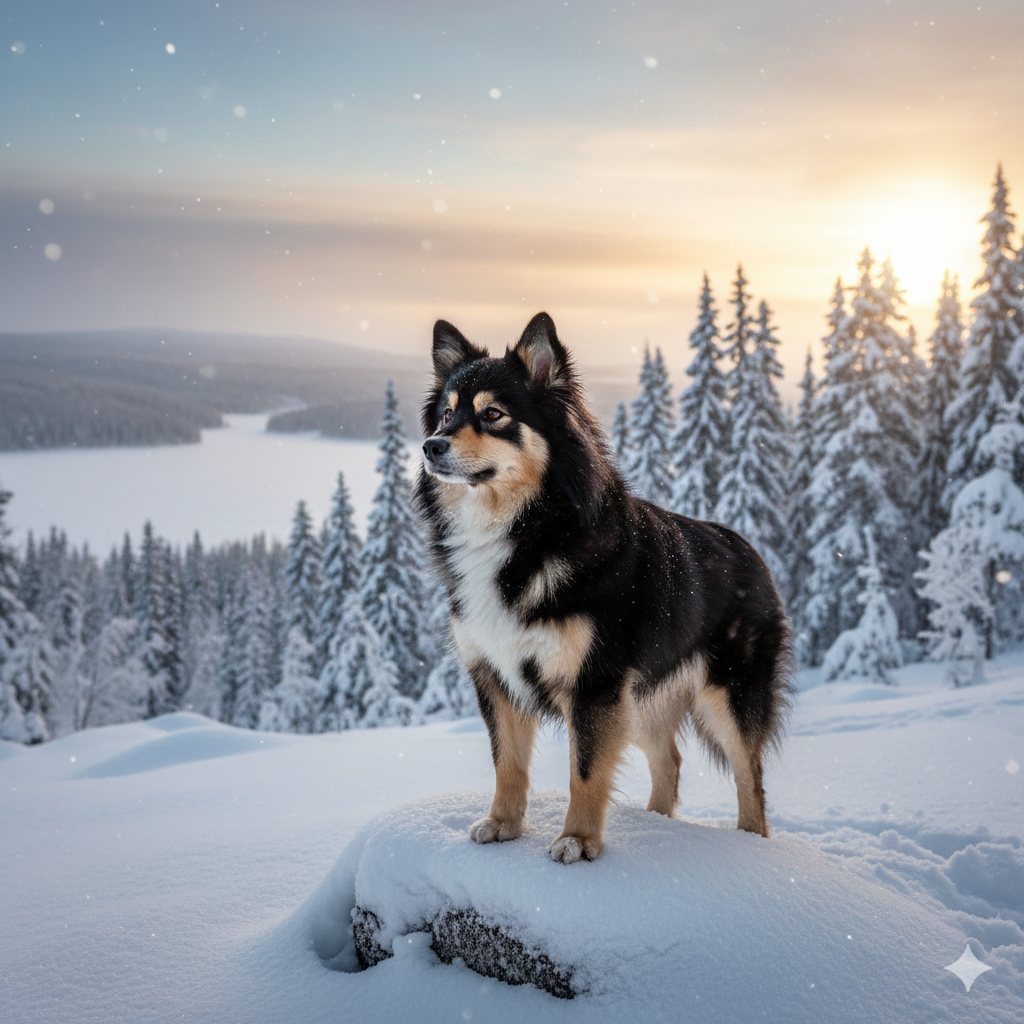
Distinctive Physical Traits of the Finnish Lapphund
From its luxurious fur to its alert, wedge-shaped head, the Finnish Lapphund carries every feature with purpose—each shaped by generations of life in the Arctic Circle.
- Thick, Double-Layered Coat:
A dense undercoat and long, water-repellent guard hairs provide insulation against snow, wind, and cold, with a signature “mane” around the neck in males. - Medium, Balanced Build:
Standing 16–20 inches tall and weighing 33–53 pounds, the breed is sturdy without being bulky—ideal for agility and endurance over long distances. - Expressive, Almond-Shaped Eyes:
Dark, intelligent eyes radiate calm awareness, often complemented by dark eyeliner-like markings that enhance their keen gaze. - Tail and Ears:
The bushy tail curls firmly over the back in cold weather, while upright, furry ears swivel to catch the faintest sounds of reindeer or approaching footsteps. - Color Variety Within Tradition:
Acceptable colors include black, brown, red, cream, wolf-sable, and piebald—always with clear facial markings and often a lighter undercoat.
These aren’t just aesthetic details—they’re functional adaptations that reflect a life of purpose in one of Earth’s harshest environments.
Check this guide 👉Nordic Dog Breeds: Best 7 Expert Tips!
Check this guide 👉Discover the Finnish Spitz Dog: Best 7 Expert Tips!
Check this guide 👉The Norwegian Spitz Dog: Best 7 Expert Tips!
Temperament Highlights | Care Considerations |
|---|---|
Calm, friendly, and deeply people-oriented | Heavy seasonal shedding—brush 3–4 times weekly |
Naturally alert but not aggressive | Needs cool environments in summer—prone to overheating |
Excellent with children and other pets | Requires regular ear cleaning due to fluffy ear hair |
Intelligent and eager to please | High mental stimulation needed to prevent boredom |
Retains strong herding instincts | Needs gradual socialization to manage reactivity |
Personality and Temperament: Gentle Guardian of the North
Beneath the Finnish Lapphund’s majestic fur lies a soul of remarkable warmth, patience, and quiet confidence. This is not a high-strung herder but a thoughtful, family-centered dog with a natural sense of duty.
- Devoted Family Companion:
Finnish Lapphunds form tight bonds with all household members and thrive on inclusion in daily life—often shadowing their humans from room to room. - Naturally Calm Demeanor:
Unlike some high-energy herding breeds, they balance activity with serene relaxation, making them excellent indoor companions when exercised. - Watchful but Not Aggressive:
They’ll alert you to visitors with a resonant bark, but their default mode is friendly curiosity rather than suspicion or fear. - Patient with Children:
Their gentle nature and tolerance make them ideal for families, especially when kids are taught respectful interaction from the start. - Innate Herding Drive:
Though rarely used for reindeer today, many still “herd” by circling, nudging, or gently guiding children or other pets—often with surprising finesse.
In the right home, the Finnish Lapphund isn’t just a pet—it’s a peaceful, protective presence that brings quiet joy and unwavering loyalty.
Training and Socialization Tips for Finnish Lapphund Owners
Trainable, sensitive, and responsive, the Finnish Lapphund excels with positive methods—but early guidance is key to channeling its intelligence constructively.
- Start Socialization Before 14 Weeks:
Expose your puppy to diverse people, sounds, surfaces, and animals to prevent shyness or noise sensitivity later in life. - Use Reward-Based Training:
Praise, play, and treats work far better than correction; this breed shuts down under harshness but blossoms with encouragement. - Incorporate Mental Challenges:
Puzzle toys, scent games, and obedience drills satisfy their herding brain and prevent destructive boredom. - Teach “Quiet” Commands Early:
Their alert barking is useful—but without control, it can become excessive, especially in urban settings. - Practice Off-Leash Recall in Safe Areas:
Strong prey drive and herding instinct mean they may chase wildlife; rock-solid recall is non-negotiable for off-leash freedom.
With consistent, kind leadership, your Finnish Lapphund becomes a well-mannered, attentive, and joyful partner for life.
Grooming and Health Needs of the Finnish Lapphund
That stunning coat comes with responsibility—and proactive health care ensures your Lapphund lives its full 12–15 years in vibrant health.
- Seasonal “Blowing” of Coat:
They shed moderately year-round but “blow coat” heavily twice a year—daily brushing during these periods prevents mats and fur drifts. - Bath Only When Necessary:
Their natural oils protect the skin; over-bathing strips moisture. Use dog-specific shampoos during heavy shedding to loosen undercoat. - Dental and Ear Care:
Brush teeth 2–3 times weekly; check ears weekly for wax buildup, especially after snow or rain exposure. - Genetic Health Screening:
Reputable breeders test for PRA (progressive retinal atrophy), hip dysplasia, and glycogen storage disease type II (GSD II). - Weight and Joint Monitoring:
Maintain lean muscle mass to protect joints; avoid high-impact exercise in puppies until growth plates close (~12 months).
Grooming and preventive care aren’t chores—they’re moments of bonding that keep your Nordic companion healthy and happy.
Living with a Finnish Lapphund: Ideal Home and Lifestyle Fit
This breed adapts beautifully to many homes—but flourishes only when its physical, mental, and emotional needs are honored.
- Thrives in Cold Climates:
Naturally suited to northern regions; provide cooling mats, shade, and AC in warmer zones to avoid heat stress. - Needs Daily Physical Activity:
A 45–60 minute walk plus play or training sessions satisfies their energy—boredom leads to chewing, digging, or vocalizing. - Excellent Apartment Candidate (With Exercise):
Despite size, they’re calm indoors if sufficiently exercised—ideal for active urban dwellers who enjoy outdoor adventures. - Loves Participation, Not Isolation:
They dislike being left alone for long hours; consider doggy daycare, a canine sibling, or remote work if you’re often away. - Compatible with Multi-Pet Households:
Early socialization helps them coexist peacefully with cats and other dogs—though their herding may surface during play.
The Finnish Lapphund isn’t a backyard dog. It’s a family member who wants to walk, rest, and dream beside you—always within sight, always connected.
Potential Challenges of Owning a Finnish Lapphund
While deeply rewarding, this breed isn’t without its unique demands. Awareness upfront prevents frustration and builds stronger bonds.
- Heavy Shedding Seasons:
Be prepared for fur on clothes, furniture, and floors—vacuuming becomes a daily ritual twice a year. - Moderate Barking Tendency:
Their alert nature means they’ll announce delivery trucks, squirrels, or passing clouds—training helps, but silence isn’t their default. - Sensitivity to Harsh Training:
They respond poorly to yelling or punishment; positive, patient methods are essential for trust and cooperation. - Need for Mental Engagement:
Without puzzles, jobs, or training, they may invent their own “projects”—like rearranging your shoes or excavating the garden. - Not Built for Hot Climates:
Their Arctic coat makes summer uncomfortable; owners in southern regions must prioritize cooling and limit midday activity.
Understanding these traits isn’t a deterrent—it’s the foundation for a fulfilling, respectful partnership with your fluffy northern friend.
“Finnish Lapphunds are calm, friendly and very submissive with people. Their friendly, gentle disposition makes them ideal dogs around small children and the elderly.” — VCA Animal Hospitals
Frequently Asked Questions About the Finnish Lapphund
Is the Finnish Lapphund good for first-time dog owners?
Yes—with preparation. They’re trainable and gentle, but require consistent training, socialization, and commitment to grooming and exercise.
Do Finnish Lapphunds get along with cats?
Generally yes, especially when raised together. Their herding instinct may prompt chasing, but proper introduction and boundaries help.
How much exercise does a Finnish Lapphund need daily?
45–60 minutes of active walking, play, or structured activity is ideal—plus mental stimulation through training or games.
Are Finnish Lapphunds hypoallergenic?
No. They shed heavily, especially seasonally, and are not suitable for allergy sufferers.
Where can I find a Finnish Lapphund in the US or Europe?
Look for breeders affiliated with national clubs (e.g., Finnish Lapphund Club of America) who health-test and prioritize temperament and working heritage.
A Nordic Heart Wrapped in Fur
The Finnish Lapphund may hail from the snow-laced edges of Europe, but its warmth fills any home it enters. With its calm intelligence, unwavering loyalty, and quiet dignity, this breed offers more than companionship—it offers partnership. Whether guiding reindeer across frozen tundra or napping at your feet after a forest hike, the Finnish Lapphund carries the soul of the North in every gentle step. If you’re ready to welcome a dog of grace, grit, and deep emotional connection, look no further than this remarkable Nordic treasure.

Is Rawhide Bad for Cats? Best 7 Expert Tips! – Discover the risks, safe alternatives, and expert advice to keep your feline friend healthy and happy.

Is Rawhide Bad for Dogs? Best 7 Expert Tips! – Discover the risks, benefits, and safer alternatives to rawhides for your dog’s chewing needs.

Understanding Anorexia in Cats: Best 7 Expert Tips! – Learn why cats stop eating, spot warning signs, and discover how to help your feline regain appetite safely.

Understanding Anorexia in Dogs: Best 7 Expert Tips! – Learn causes, symptoms, and solutions to help your dog regain appetite and stay healthy.