
Understanding Meloxicam Cat Side Effects: Best 7 Expert Tips!
Meloxicam is a non-steroidal anti-inflammatory drug (NSAID) sometimes prescribed by veterinarians to manage pain and inflammation in cats—but its use comes with serious caveats. While it can offer relief for conditions like osteoarthritis or post-surgical discomfort, even a small dosing error can lead to life-threatening complications. Feline physiology processes medications very differently than humans or dogs, making meloxicam especially risky. Recognizing potential side effects early is crucial to protecting your cat’s health. With expert guidance and vigilant monitoring, you can weigh the benefits against the dangers—and act swiftly if something goes wrong.
Common Signs of Meloxicam-Related Adverse Reactions in Cats
Cats are exquisitely sensitive to NSAIDs like meloxicam, and side effects can emerge quickly—sometimes within hours of administration. Many reactions stem from kidney stress, gastrointestinal irritation, or liver strain. Watch for these key warning signals, especially during the first few doses:
- Vomiting or Regurgitation:
Your cat may vomit clear fluid, bile, or even blood if meloxicam irritates the stomach lining or causes ulceration. - Loss of Appetite:
Sudden disinterest in food is often one of the earliest signs of internal distress, even before other symptoms appear. - Lethargy or Weakness:
Unusual drowsiness, reluctance to move, or hiding behavior can indicate pain, dehydration, or organ dysfunction. - Changes in Urination:
Decreased urine output, straining to urinate, or blood in urine may signal acute kidney injury—a known risk with meloxicam. - Diarrhea or Black, Tarry Stool:
Gastrointestinal bleeding caused by NSAID toxicity can result in dark, foul-smelling feces resembling tar (melena).
If you observe any of these signs after giving meloxicam, stop the medication immediately and contact your veterinarian—even if the dose was prescribed.
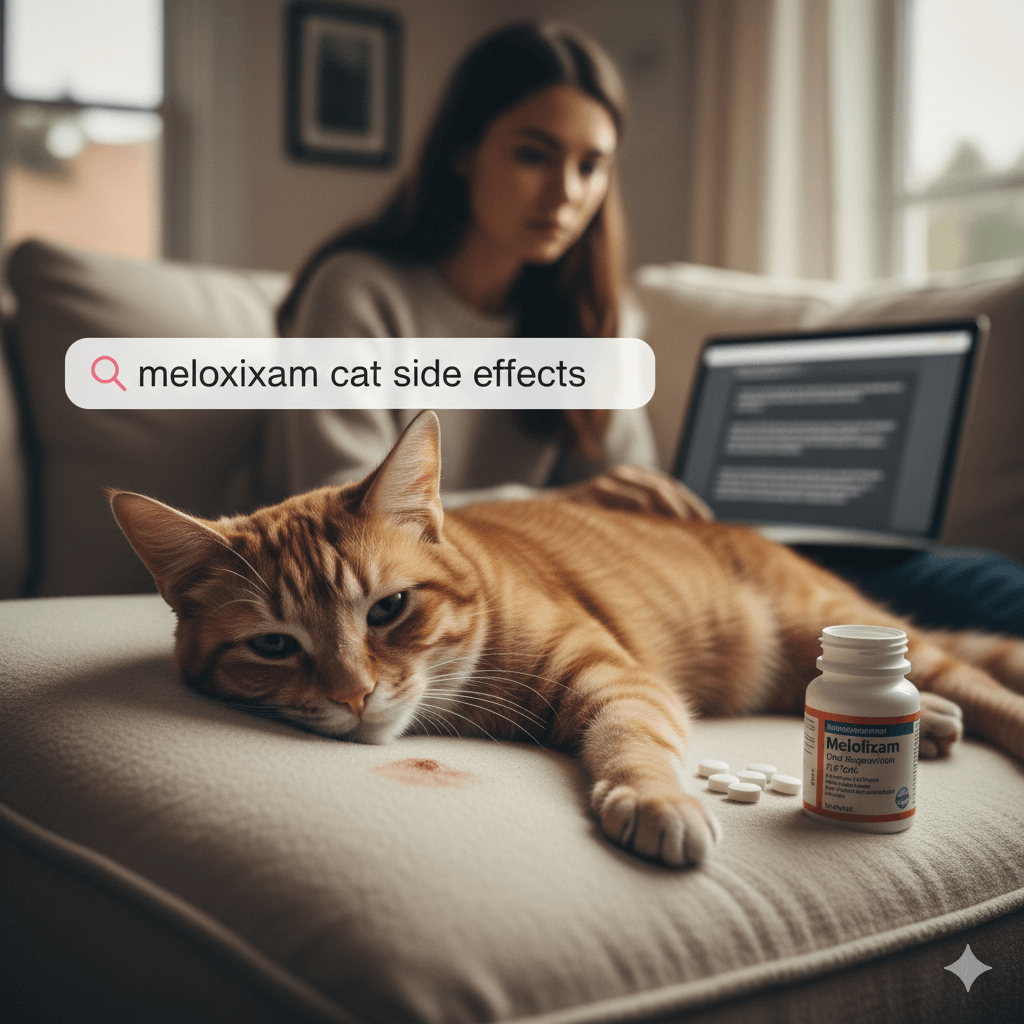
When Meloxicam Use Becomes Life-Threatening
While mild reactions may resolve with prompt care, meloxicam can cause severe, irreversible harm in cats—especially with repeated dosing or off-label use. The FDA has approved meloxicam for a single, one-time injection in cats before surgery, but oral or repeated use is not approved in the U.S. due to high risk. Be alert for these emergency-level symptoms:
- Severe Dehydration:
Dry, tacky gums; sunken eyes; or skin that stays “tented” when gently pinched suggest critical fluid loss or kidney failure. - Neurological Changes:
Seizures, disorientation, tremors, or collapse may occur in advanced toxicity cases affecting multiple organ systems. - Pale or Yellow Gums:
Pallor indicates anemia from internal bleeding; jaundice (yellow tint) signals possible liver damage. - Rapid or Labored Breathing:
This can reflect metabolic acidosis, pain, or systemic shock—requiring immediate oxygen and intensive care. - Complete Refusal to Eat or Drink for 24+ Hours:
Prolonged anorexia in cats can trigger hepatic lipidosis (fatty liver disease), compounding the initial drug injury.
Never assume “a little extra” is safe—even one extra tablet can be fatal in feline patients.
Check this guide 👉Understanding Doxycycline Cat Side Effects: Best 7 Tips!
Check this guide 👉Metronidazole Side Effects in Cats: Best 7 Expert Tips!
Check this guide 👉Dog Thyroid Medication Side Effects: Best 7 Expert Tips!
Early Warning Signs | Emergency Red Flags |
|---|---|
Mild vomiting once or twice | Repeated vomiting with blood |
Slight decrease in activity | Inability to stand or extreme weakness |
Drinking less than usual | No urine production for 12+ hours |
Occasional lip-licking (sign of nausea) | Black, tarry stools or bloody diarrhea |
Hiding more than normal | Seizures, jaundice, or collapse |
Why Cats Are Especially Vulnerable to Meloxicam
Unlike dogs or humans, cats lack sufficient levels of a liver enzyme (glucuronyl transferase) needed to safely metabolize many NSAIDs—including meloxicam. This metabolic limitation means the drug lingers in their system far longer, increasing the risk of cumulative toxicity. Additionally, cats have a highly sensitive gastrointestinal tract and are prone to kidney issues even under normal conditions.
- Slow Drug Clearance:
Meloxicam’s half-life in cats can exceed 24 hours—compared to 6–8 hours in dogs—leading to dangerous buildup. - Low Body Weight Amplifies Risk:
A standard human or dog dose, even halved, is often catastrophically high for a 4–10 lb cat. - Preexisting Conditions Increase Danger:
Cats with undiagnosed kidney disease, heart issues, or dehydration are at exponentially higher risk. - Oral Liquid Form Confusion:
Many pet owners accidentally use the dog-labeled oral suspension, which is 10 times more concentrated than the feline-safe injectable dose. - Lack of Owner Awareness:
Some veterinarians in other countries prescribe oral meloxicam off-label, creating confusion about its safety in the U.S. context.
This biological reality means meloxicam should only be used in cats under strict veterinary supervision—and never at home without explicit, written instructions.
Safe Alternatives and Pain Management Options for Cats
Thankfully, safer strategies exist to manage feline pain without risking NSAID toxicity. Modern veterinary medicine prioritizes multi-modal approaches that protect your cat’s delicate systems while ensuring comfort:
- FDA-Approved Feline Pain Medications:
Drugs like buprenorphine (an opioid) or gabapentin (for nerve pain) are much safer for chronic or post-op use in cats. - Laser Therapy and Acupuncture:
Non-invasive modalities can reduce inflammation and improve mobility in arthritic cats with zero drug risk. - Joint Supplements with Proven Safety:
Glucosamine, chondroitin, omega-3s (from fish oil), and green-lipped mussel support joint health without kidney strain. - Environmental Modifications:
Ramps, heated beds, and low-sided litter boxes ease daily movement and reduce pain triggers at home. - Weight Management:
Even a small weight reduction (if overweight) significantly decreases joint stress and discomfort in aging cats.
Always consult your vet before starting any supplement or therapy—what works for dogs may not be safe for cats.
What to Do If Your Cat Accidentally Receives Meloxicam
If you—or another caregiver—accidentally give your cat meloxicam (especially oral or repeated doses), act immediately:
- Call Your Vet or Animal Poison Control:
Contact the ASPCA Animal Poison Control (888-426-4435) or Pet Poison Helpline (855-764-7661) right away—do not wait for symptoms. - Do Not Induce Vomiting at Home:
This can worsen internal damage; only professionals should decide on decontamination methods. - Bring Medication Packaging:
Have the bottle, dose, and time of administration ready when you call—it speeds up treatment decisions. - Seek Emergency Care Promptly:
Even if your cat seems fine, bloodwork and IV fluids within 2–4 hours can prevent kidney failure. - Monitor Closely for 72 Hours:
Some signs appear delayed; hospitalization for observation may be recommended even after a single small overdose.
Time is kidney tissue—early intervention dramatically improves survival odds.
Preventing Medication Errors in Multi-Pet Households
Homes with both dogs and cats face heightened risk, as meloxicam is commonly prescribed for dogs but deadly for cats. A single mix-up can be fatal, so proactive safeguards are essential:
- Store Medications Separately:
Keep dog and cat meds in different cabinets, clearly labeled with species and pet name. - Use Pill Organizers by Pet:
Color-coded weekly boxes reduce confusion during busy mornings or when multiple caregivers are involved. - Double-Check Before Dosing:
Implement a “two-person rule” if possible—have another adult verify the pet, medication, and dose. - Never Share Medications Between Pets:
Even if symptoms seem similar, drugs safe for dogs are often toxic to cats (and vice versa). - Educate All Household Members:
Ensure children, seniors, or pet sitters understand that “dog medicine ≠ cat medicine”—ever.
Prevention isn’t just smart—it’s lifesaving in a species where a single pill can be lethal.
Essential Safety Reminders for Administering Medication to Cats
Giving any medication to a cat requires extreme caution, especially with drugs like meloxicam that carry high risks. A moment of confusion or a well-intentioned assumption can lead to serious harm. To keep your feline friend safe, always follow these critical guidelines:
- Never Use Human or Dog Medications:
Many over-the-counter or canine NSAIDs are lethal to cats—even in tiny amounts. Always confirm any drug is feline-approved. - Verify Dose and Formulation with Your Vet:
Double-check the exact milligram amount, frequency, and delivery method (liquid vs. tablet) before each dose. - Use a Dedicated Syringe or Piller:
Avoid using household spoons or shared tools; cat-specific dosing devices reduce errors and cross-contamination. - Document Every Dose Given:
Keep a written or digital log to prevent accidental double-dosing, especially in multi-caregiver households. - Observe for 24 Hours After First Dose:
Even a vet-approved single dose can trigger unexpected reactions—watch closely and know your emergency contacts.
When it comes to feline medication, caution isn’t optional—it’s a cornerstone of responsible care.
“Gastrointestinal upset, including vomiting, diarrhea, and lack of appetite are side effects sometimes seen in cats.” – Rania Gollakner, BS, DVM
Frequently Asked Questions About Meloxicam Cat Side Effects
Is meloxicam ever safe for cats?
Only as a single, one-time injectable dose given by a veterinarian before surgery in the U.S. Oral or repeated use is not approved and carries high risk.
Can a cat survive meloxicam overdose?
Yes—with immediate veterinary intervention. IV fluids, activated charcoal, and hospitalization within hours offer the best chance of recovery.
What are the first signs of meloxicam toxicity?
Loss of appetite, vomiting, and lethargy often appear within 12–24 hours. Do not wait—seek help at the first hint of trouble.
Are there safe NSAIDs for cats?
No NSAID is considered truly safe for repeated use in cats. Veterinarians avoid them in favor of safer alternatives like buprenorphine or gabapentin.
How long does meloxicam stay in a cat’s system?
Up to 24–48 hours or longer, compared to just hours in dogs—making even small doses potentially cumulative and dangerous.
Protecting Your Cat with Knowledge and Vigilance
Your cat’s curious nature and quiet resilience can mask serious illness until it’s advanced—but when it comes to meloxicam, you hold the power to prevent tragedy before it starts. By understanding the profound risks, recognizing early warning signs, and choosing safer pain solutions, you honor your feline friend’s unique biology and fragility. Never hesitate to question a prescription or ask for alternatives; your advocacy could be the difference between a safe recovery and irreversible harm. In the delicate balance of feline health, caution isn’t just wise—it’s an act of love.

Is Rawhide Bad for Cats? Best 7 Expert Tips! – Discover the risks, safe alternatives, and expert advice to keep your feline friend healthy and happy.

Is Rawhide Bad for Dogs? Best 7 Expert Tips! – Discover the risks, benefits, and safer alternatives to rawhides for your dog’s chewing needs.

Understanding Anorexia in Cats: Best 7 Expert Tips! – Learn why cats stop eating, spot warning signs, and discover how to help your feline regain appetite safely.

Understanding Anorexia in Dogs: Best 7 Expert Tips! – Learn causes, symptoms, and solutions to help your dog regain appetite and stay healthy.