
Understanding Husky Dog Temperament: Best 7 Expert Tips!
The Siberian Husky is a striking blend of beauty, endurance, and independent spirit—bred not as a lapdog, but as a resilient sled-puller in Arctic conditions. Known for their piercing blue eyes, wolf-like grace, and spirited howls, Huskies captivate hearts worldwide. Yet beneath that photogenic exterior lies a complex temperament shaped by centuries of teamwork, freedom, and instinct. Understanding their true nature is essential before bringing one into your home—because loving a Husky means embracing both their joy and their challenges.
Origins and Evolution of the Husky’s Temperament
The Husky’s personality didn’t emerge by chance—it was forged by survival in harsh environments and refined through generations of selective work. Originally developed by the Chukchi people of Northeast Asia, these dogs were valued not just for speed and stamina, but also for their ability to function as part of a cohesive team. That legacy lives on in every modern Husky:
- Built for Endurance, Not Obedience:
Huskies were bred to make split-second decisions while pulling sleds across tundra—meaning they’re intelligent but not eager to please like retrievers or shepherds. - Strong Pack Mentality:
They thrive in social settings with humans or other dogs, often seeking hierarchy and companionship rather than solitary roles. - Low Aggression Toward People:
Historically, Huskies lived closely with families in nomadic camps, resulting in a naturally friendly, non-guardian disposition toward strangers. - High Prey Drive from Hunting Roots:
Though primarily sled dogs, they occasionally hunted small game—leading to strong instincts to chase squirrels, cats, or even birds. - Vocal, Not Guarding:
Instead of barking, Huskies howl, “talk,” or whine to communicate—reflecting their role as team members who needed expressive but non-aggressive signals.
These traits made them exceptional working partners—but they require an owner who understands and respects their ancestral wiring.
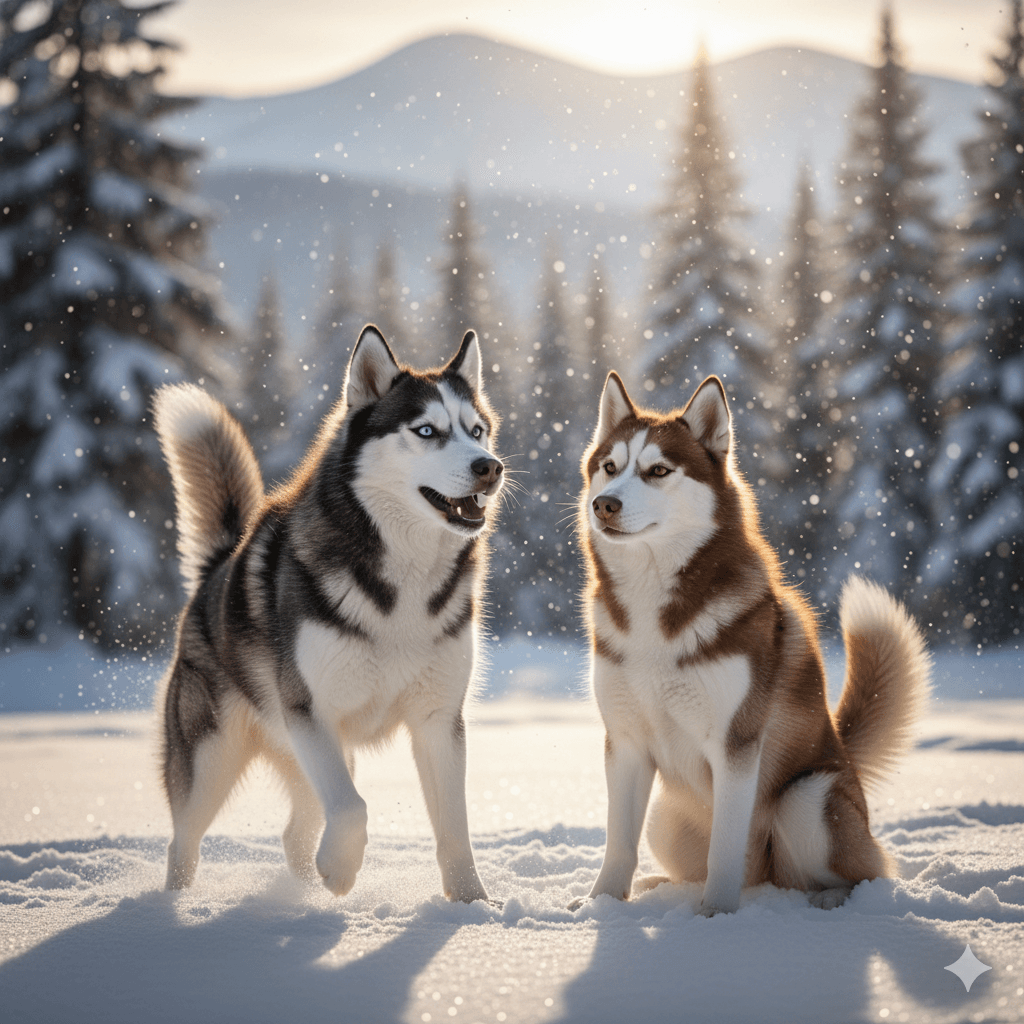
Core Temperament Traits of the Siberian Husky
Ask any Husky owner, and they’ll tell you: this breed is full of contradictions. Affectionate yet aloof, energetic yet calm indoors, loyal yet stubborn. Their temperament is layered—and best understood through these defining characteristics:
- Friendly and Outgoing:
Huskies rarely show aggression toward people; they’re more likely to greet strangers with tail wags than warning growls. - Independent Thinkers:
They assess commands and may “choose” whether to obey—especially if something more interesting (like a rabbit) catches their eye. - Playful and Energetic:
Even as adults, Huskies retain a puppy-like joy for games, snow, running, and mischief—often well into their senior years. - Emotionally Expressive:
From dramatic sighs to full-body wiggles, Huskies communicate their feelings vividly—and often comically. - Not Clingy, But Deeply Bonded:
They may not sit in your lap, but they’ll follow you from room to room, sleep near you, and watch over your daily routines with quiet devotion.
This combination makes them wonderful companions—if you value freedom, humor, and a touch of wilderness in your dog.
Check this guide 👉How Much Does a Husky Dog Cost? Best 7 Expert Tips!
Check this guide 👉Azawakh Husky Mix: Best 7 Expert Tips!
Check this guide 👉Rhodesian Ridgeback Husky Mix: Best 7 Expert Tips!
Temperament Strengths | Behavioral Challenges |
|---|---|
Exceptionally friendly with people | Poor off-leash reliability due to prey drive |
Great with active families and kids | Can be destructive if bored or under-stimulated |
Low tendency toward aggression | Strong escape artists—digging, jumping, or opening gates |
Thrives in multi-dog households | May “talk back” or ignore commands when distracted |
Calm and clean indoors (when exercised) | Howling can disturb neighbors in apartments or suburbs |
Socialization Needs and Early Development
A Husky’s temperament is heavily influenced by early experiences. Without proper socialization, their natural curiosity can tip into fearfulness or over-excitement. The goal isn’t to suppress their spirit—but to channel it wisely:
- Expose to Varied Environments Early:
Between 8–16 weeks, introduce your puppy to different surfaces, sounds, people, and calm dogs to build confidence. - Teach Recall in Low-Distraction Settings:
Because of their roaming instinct, start recall training early using high-value rewards—but never assume 100% reliability off-leash. - Introduce to Cats and Small Pets Cautiously:
Their prey drive is strong; supervised, gradual exposure is key if you have other small animals at home. - Encourage Gentle Play with Children:
While not aggressive, Huskies can be boisterous; teach kids to interact calmly and never leave them unsupervised. - Avoid Punitive Training Methods:
Harsh corrections backfire with this sensitive breed—positive reinforcement builds trust and cooperation far more effectively.
Early investment in socialization pays lifelong dividends in a well-adjusted, balanced adult Husky.
Training Realities: What Works (and What Doesn’t)
Training a Husky is less like commanding a soldier and more like negotiating with a clever diplomat. They respond best to engagement, variety, and mutual respect—not repetition or domination:
- Keep Sessions Short and Fun:
5–10 minutes of upbeat, game-based training several times a day beats long, boring drills they’ll mentally check out of. - Use High-Value Rewards:
Freeze-dried liver, cheese, or play breaks often work better than standard kibble for capturing their focus. - Incorporate Mental Challenges:
Puzzle toys, scent games, or obstacle courses satisfy their problem-solving instincts and prevent boredom. - Be Patient with Recall:
Even well-trained Huskies may ignore a “come” command if chasing a scent—always use long lines or secure fencing during off-leash practice. - Consistency Over Control:
They won’t obey out of duty; they obey because they see value in it. Build that value through trust, not force.
Success with a Husky isn’t measured by perfect obedience—it’s measured by joyful cooperation and mutual understanding.
Ideal Home Environment for a Husky
This breed isn’t for every lifestyle—and honesty about your routine is crucial before adoption. Huskies flourish in homes that match their energy, intelligence, and need for engagement:
- Active Households with Outdoor Access:
Daily runs, hikes, or backyard play are essential; sedentary owners risk a frustrated, destructive dog. - Climate-Aware Living:
Their double coat insulates against cold—but they overheat easily in warm climates. Air conditioning and shade are non-negotiable in summer. - Secure Fencing Required:
Huskies can jump 6-foot fences, dig under barriers, or even learn to unlatch gates—your yard must be escape-proof. - Not Ideal for Apartments (Unless Highly Committed):
While calm indoors, their vocalizations and exercise demands can clash with close-quarter living—unless you provide ample daily outlets. - Companionship Prevents Problems:
A solo Husky left alone 8+ hours daily may howl, chew, or dig out of loneliness; a dog sibling or human presence helps immensely.
The right home doesn’t just shelter a Husky—it actively partners with them in life.
Common Misconceptions About Husky Temperament
Pop culture and social media often paint Huskies as “wolf-like” or “untrainable”—but the truth is more nuanced. Addressing these myths helps set realistic expectations:
- “Huskies Are Part Wolf”:
False—they’re 100% domesticated dogs, genetically distinct from wolves despite superficial resemblance. - “They’re Aggressive Because They Look Wild”:
Actually, Huskies rank among the least aggressive breeds toward humans; their expression is intense, not threatening. - “They Don’t Bond with Owners”:
They bond deeply—but on their terms. They may not cuddle on demand, but they’ll shadow you, sleep near you, and alert you to changes. - “All Huskies Howl Constantly”:
While vocal, many are quiet unless triggered by sirens, other dogs, or excitement—training can reduce nuisance howling. - “They’re Easy Because They’re Clean”:
Their self-grooming habits mean less odor, but their mental and physical needs are high—this is not a low-maintenance breed.
Understanding the real Husky—beyond the Instagram aesthetic—leads to happier dogs and owners alike.
Key Considerations Before Bringing a Husky Into Your Life
Owning a Husky is a rewarding adventure—but it’s not a decision to make lightly. Their unique blend of beauty, brains, and boldness demands thoughtful preparation. Before falling for those mesmerizing eyes, ask yourself if your lifestyle truly aligns with their needs:
- Time Commitment for Exercise:
Huskies require at least 1–2 hours of vigorous activity daily; without it, they become bored, anxious, and destructive. - Secure Living Environment Essential:
Their renowned escape artistry means standard fences often aren’t enough—you’ll need tall, buried, and possibly covered enclosures. - Grooming During Heavy Shedding Seasons:
They “blow coat” twice a year, filling your home with enough fur to knit a second Husky—daily brushing is non-negotiable during these periods. - Not a Protective or Guard Dog:
If you want a watchdog, look elsewhere; Huskies typically greet strangers like long-lost friends, not intruders. - Mental Stimulation Is Just as Crucial as Physical Exercise:
Puzzle feeders, scent games, and training challenges prevent behavioral issues rooted in boredom and frustration.
Choosing a Husky isn’t just about loving the breed—it’s about being ready to meet them halfway with structure, creativity, and unwavering patience.
“Huskies are friendly dogs that are typically good with kids and other pets, but they are also very smart and strong-willed” — Dr. Tiffany Paul, DVM
Frequently Asked Questions About Husky Dog Temperament
Are Huskies good with children?
Yes—when properly socialized and supervised. They’re playful and tolerant but may be too rambunctious for toddlers.
Can Huskies live in hot climates?
Yes, with precautions: air conditioning, limited outdoor time in heat, access to cool water, and never shaving their coat (it insulates!).
Do Huskies get along with other dogs?
Generally, yes—they often thrive in multi-dog homes due to their strong pack instincts and social nature.
Why does my Husky ignore me when called?
Their independent nature and high prey drive mean recall is challenging; consistent training helps, but off-leash freedom should be limited.
Are Huskies protective or good guard dogs?
No—they’re typically friendly toward strangers and more likely to greet an intruder than deter them.
Embracing the Spirit of the Husky
To love a Husky is to accept a free soul wrapped in fur—a dog that will challenge your patience, expand your understanding, and fill your life with laughter, loyalty, and unexpected joy. They’re not the easiest breed to live with, but for those who appreciate intelligence, resilience, and a touch of wild grace, there’s no better companion. Remember: a Husky doesn’t live to serve you—they choose to walk beside you. And if you earn their trust, that partnership is one of the most rewarding bonds a dog lover can experience.

Is Rawhide Bad for Cats? Best 7 Expert Tips! – Discover the risks, safe alternatives, and expert advice to keep your feline friend healthy and happy.

Is Rawhide Bad for Dogs? Best 7 Expert Tips! – Discover the risks, benefits, and safer alternatives to rawhides for your dog’s chewing needs.

Understanding Anorexia in Cats: Best 7 Expert Tips! – Learn why cats stop eating, spot warning signs, and discover how to help your feline regain appetite safely.

Understanding Anorexia in Dogs: Best 7 Expert Tips! – Learn causes, symptoms, and solutions to help your dog regain appetite and stay healthy.