
Understanding Euthyroid Sick Syndrome in Cats
If your cat has abnormal thyroid test results but doesn’t seem to have hyper- or hypothyroidism, they might be experiencing euthyroid sick syndrome (ESS). Also known as “non-thyroidal illness syndrome,” this condition occurs when a cat’s thyroid hormone levels drop due to another underlying illness—not a problem with the thyroid gland itself. It’s a protective response by the body during stress, infection, or chronic disease, and it’s crucial not to mistake it for true thyroid dysfunction. Recognizing ESS helps avoid unnecessary treatments and focuses care on the real health issue at hand. Understanding this syndrome ensures your feline companion gets the right support during recovery.
What Is Euthyroid Sick Syndrome?
Euthyroid sick syndrome is a metabolic adaptation, not a thyroid disorder. When cats face significant physiological stress—such as kidney disease, diabetes, or infection—their bodies temporarily alter thyroid hormone production to conserve energy and redirect resources toward healing. This leads to misleading lab results that can confuse even experienced veterinarians if not interpreted in context.
- Normal Thyroid Gland Function:
Despite abnormal blood values, the thyroid itself is healthy and functioning properly—hence the term “euthyroid” (meaning “good thyroid”). - Triggered by Systemic Illness:
Conditions like heart failure, cancer, severe infections, or major surgery can initiate this hormonal shift as part of the body’s survival strategy. - Common in Hospitalized Cats:
Studies show ESS is especially prevalent in critically ill or geriatric cats admitted to veterinary hospitals, where up to 30–50% may show these lab changes. - Reversible with Recovery:
Once the primary illness improves, thyroid hormone levels typically return to normal without thyroid-specific treatment. - Risk of Misdiagnosis:
Without thorough evaluation, ESS can be mistaken for hypothyroidism—leading to inappropriate medication that may harm your cat.
Correctly identifying ESS ensures your vet focuses on treating the root cause, not a phantom thyroid problem.
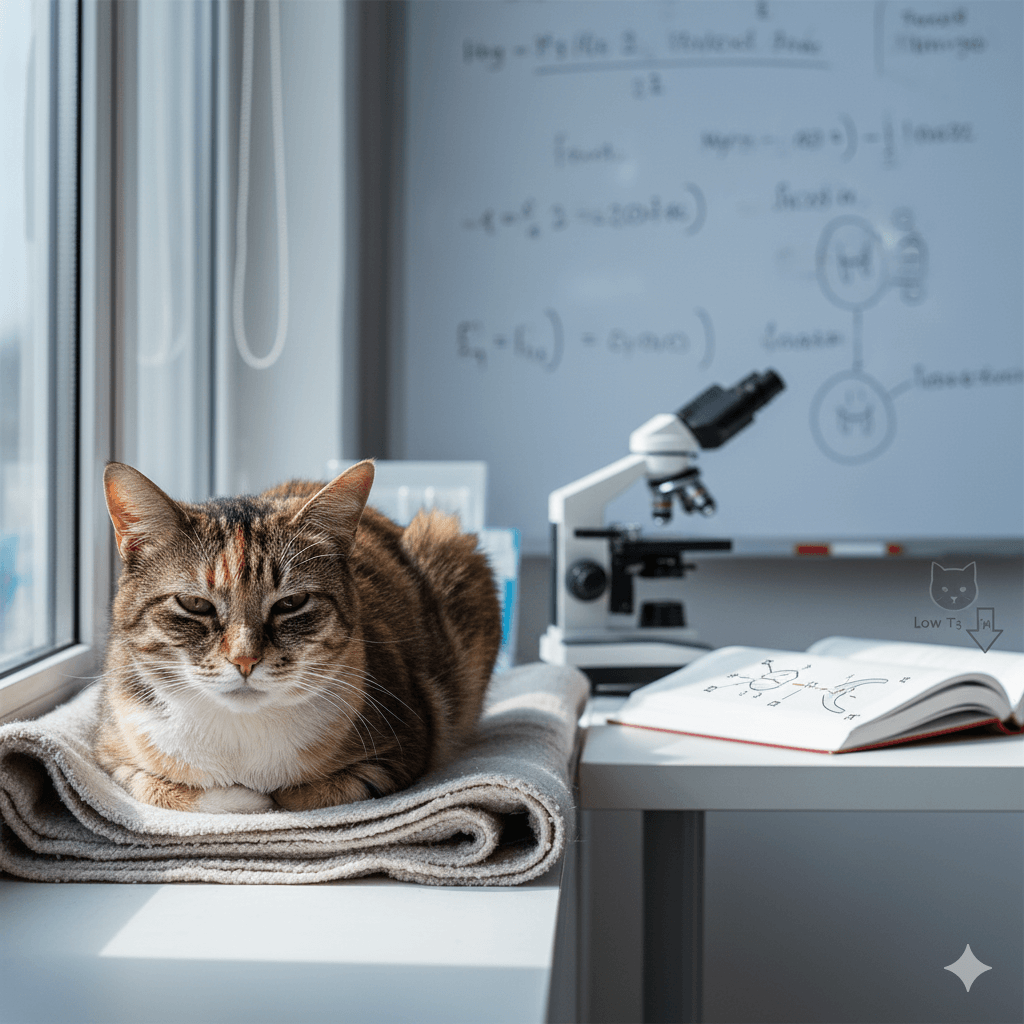
How Euthyroid Sick Syndrome Affects Thyroid Lab Results
In ESS, standard thyroid blood tests often show low total T4 (thyroxine), and sometimes low free T4 or T3—but these changes don’t reflect true gland dysfunction. Understanding how and why these values shift helps prevent treatment errors.
- Low Total T4 Levels:
The most common finding; caused by reduced binding proteins and altered hormone metabolism during illness. - Normal or Low TSH:
Unlike true hypothyroidism, TSH (thyroid-stimulating hormone) usually stays normal or low in ESS, not elevated. - Free T4 May Be Misleading:
Even “free” T4 (considered more accurate) can be suppressed in severe illness, especially if measured by equilibrium dialysis. - Reverse T3 Elevation (in some cases):
The body may convert T4 into inactive reverse T3 instead of active T3—a metabolic slowdown to conserve energy. - Dynamic Changes Over Time:
Hormone levels may fluctuate daily based on illness severity, making single tests unreliable for diagnosis.
Interpreting these results requires correlating lab data with your cat’s clinical signs and overall health status.
Check this guide 👉White Shaker Dog Syndrome: Best 7 Expert Tips!
Check this guide 👉What Is Old Dog Syndrome? Best 7 Expert Tips!
Check this guide 👉Understanding Happy Dog Syndrome: Best 7 Expert Tips!
Thyroid Test Patterns in ESS | True Hypothyroidism in Cats |
|---|---|
Low total T4, normal/low TSH | Low total T4, high TSH |
No weight gain or lethargy beyond primary illness | Significant lethargy, weight gain, poor coat |
Occurs alongside known systemic disease | Rare; usually post-treatment for hyperthyroidism |
Resolves as cat recovers | Requires lifelong thyroid hormone replacement |
Free T4 often low but inconsistent | Free T4 consistently low |
Common Underlying Conditions That Trigger ESS
Euthyroid sick syndrome doesn’t happen in isolation—it’s always a sign that another health issue is taxing your cat’s system. Identifying and managing that primary condition is the key to resolving ESS.
- Chronic Kidney Disease (CKD):
One of the most frequent triggers in older cats; metabolic imbalances and inflammation suppress thyroid hormones. - Diabetes Mellitus:
Poorly controlled blood sugar increases metabolic stress, often lowering T4 levels even in stable diabetic cats. - Heart Disease:
Conditions like cardiomyopathy reduce tissue oxygenation, prompting hormonal conservation responses. - Severe Infections or Sepsis:
Bacterial, viral, or fungal infections can cause systemic inflammation that alters thyroid axis function. - Cancer or Advanced Tumors:
Malignancies create chronic stress and cytokine release, directly influencing thyroid hormone conversion.
Treating these conditions—not the thyroid—leads to normalization of hormone levels and overall improvement.
Why Misdiagnosing ESS Can Be Harmful
Mistaking euthyroid sick syndrome for true thyroid disease can lead to unnecessary and potentially dangerous interventions. Cats are especially sensitive to thyroid medication, and giving it when not needed can cause serious complications.
- Unnecessary Thyroid Medication:
Supplementing T4 in a cat with ESS may induce iatrogenic hyperthyroidism, stressing the heart and metabolism further. - Delayed Primary Diagnosis:
Focusing on the thyroid distracts from identifying the real illness—such as kidney failure or cancer—delaying life-saving care. - Increased Financial and Emotional Burden:
Additional tests, medications, and follow-ups add cost and anxiety without clinical benefit. - Worsening of Underlying Illness:
Artificially increasing metabolic rate in a sick cat can impair healing and reduce resilience. - Confusion in Monitoring:
Future thyroid tests become harder to interpret if exogenous hormones have been introduced.
Always seek a holistic interpretation of lab results—not just isolated numbers—when evaluating feline thyroid health.
Diagnostic Approach: How Vets Rule In or Out ESS
Veterinarians use a combination of history, physical exam, lab work, and clinical judgment to distinguish ESS from true thyroid disorders. There’s no single test for ESS—it’s a diagnosis of exclusion.
- Comprehensive Blood Panel:
A full CBC, chemistry profile, and urinalysis help identify underlying illnesses like CKD or liver disease. - Thyroid Panel with Context:
Total T4, free T4 (by equilibrium dialysis), and TSH are interpreted alongside the cat’s symptoms and other lab abnormalities. - Assessment of Clinical Signs:
True hypothyroid cats show consistent signs like weight gain, lethargy, and dull fur—rarely seen in ESS alone. - Repeat Testing After Recovery:
If the cat improves, rechecking T4 levels weeks later can confirm whether values normalize—supporting ESS. - Rule Out Iatrogenic Causes:
Review medication history; some drugs (e.g., glucocorticoids, phenobarbital) can also suppress T4.
This careful, integrative approach prevents missteps and ensures accurate diagnosis.
Special Considerations for Senior and Chronically Ill Cats
Older cats are at highest risk for ESS due to the prevalence of age-related diseases. Their complex health profiles demand extra caution when interpreting thyroid results.
- Higher Prevalence of Comorbidities:
Many senior cats have both CKD and heart disease, creating layered stress that strongly suppresses T4. - Subtle or Atypical Symptoms:
Illness signs may be masked by age-related changes, making ESS harder to recognize without thorough testing. - Frequent Monitoring Needed:
Thyroid values may shift as chronic conditions progress, requiring periodic reassessment. - Avoid Over-Treatment:
Veterinarians must resist the urge to “fix” a low T4 if the cat is otherwise stable and thriving. - Focus on Quality of Life:
Managing pain, hydration, and nutrition supports natural hormonal recovery better than thyroid intervention.
In geriatric care, less is often more—and wisdom lies in knowing when not to treat.
Supporting Your Cat Through ESS and Recovery
While ESS itself doesn’t need treatment, supporting your cat through their primary illness creates the best environment for hormonal balance to return naturally. Your role as a caregiver is vital during this time.
- Prioritize the Underlying Condition:
Follow your vet’s treatment plan for kidney disease, diabetes, or infection with consistency and care. - Ensure Proper Nutrition:
Offer highly digestible, vet-recommended food to maintain energy and support healing without overburdening organs. - Maintain Hydration:
Dehydration worsens metabolic stress; encourage water intake via wet food, fountains, or subcutaneous fluids if advised. - Reduce Environmental Stress:
A quiet, warm, predictable routine helps lower cortisol and supports endocrine stability. - Attend All Follow-Up Appointments:
Regular check-ins allow your vet to track both the primary illness and thyroid trends over time.
Your calm presence and attentive care are powerful medicine—often more impactful than any pill.
“Concurrent diseases, common in older cats, can result in ‘euthyroid sick syndrome,’ characterized by falsely low serum thyroid hormone concentrations.” — Mark E. Peterson, DVM, DACVIM-SAIM
Frequently Asked Questions About Euthyroid Sick Syndrome in Cats
Can euthyroid sick syndrome cause weight loss in cats?
Weight loss is usually due to the underlying illness (like kidney disease or cancer), not ESS itself—but low T4 can contribute to muscle wasting in severe cases.
Is euthyroid sick syndrome common in hyperthyroid cats being treated?
Yes—after radioactive iodine or surgery, some cats temporarily show ESS-like patterns as their metabolism adjusts, even with a healthy remaining thyroid tissue.
Should I retest my cat’s thyroid if T4 is low but they seem fine?
If your cat is clinically well with no signs of illness, a single low T4 is unlikely to be significant—but discuss full context with your vet before retesting.
Can stress from a vet visit cause ESS?
Acute stress alone rarely causes significant T4 suppression in cats; ESS typically requires serious or chronic illness, not brief anxiety.
Do all sick cats develop euthyroid sick syndrome?
No—not every ill cat shows ESS, but it’s more likely in those with severe, systemic, or prolonged diseases, especially involving multiple organs.
Trust the Process, Not Just the Numbers
Euthyroid sick syndrome reminds us that lab values are just one piece of your cat’s health puzzle. In a species as stoic as the cat, interpreting results requires wisdom, patience, and a commitment to seeing the whole picture. By recognizing ESS for what it is—a temporary, adaptive response—you protect your feline friend from unnecessary treatments and focus energy where it truly belongs: on healing the underlying condition. With your support and your vet’s guidance, most cats rebound fully, their thyroid levels restoring as their bodies regain balance. In the end, the best care comes not from chasing numbers, but from listening deeply—to your cat, to their story, and to the quiet resilience that defines them.

Is Rawhide Bad for Cats? Best 7 Expert Tips! – Discover the risks, safe alternatives, and expert advice to keep your feline friend healthy and happy.

Is Rawhide Bad for Dogs? Best 7 Expert Tips! – Discover the risks, benefits, and safer alternatives to rawhides for your dog’s chewing needs.

Understanding Anorexia in Cats: Best 7 Expert Tips! – Learn why cats stop eating, spot warning signs, and discover how to help your feline regain appetite safely.

Understanding Anorexia in Dogs: Best 7 Expert Tips! – Learn causes, symptoms, and solutions to help your dog regain appetite and stay healthy.